Author Archive
Chocolate Can Improve Blood Flow and Brain Function
By Chad Upton
The Kuna Indians of the Panama Islands consume large quantities of cocoa, even when compared to those living on mainland Panama.

A study by Norman K Hollenberg, MD and PhD of Harvard Medical School, found that the islanders have astonishingly low occurrences of hypertension and cardiovascular disease. In fact, death from heart disease is a 1280% higher risk for mainlanders. What is in the chocolate the islanders are consuming? (more…)
The Sun is Green
By Chad Upton
I know, the sun doesn’t look green. But, keep in mind the sky looks blue and we know it’s not really blue. The sky appears blue for the same reason some people’s eyes look blue — an optical illusion known as the Tyndall effect.
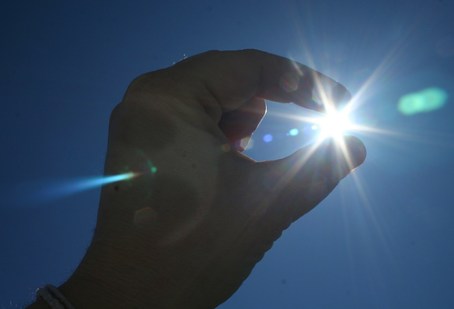
When scientists measure the wavelength (color) of the sun, the peak output is in the transition area between blue and green (about 500 nanometers). So, technically, the sun is green-blue. But, why doesn’t it look green? (more…)
Netflix Accounts for 29% of North American Internet Traffic
By Chad Upton | Editor
YouTube was once the king of online video bandwidth. They still make a significant dent, especially in Europe where they account for more than 20% of peak downstream mobile traffic.
In North America, Netflix is the largest single consumer of bandwidth. At peak, they’re tasked with 33% of downstream internet traffic. Off peak, they’re responsible for about 28.8% of downstream bandwidth.

As Netflix continues to expand into South America and Europe, they will certainly impose a bigger footprint on networks in those regions. Interestingly, they may also have a calming effect on other local internet traffic. Analysis shows that bit-torrent traffic, sometimes used to pirate movies and tv shows, actually decreases when Netflix is introduced into a market.
Since some Internet Service Providers slow down the internet for users running bit-torrent clients, Netflix may be something they’re willing to pay for.
Broken Secrets | Facebook | Twitter | Email | Kindle
sources: sandvine.com, wikipedia (Netflix), torrentfreak.com
Bananas Emit Antimatter Almost Every 75 Minutes
By Chad Upton
Potassium-40 is a fairly unstable isotope, although the half life is nearly a billion years.
Because bananas have so much of this isotope, there is enough decay to generate one positron (approximately) every 75 minutes.
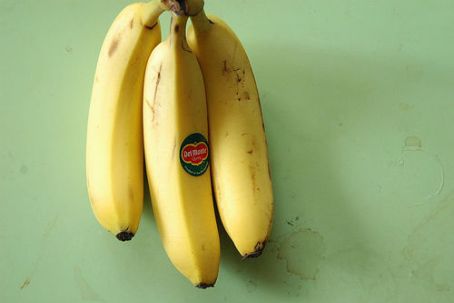
A positron is basically the opposite of an electron. It has the same mass as an electron, but a positive charge instead of a negative one. It is the electron’s antimatter doppelgänger.
Broken Secrets | Facebook | Twitter | Email | Kindle
photo: keepon (cc)
sources: tertiarysource.net, wikipedia (positron, gamma ray)
YouTube Keyboard Shortcuts
By Chad Upton | Editor
The youtube.com video player only has a few buttons on it, making it hard to freeze a video on a specific frame. But, using the keyboard shortcuts, you can control the video frame-by-frame or quickly expand it to fullscreen mode.
My favorite is probably the fullscreen shortcut; it’s much easier to hit the F key than move the mouse and click the fullscreen button. Here is a list of some other shortcuts:
Playback Controls:
- K – Play/Pause (spacebar does the same)
- J – Jump back 3 seconds when playing / jump back one frame when paused (Left Arrow Key does the same)
- L – Jump forward 3 seconds when playing / jump forward one frame when paused (right arrow key does the same)
- 0 – Jump to beginning
- 1-9 – The number keys can be used to jump to a relative point on the timeline. For example, 5 jumps to the 50% mark on the timeline, half way through the video. 1 jumps to the 10% mark and 9 jumps to the 90% mark.
Volume Controls:
- M – Mute
- Up Arrow – Increase Volume 5%
- Down Arrow – Decrease Volume 5%
View Control:
- F – Fullscreen (ESC to exit fullscreen)
This is great if you’re trying to spot a secret in a video or just cue up a clip to show a friend. From my testing, these keys work in Chrome, Firefox and Safari.
You Cannot See the Great Wall of China from Space
By Chad Upton | Editor
Before we could even go to space, the myth was the great wall is visible from the moon. Ever since we got to space, astronauts have been looking for it.

Mathematically, the wall would have to be at least 70 miles (110 km) wide to be seen from the moon with unaided eyes. Since the wall has a maximum width of 30 ft (9.1 m), this is easily dismissed as myth. The moon legend came from a 1754 letter by William Stukeley; his remarks on the massive size of the wall could have been literary hyperbole. But, some people took it literally.
In his defense, there have been a few claims that the great wall can be seen from low earth orbit — as little as 100 miles (160 km). A number of astronauts have claimed they have seen it. Even the European Space Agency claimed it was visible and published a picture. A week later they issued a press release indicating it was actually a river and not the Great Wall of China.
NASA claims it, “generally isn’t [visible], at least to the unaided eye.” Mathematically, it’s the same answer, unless you have 20/3 or better vision. But, according to the Journal of Optometry, “Not even the best of human eyes at a simple glance could see the Great Wall of China from Space.” That’s because the anatomy of the eye limits vision to an acuity no greater than 20/9. So, 20/3 is impossible.
The gaza pyramids on the other hand are about 22 times wider than the Great Wall of China; they are visible from low earth orbit.
Broken Secrets | Facebook | Twitter | Email | Kindle
Photo: Keith Roper (cc)
Sources: wikipedia (Great Wall of China), Journal of Optometry, NASA
Olympic Medals Awarded for Art from 1912 to 1948
By Chad Upton | Editor
The modern Olympics are all about athletics, but from 1912 to 1948 they also included competitions in art and science.

The main categories were as follows:
- Architecture
- Literature
- Music
- Painting
- Sculpturing
- Statistics
Some of the events included “town planning”, “Epic works” (long poems), “Drawings and water colors”, “Medals”. Yes, medals were given out for creating the best medals. (more…)
Page Up and Page Down Shortcuts in Mac OS X
By Chad Upton | Editor
Unless you’ve specifically bought the full size Mac keyboard, you’re missing dedicated page up and page down keys.

But, you’re not missing out on the functionality; here are the shortcuts: (more…)
Nigerian Visa Doesn’t List Blonde Hair Color Option
By Chad Upton | Editor
If you have blonde hair and you’re planning a trip to Nigeria, you may want to visit your colorist first. The online visa application doesn’t have “blonde” as an option for hair color.

No research turned up any answers, although I have sent an inquiry and will report back with any findings. (more…)
Kosher Coke Contains Real Sugar
By Chad Upton | Editor
In many countries, Coca-Cola and most other soft drinks, are sweetened with High Fructose Corn Syrup (HFCS). This is not real sugar from cane or beets, it is a processed sweetener made from corn that is almost identical to natural sugar.
There have been some debates and studies about whether or not HFCS is bad for us. Without getting into it, I will say that some people don’t have a problem eating HFCS and other people do.

The reasons for avoiding HFCS vary widely and one of them has led to Kosher Coke. Because high fructose corn syrup is made from corn (a grain) it cannot be consumed by (Orthodox) Ashkenazi Jews who refrain from eating grains during passover.
You can spot Kosher Coke by the yellow cap on the bottle (white in Chicago). It typically has a Kosher certification symbol and sometimes Hebrew characters. If you live near Cleveland the local bottler never switched to HFCS, so check the ingredients — your Coke might be perma-Kosher. (more…)


 Broken Secrets