Where the Phrase “Face the Music” Came From
By Kaye Nemec
Have you ever heard someone say, “Well, you better face the music?” Face the music? What does that mean – where did that phrase come from?
The phrase “face the music” has a military history. When disgraced or dishonored soldiers were being relieved of their duties and stripped of their rank their final march was accompanied by drums – it is commonly referred to as “drumming out.”

During the Civil War some officers had their heads shaved before drumming out. Although their fellow officers were not permitted to touch them as they passed by, several cases were reported in which the discharged soldier was later found dead.
Some historical references claim that soldiers were forced to sit on their horse backwards as they were marched passed their comrades so they could see and hear the drums – therefore facing the music.
Broken Secrets
Get updates from: Facebook | Twitter | Email | Kindle
Sources: Big Site of Amazing Facts, Wikipedia
Photo: Duane Matsen (cc)
Standard Keyboards are Designed to Slow You Down
By Kyle Kurpinski
It’s no secret that you will probably spend a significant chunk of your lifetime prodding at a keyboard, but have you ever considered why keyboards are designed the way they are? Logic would dictate that the layout of the keys should increase typing efficiency and maximize your output. Reality, however, is not always logical, and the vast majority of modern keyboards are actually designed to make you type slower.
The basic QWERTY layout – the default keyboard layout you’re probably using right now – is a remnant of the very first typewriters. As a kid I used to play with my mother’s typewriter and I would frequently jam the machine by pressing too many keys at once. The same thing could happen if a proficient typist hit two or more keys in rapid succession. Due to the mechanical nature of the typebars, jams were increasingly likely with faster typing speeds. The QWERTY layout (named for the six letters at the left side of the top row) was specifically designed to space out the most common letter combinations, thereby reducing jams by stunting the user’s output. By the time newer devices made typebars obsolete, QWERTY had already cemented itself as the primary standard layout. So if you’re using this archaic configuration today (which I admit, I am), you’re actually making yourself less efficient and potentially increasing your risk of a repetitive strain injury like carpal tunnel. Fortunately, there are other options available.
In 1963, Dr. Augustus Dvorak and his brother-in-law patented the (you guessed it) “Dvorak Simplified Keyboard,” which is one of the more commonly used keyboard alternatives. And no, it’s not just for engineers or computer scientists (or at least, it shouldn’t be). Take a look at the Dvorak layout below and compare it to your QWERTY keys. Note how many of the most common letters in the English language – T, N, S, vowels, etc. – are located in the “home row” where your fingers normally rest. This allows you to type the majority of letters with minimal hand movement. Less common letters like Q, X, and Z reside in the bottom row where keys are the most difficult to reach. On a Dvorak keyboard, approximately 70% of the keystrokes will occur in the home row compared to only 32% on a QWERTY layout.
Other alternative configurations are also available, including one-handed keyboards for people who like to type and use a mouse (or other peripheral) simultaneously, but Dvorak is probably the place to start if you’re looking for a quick way to increase your word-processing efficiency. Yes, it will take some vigilance to re-learn how to type on a completely different layout, but the results could very well be worth it. Besides, doesn’t it feel a little funny to willingly use a device designed to handicap you?
If you do decide to make the switch, the software to run Dvorak is already included with all major operating systems and can typically be activated with a with a simple change of preferences. You won’t even need to buy a new keyboard – Dvorak decal sets are available online (usually for a couple bucks) or if you’re ready to scrap QWERTY altogether you can manually remove and rearrange the keys yourself.
Broken Secrets
Get updates from: Facebook | Twitter | Email | Kindle
Source: Wikipedia
Image: josue salazar
New Contributors are Joining the Team
When I started this blog in 2009, I was writing five days per week. I was doing that in the evenings after my day job and was able to keep it up until August of 2010.
In a summer blog update, I asked for others to contact me if they wanted to contribute to the site. One of the first people to contact me was Kaye Nemec; she was already writing great content for other sites, so it was a perfect fit. Since then, she’s contributed some very popular posts:
- The Word “Nerd” Was First Written by Dr. Seuss
- The Real Names of Brand Name Products
- Bakery Twist Tie Colors Indicate Freshness
Today, I’m happy to announce that we’ve got two more contributors joining the team. Kyle Kurpinski and Terry D. Johnson. They’re co-authors of the educational, yet satirical, book, How to Defeat Your Own Clone. Kyle has a PhD in Bioengineering (among other degrees) and works at a medical device startup in the Bay Area. Terry has a Masters in chemical engineering from MIT and teaches bioengineering at Berkeley. You can checkout more detailed bios of everyone on the about page.
Kyle’s first post, Standard Keyboards are Designed to Slow You Down,will be online tomorrow. We’re excited to be working with these guys and I know you’ll enjoy their work too.
Chad Upton, Editor
Sarcastic Secret: This is a Toilet Seat
By Chad Upton | Editor
Sure, you can hold it, we all can. But one day, your knees will buckle and you’ll actually want to use a public toilet.
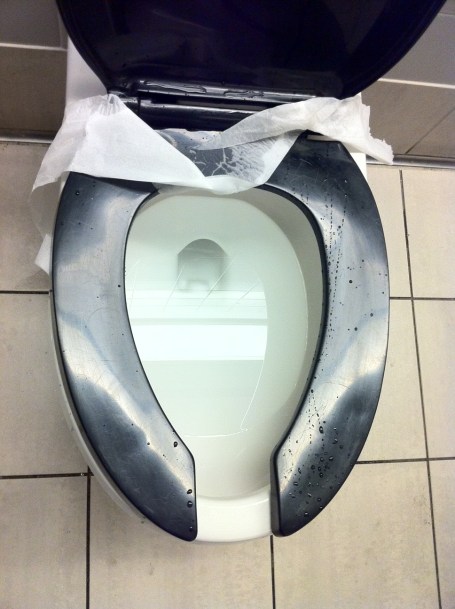
When you need a public toilet, there’s nothing more demoralizing than discovering the last patron was a Neanderthal. Of course, you have to forgive them — cavemen don’t know that attachment is actually a seat. The archaeologist in me suspects that cavemen believe it is a funnel, you know, to help them get everything in the bowl. If that’s true, they may be more advanced than previously understood.
If you ever catch one of these beings, enlighten them. Tell them that other people reluctantly want to sit on that seat.
An abstract and slightly less plausable hypothesis is that some of them are aware that it is a seat, but are worried about catching some disease when they lift it. You can let them in on the toilet-paper-secret: use a tiny wad of paper to lift the seat. Then leave that toilet paper on the floor as a potentially embarrassing trap for someone else to catch on their shoe. Just kidding of course, you can let them in on this other little secret: toilet paper can actually be placed right in the toilet.
Also, direct them to the flush lever. It’s incredibly effective when used.
Broken Secrets
The Word “Nerd” Was First Written by Dr. Seuss
By Kaye Nemec
Although many of us know Dr. Seuss as a children’s author, it was his 15 year career in advertising that really made him famous.
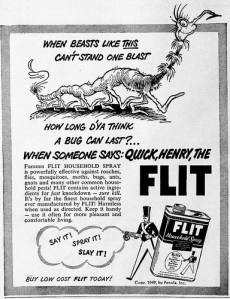
He started working as a freelance writer and illustrator when his talents caught the eye of the ad industry. His first big hit came when he coined the popular catchphrase, “Quick, Henry, the Flit!” Today, it would be comparable to, “There’s an app for that.”
Realizing he had a gift for both illustrating and writing, Seuss wrote his first children’s book, And to Think That I Saw it On Mulberry Street. After submitting it to 27 publishers and receiving 27 rejections, Mulberry Street was finally published with the help of a friend at Vanguard Publishing.
It was a huge hit among teachers and librarians so Houghton Mifflin and Random House asked Seuss to write a children’s book using new-reader vocabulary. They gave him 400 words but told him to cut the list in half. Nine months later, the result was the widely popular, The Cat in the Hat (1957). It uses 223 of the words on the original list and 13 words that are not. Of the 236 words used, 221 are monosyllabic. In three years, about 1 million copies of The Cat in the Hat were sold.
 After the success of The Cat in the Hat, Seuss’ editor, Bennett Cerf, bet him that he could not write a children’s book using only 50 different words – 186 fewer words than he used for The Cat in the Hat. In 1960 Seuss won the bet when he published Green Eggs and Ham, a story of only 50 words, 49 of which have only one syllable. It has since become one of the best-selling children’s books of all time.
Dr. Seuss wrote and illustrated several children’s books, most of which have unique histories or quirky facts associated with them. The first time the word ‘nerd’ was used in print was in If I Ran to the Zoo. That wasn’t his first new word, ‘Grinch’ became mainstream after Seuss used it in How the Grinch Stole Christmas.
Broken Secrets
Get updates with: Facebook | Twitter | Email | Kindle
Photos: Joe (cc), davemc500hats (cc)
Sources: Seussville.com, Wikipedia – Green Eggs & Ham, Wikipedia – The Cat in the Hat, Barnes & Noble
The Hidden Lever to Raise Airplane Armrests
By Chad Upton | Editor
Airplanes are cramped places.
The leg room is short, the aisles are thin and the headroom isn’t room at all. The bathrooms provide some private space and a complimentary gymnastics lesson.
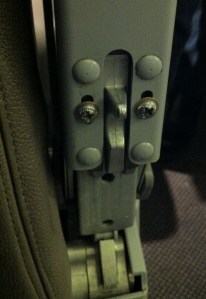
If you’re tall, fitting your knees behind the seat in front of you is a painful reality that many of us live with each trip, unless you get an exit row, a courtesy upgrade or a hole in your wallet.
Even if you’re not very tall, when you stand up in your seat, you have to duck to avoid a head-on-collision with the overhead bin, especially in smaller regional jets.
But, a few years ago, I saw a person in the row ahead of me raise the aisle armrest. That was a game changer for me. No more ducking! Simply raise the armrest, then stand up while you slide off your seat into the aisle.
There are a few planes that do not have movable aisle armrests. However, most of them have a small lever or button on the underside of the armrest, near the hinge. Pushing or sliding this lever will release the hinge lock, allowing you to raise the armrest.
Broken Secrets
Potatoes: Green Means Stop
By Chad Upton | Editor
If you eat potatoes, in any form, you’ve probably come across a partially green one.
Most importantly, don’t eat the green part — it’s toxic enough that you may get very ill, and it can cause death in rare cases. Secondly, it’s very bitter, so you’re not going to enjoy it. French fries and potato chips are also affected, so avoid the green stuff there too.

The green coloration is chlorophyll. Like many other plants, chlorophyll is formed with enough exposure to certain types of light. Of course, many green leaves are part of a healthy diet, so it’s not the chlorophyll itself that is the problem.
Exposure to light can also cause another reaction that forms a substance called “solanine.” It is not related to chlorophyll, but is often formed at the same time. Solanine is toxic. 16 ounces of a fully green pototo could be enough to make a 100lb person sick.
The green chlorophyll is a good warning about the presence of solanine, but solanine can form when chlorophyll does not. So, even if the potato looks normal, the bitter taste will serve as a warning.
Cooking a green potato will not help, it’s still toxic. But, a cooked potato cannot turn green since the required enzyme mechanisms are destroyed in cooking.
Bottom line: if it’s green or bitter, skip it.
Broken Secrets
Get updates on: Facebook | Twitter | Email | Kindle
Photo: Selva / Eden (cc)
Magazine Mastheads Have a Nautical History
By Kaye Nemec
At the beginning of most magazines and newspapers, somewhere near the editorial page, you’ll find the masthead — the page of a publication that lists who is responsible for the magazine “behind the scenes.” Everyone from editors and writers to advertising staff and designers are listed on the masthead. It may also include history of the publication, advertising rates, subscription and circulation information, contact names and numbers. So, why does this source of information have a clearly nautical name?
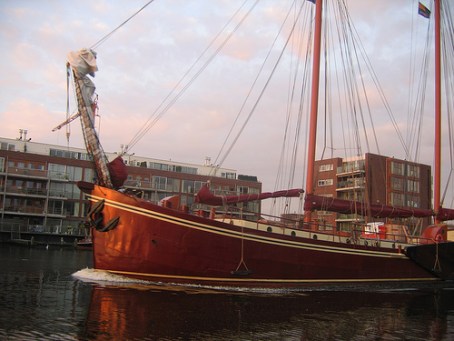
The term masthead did indeed derive from a nautical origin. Specifically, it came from a tradition within the shipping industry where brass plates were commonly displayed on the main mast of ships to showcase the owner of the ship, information about the ship and/or the location of its home port.
Broken Secrets
Get updates on: Facebook | Twitter | Email | Kindle
Photo: hans s (cc)
Finding Home and End on a Mac Keyboard
By Chad Upton | Editor
I use both Mac and Windows computers and I appreciate some attributes of each. For example, I really like the home and end keys on Windows keyboards. These guys make it a breeze to select a single line of text or jump to the end of the line to keep writing after an edit.
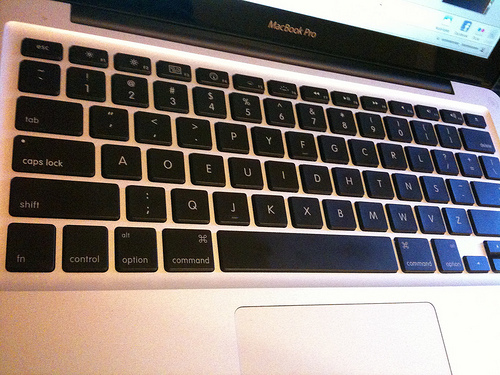
Because Apple market share is at an all time high, I’m sure a lot of people are going to notice the absence of these keys when they switch. Unless you’ve got the full-size apple keyboard, the “home” and “end” keys are absent on your desktop or macbook keyboard. But, if you hold down the fn (or control) key, you can use the left and right arrow keys as home and end keys respectively. Hold shift while doing this to select the characters between cursor positions.
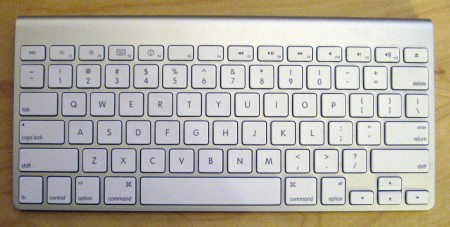
Speaking of the Mac keyboard, the delete key is equivalent to the backspace key on a Windows computer — it deletes characters to the left of the cursor. But, you can make Mac’s delete key function like the Windows delete key if you hold the fn key while pressing it — deleting characters to the right. Another favorite keyboard shortcut on Mac OS is fn + F11 which will temporarily hide your windows to expose your desktop, allowing you to easily select files without going to the finder or minimizing all of your windows. Then press fn+F11 to bring all your windows back to their original positions.
By the way, you can plug a Windows USB keyboard into a Mac, although not all of the task keys function the way they do on a PC.
Broken Secrets
The Calendar is Named After The Pope
By Chad Upton | Editor
Many different calendar systems exist, but the calendar used by most modern cultures is known as the Gregorian Calendar.
It may also be called the Western Calendar, Civil Calendar or the Christian Calendar. The names Gregorian and Christian Calendar are popular because it was introduced by Pope Gregory XIII.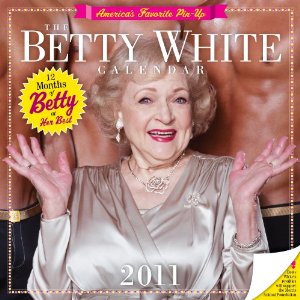
He introduced it in 1582 and it was quickly adopted by a handful of countries. Most others jumped on the wagon over the following centuries. It was very similar to the Julian calendar, although it more accurately represented the lunar cycle and made the dates of Easter easier to calculate. This is the main reason it was preferred by Christians. The calendar is Christian centric in other ways too, after all, the years we count are relative to the traditional Incarnation of Jesus.
Interestingly, there are exactly 14 possible calendar configurations. That makes it easy to figure out if your birthday is on the weekend this year.
Broken Secrets
Get updates from: Facebook | Twitter | Email | Kindle
Sources: Wikipedia


 Broken Secrets