Posts filed under ‘Health and Beauty’
State Health Care in Hawaii Since 1975
While the federal health care reform bill passed in the House of Representatives last night, Hawaii and Massachusetts have had state regulated health care since 1975 and 2006 respectively.
Whether you support government regulated health care or not, there is a good chance it will soon be an option for most Americans (the bill still has a number of steps before it is official). In the meantime, let’s have a look at the impact of health care reform on two other states.
Depending on where you get the numbers from, 85-89% of Americans have health insurance.
Before 1975, 70% of Hawaiians had health insurance, which made it the highest insured state at the time. On January 1, 1975 the Hawaii Prepaid Health Care Art was passed, bringing the state to 92% coverage.
In Massachusetts, the introduction of State health care raised the insurance rate to approx 94% of residents in 2006. The following year, it went up to 97%. In the next two years it dropped a point and Massachusetts now has the lowest number of uninsured residents at 4.1%.
The Hawaiian and Massachusetts systems are quite different from each other. One of the key differences is who pays for it. In the Hawaiian system, employers are required to provided health insurance to employees who work more than 20 hours per week. (more…)
Botox can be Prescribed by Your Doctor
Botox is widely known as a beauty product used to reduce winkles.
It works really well for that because it prevents the neurotransmitters from contracting the muscles it is injected into. The wrinkles disappear because the muscle is completely relaxed.
Botox (botulinum toxin) is a toxin produced by botulism bacteria and it is extremely dangerous in sizable doses. Doses are measured in MU (mouse units). They’re called mouse units because it’s the quantity of toxin required to kill 50% of mice of a specific weight, strain and sex.
In fact, due to the prevalence of this bacteria in honey, it is not advisable to feed babies honey.
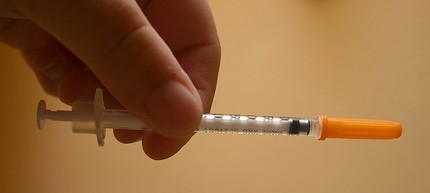
Despite its danger and common use for vanity, there are a number of reasons why your doctor may actually prescribe it. (more…)
Why Do People Eat Organic Food?
I have always enjoyed visiting my grandparents, something I probably didn’t and still don’t do often enough.
I have a lot of great memories from those times and spending time in my grandmother’s vegetable garden is one of my favorites. She had a huge backyard, almost half of it was a garden.
I didn’t actually like vegetables back then, but she had a secret raspberry patch. It was tucked away in the back of the garden, behind the shed. I’m not sure if she was trying to hide it, or just keep it separate from the main garden — raspberry plants are locally invasive, they can take over your entire garden if not pruned.
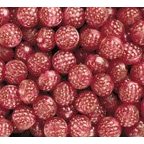 I could spend the whole day eating raspberries, fresh off the bush.
Some days, I did.
It was nature’s 7-11, a store full of squishy red candy, at the right height and the right price for a child.
I wouldn’t dare say they were “free” since there was a price to pay — raspberry bushes are very prickly. There are thornless cultivars available now, but it worked out OK. The thorns slow you down enough to swallow one raspberry before you pick the next. I’m sure that’s why nature put the pricks there. (more…)
Listerine Was Once Sold as Floor Cleaner
By Chad Upton | Editor
If you haven’t noticed, the popularity of hand sanitizer has exploded. It’s in our desks, cars, purses and homes. I have seen dispensers at subway stops, hospitals, airports and restaurants. We are obviously obsessed with killing germs and fighting viruses.
With H1N1, Mad Cow, SARS and others, you can’t blame us for being careful. It seems like hand sanitizer came out of nowhere, but it’s not new, and neither is the principle.
 The first time I saw hand sanitizer was in 1995. I worked at a restaurant and we were told to use it hourly. At the time, it seemed like a magical potion. I thought the concept was weird: I wasn’t washing anything off my hands, I was rubbing it in.
The truth is, hand sanitizer is more effective at killing bacteria than soap and water. That said, soap and water is far more effective at removing visible dirt.
For the most part, hand sanitizers use a variety of alcohols as their active ingredient. To be effective at reducing bacteria, they should contain at least 60% alcohol, and most contain 60% to 85%. A few brands (worth avoiding) contain as little as 40% alcohol and some hospital solutions have as much as 95%.
So, where did this idea start?
It began in 1867 with a British surgeon, Joseph Lister. He published a series of articles in the British Medical Journal stating that surgery patients had less tissue infection if the incisions and surgical instruments were treated with carbolic acid prior to surgery.
At the time, they didn’t wash their hands or anything else before surgery. They thought gangrene wounds were caused by stinky air. Seriously. The same stinky air they blamed for cholera, black death and bubonic plague. They later realized the stinky air was actually the result of rotting wounds, not the cause.
His work lead to the germ theory of disease. It was the equivalent of suggesting the Earth was round, when everyone else thought it was flat. Fortunately, it was very easy to demonstrate the success of his theory and it became widely accepted.
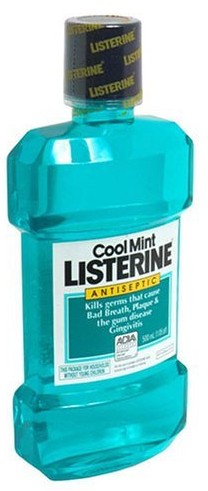
In 1879, Listerine was named after him. It was originally developed as a surgical antiseptic, but that’s a pretty small market. To increase sales, they began marketing it as a floor cleaner and a cure for gonorrhea. That brought company revenues to about $115k, but marketers had another idea in the 1920s.
In this era of patent medicines, there were products to cure every known illness. The Listerine folks weren’t going to let this bandwagon pass by. All they needed was the perfect illness, something that everyone had and Listerine could cure; so, they made up the term, “chronic halitosis” (bad breath).
You see, bad breath hadn’t been invented yet. At that time, bad breath was just known as “breath.” Their best effort was an ad campaign that suggested young people would never find marriage with a condition such as bad breath. Over 7 years, revenues skyrocketed to $8 million.
Listerine is still sold as an antiseptic today, and primarily marketed for oral health. Depending on the flavor, it contains 21.6% to 26.9% alcohol.
Broken Secrets | Facebook | Twitter | Email | Kindle
Sources: WP Hand Sanitizer, WP Lister, WP Listerine
The Sugar in Most Foods is Not Natural Sugar
Real sugar, from cane or beets, is expensive to import. That’s why countries without real sugar, make it from other stuff.
The United States, Canada and the UK consume a lot of sugar and don’t have enough real sugar to meet their needs. A complicated series of transformations involving enzymes and fungi can process corn into a sugar substitute called high fructose corn syrup (known as “glucose/fructose” in Canada and “glucose fructose syrup” in the UK).
It is almost exactly like real sugar. Almost.

The safety of high fructose corn syrup (HFCS) is a hot debate in health circles. Food manufacturers say that it is almost exactly like real sugar and there is no proof that it is any worse for you than real sugar. Other experts point to a key difference between natural sugar (sucrose) and high fructose corn syrup. It’s very technical, but I’ll try to simplify it.
Sucrose and HFCS are both made up of glucose and fructose, which is why the food manufacturers say they’re almost the same. The key difference is that sucrose contains a bond between glucose and fructose, while HFCS does not. Because of this bond, your body must break it down before it can be utilized. In high fructose corn syrup, there is no bond — allowing it to be utilized more easily.
When you have more energy than you can burn, it gets stored as fat. A high absorption of sugar can also lead to insulin resistance and then diabetes.
Pay attention to the type of sugar in your food, it’s important. You might be surprised by how many things contain high fructose corn syrup. Some examples include: yogurt, breakfast cereals, granola bars, crackers and of course things like soda/pop and cookies. But, for all of these products, there are brands with natural sugar. Even manufacturers are starting to pay attention, Pepsi is currently offering Pepsi and Mountain “Throwback.” They’re just like their normal drinks, but made with real sugar — a throwback to the good ol’ days.
Remember that if you’re not in the USA, high fructose corn syrup is called glucose/fructose or glucose-fructose syrup.
Broken Secrets
Subscribe on: Facebook | Twitter | Kindle
Sources: WP HFCS, WP Insulin, Princeton University
Photo: *MarS (cc)
How to Apply Cologne and Perfume
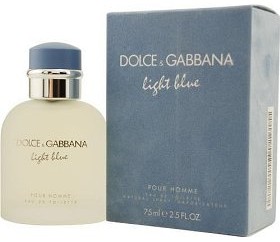 Perfume and cologne should be applied to pulse points (wrists, base of the throat, inside of the elbow or knee). These are places where blood vessels are closest to the skin; therefore, your skin warms the perfume and causes it to gradually release its fragrance over time.
Rubbing your wrists together will also speed the release of the fragrance, but experts say this bruises the fragrance and diminishes its endurance. Putting cologne on the pulse points should negate the need to rub your wrists together anyway.
Perfume and cologne usually contain alcohol which helps the fragrance evaporate so others can smell it. The warming property of your pulse points assist with the evaporation.
BrokenSecrets.com
Sources: eHow, Perfume Station, Tips for Healthy You


 Broken Secrets