Posts filed under ‘Health and Beauty’
Babies Don’t Shiver
By Kaye Nemec
When adults are cold, our bodies shiver to engage our muscles and produce more body heat. When babies are cold their bodies do not react in the same way. Instead of shivering, babies warm themselves by burning body fat.
Babies are born with brown thermogenesis fat, also known as brown fat (because of its color). Brown fat is basically a fat-burning type of fat. Scientists used to think brown fat was only found in babies but recent studies suggest it does not actually disappear with age. For adults this could end up being the ultimate diet solution. For a baby it is critical for temperature regulation.
Brown fat is filled with mitochondria. When the body is fueled with food (sugar) the mitochondria help to transform sugar into energy in the form of heat. This heat warms the babies until they are able to shiver like adults.

Does this process warm them? Yes. However, some studies suggest this takes away calories that should be used to help the baby grow.
It is usually recommended that babies are dressed warm and in layers but ask your pediatrician for specific recommendations on ways to keep your baby warm, like what temperature you should keep your house at.
Broken Secrets
Subscribe on: Facebook | Twitter | Email | Kindle
Sources: Riley Hospital for Children, brainyweightloss.com, Chicago Tribune
Photo: Kaye Nemec
Most Medications Still Good After Expiration
By Chad Upton | Editor
If you check your medicine cabinet, chances are good you’ve got some expired medication in there. Are they still safe and effective or are they fit for the trash?
First of all, this post is for information purposes only and it is not suggesting you take any drugs after their expiration date — always check with your doctor or pharmacist before making any decisions about pharmaceuticals.
The Federal Drug Administration regulates drugs in the United States. They have extensively studied drug expiration dates for the US government. Specifically, the US military stockpiles large quantities of drugs for regular troop usage and emergencies. If those drugs are not used, the cost to replace them can be high.
The FDA found that 88% of drugs tested remained potent for a year after their expiry date; some lasted up to 14 years. Experts caution these results cannot be directly translated to your medication since the military stores their drugs in climate controlled environments that represents ideal conditions.

That said, the FDA and many in the drug industry, including one pharmacist I talked to off the record, agreed that certain drugs are still good up to a year after the expiration date.
Many popular drugs are safe after their expiration date, but there are known exceptions too. For example, Tetracycline, an antibiotic, becomes toxic and should not be taken after its expiration date. Aspirin, on the other hand, is known to be good for a while after its expiration date.
If the drugs are still good, why do drug companies put these short expiry dates on the bottles? It’s hard to say for sure, but there are a couple things we know.
1. The drug companies are required to ensure their products are 100% effective up to the expiration date. That means they need to do testing. The longer the expiration time they shoot for, the longer it will take to release a new product to market, which is bad for business and customers. In most cases, the products have at least a 1 year shelf life.
2. Every company wants you to buy as much of their product as possible. The drug companies can’t really control how much you use their product, but shorter expiration dates may convince you to buy more, even if you haven’t used all of the product yet.
To be safe, you should check with a pharmacist before taking any expired drugs. When you are ready to dispose of your medicine, check out this previous post: How to Dispose of Medicine.
Broken Secrets
Subscribe on: Facebook | Twitter | Email | Kindle
Photos: hit thatswitch (cc)
White Wine also Stains Teeth
By Kaye Nemec
We’ve long been told that coffee, marinara sauce and red wine will leave our teeth stained and in need of whitening. Dentists have warned us about letting these foods sit on our teeth for too long without brushing. But, it turns out we also need to be cautious when drinking white wine if we want our pearly whites shiny and bright.
 It’s not just the color of red wine that affects our teeth, it is also the acidic nature of wine that helps stain and darken our teeth. In fact, red wine and white wine are equally acidic. The acids erode tooth enamel, which is there to protect your teeth.
Because red wine contains dark pigments that will stain your teeth, you get a two-for-one deal when drinking it. Not only will the acid rough up the surface of your teeth, but it will also clear an immediate path for the red pigments to settle in and stain. White wine, on the other hand, will simply make way for stains and is more dangerous if paired with or consumed in a diet that also contains red sauce, coffee or cola.
Apparently, citrus drinks like orange and grapefruit juice, sodas and energy drinks also contain enough acid to have the same, damaging effect on the enamel of teeth. Because coffee, sodas, juices and energy drinks have become so popular, whitening agents and toothpastes have also increased dramatically in popularity over the last few years. It seems that dentists agree, it is OK to use a toothpaste with a whitening agent in it; however, it is recommended that you do not brush your teeth immediately after drinking wine. As mentioned above, the acid in the wine will weaken the enamel on your teeth. The weakening process will last about an hour so if you brush before that hour is up you risk brushing away bits and pieces of your weakened enamel causing further damage.
Broken Secrets
Subscribe on: Facebook | Twitter | Email | Kindle
Sources: ToothMingle.com, NPR, DentalHealth.org
Photo: Danielle Bauer (cc)
Babies Blink Less Than Adults
By Kaye Nemec
I was rocking my son, trying to get him to sleep, staring at his wide-eyes as he stared back at me. I noticed that he rarely blinked and each time I blinked, I wondered if we had done it at the same time and I just missed him doing it. But, that type of coincidence can’t possibly happen every time I blink for 20 minutes, so I did some research.
It turns out, babies blink much less often than adults. Studies have found that babies, on average, blink less than twice per minute while adults blink, on average, 10 to 15 times per minute.
 There are a couple of theories about why babies blink less than adults. One theory is that, because babies’ eyes are so much smaller, there is a much smaller opening through which things like dust, dirt and debris can pass. If fewer foreign particles enter the eye, less blinking and tears are needed to wash it away.
Another suggests that the more sleep a person gets, the less blinking is required. Since babies may have their eyes shut for as much as 15 hours per day, they are not as prone to dry eyes as adults, who often get 6 to 8 hours of sleep per day. When eyes are dry, blinking moisturizes them, so if babies don’t have dry eyes, there is no need to blink as often.
It is also interesting that babies do not produce tears until around the age of one month, when their tear ducts have developed. Even after that one month milestone, babies may continue to cry without tears for awhile. During the first few months, babies tend to save their tears for times when they are especially adamant about what they want or when they are in pain. So, if the purpose of blinking is to clear the eye of debris and lubricate it with tears, there is really no need for a baby to blink until they begin producing that cleansing agent.
Broken Secrets
Subscribe on: Facebook | Twitter | Email | Kindle
Sources: New York Times, The Register, Parenting
Photo: bbaunach (cc)
Differences Between Major Over-The-Counter Pain Drugs
By Chad Upton | Editor
There are many over-the-counter pain killer choices and although they are often used interchangeably, they each have unique strengths and weaknesses. Knowing their differences can be extremely beneficial for choosing the most effective one for each situation.
This kind of information needs an upfront disclaimer, so I’ll warn you that this post is provided for information purposes only and it should not be taken as medical advice. Everybody is different and various medications can affect each person differently, be sure to seek professional advice before taking any medications. Also, read the sources listed at the bottom of this post for more detailed information.
Due to the cost of over-the-counter pain medication, they are often used in large doses for chronic pain. Therefore, it may be helpful to know that Tylenol and Ibuprofen do not interact with each other, so if you reach the maximum allowable intake of each per day, you can actually alternate them to increase the pain killing effects. Again, consult your doctor before doing this.
All of these pain relievers are generally used to relieve the same types of pain and symptoms: headache, arthritis, fever, menstrual pain, back pain, etc. But, each one has unique pros and cons. Hopefully, this comparison will help you ask your doctor the right questions to help find the right one for each scenario.
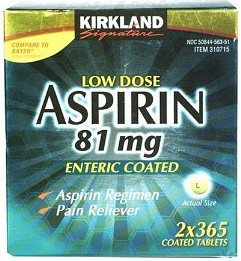 Aspirin
Uniqueness: Antiplatelet drug that improves arterial circulation. Small daily doses and/or large emergency doses are sometimes used to reduce risk of heart attack, stroke and blood clots in certain patients.
Warnings: Potential for allergic reactions, asthma complications, ulcers and stomach bleeding (especially in higher doses). If taking aspirin, doctors may recommend a break before taking ibuprofen. Should not be used to control flu, chickenpox or other viral symptoms in children and adolescents due to a risk of Reye’s syndrome.
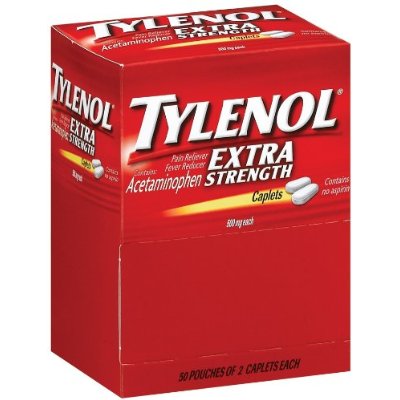 Tylenol (Acetaminophen)
Uniqueness: Alternative for those with Aspirin allergies. Some acetaminophen products contain caffeine, especially ones that are marketed for headache and migraine relief. The caffeine makes the drugs more effective, which means you need less of them, which reduces cost and side-effects.
Warnings: Potential for liver damage, especially in high doses.
 Advil (Ibuprofen)
Other Common Names: Nurofen (UK), Brufen, Motrin.
Uniqueness: Is better at reducing fever than Tylenol. Although it is an antiplatelet drug, its antiplatelet properties are mild and short-lived when compared to aspirin. One of the scientists who developed the drug, Dr Stewart Adams, discovered its hangover mending capabilities first hand shortly after the drug was finally approved for treatment of rheumatoid arthritis.
Warnings: Should not be used during last trimester of pregnancy. If taking aspirin, doctors may recommend a break before taking ibuprofen. Can cause upset stomach.
Aleve (Naproxen)
Uniqueness: Powerful anti-inflammatory properties. Doesn’t just relieve pain, may reduce the inflammation that is causing the pain.
Warnings: Should not be used by nursing mothers. Can cause upset stomach.
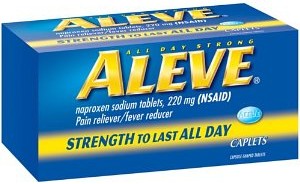
All of the above drugs, except for Tylenol, are non-steroidal anti-inflammatory drugs (NSAID). That means they are generally better at treating pain caused by inflammation than pain killers that do not reduce inflammation. They are a very popular form of pain killer, in 2001 there were more than 30 billion NSAID doses purchased over-the-counter and over 70 million prescriptions in the United States alone.
Broken Secrets
Subscribe on: Facebook | Twitter | Email | Kindle
Sources: Wikipedia (Advil, Tylenol, Aleve, Aspirin, NSAID), PubMed (Ibuprofen, Acetaminophen, Naproxen, Aspirin), Manufacturers (Tylenol) Consumer Reports (PDF), Vaughn’s Summaries
Relevant
Taking medications in excess, even if the drugs involved are over-the-counter ones, may also require substance abuse treatment later on.
Chewing Gum Digests Within a Few Days
By Chad Upton | Editor
An old wives tale states that gum stays in your stomach for up to seven years, but that is far from the truth.
 Although it’s pretty sticky between your fingers, a single piece of gum doesn’t present a great challenge to your digestive enzymes — gum generally moves through your digestive system pretty quickly.
Food digests in as little as a few hours, and although gum can move at the same speed, it is sometimes slower than normal food, and it passes through our digestive system within a few days at the most.
The confusion comes from the fact that gum cannot be broken down. It’s the same as small coins, they cannot be broken down but they usually pass through within a couple of days. That earns gum the designation of “indigestible”, but that doesn’t mean it won’t pass through the digestive system, it just means it can’t be broken down into smaller pieces. I guess it goes in the same category as corn.
That means habitual swallowers can suffer from blockages and constipation if a large amount of gum builds up, especially children who swallow gum frequently. But, a single piece of gum usually passes without a problem.
Broken Secrets
Subscribe on: Facebook | Twitter | Email | Kindle
Sources: Scientific American, Snopes, How Stuff Works
Hair and Nails Grow Faster in the Summer
By Chad Upton | Editor
Actually, your hair and nails grow faster in sunlight, and we generally have more daylight available and spend more time exposed to it in the summer.
This is because your body produces more vitamin D in daylight, which is important for nail growth. In fact, hair and nails are just a basic form of skin. The epidermis layer of skin is made up of a few types of cells, hair and nails are made from one of those types of cells: keratinocytes.

Fingernails also grow faster on your dominant hand, due to better blood flow. Also, on your dominant hand, the finger nail on your middle finger usually grows the fastest and slowest on your thumb. Fingernails grow about five times faster than toenails.
Despite popular belief, hair and fingernails do not continue to grow after death. As a dead body dehydrates, the skin retracts, which gives the appearance that the hair and nails have grown. But, even while you’re alive, hair and nails are made from dead cells, which is why it doesn’t hurt to cut them.
Broken Secrets
Subscribe on: Facebook | Twitter | Kindle
Photo: Ibrahim Iujaz (cc)
Sources: Straight Dope, Wisegeek, KidsHealth, eHow, Wikipedia
McDonald’s Once Owned Chipotle Mexican Grill
By Chad Upton | Editor
Chipotle Mexican Grill is a popular fast food restaurant with more than 1000 locations in the United States, Canada and England.
For those who don’t know, they are well known for using fresh and healthy ingredients. For the most part, they use meat from animals that are free range, fed vegetarian diets and raised without antibiotics, hormones or arsenic, not to mention vegetables that are organic and locally produced.

If you’ve read or seen Fast Food Nation (2001/2006), you’ll know that most fast food chains do not operate like this. They source the cheapest meats possible, which often come from animals raised in the least healthy ways. If you’ve seen the documentary Food Inc (2008), Chipotle is painted as a very different kind of fast food chain.
That’s why it’s so surprising that McDonald’s once owned a majority share.
Chipotle was started in 1993 by a chef named Steve Ells. The first store was in Denver Colorado, followed by a few more Denver stores in 1995 and five more in 1996. The chain was growing quickly, so they accepted outside investors in 1998, including McDonald’s.
Because the chain was expanding so quickly, it made a lot of sense for McDonald’s to invest. The funding helped Chipotle expand even more quickly, going from 16 stores in 1998 to 500 in just 8 years.
In January of 2006, Chipotle went public on the New York Stock Exchange. It was the second most successful public offering for a restaurant, second to Boston Chicken (now Boston Market), which was another McDonald’s property. McDonald’s divested its interest in both companies in October 2006 to focus on the McDonald’s brand.
It should be noted that Chipotle chose to sponsor the documentary Food Inc. Although, it’s not know if it was the chicken or the egg, that is if Chipotle was painted in such a positive light because they were a sponsor or if they sponsored and promoted the film because it made them look good. The sponsorship was announced almost two months after the film was released, so it’s plausible the sponsorship was an effort to promote the film because it was so favorable to Chipotle.
Broken Secrets
Subscribe on: Facebook | Twitter | Kindle
Sources: grist, wikipedia, chipotle
Photo: Mr. T in DC (cc)
How to Get Less Meat on a Deli Sandwich
By Chad Upton | Editor
Some delis put way too much meat on their sandwiches.
Some people will say, “there’s no such thing as too much meat.” For me, I at least want to fit my mouth around it.

When you order your sandwich, you can ask for it “lite”, which is deli-speak for less meat. Some delis also use the term “half sandwich”, where they give you a full sandwich but only half the meat, other delis will just give you half the sandwich.
There are health benefits to a lite sandwich. Deli meats usually contain a lot of sodium, saturated fat and nitrates. The other benefit of lite sandwiches is the price. Because the meat is the most expensive part, you typically get a break when you order lite.
If you’re buying your own deli meats, look for labels like “healthy” which means the meat contains less fat and less sodium or “lean” meaning it contains less than 10% fat.
PS – I’m still looking for more contributors to help write content. Please contact me here if interested.
Broken Secrets
Subscribe on: Facebook | Twitter | Kindle
Sources: Xomba, Find Articles, All Menus, Yelp (1, 2)
Photo: onefish2 (cc)
Bluetooth Headsets Can Reduce EMF Exposure
By Chad Upton | Editor
Popular wireless devices such as cell phones and wifi transceivers produce electromagnetic fields (EMFs).
A lot of people are concerned about the health affects of EMFs, so the World Health Organization started a project in 1996 to study their effects on people.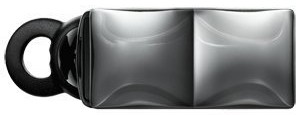
They currently maintain that EMFs, “do not produce any known adverse health effect.”
Operating in the microwave frequency range of EMFs, there is no denying that cell phones induce some of the highest exposure. The UK’s Health Protection Agency claims that 1 year of wifi exposure is comparable to 20 minutes on a cell phone.
The additional exposure with mobile phones is attributed to two factors:
- Close proximity to your head
- High power output (to reach distant receivers)
Both the World Health Organization and the Health Protection Agency continue to review the effects of EMF exposure in humans.
The amount of energy radiated by each cell phone model is measured and tracked. This measurement is taken in watts of radiation absorbed per kilogram of human tissue (W/kg). The amount of radiation absorbed, varies across the body — it is typically averaged over 1 gram of head tissue.
Canada and the US allow up to 1.6 watts per kilogram of radiation in cell phones, while the UK allows up to 2.0 W/kg. cnet maintains an up-to-date ranking of cell phones that emit the highest and lowest amount of radiation. They range from 0.1 W/kg to 1.6 W/kg. Check your user manual to see if your phone is high or low.
Comparatively, many bluetooth headsets emit ~0.001 W/kg of radiation, making them far lower than the mobile phone itself.
If you use a cell phone a lot, you should probably be using a bluetooth headset or speakerphone instead of holding the phone against your head.
Many new cars include audio systems that integrate with your cell phone for hands free calling, these are great. If you want something similar for your car, you can get a bluetooth speakerphone. I’ve had really good luck with the BlueAnt Supertooth 3, it downloaded my entire contact list for voice activated calling and its noise cancellation is really great.
If you’re looking for a headset, be sure to check the class of bluetooth headset you get. Most bluetooth devices are considered Class 2 devices, meaning they output around 2.5 mW of energy, which is a very small amount. A “Class 2” device is likely what you want, which should translate to range of approximately 33 ft (10 meters). One of the most advanced and highest rated Class 2 headsets is the Jawbone Icon.
There are also Class 1 headsets, which give you much better range (up to 330 feet/100 meters), but they output more radiation, about the same as the phone itself. The Callpod Dragon is an example of a popular Class 1 headset.
Broken Secrets
Subscribe on: Facebook | Twitter | Kindle
Sources: cnet, business week, bluetooth SIG, Wikipedia (bluetooth, wireless safety), antiradiation


 Broken Secrets