Posts filed under ‘Despite Popular Belief’
Some Eggs Do Not Need Refrigeration
By Chad Upton | Editor
Eggs are incredibly versatile. They can be prepared many different ways and appear in thousands of recipes, from salad dressings to dessert puddings.
While eggs taste great, they can also be dangerous if not treated properly. In the United States, about 1 in 20,000 eggs may contain salmonella — a bacteria that can make people very sick and possibly lead to death. In fact, approximately 142,000 cases of salmonella poisoning are reported each year and approx 30 of those cases result in death.
 In many countries, eggs lay on supermarket shelves completely unrefrigerated. In other countries, eggs must be refrigerated when they are shipped, stored and sold.
Eggs have a natural protective layer on the outside of them which preserves the egg for a long period of time without refrigeration. Unfortunately, eggs can become contaminated with salmonella. This happens by contacting feces or other environmental contaminants during production. It can also be caused by the ovaries of an infected hen.
Because of this risk, countries such as the US and Canada insist that eggs be washed before they are sold. The advantage of this is that potential bacteria is removed from the outside of the egg. The disadvantage: the natural protective coating will also be removed, which requires that eggs be refrigerated to mitigate the risk of other contamination.
Although rare, there is also a risk that the egg yolk is infected. Refrigerating eggs prevents the potential bacteria from multiplying further, which reduces the risk of illness if a contaminated egg is consumed.
Typical egg care varies by country. If you buy eggs that are refrigerated, you should refrigerate them at home. If the eggs are not refrigerated at the time of purchase, you may optionally refrigerate them at home to extend the shelf life.
Room temperature eggs are recommended for hard boiling, experts say the shell is easier to remove because the outer membrane (just inside the shell) is weaker.
Many chefs suggest that refrigerated eggs should be at room temperature before they are mixed for baking, salad dressings and mayonnaise. The yolk in a cold egg is more firm, so they mix better at room temperature. Therefore, cold eggs are ideal for poaching or frying, reducing the chance that the yolk will break open during preparation.
Broken Secrets
Subscribe on: Facebook | Twitter | Kindle
Sources: USDA, Chow, Banderas, Ochef, Wikipedia (Salmonella)
Photo: chizang (cc)
Sherlock Holmes’ Famous Saying Wasn’t Part of the Original Works
By Kaye Nemec
The fictional character, Sherlock Holmes, was brought to life in 1887 by Sir Arthur Conan Doyle who authored 56 short stories and 4 novels about Holmes. The majority of the stories, all but 4, were narrated by Holmes’ fictional friend, Dr. Watson. The stories were hugely popular and the last one was published in 1927, they were and even still are adapted to stage and screen.
 Even if you haven’t read any Sherlock Holmes stories, you’ve probably heard people quote Holmes’ popular phrase, “Elementary, my dear Watson.” Although this quotation is synonymous with Sherlock Holmes, it was not written by Sherlock Holmes author Conan Doyle.
The phrase was written by P. G. Woodhouse in his novel, Psmith Journalist in 1915. Its next known use was at the end of the film The Return of Sherlock Holmes (1929) which was the first Sherlock Holmes film with sound. The phrase grew in popularity from there, through various radio, screen and stage shows.
Not once in any of the 60 Sherlock Holmes’ stories written by Conan Doyle does Holmes say the exact words, “Elementary, my dear Watson.” He often refers to his more logical conclusions as “elementary” and, once in a while, he does refer to Dr. Watson as “my dear Watson” but he never used them together.
David Shore, creator of the popular TV medical drama House, pays homage to Sherlock Holmes throughout the series. For example, Sherlock Holmes lived at 221B Baker Street and the main character in the show, Dr. Gregory House, lives in apartment 221B. Holmes occasionally used cocaine; House was addicted to Vicodin until season 6. Shore also says he chose the name House because it was a play on the name Holmes. In addition, both Holmes and House have only one true friend. Holmes has Dr. Watson and House has Dr. Wilson.
Broken Secrets
Subscribe on: Facebook | Twitter | Kindle
Sources: Wikipedia (Sherlock Holmes), Wikipedia (Gregory House), Wikipedia (PSmith, Journalist), FactsMonk.com
Tires Do Not Protect You During a Vehicle Lightning Strike
By Chad Upton
I’ve always heard that a car is one of the safest places to be during a lightning strike and that is true.
The tires usually get all the credit. As the story goes, tires are rubber and rubber is an insulator, so you don’t get electrocuted in the car because you’re isolated from the ground like a bird on a wire.
It’s a pretty believable story, but it’s not the truth.
If you think about it, the lightning travels thousands of feet through thin air to reach the car — it could easily continue to travel through thin air to get around a few inches of rubber tires. Compared to the power of lightning, tires don’t really provide any protection.
Trains are struck by lightning and the people inside are fine, even though trains have metal wheels, which are great conductors.
Airplanes are regularly struck by lightning in the air. In fact, the FAA estimates that each plane gets struck about once per year.
So why are people safe in these cases?

It’s all because of a principle discovered by Michael Faraday in 1836.
Faraday demonstrated that an electrical charge exists only on the exterior of a hollow conductor and not the interior. He built a wire cage, that is now know as a Faraday cage, to demonstrate that an electrical current flowing through the cage did not produce an electrical current inside the cage. When you’re in a vehicle, with a conductive exterior shell, you’re inside a Faraday cage and the electrical charge is carried around you.
Faraday cages can also be used to shield against electromagnetic radiation. Coaxial cables are common in most households for carrying TV signals. These cables are design with what amounts to be a built in Faraday cage to protect the inner copper wire from electrical noise.
Microwave ovens are also a good example of a Faraday cage. This principle protects you from exposure to microwaves by turning the inside of the oven into a Faraday cage. The mesh you see on the inside of the door is part of that cage and explains why the glass isn’t perfectly transparent.
Broken Secrets
Subscribe on: Facebook | Twitter | Kindle
Sources: Wikipedia (Ground, Faraday Cage), Weather Imagery (Cars, Airplanes), Faraday Cage
Photo: jonathan mcintosh (cc)
The Real Reason Cell Phones are Banned on Planes
I should start by saying that smartphones and simple cell phones are not banned on planes everywhere. Air France started allowing passengers to use their cell phones in 2008. Since then, a few Eastern airlines have followed suit.
These airlines use an in flight system that mimics cell phone towers found on the ground. The system relays the call/text/email to a satellite and back to the ground from there. Similar systems have been on cruise ships for years. On cruise ships, they use these systems because there aren’t any ground based cell phone towers in the middle of the ocean.
When you drive in a car, your cell phone call may jump from tower to tower as you travel out of range from one tower and into range of another. These jumps used to cause an echo with early cell phone networks, but it is pretty seamless today. Well, at least in your car it is. Airplanes move much more quickly and the network cannot pass your call from tower to tower at that speed. That’s why airplane systems typically bounce your call off a satellite, which it can easily maintain a connection to.
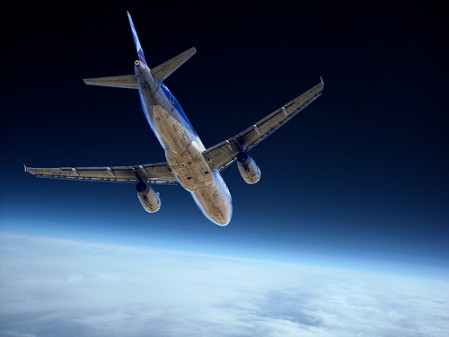
An unintended benefit of having the cellular connection on the plane is that the cell phone doesn’t require a lot of power to connect the call, so your battery will last longer and there will be less electromagnetic radiation in the plane. If you phone was attempting to connect to ground based towers it would have to amplify the signal much more and that consumes more battery power.
So, the technology exists. Why don’t most airlines allow it?
Firstly, there is the myth that cell phones cause interference with navigational equipment. Most people aren’t going to try to test it either, no phone call is important enough to take that risk. But, if you fly a lot then chances are good that you’ve realize mid-flight that you forgot to turn your phone off. It doesn’t appear that there have been any equipment problems. You seem to be flying in the right direction and you haven’t heard any complaints from the cockpit.
I asked an airline insider about this and they checked with some pilots and filled me in on the details. They said that old analog cell phones may have caused problems, but there is no evidence that digital phones cause any problems. Like I said before, Air France has been doing it for two years now without incident and there have been a number of studies that failed to find any incompatibilities between aircraft systems and cell phones. In fact, the problems are more likely with the ground based systems as they scramble to route your call to the nearest tower as you pass a new tower every few seconds in an airplane.
Here’s where it gets really interesting, many planes already have equipment to route in-flight cell phone calls without going to ground based towers (similar to what Air France uses to properly route cell phones through satellites). This equipment is often part of the system that planes use to offer in-flight wifi. Many US carriers currently offer that service and much of that equipment has cellular capability, it’s just not enabled right now.
If it was truly a problem with airplane systems, the FAA (Federal Aviation Administration) would surely support the ban of cell phones. Instead, the FAA blames the FCC (Federal Communications Commission) for the in-flight cell phone ban.
The FCC regulates all electronics that are sold in the United States and they readily admit they’re cautious about changing the rules on this issue. Their main goal is to prevent electronics from interfering and causing problems with each other, especially with emergency and government systems. They say that limited information is available on the safety of using cell phones on airplanes. They also note that consumers don’t want cell phones on planes.
They’re probably right about cell phone calls on the plane, although I’m not sure if that is their decision to make. I could see a war between airlines who adopt the technology and those who promote their flights as cell phone free.
The interesting thing about the technology is that the airlines can control which services the passengers can use. They can disable calls, but allow text messages and emails/data to be transferred. Disabling calls would maintain a flight environment similar to what we have now and that would ensure that screaming babies retain their exclusive right to prevent you from sleeping on red-eye flights.
As more airlines install the equipment for in-flight wifi, they’ll be itching to generate revenue from in-flight cell phone usage too. I wouldn’t be surprised to see the airlines lobbying the FCC for the right to offer these services. When they do, sign me up for the deluxe service package: 1 piece of luggage, cellular usage, 1 meal, 1 life vest during an emergency and 1 bathroom break — not necessarily in that order.
Thanks to Gina for suggesting this secret!
Related: Why Airlines Dim the Lights Before Night Landings
Broken Secrets | By: Chad Upton
Subscribe on: Facebook | Twitter | Kindle
Sources: Live Science, ABC, OnAir
Photo: lrargerich
Cats Cannot Taste Sweetness in Food
My favorite classic science fair exhibit is the taste buds booth.
It’s like going to the electronics department in Costco — you eat free food samples while some kid tells you stuff you’ll never remember because all you’re thinking about is how you can get away from the booth without it looking like you just came over for the free food samples.
Taste has been studied for a long time. In 1901, Harvard professor Edwin G. Boring published a paper that stated different taste receptors can be found on different parts of the human tongue. His last name was Boring, but his work was not. In fact, his work is slightly controversial since all areas of the tongue are sensitive to all tastes; however, some areas are more sensitive than others.
Some wine and beer glasses are shaped to encourage the liquid to hit certain parts of your tongue first, this is supposed to deliver the ideal taste sensation for that drink.
 There are five generally accepted taste sensations:
- Sweet
- Bitter
- Savory
- Salty
- Sour
Most mammals can experience all of these sensations. There are some exceptions, particularly with sweetness. New world monkeys do not perceive aspartame as sweet. Humans, apes and old world monkeys do. Cats cannot taste sweetness at all.
Broken Secrets | By: Chad Upton
Subscribe on: Facebook | Twitter | Kindle
Sources: Wikipedia (taste buds, sweetness, wine glass), Scientific American
Altitude Does Not Increase the Effect of Alcohol
By Chad Upton | Editor
Whether you’re in a plane, at the top of a ski hill or reading this in the mile high city, your body will metabolize alcohol exactly the same in all cases.
It is a common myth that you get drunk at high altitude much faster than at lower altitudes. In fact, I set out to research why this is the case, only to find out it’s not the truth.
As you can probably imagine, they didn’t have any trouble finding volunteers to help them get to the bottom of this — it has been studied and studied and studied and studied (PDF).
Even without alcohol, high altitudes can induce high-altitude sickness, which happens because there is less oxygen in the air. Because the symptoms are much the same as a hangover (headache, nausea, vomiting…etc), the effects of alcohol are often confused with high-altitude sickness. In fact, there is a study that shows Alcohol can impede the initial stages of adapting to high altitude; therefore, it is recommended that people do not drink for the first couple days while their body acclimatizes to the lower oxygen levels of high altitudes.

A study with alpine skiers in Austria tested blood-alcohol content at sea-level and at 10,000 feet. After drinking a liter of beer, their blood-alcohol levels were the same regardless of altitude.
An FAA study (PDF) found that both alcohol and altitude affect pilot performance, but there was no interaction between the two. Altitude does affect your ability to perform tasks, but that effect is present with or without alcohol. Another US government funded study found the same thing, concluding, “there was no synergistic interactive effect of alcohol and altitude on either breathalyzer readings or performance scores.”
From my observations, college loans are another popular way to get government money to study the effects of alcohol.
Broken Secrets | Facebook | Twitter | Email | Kindle
Sources: Pub Med, High Altitude, Annals, FAA (PDF), AHA
Photo: evilmidori (cc)
Relevant:
Professionals should always supervise detox from alcohol and other drugs to prevent any untoward medical mishaps.
Arial is Not a Font
Arial is a typeface (aka “font family”). In fact, what many people refer to as “fonts” are actually “typefaces.”
The meaning of the word “font” has been butchered since the introduction of desktop publishing in the mid 1980s.
 What is the true meaning? Directly from Wikipedia, “… a complete character set of a single size and style of a particular typeface.”
In other words, a font is a specific version of a typeface. Arial is a typeface, and 12-point Arial Italic is a font. 14-point Arial Italic is a different font in the Arial font family.
Changing the size of text on a computer is not a significant amount of work, so it might seem silly to think that you’re actually changing the font when you do this. Especially since we think of the font as just the typeface and not its size or style. But, this terminology made a lot of sense before desktop publishing.
The first printing presses used characters that were carved from wood and arranged in order to form a complete sentence, although they were glyphs rather than Latin characters.
This evolved into more modern systems that used metal characters that were more durable. At that time, changing the size of a typeface was a lot of work — it meant you had to pull all of the letters out and reassemble the words with a different set of metal pieces. (more…)
Celebrities Pay for Their Star on the Walk of Fame
On Hollywood Boulevard and a few other streets in Hollywood, there are thousands of five-pointed stars laid into the sidewalk. Each star represents a person or fictional character who has made significant impact on film, television, music, broadcasting or theater.
The Walk of Fame is managed by the Hollywood Chamber of Commerce. They receive about 200 nominations per year and meet every June to decide who is worthy of a star. They award a star to an average of 20 celebrities per year.
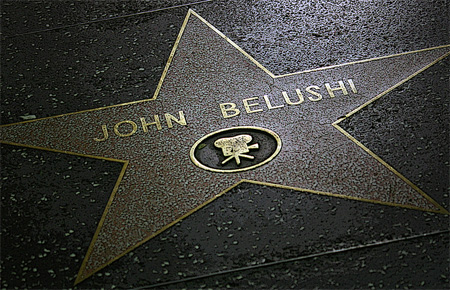
Celebrities can be nominated for a star by anyone, as long as the nomination includes a letter from the celebrity or their management, indicating they support the nomination. For example, if you think Conan O’Brien deserves a star then you need to get a letter from him or his agent and provide that letter with the letter of nomination.
To be selected for this award is a huge honor. You really need to make a significant contribution to the entertainment world to get a Hollywood star.
If you’re given a star, it really is yours. In fact, you have to pay a one-time fee that covers the cost of the star to be manufactured and maintained forever. When the Walk of Fame began in 1960, the stars were free. However, the cost of repair and maintenance of so many monuments, made that infeasible. In 1980, they started charging a one time fee of $2500. Today, there are 2407 stars to maintain. It’s no surprise that the fee for new stars is higher than ever at $25,000.
Celebrities are required to show up for the unveiling of their star, they have 5 years after the announcement to schedule a date for unveiling. Among the awards, there is usually 1 posthumous award per year. To qualify for a posthumous award, the nominee must be deceased for at least 5 years and they are not required to show up for their unveiling.
Broken Secrets | By: Chad Upton
Sources: Hollywood Chamber of Commerce, Wikipedia
Photo: cobalt123 (cc)
Neil Armstrong’s Famous Words Include a Mistake
The famous words from the Apollo 11 “Journey to the Moon” were spoken by Neil Armstrong after his first step on the lunar surface, “That’s one small step for man, one giant leap for mankind.”
Most people know these words well because the recording is frequently played in everything from TV commercials to training videos. But, depending on your age, you might not know that’s not what he intended to say. He meant to say, “That’s one small step for a man, one giant leap for mankind.” He apparently said “man” instead of “a man.”
Armstrong was sure he said the “a” but later stated, “Damn, I really did it. I blew the first words on the moon, didn’t I?” Armstrong has since indicated that he intended to say the “a” and when the quotation is written he would prefer the “a” is included in parenthesis: “That’s one small step for [a] man, one giant leap for mankind.”
There has been great debate over what he actually said. In 2006, a researcher in Australia claimed that the “a” was spoken, but that it was inaudible due to transmission and recording equipment of the time. Using high-tech computer software, he was apparently able to detect the missing word. Other researchers have disputed this claim. Since one theory is that the “a” is inaudible, that will be a hard case to prove. I think another clue is the gap between the words. You can decide for yourself if there was room for an “a” between the words “for” and “man” — I have embedded the video, which includes the famous quote.
Broken Secrets
Written By: Chad Upton
Follow BrokenSecrets on Twitter
Sources: Snoops, Wikipedia, Wikiquote, Space Week
How to Sterilize Your Toothbrush
Whether you plan to buy your own dental tools, or clean baby bottles, you should understand how to sterilize some important household items.
The purpose of sterilization is to remove fungi, bacteria, viruses and spores. Some people believe exposure to some bacteria is a good thing, and they might be right, but exposure to some varieties of these organisms can be very bad for you.
 There are a number of ways to perform sterilization using: heat, chemicals, radiation, pressure and filtration.
Heat is probably the most misunderstood method of sterilization. It is a popular practice to boil baby products in water and if the duration is long enough, it may disinfect them but it does not sterilize them. The boiling method is really good at removing particles, which can be a source of bacteria, but is not great at killing the bacteria itself. If you do use this method, be sure to start with cold water since hot water from your tap is already a bacteria risk (see: why you shouldn’t drink hot water from your tap).
To sterilize with heat, you need a holding time of 3 minutes at 273 °F (134 °C). Water turns to steam at 212 °F (100 °C), so you can’t use water to sterilize something directly. But, you can use steam. In fact, that’s basically what hospitals use inside a device called an autoclave. It is like a small dishwasher that uses steam and pressure to sterilize items. Color changing tape is used inside to tell the operator when optimal sterilization conditions have been met. Some new dishwashers and clothes washing machines have steam cycles too.


 Broken Secrets