Author Archive
Credit Cards Reveal Hidden Symbols Under Black Lights
By Chad Upton | Editor
Many people know that paper money has markings that illuminate under a black light. These markings make it more difficult to counterfeit and thus easier to spot counterfeit money. Also, regular paper glows wildly under a black light, while currency paper does not, another dead giveaway. The same also applies to credit cards.
For this demonstration, I rounded up one card from each of the major issuers and tore my basement apart looking for my standard issue college black light. I eventually found it, but only after creating a small pile of retro items for this year’s halloween costume.
The black light’s strong purple glow catalyzed the American Express card to reveal “AMEX” spelled across the card, with a picture of a globe between “AM” and “EX.”

MasterCard was hiding “MC” on theirs:

The Visa card revealed the V logo.

Story and Plot are Not the Same Thing
By Chad Upton | Editor
Movies are extremely captivating because of their complex combination of: music, characters, dialogue, lighting, story, plot and everything else. Yes, story and plot.
These two words are often used interchangeably. I don’t have a problem with that, but I do find this little known fact interesting and heck, that’s what this site is all about.
Whether you’re talking about books, films or campfire tales, the differentiation between story and plot applies. I’ll start by oversimplifying the difference:
Story is what happens; plot is how those events are presented.
 To be more specific: the story is a chronological arrangement of the events, including everything you’re presented with and also the implied or assumed events that you are not explicitly given. On the other hand, the plot includes everything that contributes to how you experience the story, including everything you see and hear, but not including the story events that are implied or assumed.
These two words are confusing because the elements they describe have some overlap — the parts of the story that you see are also part of the plot. While they do have this overlap, it is important to note that both plot and story include elements that do not overlap. Lets look at a popular film for example.
By now, I think most people have seen The Hangover (2009). If you haven’t, that’s ok, there are no spoilers beyond this point, but there is a basic description of the story and plot.
At a high level, it’s a comedy about four guys who go to Las Vegas and lose their friend, then retrace their steps to find him.
At the start of the film, the main characters are already friends; the film doesn’t show you how the core group of people met or became friends. Because we don’t see when they originally met, the formation of their friendship is part of the story, but not the plot.
The second act begins with the characters waking up from a blackout. Their hotelroom is a mess, but they can’t remember what happened the night before. The plot jumps from the night before to the morning after and skips everything in between. Because we did not see what happened, the events the plot skipped are just part of the story at this point.
The story ends by revealing something that happened the night before. Because the events in the story are rearranged (the plot), the viewer is part of the adventure, they know just as much as the characters. The plot makes the story more captivating because we want to know what happened, just as bad as the characters.
In movies, the plot also includes the music and credits because these are not generally part of the story — they’re not things the characters experience, but they do affect how viewers experience the story. This is where The Hangover does something really interesting; during the credits they show some still “pictures” from parts of the story that were skipped in the plot, bringing those elements that were once only part of the story into the plot too.
Bonus fact: music can be part of the story if, for example, there is a person/band/radio in the scene that is playing music.
Broken Secrets | Facebook | Twitter | Email | Kindle
Sources: Film Art (ISBN 0073386162)
US Navy Employs Dolphins and Sea Lions for Some Missions
While they’re not exactly sharks with frickin’ laser beams attached to their heads, they are the next best thing — dolphins natural biosonar is better than anything manmade.
The US Navy Seals have about 75 dolphins and 35 sea lions that are trained to assist with search and recovery type missions. The dolphins have excellent biosonar, making it easy for them to find objects in the water: friendly people, dangerous people, mines and more. They also use sea lions, which have amazing underwater vision, allowing them to find objects on the seafloor.

Think of them as the Navy’s version of the K9 unit. These animals can be deployed by aircraft or vessel anywhere in the world in 72 hours.
The program began in the 1960s and the animals have been deployed in numerous missions, including mine clearing in Iraq and protecting various naval ports.
The sea lions can find threats in the water too and have been credited with saving the Navy millions of dollars simply by recovering dropped equipment and weapons.
Broken Secrets | Facebook | Twitter | Email | Kindle
Image: Bodhi Suft School (cc)
Sources: CNN
Non-Wing Chicken “Wings” are Called “Wyngz”
By Chad Upton | Editor
Boneless chicken “wings” are not made from wing meat at all. They’re generally large piece of chicken breasts or thighs that are cut or shaped to look like chicken wings.

Legally, they can only be called “wings” if they are actually made from wing meat. But, the United States Department of Agriculture’s Food Safety and Inspection Service has an alternative name that can be used, “Wyngz.”
Using “Wyngz” has some specific rules:
- No other misspellings are allowed.
- The product label must be submitted for approval.
- White meat must be used.
- The Wyngz* term must be prominent.
- An asterisk must link to a statement that indicates the product is not made entirely from wing meat.
Broken Secrets | Facebook | Twitter | Email | Kindle
Image: theimpulsivebuy (cc)
Sources: USDA
The Term Hat-Trick Comes from Cricket
By Chad Upton | Editor
The term hat-trick is used in many sports to describe the act of performing three scoring moves in a game.
Although the term is more widely used in some sports than others, the term was first used in cricket, when HH Stephenson took three wickets in three balls in 1858 and was awarded a free hat.
In cricket, it’s considered a hat-trick when one bowler dismisses three batsmen in three consecutive tries. Besides cricket, the term is popular in football (soccer) and hockey too. In football and hockey, the three goals can be made at any point in the game by the same player, they need not be consecutive.

There are a few different accounts about how this term originated in hockey. The Hockey Hall of Fame in Toronto only recognizes one as the official story.
In 1946, Alex Kaleta, a Chicago Black Hawks forward entered a local shop to buy a new hat. It turned out he didn’t have enough money. The shop owner, Sammy Taft, made him a deal — if he scored three goals against the Toronto Maple Leafs that night, he could have the hat for free. Kaleta earned that hat by scoring four goals in that game. In hockey, hometeam fans often celebrate a hat-trick by throwing their own hats onto the ice.
Another legend states that it takes a bit of magic for one person to pull off three scoring actions and therefore, they are doing the equivalent of pulling a rabbit out of a magician’s hat.
The hat-trick concept also exists in bowling, although it’s called a “Turkey” in that case. That term dates back to a time when bowling alleys would present live turkeys to those who scored three consecutive strikes during Thanksgiving or Christmas.
Broken Secrets | Facebook | Twitter | Email | Kindle
Image: David Kelleher (cc)
Sources: Wikipedia (Hat-trick, HH Stephenson, Strike Bowling)
Japan: Where the Streets Have No Names
By Chad Upton | Editor
The U2 song, “Where the Streets Have No Name” refers to the city of Belfast, Northern Ireland, where the streets actually do have names. Bono wishes they didn’t have names because they can be used to determine the class and religion of some people.
In Japan; however, a majority of the streets do not have names.
So, how do you find a location? Instead of the streets being named, the blocks between the streets are numbered.
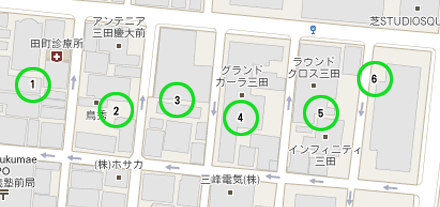
The houses and units inside a block are also numbered. The blocks are inside a named district, the district is within a city or town. So, other than the block numbers and street names, it’s quite similar to the Western address system.
In Japan, directions to a location often include references to visual landmarks or subway stations. The block numbers could also be good for driving directions; if someone told you to turn right at the end of block 4, you’d see block 4 on a utility pole and know that the next turn is yours. In the Western system, you rarely know when your street is next, unless you’re in one of the few cities that are built on a perfect grid and have incrementally named streets.
Broken Secrets | Facebook | Twitter | Email | Kindle
Sources: songfacts, goabroad.com, Wikipedia (Japanese Address System)
Label Cords Cheaply and Easily
By Chad Upton | Editor
Sometimes you have to temporarily disconnect your home electronics. It can be difficult to find a device you can spare or remember which cables to put back later. Use bread expiration tags as labels.

Lobsters Don’t Age
By Chad Upton | Editor
As people and most animals age, our bodies don’t work like they used to: we weaken, lose fertility and wrinkle among other things.
Research shows that lobsters do not have these same symptoms of age.

Our cells are constantly being replaced by new cells. These cells are built to the specifications in our DNA. Over time, our DNA is damaged and cells do not divide perfectly.
Lobsters have an enzyme that naturally repairs DNA. In fact, if it weren’t for disease, capture or injury scientists believe they could live indefinitely.
Broken Secrets | Facebook | Twitter | Email | Kindle
Sources: Wikipedia (Lobster)
Image: Stacy Lynn Baum (cc)
The First IBM ThinkPad Was a Paper Notebook
By Chad Upton | Editor
IBM’s first notebook computer went on sale in 1992. The name ThinkPad was borrowed from a notebook they already made — a paper notebook.

In the 1920s, IBM’s corporate slogan was “THINK!”
For inspiration, employees and customers were given paper notebooks with the word “THINK” embossed in the cover.
While on a coffee break, IBM researcher Denny Wainwright was inspired by the notepad and came up with the name for their notebook computer line, “ThinkPad.” In fact, the idea for the notebook computer was first conceptualized on the paper inside one of the brown leatherette notepads.
In 2005, IBM sold the ThinkPad brand for approximately $1.75 billion. While they’re not known for style, both IBM and Lenovo manufactured ThinkPads are renown for high quality and reliability.
Broken Secrets | Facebook | Twitter | Email | Kindle
Photo: Chris Metcalf
Calculating the Distance to Lightning Strikes
By Chad Upton | Editor
I love watching electrical storms. The time between strikes builds anticipation; the light show is epic and the sound is awe inspiring.
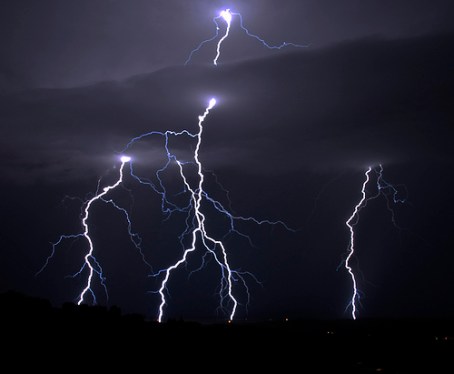
As a kid, I heard that if you count the seconds between the sight of the lightning and the sound of the thunder, the distance to the strike is one mile for every second you count. It’s a simple model, but it’s far from accurate.
It’s actually closer to 5 seconds for every mile.
For those who don’t know, you see the lightning before you hear the thunder because light travels much faster than sound, about 200,000 km per second faster (186,282 miles per second).
Depending on the environment, sound travels at about 350 meters per second (1150 feet per second). To calculate the distance, you can multiply the number of seconds by the speed of sound in your preferred units above.
If you count 10 seconds between the lightning and the thunder, the strike was about 3.5 km (2.17 miles away). To make it easier, use this lightning distance calculator.
Thanks to Kristen for this suggestion.
Broken Secrets | Facebook | Twitter | Email | Kindle
Image: John Fowler (cc)
Sources: Lightning Strike Distance Calculator, Wikipedia (Speed of Light, Speed of Sound)


 Broken Secrets