Author Archive
Grocery Store Designs are Based on Psychology
By Kaye Nemec
Grocery stores design their floor-plan and shelf layouts based on sales data, practical research and even psychology.
From the placement of flower, produce and bakery departments to the detailed way each shelf is stocked, researchers have spent years studying the psychology of grocery store design in order to maximize profits. That’s right, it’s not about making the store work the best for the shopper, it’s about making the shopper work for the store.
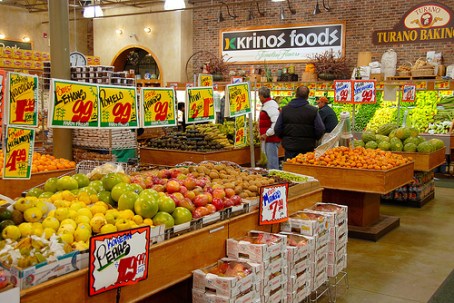
When you walk into your local grocery store you will, most likely, walk into fresh produce and fresh flowers and you can probably see and smell the bakery just around the next corner.
Flowers and fresh baked goods are placed close to the entrance to stimulate the shopper with the varying sights, scents and tastes. These departments have very high margins, so the store is betting you’ll spend extra time browsing, take in all of the fresh sights and scents and, hopefully, picking up a few items you didn’t intend to buy. When you are exposed to such a pleasant scene at the entrance your mind is comforted with the notion that this store has fresh items. It also activates your salivary glands which makes you more likely to purchase impulse items that are not on your list.
Staple items, or the items that consumers purchase most often, such as: bread, milk and eggs, are typically placed at the very back of the store or in the corners. If you wanted to make a quick trip to get a gallon of milk and a loaf of bread, you are forced to walk past several other aisles and sections of the store that are filled with tempting items for you to toss in your cart.
If you’ve ever taken kids to the grocery store you may have noticed how easily they’re able to grab items like sugary cereal, Mac & Cheese, cookies and other highly advertised products.
The cereal aisle is a great example of how stores stock shelves so items that appeal to kids are at their eye level. Typically the “healthy” cereals, like granola and bran, are at the very top of the shelf. Towards the bottom you’ll find bulk items like bags of cereal and jumbo boxes. And right in the middle, at the eye level of your children, you’ll find things like Trix, Fruit Loops, Lucky Charms etc. Kids are able to grab these cereals themselves or beg their parents to add them to the cart.
They also happen to be some of the higher margin cereals. The same principle is used in most aisles, the items with the most profit are in the “Thigh to Eye” zone where customers will see them first.
Many stores also charge manufacturers a “listing fee” (aka Slotting Fee) to place a product on their shelves. If you’ve got a great idea for a product, you’ll probably have to cough up tens of thousands of dollars just to put that product on the shelf at your local supermarket. These fees are paid once for the lifetime of each SKU, but if the product is not selling well then the item will be not be carried any longer and you won’t get your listing fee back.
Placing a product on an aisle’s end cap is usually an additional fee that manufacturers pay when they want to further promote a product. Some stores also limit the number of brands in a specific category and companies may pay to be the exclusive brand in that category.
These are all ways that retailers make additional money and give the manufacturers some control over how you find their products.
Now that you know some grocery store secrets, you can avoid their traps. Always go to the store with a list and stick to it. Only buy the items you need; avoid walking down aisles that don’t relate to your list. If you bring kids with you, make sure they are aware of your list and don’t give in to their begging.
Broken Secrets
Subscribe on: Facebook | Twitter | Kindle
Sources: Frugal For Life, All Sands, Listing Fees
Photo: J-P F (cc)
Why You Shouldn’t Wear White After Labor Day
By Chad Upton | Editor
Labor Day is a popular holiday in the United States and Canada, observed on the first Monday of September.
According to the US Department of labor, it’s “a creation of the labor movement.” Therefore, it only seems fitting that we celebrate by not going to work — it is a Federal holiday in both the US and Canada.
Labor Day also marks the last day people should wear white (until Memorial Day in May). About 10 years ago, I was schooled on this manner of etiquette.
I was walking downtown by myself and it was pretty late. As I turned the corner onto another street I saw two tough guys walking toward me. I noticed that one guy got visibly angry when he saw me. I didn’t know the guy and I didn’t know what problem he could possibly have with me.
I held my ground and I kept walking toward them, trying not to look at them. But, just as we were passing I looked up, either to say “hey” in a friendly way or just to block a punch if that was the case. The one guy yelled at me, “Don’t wear white after labor day.”
I was really surprised. Based on the his outfit, I would not have guessed he was the fashion police, but maybe he was undercover.
That’s a completely true story and I laugh about it now, but at the time I was pretty scared when I saw his reaction to me.
In my defense, I was wearing khaki.
Historically, the rule only applied to white dress shoes and high heels. In the 50s and 60s, the middle class extrapolated this rule to include other clothing.
Some believe it was practical advise, since white clothing would be tough to keep clean in the winter. Others say that white clothing was typical dress for members of high society during summer holidays and was too casual for getting back to serious business when summer had finished. In the 1950s, the middle class was growing and they were given simplified rules of high society to help them fit in, including the rule about white after labor day.
In the latest edition of Emily Post’s Etiquette, the ban was lifted on wearing white after labor day. In fact, some now consider it very fashion forward to do so.
If you’re old fashioned and are shy about trading in this tradition, you should know that cream colored wool has always been exempt. So, go ahead and wear cream (at your own risk).
Broken Secrets
Subscribe on: Facebook | Twitter | Kindle
Sources: Dept of Labor, Wikipedia, Wise Geek, Time, Yahoo
Japanese Theft Deterrent
By Chad Upton | Editor
They sit on the counter in many Japanese stores, but they are not for sale.
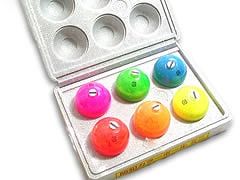 At the size of a baseball, these bright spheres are placed in public view to deter theft. They’re not magical, they’re highly practical.
If a store or bank is robbed, the employees throw the baseballs at robbers as they leave the shop. Bright paint covers the thief, making it easy to identify them as they flee the scene and potentially prove their guilt when caught.
Although orange is the most popular color, they’re actually available in a variety of colors. They’re known as bohan balls, and they cost about 1500 yen ($18 USD).
The paint is brightly colored, glows in the dark and carries a strong odor. The odor is embarrassing, but more importantly, police dogs are trained to track it.
Oh and you can get a semi-automatic gun to shoot the balls too.
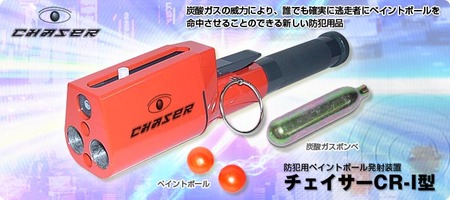
It’s called the Chaser because you can follow the criminals and still paint them or their getaway car from a safe distance.
Sources: Stippy, Urlesque, Great Geek Manual, Ring-G, Rakuten, Toyokuni
Stainless Steel Appliances are Not Magnetic
By Kaye Nemec
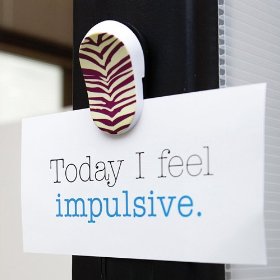
Stainless steel appliances look great and are very popular. However, you may upgrade without realizing that your magnet will no longer stick to the front of these appliances.
 Stainless steel is a general name for a steel alloy that gets mixed with other metals. Because of the various mixtures, some stainless steel products have magnetic properties and some do not. The metal used for stainless steel appliances typically has a higher level of chromium added to it because chromium gives the steel its durable, stain-resistant properties. Chromium is not the only additive that reduces the alloys magnetic property, the nickel that is added to the steel destroys the metal’s natural magnetic properties.
Nickel is typically added to the stainless steel mixture in order to help enhance the qualities of the chromium and to make the stainless steel even more durable. But, the nickel prevents your appliances from holding your magnets.
Like everything else, there are exceptions to the rule. There are a few appliances that have a thin sheet of stainless over a magnetic metal, allowing these appliances to hold magnets. There are also appliances that simply give the allusion of being stainless steel but are actually made of titanium or painted silver metallic. These faux stainless appliances are still magnetic. If you’re in the market for new appliances, take some magnets shopping with you and test out your future purchase.
Here are some ways you can stick things to your non-magnetic appliances:
- If the sides of your stainless steel fridge are exposed try hanging your magnets there. Most appliances are magnetic on the sides even if they’re not on the front.
- Use suction cups, putty and other replacements.
- Hang a magnetic whiteboard.
- Order a Choopa Board suction mounted magnetic stainless panel for your appliance.
Magnetic paint is another option. You could paint a small section of a wall where it’s most useful, even in kids rooms. Magnetic paint is available at many hardware stores.
Broken Secrets
Subscribe on: Facebook | Twitter | Kindle
Sources: Physlink.com, WiseGeek.com , Domestikgoddess.com, ehow.com
Microsoft Invested in Apple in 1997
By Chad Upton | Editor
Microsoft and Apple are mortal enemies, at least, that’s what their TV commercials will have you believe.
They’ve always been competitors, originally trying to dominate our preference in computers, and now music players and mobile phones. Apple has a strong lead in music player and mobile phone segments, but Microsoft has a big lead as the dominant operating system. That said, Apple has become much more competitive in that space, especially in the past few years.
Their competition is most visible during commercial breaks, when they take jabs at each others potential flaws. Forget on court trash talk, when you’ve got as much money as these guys, you can trash talk in the form of multi-year, multi-million dollar ad campaigns — it’s so much more fun.
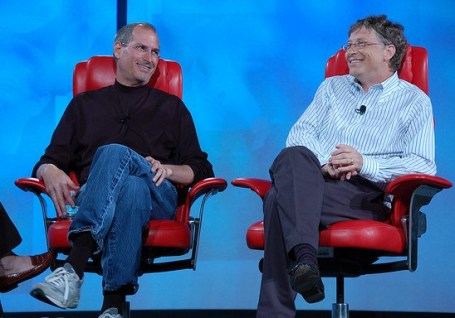
You see, Apple CEO Steve Jobs and Microsoft founder Bill Gates have a long history as friends. In the early days, they used to take their girlfriends on double dates with each other. They didn’t see a lot of each other after Bill moved to Washington State, but they’ve remained friends.
In fact, when Steve Jobs came back to Apple in 1996, the company needed help. To be a serious player, Apple also needed competitive office software.
Mac fans and developers were shocked on August 6th, 1997 when Bill Gates appeared via teleconference during Steve Job’s presentation at Macworld.
Steve and Bill announced that Microsoft would invest $150 million in Apple. Today, it sounds crazy, and at the time it sounded pretty crazy too. Jobs was booed when he announced the partnership and Bill was booed when he appeared on screen. But, it actually made a lot of sense for both companies. Steve said it best, “We have to let go of a few notions here. We have to let go of the notion that for Apple to win, Microsoft needs to lose.” (more…)
Bakery Twist Tie Colors Indicate Freshness
By Kaye Nemec
You may not have noticed before, but if you look closely at the loaves of bread on your grocery store shelves you’ll see that they are sealed with twist ties in a variety of colors. The colors vary not only by brand, but also within the same brand of bread.
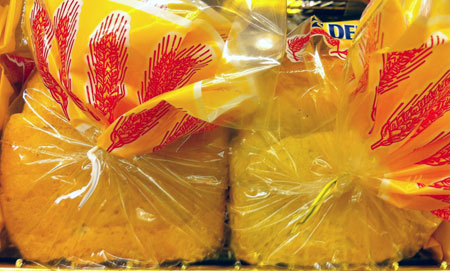
Most bread companies use varying colors of twist ties to track the freshness of bread. For example, bread that was baked on Monday may be sealed with a blue tie; Tuesday may be green, Wednesday orange… etc. The color coding makes it much easier for employees to remove stale loaves and replace them with fresh ones. It is faster to look at the color of the twist tie than it is to read the date code on each bag.
As a consumer you can use this information to get the freshest loaf. However, the color coding system is not consistent between brands, but some people claim the most common system is the following:
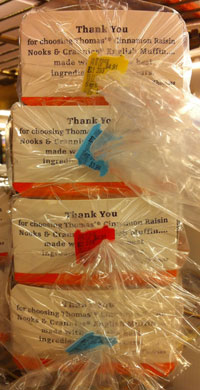 Monday: Blue twisty
- Tuesday: Green twisty
- Wednesday: (No bread delivered)
- Thursday: Red twisty
- Friday: White twisty
- Saturday: Yellow twisty
- Sunday: (No bread delivered)
Without positively knowing which colors represent which days, you’ll have no way of knowing which loaf to pick. You’ll have to pay attention to the color system used by your bread maker. Try calling the customer service number and asking them what their color coding system is. Chances are good they’ll share this info.
Most bread companies deliver fresh loaves to grocery stores several times per week. If you happen to be in the store, pay attention when the deliveries are made and even ask the delivery man.
With each delivery old loaves should be replaced with fresh, new loaves. Because of the frequent deliveries, odds are that you wouldn’t see more than two to three colors for any one brand on the shelf at one time. If you do happen upon a plethora of colors you’ll know the inside scoop and may want to steer clear of that brand unless you know their specific codes.
Some brands also use tab clips that have the date on them, these should help you learn the system fairly quickly.
This secret was also suggested by Heather, thanks for the tip. I should also mention that Shannon suggested hanging on to bread tabs for scraping food off dirty plates.
Broken Secrets
Subscribe on: Facebook | Twitter | Kindle
Sources: Snopes, Thriftyfun.com
August is the Most Popular Month for Births
By Kaye Nemec
Worldwide, there are around 140 million births each year (down from 173 million in the late 1990s). That’s about 4 births every second.
The United States accounts for more than 4 million of those annual births.
Around the world, more babies are born during the month of August than any other month. India and China have the most August newborns at 19.5% and 11.6% of babies born during August respectively. That’s 6 and 4 times more than we have in the United States during August; however, it still remains our highest birth month. In general, more babies arrive in late summer and early fall than any other time of year, but the most recent data puts August at the top of the list.
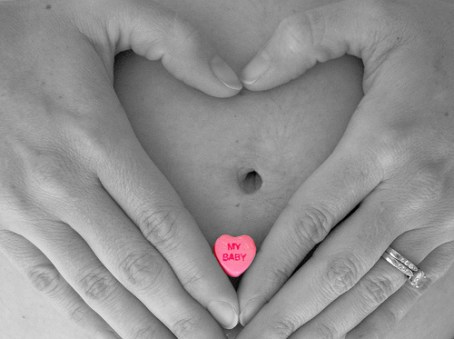
If you do the math and count nine months back from August, you’ll land at November. It is starting to get colder and the holiday season is in full swing. One school of thought believes these factors explain why August is such a popular birth month. Others believe it comes down to planning. There are people who try to plan their childbirth to coincide with summer vacations and lighter summer work schedules.
In contrast, the month of February has the lowest birth rate.
If you ask Malcolm Gladwell, author of The Tipping Point, he outlines in another best selling book, Outliers, why January and February may be the most beneficial month for your baby to be born.
Apparently, if you look at professional Hockey and Soccer players, 67% of them are born in January or February. He believes this is not a coincidence, because of age/date cutoffs, players born in these months get an extra 6 months experience compared to the other kids in the same age group, giving them a huge advantage. This advantage is most beneficial at an earlier age when the kids are streamed into more and less advanced leagues.
At a young age, 6 months development makes a big difference, giving the slightly older kids more coaching and more opportunity to develop higher level skills. This cycle repeats itself each year, raising the slightly older kids with years of better opportunities to improve.
More interesting facts:
- Wednesday has more births than any other day of the week.
- Sunday has the fewest births.
- With 21 babies born for every 1,000 people, Utah continues to have the highest birth rate in the United States.
- The State of Virginia has the lowest birth rate with 10 babies born for every 1,000 people.
- Congo has the highest birth rate of any country at 49.6 births per 1,000 people.
- Hong Kong and Macau are tied for the lowest birth rate at 7.6 / 1,000 people.
Broken Secrets
Subscribe on: Facebook | Twitter | Kindle
Sources: DidYouKnow.org, BabyCenter.com, Business Week, Wikipedia (Birth Rates, World Population)
Photo: treyevan (cc)
What is the Thirty Mile Zone?
By Chad Upton | Editor
Thirty Mile Zone or The Studio Zone, these terms refer to the area within 30 miles (48.3 km) of downtown Los Angeles, specifically the intersection of Beverly Boulevard and North La Cienega Boulevard.
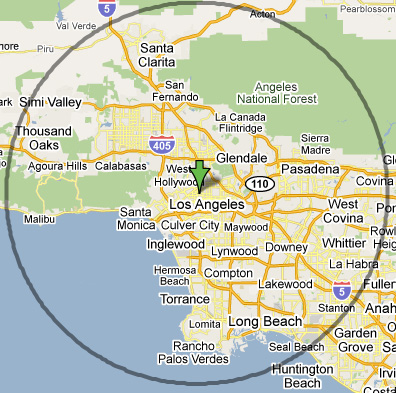
That intersection is significant because it was the home of the Academy of Motion Picture Arts and Sciences, which was originally formed to mediate labor disputes between studios and workers.
The Academy is no longer stationed there, but it remains the center point of The Studio Zone. And yes, this is the same Academy that Oscar winners always thank in their acceptance speeches.
The Studio Zone is important to the entertainment industry in Southern California. It was created to establish a reasonable distance that union workers should be expected to travel to and from the production location without additional compensation.
Productions outside of this area require higher wages to union workers and therefore many productions remain in the Studio Zone. Productions outside the zone are often referred to as runaway productions.

The Studio Zone is responsible for a land-rush during the early part of the 20th century when studios acquired ranches and other large parcels of land within the zone. In the 1920s, Westerns movies were popular, and the ranches were great locations for these pictures. Because they were in the zone, “Studio rates” were paid to the workers, which helped keep the costs down. When a picture is shot outside of the zone, the studio may pay “distant location rates” in addition to travel time and mileage, depending on the agreement.
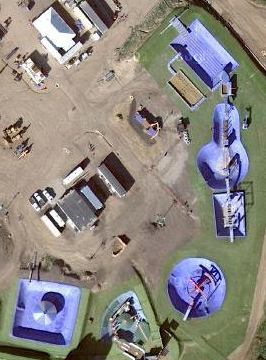 There is one exception, MGM’s Conejo movie ranch. It was a few miles outside of the Thirty Mile Zone, but the Academy considered it part of the zone for labor purposes. Why? It’s hard to say, but it’s probably worth mentioning that the Academy was started by Louis B. Mayer, the second “M” in MGM. The MGM ranch is now a nature preserve and a housing development.
Although Western movies are no longer popular, movie ranches still are. Because many of them are in the zone, they help keep costs low. Productions are bigger than ever, even TV shows use movie ranches for large elaborate sets. Click the embedded image to visit the google maps location of the Wipeout set (under construction at time of picture).
The celebrity news show TMZ stands for “Thirty Mile Zone” — that’s where they capture most of their footage.
Broken Secrets
Subscribe on: Facebook | Twitter | Kindle
Sources: California Film Commission, Wikipedia (The Studio Zone, AMPAS, Movie Ranch, Wipeout), Shapell Homes,
Photos: ezioman (cc), Film LA, Google – Imagery GeoEye, US Geological Survey, DigitalBloge, USDA Farm Service Agency, Map data
How to Get Less Meat on a Deli Sandwich
By Chad Upton | Editor
Some delis put way too much meat on their sandwiches.
Some people will say, “there’s no such thing as too much meat.” For me, I at least want to fit my mouth around it.
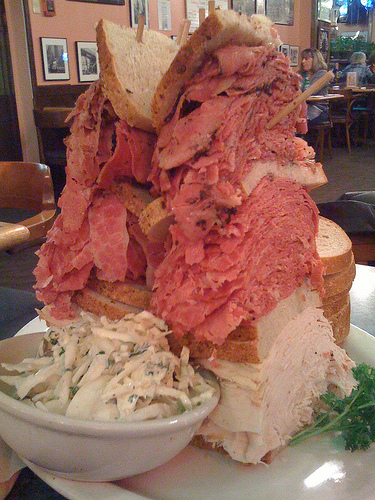
When you order your sandwich, you can ask for it “lite”, which is deli-speak for less meat. Some delis also use the term “half sandwich”, where they give you a full sandwich but only half the meat, other delis will just give you half the sandwich.
There are health benefits to a lite sandwich. Deli meats usually contain a lot of sodium, saturated fat and nitrates. The other benefit of lite sandwiches is the price. Because the meat is the most expensive part, you typically get a break when you order lite.
If you’re buying your own deli meats, look for labels like “healthy” which means the meat contains less fat and less sodium or “lean” meaning it contains less than 10% fat.
PS – I’m still looking for more contributors to help write content. Please contact me here if interested.
Broken Secrets
Subscribe on: Facebook | Twitter | Kindle
Sources: Xomba, Find Articles, All Menus, Yelp (1, 2)
Photo: onefish2 (cc)


 Broken Secrets