Archive for 2010
Most Expensive TV Pilot in History: LOST
If you’ve watched ABC in the last week then you’ve probably seen commercials for the final episode of LOST this Sunday. If you’re not a LOST fan then you’re probably sick of hearing about it. Frankly, if you’ve never seen the pilot episode, then bear with me for one minute while I tell you why I think you should at least watch that first episode.
I think that everyone likes a good story, that’s why we read books, follow the same TV show for years and lineup overnight for movies. We suspend our disbelief to live in a different world for a few hours, days or even years. We do this because we want to feel happy, inspired and surprised. Great stories make us smile, laugh and cry — LOST is no exception.
Rent the first season on DVD and at least watch the 2 hour pilot episode. At $11.5 million, it’s the most expensive TV pilot ever made and it’s worth every penny. In fact, that’s more money than it cost to make Star Wars Episode IV: A New Hope, and it’s a much better story too. But, it cost more than a lot of money, it cost Disney Chairman Lloyd Braun his job — they fired him for green-lighting such an expensive pilot. In hindsight, he made the right decision, LOST is one of the most successful shows ABC history.

The story of LOST draws from; makes subtle references to, and more than anything; pays homage to dozens of literary classics including: Alice in Wonderland, King Lear,Through the Looking Glass, Catch 22, The Fountainhead, A Tale of Two Cities, Of Mice and Men and dozens of others.
Just to put it into perspective, LOST is so rich with story that it has it’s own book. There is a character with a bit part in the pilot episode. That character (not the actor) is an author who wrote a book. There is no mention of the book in the show, other than its use as a prop in one scene, but you can buy the book on Amazon. Yes, it’s a real book that they wrote just for the show, the author listed is even the Character’s name on the show. As a viewer, you don’t need to read the book, but it’s apparently a pretty good book and it has a meaningful subtext if you’re a fan of the show.
LOST is filmed in Hawaii, which presents its own challenges. One reason the first episode was so expensive is because they bought a decommissioned Boeing 777 airplane to recreate the plane crash scene. Just the shipping on the plane alone cost $250,000. The crash scene was clearly visible to other planes landing at the nearby Honolulu airport. A plane crashed on the beach is not what you want to see from a plane that is about to land on a short runway that ends at the beach. So, airlines were advised to notify passengers they were looking at a TV set.
Many scenes in LOST are filmed in the same area as Jurassic Park. If you remember the magic you felt when you first saw that film, I think you’ll feel the same when you discover what’s great about LOST.
Broken Secrets | By: Chad Upton
Join us: Facebook | Twitter | Kindle
Sources: Movie Budgets, LOST Books, LOST Trivia
Photo: ewen and donabel (cc)
Free Text Messaging on iPhone and iPod Touch
By Chad Upton | Editor
Update: After many problems with PingChat!, I’d be hesitant to recommend it any longer. WhatsApp seems to be the best alternative at this time. It’s available for iOS, Android, Blackberry and Nokia (Symbian).
I know this is pretty specific to iPhone and iPod touch users, but with 50 million iPhones sold and 35 million iPod touches, there are 85 million of you out there.
Ever since the introduction of the iPhone 3GS and the 3.0 Operating System last year, push notifications have been available to iPhone users. Basically, these are real time messages that can be sent to your phone from Apple’s notification server.
The best part about these messages is that they’re free and your iPhone or iPod touch can be on standby or in any application when you receive them.
There are lots of applications (“apps”) that use this feature. For example, the facebook app (free) will buzz your phone with a notification when someone sends you a message or comments on a photo…etc.
The associated press (free) app will give you push notifications when breaking news is happening, allowing you to tune in and catch the car chase live or see the story as it’s unfolding.
One of the most practical uses for this feature is instant messaging. My favorite text messaging application for iPhone is PingChat! (Ping! Lite is also available for free). This app is great if you text a lot but don’t want to pay for it.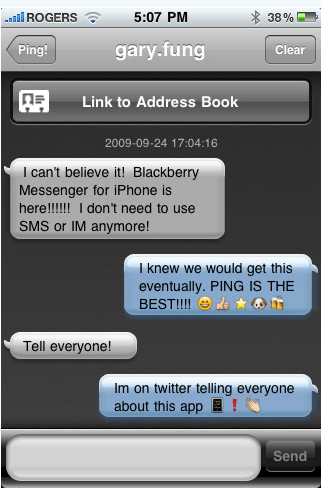
PingChat! works just like the native text messaging application on iPhone, except all your messages are free. With the paid version, which only costs $0.99, you can send pictures too. This app also works for iPod Touch users, so you can text message them when they are on a wifi network.
PingChat! is like Blackberry Messenger for iPhone — users within the blackberry network can message each other for free with Blackberry Messenger.
Since I have a lot of friends outside the US, this is a great way for us to keep each other up-to-date with the little things and avoid the $0.50/message SMS cost for international texts.
Broken Secrets
Altitude Does Not Increase the Effect of Alcohol
By Chad Upton | Editor
Whether you’re in a plane, at the top of a ski hill or reading this in the mile high city, your body will metabolize alcohol exactly the same in all cases.
It is a common myth that you get drunk at high altitude much faster than at lower altitudes. In fact, I set out to research why this is the case, only to find out it’s not the truth.
As you can probably imagine, they didn’t have any trouble finding volunteers to help them get to the bottom of this — it has been studied and studied and studied and studied (PDF).
Even without alcohol, high altitudes can induce high-altitude sickness, which happens because there is less oxygen in the air. Because the symptoms are much the same as a hangover (headache, nausea, vomiting…etc), the effects of alcohol are often confused with high-altitude sickness. In fact, there is a study that shows Alcohol can impede the initial stages of adapting to high altitude; therefore, it is recommended that people do not drink for the first couple days while their body acclimatizes to the lower oxygen levels of high altitudes.

A study with alpine skiers in Austria tested blood-alcohol content at sea-level and at 10,000 feet. After drinking a liter of beer, their blood-alcohol levels were the same regardless of altitude.
An FAA study (PDF) found that both alcohol and altitude affect pilot performance, but there was no interaction between the two. Altitude does affect your ability to perform tasks, but that effect is present with or without alcohol. Another US government funded study found the same thing, concluding, “there was no synergistic interactive effect of alcohol and altitude on either breathalyzer readings or performance scores.”
From my observations, college loans are another popular way to get government money to study the effects of alcohol.
Broken Secrets | Facebook | Twitter | Email | Kindle
Sources: Pub Med, High Altitude, Annals, FAA (PDF), AHA
Photo: evilmidori (cc)
Relevant:
Professionals should always supervise detox from alcohol and other drugs to prevent any untoward medical mishaps.
Arial is Not a Font
Arial is a typeface (aka “font family”). In fact, what many people refer to as “fonts” are actually “typefaces.”
The meaning of the word “font” has been butchered since the introduction of desktop publishing in the mid 1980s.
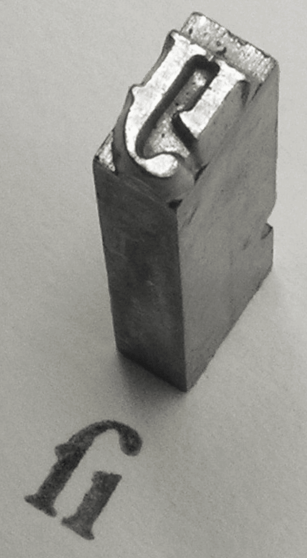 What is the true meaning? Directly from Wikipedia, “… a complete character set of a single size and style of a particular typeface.”
In other words, a font is a specific version of a typeface. Arial is a typeface, and 12-point Arial Italic is a font. 14-point Arial Italic is a different font in the Arial font family.
Changing the size of text on a computer is not a significant amount of work, so it might seem silly to think that you’re actually changing the font when you do this. Especially since we think of the font as just the typeface and not its size or style. But, this terminology made a lot of sense before desktop publishing.
The first printing presses used characters that were carved from wood and arranged in order to form a complete sentence, although they were glyphs rather than Latin characters.
This evolved into more modern systems that used metal characters that were more durable. At that time, changing the size of a typeface was a lot of work — it meant you had to pull all of the letters out and reassemble the words with a different set of metal pieces. (more…)
Fake Smoke is Not Usually Dry Ice
I frequently hear people refer to fake smoke as “dry ice.” It’s true, you can make smoke from dry ice. But, in many cases, it’s dangerous and inconvenient.
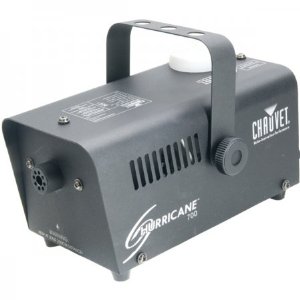
That’s why they invented fog machines. Fog machines are made up of a small heater, a fluid reservoir and a pump. These machines vaporize mineral oil, glycol or glycol/water mixtures to produce fog. Low powered machines for home use are pretty affordable, you can get a decent one from Amazon for $40. Around Halloween, many other stores carry them too.
Fog machines are great for enhancing lighting effects and creating an eerie mood. The fog usually fills the room from floor to ceiling, but cooling the fog with ice creates layered fog that stays below your knees.
In sixth grade, my friend Troy and I had a vision for our school air guitar competition. He saw himself as lead lip sync-er, rocking out to Tone Loc’s Wild Thing. I didn’t know that song when he mentioned it, nor did I care — I just wanted lots of smoke and lasers.
I called a few equipment rental houses and got quotes to rent a fog machine and lasers. It was a hefty amount for an 11 year old, but I was making a name for myself in the newspaper delivery business and I was willing to spend the money — I knew that lasers would help us win the competition.
I shared my creative vision with the drama teacher and he said, “no smoke.” He had worked with dry ice before and said it makes the floor slippery; it was a liability he wasn’t willing to take on. I told him, “people don’t use dry ice anymore — there is new technology that is completely dry and doesn’t make the floor wet.” He wouldn’t listen and said his decision was firm: no smoke. Without smoke, you can’t see lasers, so that meant we were back to the boring house lights.
I told Troy that smoke and lasers were off. He could tell I was upset, but he said with great confidence, “It’s alright. We’ll still win.” Comparing our rehearsals to the other groups, I knew he was wrong
In the end, smoke and lasers wouldn’t have made a difference. You see, Troy was the most hyper kid I knew. On the day of the show, he focused all of that energy into his performance and he completely stole the show.
That day I learned, you don’t need smoke to see lasers. Everybody has amazing potential and the secret lies in how you focus that energy.
Broken Secrets | By: Chad Upton
Follow BrokenSecrets on Twitter
Sources: Theatrical Smoke, Fog Machines, Dry Ice
Survivor Contestants Cannot Share Winnings
This Sunday is the season finale of Survivor. I’m more of a Lost fan (hence the photo below), but these secrets are interesting even if you don’t watch the show. For those who do watch the show, this will give you plenty of things to think about on Sunday night.
Survivor is a serious contest. In fact, contestants are not allowed to make a pact where one or more will intentionally lose and the winner agrees to share the prize money with them. It is in their contract that they will face a $5 million penalty from CBS if they are caught doing this. Why have this rule? It ruins the drama, it takes away the cut throat nature of “surviving.”
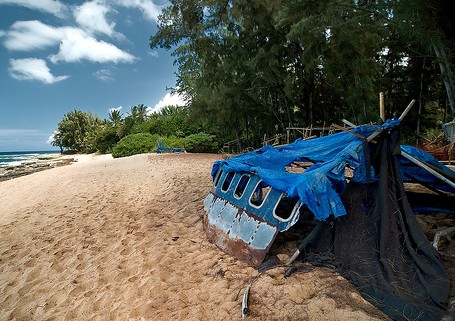
There are often 300 or more crew members hidden at a nearby “base” camp. Depending on when and where the show is being made, the crew accommodations and working quarters vary from tents, cabins and shipping containers to hotels. The base camp has proper showers, bathrooms, catered meals and even a bar. A small group of crew members work in shifts at the contestant’s camp to keep their cameras and microphones trained on the cast day and night.
You never see the camera crews because they take great care not to be seen. In fact, the cast is not even allowed to talk to the production crew. The cast is only allowed to talk to the producer (Mark Burnett) and of course the host (Jeff Probst).
Junior crew members help test out the obstacles, puzzles and events. They actually have a dress rehearsal where these crew members will run the course just like the cast members do. This gives the production crew a chance to find the best camera angles and practice who will be shooting what. (more…)
Police Do Not Have a Speeding Ticket Quota
A friend of mine is a cop and I’ve been lucky enough to go on a few ride-along trips with him. It’s pretty interesting to get a firsthand look at the job of a police officer. It gives you a lot of respect for the tough job they do.
When they’re not responding to calls, they’re doing paperwork and enforcing speed limits. On one particular ride-along, we spent a couple of hours trying to catch speeders. This was of great interest to me since I am a chronic speeder.
The first thing I wanted to know, what is the deal with quotas?
He said they don’t have a quota. Although, he added that if he didn’t write any tickets then it wouldn’t look like he was doing his job. Also, there are some cops who are trying to get promoted and write a lot of tickets, so if the other cops don’t write a fair amount of tickets then they come across as slackers. So, while there isn’t an official quota, these are the reasons why cops are driven to write tickets.
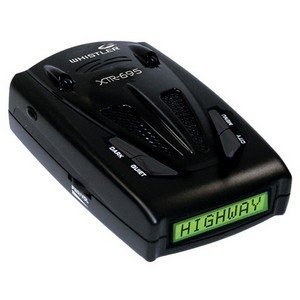
There are many tools that cops use to catch speeders. There are two speed measuring technologies, doppler radar and laser (aka Lidar, Ladar and “Laser Radar”). Doppler radar technology is the same technology that is used by meteorologists to analyze clouds and predict weather patterns. It’s also used at many stores to control automatic doors. Doppler radar units for law enforcement, come in many varieties: hand-held, vehicle mounted and automated photo-radar. (more…)
Defenestrate Means: To Throw Out of a Window
Whenever someone tells me a computer frustration story, it usually ends with the phrase, “I almost threw it out the window.”
If you prefer more concise dialogue, then you’re probably reading the wrong website, but I can share a helpful word with you: defenestrate. It means, “to throw out of a window.” Used in a sentence, “I nearly defenestrated my computer.”

Today, this word is typically used for humor, but it has a very serious past. It comes from Latin, de means from and fenestra means window or opening. The word was coined around 1618, upon what is now known as the Second Defenestration of Prague. (more…)
Celebrities Pay for Their Star on the Walk of Fame
On Hollywood Boulevard and a few other streets in Hollywood, there are thousands of five-pointed stars laid into the sidewalk. Each star represents a person or fictional character who has made significant impact on film, television, music, broadcasting or theater.
The Walk of Fame is managed by the Hollywood Chamber of Commerce. They receive about 200 nominations per year and meet every June to decide who is worthy of a star. They award a star to an average of 20 celebrities per year.
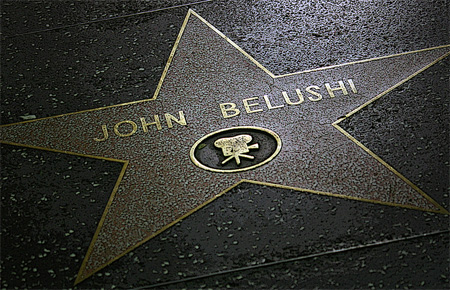
Celebrities can be nominated for a star by anyone, as long as the nomination includes a letter from the celebrity or their management, indicating they support the nomination. For example, if you think Conan O’Brien deserves a star then you need to get a letter from him or his agent and provide that letter with the letter of nomination.
To be selected for this award is a huge honor. You really need to make a significant contribution to the entertainment world to get a Hollywood star.
If you’re given a star, it really is yours. In fact, you have to pay a one-time fee that covers the cost of the star to be manufactured and maintained forever. When the Walk of Fame began in 1960, the stars were free. However, the cost of repair and maintenance of so many monuments, made that infeasible. In 1980, they started charging a one time fee of $2500. Today, there are 2407 stars to maintain. It’s no surprise that the fee for new stars is higher than ever at $25,000.
Celebrities are required to show up for the unveiling of their star, they have 5 years after the announcement to schedule a date for unveiling. Among the awards, there is usually 1 posthumous award per year. To qualify for a posthumous award, the nominee must be deceased for at least 5 years and they are not required to show up for their unveiling.
Broken Secrets | By: Chad Upton
Sources: Hollywood Chamber of Commerce, Wikipedia
Photo: cobalt123 (cc)
One US Highway Uses Kilometers Instead of Miles
Mile markers line our highways. Like many other things, they were invented in ancient Greece. Originally, they were called “milestones” because they were stone posts engraved with the number of miles to and from the next town. They were made from granite, marble and other materials; they can look a lot like modern day tombstones and originals still exist in many places.
 If you’re not familiar with mile markers, they are small signs next to the highway that indicate the distance from the beginning of the highway. If you’ve ever seen small signs that only contain a number, it’s likely a mile-marker.
In the United States, most even-numbered interstates have mile markers that start at zero on the west coast and increase as the highway runs east. Along odd-numbered interstates, which run north/south, the mile-markers start at zero in the south and increase as the highway goes north. In most States, exit numbers are determined by the nearest mile marker number.
In Canada, the system is similar, although kilometers are used for the mile markers and exit numbers. In India, the markers also indicate the total distance between the two cities where the marker is located. Systems similar to these exist in most other countries.
There are some inconsistencies in the United States where exits are numbered sequentially rather than by mile markers. States that number in this way are Connecticut, Delaware, Massachusetts, New Hampshire, New York, Rhode Island, and Vermont.
There is also one interstate where the mile markers are actually labeled in kilometers. Interstate 19 in Arizona, between Tucson and the Mexican border, uses kilometers for mile markers and destination signs. Speeds are still posted in miles-per-hour.
The metric signs were installed in the 1980s when it looked like the United States was converting to the metric system. Complete conversion to metric never happened, but most of the signs along this interstate still stand. Going forward, metric signs will be replaced with US standard unit signs (“miles”) as construction projects along the highway are complete. As of 2009, one such project has been completed.
Broken Secrets | By: Chad Upton
Sources: Interstate System, Trans-Canada, Route Markers, Milestone, I19
Photo: amandabhslater (cc)


 Broken Secrets