How Do You Solve a Rubik’s Cube?
When you bought your Rubik’s cube, it was already solved. If you just left it alone, you wouldn’t have to solve it. I’m just saying.
Of course, we all know it’s impossible to leave it alone. You have to mess it up. At first, you turn a couple rows and then turn them back. Then you turn a few more and a few more again and eventually, you can’t get it back! Now, you have to actually solve the puzzle.
 To make a short story long, you’ll try to solve it by working very little over a long period of time.
Rubik’s cube will sit on your shelf for a few days before you try it again. Over the next six months it will get picked up by a few smartypants friends who want a crack at it. After another year, you may pick it up and work on it for a short time, maybe even get one or two sides complete. Again, you’ll put it down for the next rainy day. It will seem like you’ve worked really hard on it, but you haven’t. Still, there comes a time in every cube owner’s life when they decide it needs to be solved, at any cost.
From my experience, there are three approaches to solving a Rubik’s cube.
I learned the first strategy from my brother when we were children. Every time we visited my Grandfather, he’d be working on his cube. On one visit, our small minds were blown when we realized he solved the cube. As I already stated, it’s impossible not to mess up a solved Rubik’s cube, and that’s especially true when it belongs to someone else.
When my grandfather realized we unsolved the Rubik’s cube, he told us that we’d have to re-solve it before we left. He was serious, or at least we thought so at the time. My brother’s solution, which I thought was pretty clever: peel off all the colored stickers and reapply them on matching sides. Although we got all the colors in the right places, it was still a big mess — similar to our paint-by-numbers work.
These days, I’d consider that cheating. But, it’s a good strategy to be aware of, you never know when you’ll be in a hostage situation that is one Rubik’s cube away from freedom.
The second approach comes in true internet style: have your computer solve it for you! Your computer is probably smarter than you anyway, why let that talent go to waste?
There are a number of web-based Rubik’s cube solvers. Basically, you paint the onscreen Rubik’s cube to look like yours and it generates a list of moves required to solve it. Click here for one that I have vetted. It works on the traditional 3 x 3 cube, and also on the newer 2 x 2 and 4 x 4 cubes. This is still cheating. But, it’s much less detectable than relocating the colored stickers.
Finally, the official approach, sanctioned by Rubik himself. This is the cross, corner, middle, top, corner method. It’s a combination of moves that systematically solve the cube. Once you know these moves, you can solve any cube. For the complete tutorial, click here.
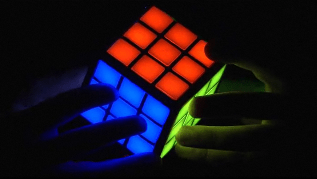 The original 3 x 3 cube is a classic. But, they have released many different versions of the Rubik’s cube and similar puzzles. There is even a touch screen Rubik’s cube called the TouchCube. Click on the picture to check it out.
Broken Secrets
Written by: Chad Upton
[Available on Kindle]
Getting The Most For Your Charitable Donation
By Chad Upton | Editor
With the recent disaster in Haiti, I have been thinking a lot about charitable donations. My wife and I wanted to make a donation, but had no idea where to start. We wanted our donation to provide as much aid as possible by giving to a trustworthy charity with minimal administration costs and decent buying power. Our questions was: which charity meets our standards and how much should we give?
I have done some research, learned some secrets and wanted to pass them along. This should be helpful for making any type of charitable donation, not just Haiti relief.

Give Cash
It might be tempting to buy blankets for a homeless shelter or give food to a food bank, but it’s actually better to give cash. Firstly, you don’t know what that charity needs most. The homeless shelter may have more than enough blankets, but not enough soap. If you give cash, they can buy what they actually need. Of course, if you already have a stack of blankets, call first to see if they can use them or if you should hang on to them for a later donation.
Secondly, your buying power is minimal. If you brought $50 worth of food to the food bank, they’d be very grateful. But, if you gave them $50, they combine that with their other cash donations to get a bulk discount and get more food with your $50 than you can.
Texting Is Actually a Slow Way to Donate
While it is extremely fast for you to initiate a donation by texting from your mobile phone, it can take 2 – 3 months for that money to get to the Charity. From the time you send the text to the time you pay your bill, 30-45 days may pass. That’s the first delay, the second delay is your mobile carrier. According mgive.com, the mobile giving foundation, carriers release donation money to mgive every 60-90 days. Then mgive takes 10% (processing fee) and distributes the money to the charities. Most of the charities take donations at their website, this is the fastest way to turn your money into help and cut out the middle man.
Know What You’re Buying
If you can’t decide how much to give, it may help to understand what your money can buy. Here are some of examples of what a donation to Unicef can get.
- $67.79 – Water purification tablets, cleans 50,000 liters of water
- $232.86 – School in a box, enough school supplies for 80 children
- $500 – Water pump, provides clean water for an entire community
- $1,994.77 – Maternity kit, enough supplies to safely deliver 50 babies
In other words, you’re not giving $68, you’re giving 50,000 liters of clean water.

Donate To a Reputable Charity
There are some great websites to help you find a charity that provides the help you want to give. These sites also rank the charities and provide transparency by including information such as charitable institution’s financial statements. Here are some sites, and what I like most about each one:
- Charity Navigator – Helpful ranking of charities. Good list of Haiti charities and their ranking.
- Network for Good – Quick links for some of the most popular charities.
- Just Give – Great search engine for finding a charity in your own community, also has a wedding registry for charitable donations.
You Don’t Need Money To Donate
Many local charities can use your time. Use Just Give to find a charity in your community.
The Largest Charities Are Not Always The Highest Rated
The largest charities usually do the best job of raising awareness, but that often means less of your money actually goes to the cause itself. That’s not necessarily a bad thing, awareness is a very important part of fund raising, and many charities allow you to designate your gift. This is ideal if you want to ensure your money is used for aid rather than further fund raising.
Click here for a list of some of the highest rated charities you can donate to, all of these are rather large charities but few of them are charities you usually hear about. Click here for a list of the charities participating in Haiti relief (4 star charities are at the top).
Privacy
Using some of the sites I mentioned above, you can ensure your charity of choice has a written privacy policy that will protect your information. It is especially important that your information is not sold to other charities — they know you’ve given before and your phone will be ringing off the hook.
Avoid scams
The FBI recently released some tips to avoid charity scams. It is very important that you don’t reply to or click on links in any spam email. Donate directly to the charity when possible, not through third parties. Verify the legitimacy of the charity with one of the sites I mentioned above. The rest is common sense, but you can read the entire list by clicking here.
Tax Benefits
One of the best parts about giving is the tax benefit. Most donations are tax deductible and many people also take advantage of a free efile, further adding to their refund. For a few countries, I have provided links to better understand the tax benefits and implications of giving to charities: USA, Canada, UK
Giving to a charity that you believe in can be one of the most rewarding things you do, for you and the people that you help.
Broken Secrets
Get updates from: Facebook | Twitter | Email | Kindle
Photos: Zoriah, DVIDSHUB (creative commons)
Sources: Charity Navigator, Just Give, Network for Good, mgive, school in a box, Unicef Health, Unicef Water,
Listerine Was Once Sold as Floor Cleaner
By Chad Upton | Editor
If you haven’t noticed, the popularity of hand sanitizer has exploded. It’s in our desks, cars, purses and homes. I have seen dispensers at subway stops, hospitals, airports and restaurants. We are obviously obsessed with killing germs and fighting viruses.
With H1N1, Mad Cow, SARS and others, you can’t blame us for being careful. It seems like hand sanitizer came out of nowhere, but it’s not new, and neither is the principle.
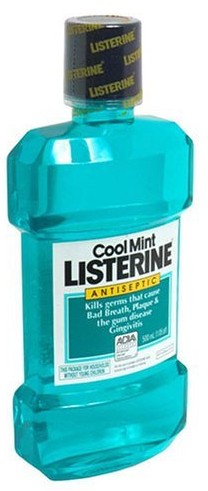 The first time I saw hand sanitizer was in 1995. I worked at a restaurant and we were told to use it hourly. At the time, it seemed like a magical potion. I thought the concept was weird: I wasn’t washing anything off my hands, I was rubbing it in.
The truth is, hand sanitizer is more effective at killing bacteria than soap and water. That said, soap and water is far more effective at removing visible dirt.
For the most part, hand sanitizers use a variety of alcohols as their active ingredient. To be effective at reducing bacteria, they should contain at least 60% alcohol, and most contain 60% to 85%. A few brands (worth avoiding) contain as little as 40% alcohol and some hospital solutions have as much as 95%.
So, where did this idea start?
It began in 1867 with a British surgeon, Joseph Lister. He published a series of articles in the British Medical Journal stating that surgery patients had less tissue infection if the incisions and surgical instruments were treated with carbolic acid prior to surgery.
At the time, they didn’t wash their hands or anything else before surgery. They thought gangrene wounds were caused by stinky air. Seriously. The same stinky air they blamed for cholera, black death and bubonic plague. They later realized the stinky air was actually the result of rotting wounds, not the cause.
His work lead to the germ theory of disease. It was the equivalent of suggesting the Earth was round, when everyone else thought it was flat. Fortunately, it was very easy to demonstrate the success of his theory and it became widely accepted.
In 1879, Listerine was named after him. It was originally developed as a surgical antiseptic, but that’s a pretty small market. To increase sales, they began marketing it as a floor cleaner and a cure for gonorrhea. That brought company revenues to about $115k, but marketers had another idea in the 1920s.
In this era of patent medicines, there were products to cure every known illness. The Listerine folks weren’t going to let this bandwagon pass by. All they needed was the perfect illness, something that everyone had and Listerine could cure; so, they made up the term, “chronic halitosis” (bad breath).
You see, bad breath hadn’t been invented yet. At that time, bad breath was just known as “breath.” Their best effort was an ad campaign that suggested young people would never find marriage with a condition such as bad breath. Over 7 years, revenues skyrocketed to $8 million.
Listerine is still sold as an antiseptic today, and primarily marketed for oral health. Depending on the flavor, it contains 21.6% to 26.9% alcohol.
Broken Secrets | Facebook | Twitter | Email | Kindle
Sources: WP Hand Sanitizer, WP Lister, WP Listerine
The Sugar in Most Foods is Not Natural Sugar
Real sugar, from cane or beets, is expensive to import. That’s why countries without real sugar, make it from other stuff.
The United States, Canada and the UK consume a lot of sugar and don’t have enough real sugar to meet their needs. A complicated series of transformations involving enzymes and fungi can process corn into a sugar substitute called high fructose corn syrup (known as “glucose/fructose” in Canada and “glucose fructose syrup” in the UK).
It is almost exactly like real sugar. Almost.

The safety of high fructose corn syrup (HFCS) is a hot debate in health circles. Food manufacturers say that it is almost exactly like real sugar and there is no proof that it is any worse for you than real sugar. Other experts point to a key difference between natural sugar (sucrose) and high fructose corn syrup. It’s very technical, but I’ll try to simplify it.
Sucrose and HFCS are both made up of glucose and fructose, which is why the food manufacturers say they’re almost the same. The key difference is that sucrose contains a bond between glucose and fructose, while HFCS does not. Because of this bond, your body must break it down before it can be utilized. In high fructose corn syrup, there is no bond — allowing it to be utilized more easily.
When you have more energy than you can burn, it gets stored as fat. A high absorption of sugar can also lead to insulin resistance and then diabetes.
Pay attention to the type of sugar in your food, it’s important. You might be surprised by how many things contain high fructose corn syrup. Some examples include: yogurt, breakfast cereals, granola bars, crackers and of course things like soda/pop and cookies. But, for all of these products, there are brands with natural sugar. Even manufacturers are starting to pay attention, Pepsi is currently offering Pepsi and Mountain “Throwback.” They’re just like their normal drinks, but made with real sugar — a throwback to the good ol’ days.
Remember that if you’re not in the USA, high fructose corn syrup is called glucose/fructose or glucose-fructose syrup.
Broken Secrets
Subscribe on: Facebook | Twitter | Kindle
Sources: WP HFCS, WP Insulin, Princeton University
Photo: *MarS (cc)
Satellite Dishes are Gray Because…
They are primed for painting. That’s right, it’s not just any gray: it’s primer gray. That means your dish can blend in or compliment your house if you paint it.
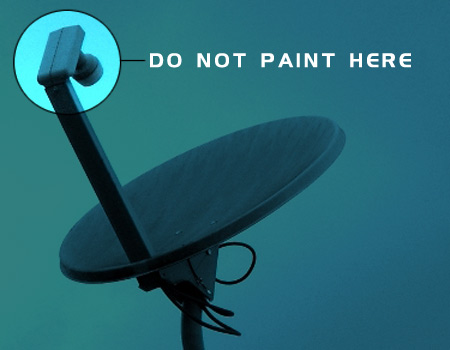
As for the type of paint, many people report good results with rust-oleum and Krylon Fusion (or similar).
If your dish is not gray then you may want to prime it first.
Tips:
- do not paint over the LNB (plastic cap at the focal point of the dish – see picture)
- only use satin/flat paint (not glossy or metallic)
- do not move the dish while painting it (unless you plan to re-aim it)
- do not hurt yourself
BrokenSecrets.com
PS – Sorry to my readers in “grey” countries. :)
Sources: Helium, DSS Geeks, Satellite Guys
Photo: angelrravelor a3r (cc)
Roadway Marks Used For Speeding Tickets
Look at the two white marks highlighted in the photo below.
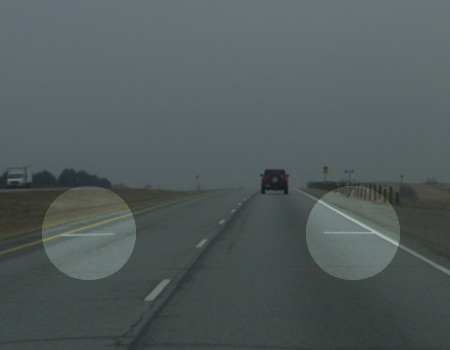
Radar is not always the best way to catch speeders, especially in open areas where the police can’t hide.
But, radar isn’t the only option, Police can also use these marks to measure how fast you’re going. This pair of marks will be followed by a second pair further down the highway. In the United States, they’re usually a quarter mile apart and in Canada, 500 meters.
An officer in an airplane or unmarked car will use a stopwatch to time your car between the two pairs of marks. The time it takes will give them your average speed between those two markers, and if it’s high enough then they can write you a ticket. In the case of aerial surveillance, the plane will notify police cars waiting on the ground.
Either way, I’d recommend a good radar detector (where legal of course).
BrokenSecrets.com
Sources: AOL, Nashville.gov, City of Ottawa
Photo: dougtone (creative commons)
What Do AM and PM Stand for?
You might see these acronyms every day and never even think about what they actually stand for. But, at some point, you’ve probably set your alarm for PM and been late for something in the AM.
I asked my dad about AM and PM at the curious age of five. He had a really good answer. It wasn’t the right answer; but, it was a good answer.
According to him at the time, “AM” stood for “At Morning” and “PM” was “Past Morning.” It made sense and kept my mind at bay until now, and it’s not that far from the actual Latin translation.
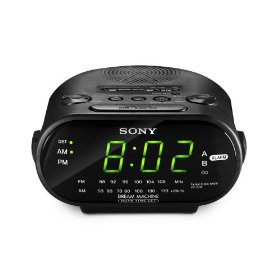
AM is a Latin acronym for Ante Meridiem, which is “before midday” when translated to English.
PM is Latin for Post Meridiem or “after midday.”
Now, if you want to showoff you can lose the acronym and throw down, “post meridiem” the next time someone asks “AM or PM?”
BrokenSecrets.com [available in the Amazon Kindle Store]
Source: WP
Google Provides Free 411 Searches and Connections
Google has a lot of cool services that most people don’t know about. One of my favorite Google secrets is Google 411.
Just dial: 1-800-GOOG-411
It is just like your local telephone company’s 411 service, except it’s free and it automatically connects you to the number for free. It works from US or Canadian phones and can be used to find US and Canadian business listings.
It also has some cool features. When you find a listing, you can say “text message” and Google will instantly text you the phone number, address and a map link for the address that opens in Google maps on a capable phone.
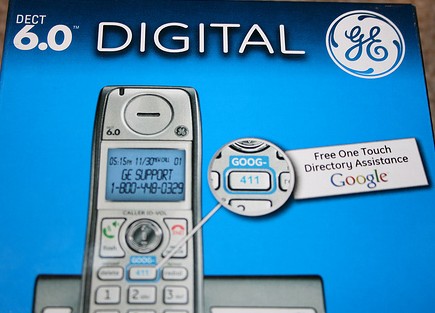
There are even cordless phones available with a dedicated button for Google 411.
Remember goog-411 the next time you need to make dinner reservations or order takeout — it couldn’t be easier or cheaper.
BrokenSecrets.com [available on kindle]
Photo: morrowplanet (cc) | Source: Google 411
Colored Sunglass Lenses Can Improve Your Sight
 Let me be clear, they don’t improve the focusing power of your eyes but they can change the way things look so you recognize them more easily. That’s important when reaction time is critical.
Yellow lenses are a popular option but it’s a myth that they make things brighter — they do not amplify light. But, according to the American Academy of Ophthalmology, they do enhance depth perception. This is because they block some of the blue light that can make objects look hazy and reduce sharpness.
For this reason, yellow lenses are popular with pilots, cyclists, shooters and boaters in low light. In daylight, blue lenses are good for pilots and skiers because they enhance the contrast between objects that are white (snow and clouds) and other objects. For boaters, red lens are good because they increase the contrast between water and objects that are in the water.
Although colored lenses can increase contrast in specific conditions, the downside with any colored lens is that they obviously distort color. Brown colored lenses are the happy-medium; they offer minimal color distortion while improving contrast, so they’re great for everyday use.
BrokenSecrets.com
Big thanks to Todd for sharing this secret with me!
Automatically Add WWW. and .COM to a Website Address
Because I spend so much time on the internet, I have bookmarked hundreds of websites, maybe thousands. They’re neatly organized into folders by category, some of them 8 folders deep. But, I rarely see anyone else use bookmarks — I know that you’re typing in the address for many of the sites you visit.
This secret will save you some keystrokes.
Instead of typing “www.BrokenSecrets.com” and then hitting enter, just type “BrokenSecrets” and press CTRL+ENTER (Mac users use COMMAND + RETURN). That will automatically add “www.” to the beginning and “.com” to the end.

For those who have no idea what I’m talking about, look at the top of your web browser (the program you’re using to view this site). You’ll see a text input area that starts with, “http://brokensecrets.com”. That is where you can type web addresses that you’d like to visit. For most sites, you need to at least type the address and the extension (ex: brokensecrets.com).
In Windows, this works with: FireFox, Internet Explorer and Chrome. On Mac, this works with FireFox and Chrome, but use CTRL + RETURN for Chrome. It does not work in Safari for Mac or Windows.
BrokenSecrets.com
Subscribe on your Kindle


 Broken Secrets