Some Rechargable Products Use Standard Batteries
I normally shave the old fashioned way, with shaving cream and a razor. Although, a couple times a week I use a rechargeable electric razor.
It doesn’t shave as close as a straight blade or cartridge razor, but it does shave time off my morning routine. It’s an easy way to catch up when I’m running behind or anxious to get working earlier.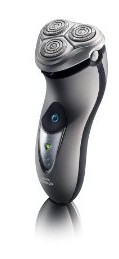
I’ve had the same electric razor for about 10 years. I got it as a gift and it has worked really well, but its ability to hold a charge has degraded significantly since it was new. When it was new, I could travel for a week and not recharge it. Recently, it has required a charge after every use.
A couple weeks ago, it failed to run for more than a few seconds. I charged it again, and had the same result.
The internal rechargeable battery had finally failed. (more…)
You Can Buy Your Own Dental Tools
A couple weeks ago, I mentioned that you can buy your own tamper proof screwdrivers. Ownership of tamper proof screwdrivers ups your do-it-yourself status to a new level; but, you can’t earn your DIY badge without having your own set of dental tools.
Maybe you’ve got a deep pocket in a molar that you can’t floss or brush clean, or maybe you just want to descale your pet’s gum line. 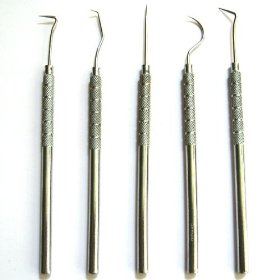
There are so many uses for dental tools. Hobbyists use them for carving, cleaning and hooking small objects. Technicians and mechanics may use them for removing tiny o-rings and gaskets. Perhaps you will use them to pick locks or scratch lotto tickets, poke the CD-ROM eject hole or spread glue in a hairline crack on the ceramic you broke last summer.
I found a 5 piece set on Amazon at a great price. Heck, for $2 (see “other sellers”), I’m not sure there is a more versatile set of tools for your toolbox. Best of all, you probably don’t own these tools yet and we all know it’s fun to get new tools.
Buying a new tool is like buying a new skill. It empowers you to put yourself in the way of new dangers and abstain from doing new things that you never dreamed of avoiding before.
So go ahead, have your popcorn and eat it too.
Broken Secrets
Written By: Chad Upton
PS – I’m really excited for fellow blogger Neil Pasricha’s new book: The Book of Awesome. Pre-order it now (or if you’ve been living under a rock and haven’t already, at least checkout the blog)!
The History of Valentine’s Day
By Chad Upton | Editor

Where did Valentine’s Day come from?
I’d like to say that some marketing genius at Hallmark was looking for a good reason to sell cards between Christmas and Easter, but that’s not the case. Although, they’re not shy about making the best of it — Valentine’s Day is the second most popular holiday for sending cards (Christmas is the leader). Approximately one billion Valentine cards are sent each year.
In elementary school, we used to decorate giant Valentine’s Day envelopes and hang them from our desks. Then we would buy a box of Valentine Cards and write a nice message for every person in our class, except the ones we didn’t like. After that, we’d walk around the room and drop the cards in each others envelopes. That was usually the end of the day, but just before we left, the teacher would feed us cake until we were mad and turn us loose on the neighborhood. (more…)
Rescue a Disc From Your CD Drive With a Paperclip
Most CD/DVD drives in computers have a secret eject button. It allows you to open the CD drive when a disc gets stuck and cannot be ejected normally. It’s also helpful if you need to remove a disc and you don’t want (or have time) to power up the computer — the force eject works without power.
You’ll need a thin sturdy object to operate the manual eject, a straightened paperclip works well. In rare cases, the hole will be slightly smaller than a paperclip and a sewing needle will be required.
Look for a round hole on the face of the CD drive that is just large enough to feed a paperclip through. The following photos show the manual eject hole on a desktop and laptop CD drive.
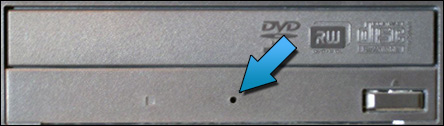
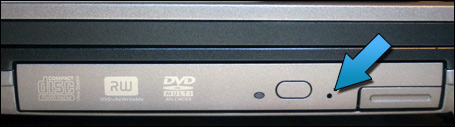
Once you have found the hole, push a straightened paperclip through the hole and when you feel it stop, push a little harder and it should push open the motorized drive tray (desktop) or release the drive lock (laptop).
If you’ve got a Mac, most new models have a slot load drive (there is no tray that the disc sits on, similar to most car CD players). Some of these drives are particularly bad at ejecting CDs with uneven edges (if yours does this then you’ll know what I’m talking about) and there is a paperclip method for these drives too. There is an Apple support document for this issue; you’ll have to click here to view it since I can’t use their material.
Maybe you’ve seen that hole and wondered what it was for, maybe not. Frankly, it doesn’t matter, because you know now and that’s what we do here.
Broken Secrets
Written By: Chad Upton
Available on Kindle | Share Your Secret!
The Massive Underground Vault Near the North Pole
By Chad Upton | Editor
Imagine your computer caught a really bad virus and you lost all of your files.
You lost all of the documents you’ve worked so hard on, all of the family photos you never printed and all the desktop icons you never clicked on. Hopefully, that never happens to you; if it does you’d probably be devastated, unless you have a thorough backup. Unfortunately, many people do not have a proper backup.

Now imagine our food crops or oxygen producing plants were being killed off by an aggressive virus that we couldn’t stop. If that happened, and it’s possible, how would we produce food to eat or air to breath?
Luckily, some smart people are keeping “backups” of as many plants as possible, so we can grow them again in the event of some man-made or natural disaster that wipes out existing crops and seeds.
These facilities are called seed banks. (more…)
The Meaning of the Numbers Inside the Recycling Symbol
By: Chad Upton | Editor
I remember going to the grocery store as a small child. It seemed like we were there for hours before finally packing all of our purchases into large brown paper bags. A few years later they phased out paper bags over concern for the trees required to make the bags. They were replaced with plastic bags and we have used them almost ever since. But, A few years ago, paper bags started appearing once again. Although they’re made from trees, those are pretty easy to grow compared to the raw materials of plastic.
It seems like everything is made from plastic now. I did a bit of dumpster diving tonight to find out how much. I went through my recycling bin looking for things with the recycling symbol on them — I guess that probably doesn’t really count as “dumpster diving.” These numbers only appear inside the recycling symbol on plastic products.
Plastic is a petroleum product, meaning the raw material used to create plastic is oil. It’s no secret that oil is one of the most in-demand natural resources and for a variety of reasons oil prices have sharply increased over the past 10 years. It’s not just the fuel companies who are affected by the increasing price of oil, but also plastic manufacturers. Both of these groups have to pass those increased costs on to their customers, and those businesses pass it on to their customers. Somewhere down the line, that customer is you and you’ve obviously noticed at the gas pump.
But, you may not have noticed the increase on plastic prices, at least not directly. Depending on where you live, you may have noticed a big or small push for you to use (or buy) reusable grocery bags. Of course these are great for the environment, but they also save the grocery store a lot of money on plastic bags, which have become significantly more expensive in the past few years. In some places, you even have to pay extra if you want plastic bags. (more…)
Shop at Off-Peak Hours for Time Savings
I’ve said it before, I love bananas. But there is one kind of bananas I do not like, busy grocery stores!
I went to my local supermarket yesterday to pickup a few things. Being Super Bowl Sunday, it was pretty much the worst day to go grocery shopping. Normally, I would just go another day but I needed some things for later in the day (like most other people there I’m sure).
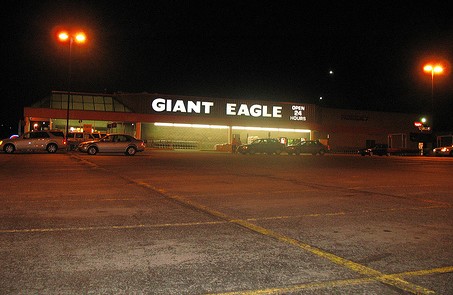 All the cart bumping and line shoving could have been avoided if I just went early in the morning or late the night before. That’s what I usually do — try to go shopping around 8pm-9pm, that includes any stores that are open late (ex. Target). Many stores are now until 10pm and some are open 24 hours. I try to take advantage of these hours since I usually get the store to myself. It actually makes shopping peaceful and efficient. (more…)
Starbucks Drink ID Codes
By Chad Upton | Editor
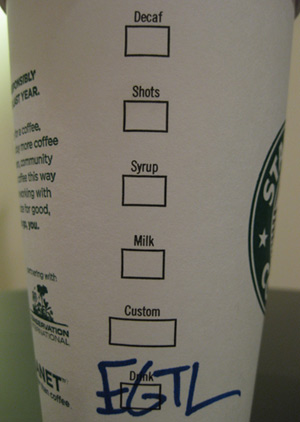
If you’re a Starbucks customer, you’ve probably noticed the column of check boxes down the side of your cup. The boxes are labeled: Decaf, Shots, Syrup, Milk, Custom and Drink.
It’s pretty obvious these boxes are used to record your drink order. Sometimes I look at the writing in these boxes and try to match the secret codes with the options I requested. Most are pretty self explanatory, but some of the codes are not.
In fact, I didn’t even know what the entire “custom” box was for.
Today I found out. You see, I got a special delivery today. It started last week during my regular search for secrets, I had an idea. I wanted to know how easily I could get a Starbucks employee training manual. About ten minutes later I had purchased one from the used book section of Amazon. There was only one copy available.
I got it, and I’m going to share its secrets with you. (more…)
Sarcastic Secret: The Left Lane is for Passing
This is another one of those things that shouldn’t be a secret, but every time I go on the highway it seems like nobody knows about it.
I assume all my readers are perfectly safe drivers, only driving in the left lane when they need to pass another car, or in gridlock when proper traffic flow isn’t possible anyway. But if you know someone who blocks the left lane then you can share this with them as a subtle hint. Oh, and if someone shared this with you, they probably think you hate left lane bandits just as much as them.
We are constantly reminded by highway signs that say, “slower traffic keep right.” But, it’s not just the law, it’s common courtesy — we all need to share the road.
Keeping the left lane clear is important. Not just because it’s the other driver’s right to pass you, but because it is safer. When everyone plays by the same road rules, then everything is more predictable, there are fewer surprises and fewer accidents — that’s why these laws exist, they’re not just for fun.
One of these laws, at least in North America, is to pass on the left. If everyone did this, you would never have a car approach you from behind on your right side. Which, isn’t a big deal if you’re going to make a planned lane change, if you didn’t notice the car approach then you would see them when you check your blind spot anyway. But, if you need to make an emergency maneuver, it’s nice to be able to count on the fact that nobody will be there and you’ve got a safe “Plan B.” (more…)
How to Accelerate and Slow Banana Ripening
I love bananas.
They are a nearly perfect fruit. They taste great. They’re fairly inexpensive. They have their own protective skin and they contain many nutrients such as: vitamins A, B1, B2, B3, B5, B6, B9, C, Calcium, Iron, Magnesium, Phosphorus, Potassium and Zinc.
But, if I had to register a complaint about bananas, it would be their shelf life. Keeping them perfectly ripe is a fine art — one worth mastering.
The first trick is something my wife, Kristen, taught me: don’t buy all your bananas from the same bunch! Pick a couple green ones and a couple that are ripe/near ripe. Then you have some you can eat right away and others that will be ripe when you’re ready for them.
The interesting part is that those two bunches are likely the same age. You assume the less ripe ones are newer, but the food distributors control ripeness. They have large, air tight banana ripening vaults that give them very precise control over banana ripening. They’re usually divided into multiple sections, so bananas can be kept at different stages of ripeness. If they’re selling a lot of bananas, they can accelerate the ripening so they will be ripe when they arrive at the store. If sales are slow, they can slow ripening to avoid waste.
How do they do that? (more…)


 Broken Secrets