White Chocolate is Real Chocolate
By Chad Upton | Editor
Somebody once told me that White Chocolate is not really chocolate. The argument is that white chocolate is not made from chocolate liquor and white chocolate does not contain cocoa solids; therefore, it is not real chocolate.
That is not necessarily true.
 Chocolate was discovered by Aztecs in Central Mexico, at least three hundred years ago. The name comes from the Nahuatl word, “chicolatl” meaning “beaten drink.” It is derived from, “chicoli”, which means “beating stick” and “atl”, meaning “water.”
To make chocolate, the seeds of the tropical cacao tree are harvested. They are bitter and must be fermented to make the flavor more palatable. The fermented beans are then dried, roasted and shelled to expose cacao nibs (you can buy cacao nibs, they’re an interesting balance between slightly bitter and mildly sweet — click on the photo for amazon link).
The nibs are ground to produce cocoa mass, which is melted to create chocolate liquor (not to be confused with chocolate liqueur). When chocolate liquor cools, it forms what we commonly refer to as baking chocolate.
At this stage, the chocolate is about 53% cocoa butter (fat), the rest is carbohydrates, protein, tannins and theobromine.
Theobromine is in the same family of chemical compounds as caffeine and is believed to be the proof that chocolate is addictive. Healthy humans can break down reasonable amounts of this compound, but many animals cannot. This is why chocolate can be harmful to pets. White chocolate contains only trace amounts of theobromine, which is what gives other chocolate its brown color.
White chocolate is made from cocoa butter, milk solids, milk fat and sugar. According to the FDA, white chocolate must contain at least 20% cocoa butter to be called “White Chocolate.” The European Union has adopted the same standard for cocoa butter requirements, but there are some other regulations around milk and sweetener contents that differ between the US and the EU.
Confectionery items that look and taste similar to white chocolate, such as “Almond Bark” are not white chocolate. In fact, they’re not chocolate at all. They are usually made from solid or hydrogenated vegetable and animal fats instead of real cocoa butter.
White Chocolate is real chocolate when it’s made from cocoa butter.
Broken Secrets
Subscribe on: Facebook | Twitter | Kindle
Sources: FDA, WP (Cocoa Butter, Chocolate, White Chocolate, Chocolate Liquor, History of Chocolate, Aztec, Theobromine)
Warning Gauges are Usually Center Normal
By Chad Upton | Editor
Even if you don’t know anything about cars, this can help you spot a problem, even if you don’t know what it is.
Virtually every car has a speedometer and a fuel gauge and you can obviously read those gauges. Many cars also have a tachometer; it measures the engine speed in revolutions per minute (rpm). This can help you understand when to shift gears and when you’re burning the least/most fuel.
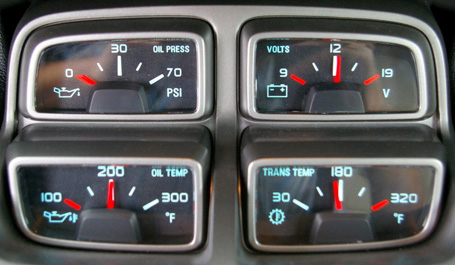
Some cars have other gauges too. Generally speaking, the needle on most of these other gauges should be near the middle of the gauge when the vehicle is operating normally. Depending on the gauge, it will usually have a red mark on one or both sides of the gauge, indicating trouble if the needle reaches that mark.
Some of these gauges take a few minutes to settle near the center, particularly the various temperature and pressure gauges that may appear in some vehicles.
These are called center normalized gauges and have been a popular gauge design standard for a long time. With so many in-car distractions, simplifying gauge design makes it easy to identify a problem.
In racing some drivers even tape over the sides of the gauges, leaving on the center visible — then they can only see the needle when it is in the center position, making it even easier to identify a problem.
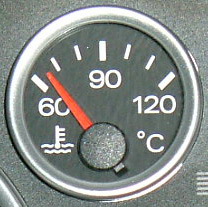 One of the most popular additional gauges is the engine coolant temperature gauge. It is identified by a symbol that looks like a thermometer partially submerged in liquid. This gauge indicates when your engine is overheating.
The following gauges are not exactly warning gauges, so they’re exempt from the center normal rule: speedometer (mph or km/h), tachometer (rpm), fuel, and turbo (boost).
Of course, not all cars use center normal gauges, but you’ll be able to tell a few minutes after your car has been running normally.
Broken Secrets
Subscribe on: Facebook | Twitter | Kindle
Sources: Answers.com, umich.edu
Photos: Photo courtesy of Aaron Gold at _cars.about.com_, rastrus (cc)
Lights Use More Energy While Turning On
By Chad Upton | Editor
There is a belief that it takes more energy to turn a light bulb on than it does to leave it running. That is true.
But, in some cases it’s still more energy efficient to turn the lights off when you leave the room.
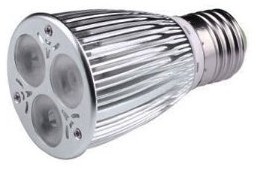 That’s because the spike of additional electricity that is used to turn on a light bulb, is very short lived. That extra energy varies depending on the type of light bulb.
For most bulb types, the extra energy is equivalent to less than one second of energy that is consumed while the light is on. That means, you’d have to leave the room and return within one second to save energy by leaving the light turned on.
The one exception is fluorescent tubes (not compact fluorescents), they require a lot more energy to turn on than they consume while running normally.
Depending on the source of the information, fluorescents use energy equivalent to 5 to 24 seconds of regular use, just to power up. Therefore, if you use fluorescent tubes, there would be times when it would be more efficient to leave them on than turn them off.
If you have a large room that is lit with fluorescent tubes and you were going to leave the room for a few minutes or less, it would be more efficient to leave them on instead of turning them off and then back on when you return. But, if you’re leaving for more than that, you should shut them off.
That said, turning lights on and off does cause wear and tear on the bulbs. LED “bulbs”, which are now available at most hardware stores, are most resilient to this type of wear and tear.
Incandescent bulbs are extremely cheap, so the cost of replacing these bulbs isn’t an important consideration, although the environmental impact may be. But, it is important to consider this wear and tear for more expensive bulbs such as compact fluorescents. It is for this reason that the EPA recommends that compact fluorescent lights are used in areas where they will usually be turned on for at least 15 minutes at a time. This will contribute to bulb lifespan.
Although I used a couple other sources for this post, Mythbusters did some great experiments on this subject and I’ve embedded the video if you’d like to watch it.
Broken Secrets
Subscribe on: Facebook | Twitter | Kindle
Sources: Mythbusters, EPA, EnergyStar (PDF)
How to Save 25% on Medical Bills
By Kaye Nemec | Contributor
If you’ve recently undergone some sort of medical procedure and are nervous about the number of digits when the bill arrives, relax. Medical bills aren’t necessarily black and white; some frugal patients have discovered a secret.
According to a recent New York Times article, most hospitals and doctor’s offices are willing to negotiate price if it means at least part of their bill actually gets paid. In a time when the economy isn’t exactly booming and some people can’t afford health care, more and more medical bills are left untouched. If you’re looking to steer clear of collection agencies and maintain your credit, you may be able to benefit from other people’s “dine & ditch” version of medical procedures.
So what’s the trick? Haggle.
Call your doctor, hospital, dentist etc. and ask them to give you a discount if you pay your entire bill immediately over the phone. Angie’s List recently performed a consumer survey about this topic and found that 74% of people received a discount on medical bills simply by asking for it.
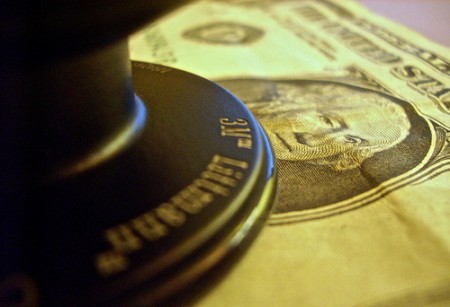
If you’re the planning ahead type, check out the website HealthCareBlueBook.com before scheduling a medical procedure. They’ll give you an estimate of what some of the most common procedures should cost, that way you can shop around and see how much various providers are charging. Once you find the best deal, schedule the appointment, then call afterward to haggle your discount. Check out their section on How to Negotiate Healthcare Prices for even more tips on lowering your bill.
Even if you’ve never used the salesperson of the month parking spot, it’s easy to ask for a discount. The worst that can happen is: they say, “no”
Your request can be as simple as, “Hello. I have a labor and delivery bill from your hospital for $1,700.00 and I heard that if I pay it in full over the phone I can get a 25% discount. I’d like to go ahead and do that today.”
I’m wondering, could this also work at the vet? If you thought medical bills for humans were outrageous, try having a puppy and you’ll soon learn what astronomical looks like.
Broken Secrets
Subscribe on: Facebook | Twitter | Kindle
Sources: NYT, CBSNews.com, Angie’s List, HealthCareBlueBook.com
Photo: Maxios (cc)
Drinking and Driving is Legal in Mississippi
By Chad Upton
Ever since I can remember, “Don’t Drink and Drive” has been drilled into my head.
But, the range of acceptable blood alcohol content varies from 0.01% in Albania, Guyana and a few other countries, to 0.08% in Canada, Ireland, Italy, United Kingdom, United States and many others.
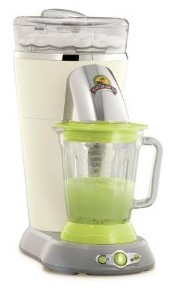 It’s obviously dangerous to be drunk while driving. But, it’s arguable when alcohol consumption becomes dangerous.
Some countries have lower limits for drivers who are new or have other special circumstances and more strict penalties for blood alcohol readings at other levels above the legal limit. In some cases: state and provincial laws are more strict than federal laws or county and city laws are more strict than state and provincial laws.
Countries, such as Brazil and the Czech Republic, have a zero tolerance policy for blood alcohol content. In those countries, and a few others, you cannot have alcohol in your bloodstream when you drive. Other countries, permit up to 0.08% blood alcohol content.
I couldn’t find a country with more internal disagreement than the United States. In most states, it is illegal to have a blood alcohol level higher than 0.08%. The rules are even more strict for drivers under the age of 21. In most states, you can’t have open containers in the passenger compartment of a vehicle — that is a container where the seal has been broken.
Conversely, there are a number of states where passengers are allowed to consume alcohol while the vehicle is moving. These states are Arkansas, Connecticut, Delaware, Mississippi, Missouri, Virginia, and West Virginia. Actually, Mississippi allows drivers to consume alcohol as long as they do not exceed the blood alcohol limit of 0.08%.
States that do not conform to federal open container laws are financially penalized. But, that doesn’t stop them, in fact, drive thru restaurants in some states serve alcoholic beverages too.
Broken Secrets | Facebook | Twitter | Email | Kindle
Sources: Wikipedia (US Open Container Laws, Drunk Driving by Country), Open Container Laws, The Monitor, State Line
Relevant:
An alcohol abuse program makes use of various methods, all designed to help an alcohol abuser get the all that drinking off his system.
Disney World has Many Legal Powers of a City
By Chad Upton
Disney World is the size of a small city, make that two small cities.
Many people believe that Walt Disney World Resort is in Orlando Florida, but that’s not exactly correct. While it is near Orlando, The City of Bay Lake and the City of Reedy Creek (now the City of Lake Buena Vista) are incorporated into the lands of Walt Disney World Resort.

When the Disney World was announced, Walt Disney explained that a special district would need to be created for it to succeed. Due to the massive construction effort to build Disney World, Walt believed the park would need to have powers similar to a city in order to manage construction efficiently and secure control over its future.
On May 12, 1967, legislation forming the Reedy Creek Improvement District was formed. This legislation provides Disney World with immunity from county and state land-use laws, giving them eminent domain and ultimate control over what they build inside the park. Property taxes and elevator inspections are the only items that the district submits to the county and state.
Broken Secrets
Subscribe on: Facebook | Twitter | Kindle
Sources: Wikipedia (Walt Disney World Resort)
Photo: Stuck in Customs (cc)
Alcohol Does Not Completely Burn Off in Cooking
By Chad Upton
Whether you marinade steaks in beer or use Vanilla extract in your baking, you’re probably left with more alcohol in your food than you realize.
That’s not necessarily a bad thing, it can infuse wonderful flavors. And yes, Vanilla extract has alcohol in it. Actually, it’s mandated by law in the US.
In many cultures, alcohol and food go hand in hand. Fancy wine bars pair meals or selected cheese and chocolate with wine.
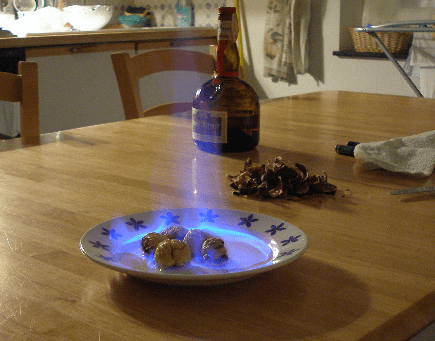
Before modern cough medicines, Doctors prescribed a tablespoon of brandy to calm children’s coughs. Even some existing cough medicines, such as NyQuil, contain alcohol (except the childrens remedy). Monks have been known to brew and drink beer since the middle ages.
The USDA’s Nutrition Data Lab used gas-liquid chromatography to determine how much alcohol remained in food after various cooking scenarios.
| Cooking Method | Alcohol Remaining |
| Flambé | 75% |
| Left Overnight (no heat) | 70% |
| baked 25 mins (alcohol not stirred in) | 45% |
| baked 15 mins (alcohol stirred in) | 40% |
| baked 30 mins (alcohol stirred in) | 35% |
| baked 60 mins (alcohol stirred in) | 25% |
| baked 90 mins (alcohol stirred in) | 20% |
| baked 120 mins (alcohol stirred in) | 10% |
| baked 150 mins (alcohol stirred in) | 5% |
Even after 2.5 hours, 5% of the alcohol remains. I don’t think it’s anything to be too alarmed about. Grandma’s have been serving cookies laced with Vanilla extract to children for many years and most of us turned out just fine. That said, it’s still pretty surprising.
Broken Secrets
Subscribe on: Facebook | Twitter | Kindle
Sources: Wikipedia, O Chef , Trappist Beer, NyQuil
Photo: 5volt (cc)
Sarcastic Secret: Signal Lights
By Chad Upton
Tickers, blinkers, indicators and flashers. They have many names, but only one purpose: to let people know your car is about to change course.
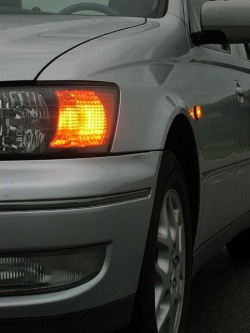 In most vehicles, a lever on the steering column moves up or down to activate flashing lights on either side of the car.
I suspect a lot of people don’t even know their car has such lights, but they’ve been standard on cars since cars.
Maybe it’s a confusing concept, so I’ll try to explain it in a straight forward manner: if you’re about to turn your steering wheel, put these lights on first.
I find that some people use signal lights like the horn. They know they’re there, but they only use them when they need you to move.
Most vehicles also have a way to put all four blinkers on at the same time. The vehicle manual may refer to these as “four way flashers” or “hazard lights” but a lot of people know these as “park anywhere lights.” Their understanding of this feature is, when you want to double park, park in a fire lane or any other no parking zone, these flashing lights give you temporary immunity from parking regulations.
In all seriousness, signal lights first appeared on cars in 1907, but weren’t patented until 1938. Some cars from the 1920s to 1950s used solid (non-blinking) retractable lights on the sides of the car, called a trafficators.
Broken Secrets
Subscribe on: Facebook | Twitter | Kindle
Source: Wikipeda (Signal Lights)
Photo: Wikimedia (gnu free)
How They Make Burgers Look Perfect In Ads
By Chad Upton
It’s rhetorical and cliche, but why doesn’t the food you order ever look like the food in the picture?
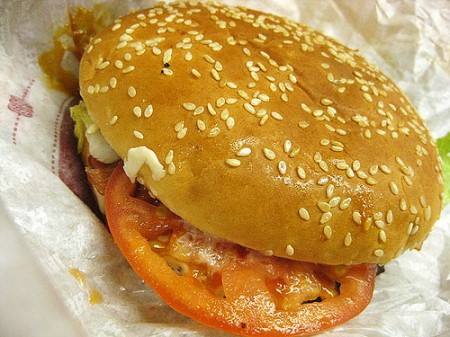
I’ll bite — it’s because your food took a few minutes to make and the food in the picture took a few hours to style. Yes, style.
I’ve rounded up some videos that show you some of the secrets of food advertising. The first video is about burgers and it’s pretty old, but still relevant.
The next video is about pizza and it’s part of a current Domino’s promotion to send in pictures of your pizza for everyone to see.
It’s a pretty well known fact that what you see is not what you’re going to get. But, Burger King recently canceled an advertisement where they misled viewers about the size of the burger. After watching these videos, it’s no surprise how they do it.
If you want to see a nice set of side-by-side photos of what they advertise and what you get, click here.
If you are reading this post on a device that does not support videos, I’ll tell you a bit about what they contain.
The burgers are cooked very little. To make them look grilled, they are brand them with thin skewers. Then they apply food dye for color. A layer of cardboard is placed on the bottom bun so the bun doesn’t get soft. The burger patty is split on the back side, so it can be widened from the front view — this makes the burger look larger. Vegetables are piled on top of the bun and pinned in place so they don’t move. A small shot of condiments are added on the front of the burger (the side the camera is on).
The second video is all about making perfect cheese strings when a slice of pizza is removed from a pizza pie. They go through all of the cheese to make sure every piece is perfect and use a heat gun to perfectly melt the cheese around the star slice, this makes it very stringy when the slice is lifted. The rest of the pizza is screwed down, except for one slice, so the pizza doesn’t move when the one slice is lifted.
There you have it, secrets from fast food advertising.
Broken Secrets
Subscribe on: Facebook | Twitter | Kindle
Photo: jasonlam (cc)
Tires Do Not Protect You During a Vehicle Lightning Strike
By Chad Upton
I’ve always heard that a car is one of the safest places to be during a lightning strike and that is true.
The tires usually get all the credit. As the story goes, tires are rubber and rubber is an insulator, so you don’t get electrocuted in the car because you’re isolated from the ground like a bird on a wire.
It’s a pretty believable story, but it’s not the truth.
If you think about it, the lightning travels thousands of feet through thin air to reach the car — it could easily continue to travel through thin air to get around a few inches of rubber tires. Compared to the power of lightning, tires don’t really provide any protection.
Trains are struck by lightning and the people inside are fine, even though trains have metal wheels, which are great conductors.
Airplanes are regularly struck by lightning in the air. In fact, the FAA estimates that each plane gets struck about once per year.
So why are people safe in these cases?
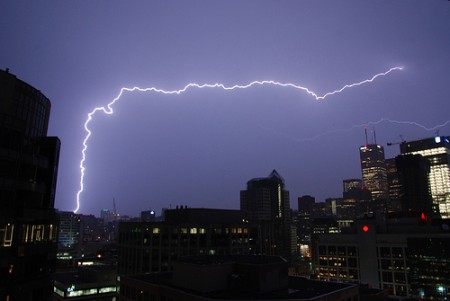
It’s all because of a principle discovered by Michael Faraday in 1836.
Faraday demonstrated that an electrical charge exists only on the exterior of a hollow conductor and not the interior. He built a wire cage, that is now know as a Faraday cage, to demonstrate that an electrical current flowing through the cage did not produce an electrical current inside the cage. When you’re in a vehicle, with a conductive exterior shell, you’re inside a Faraday cage and the electrical charge is carried around you.
Faraday cages can also be used to shield against electromagnetic radiation. Coaxial cables are common in most households for carrying TV signals. These cables are design with what amounts to be a built in Faraday cage to protect the inner copper wire from electrical noise.
Microwave ovens are also a good example of a Faraday cage. This principle protects you from exposure to microwaves by turning the inside of the oven into a Faraday cage. The mesh you see on the inside of the door is part of that cage and explains why the glass isn’t perfectly transparent.
Broken Secrets
Subscribe on: Facebook | Twitter | Kindle
Sources: Wikipedia (Ground, Faraday Cage), Weather Imagery (Cars, Airplanes), Faraday Cage
Photo: jonathan mcintosh (cc)


 Broken Secrets