Why Aluminum Foil is Dull on One Side
By Kaye Nemec
Hopefully you’ve all read Chad’s previous posts about aluminum foil retainers or how to properly use aluminum foil in the microwave. The post about aluminum foil retainers is a life changer.
I learned something else recently that adds to the growing list of things you never knew you needed to know about aluminum foil.

There are two, distinct sides to standard aluminum foil – the shiny side and the dull side. During the last phase of the rolling process, two sheets of foil are put through the rollers. The rollers themselves are oiled and, therefore, the side of the foil that touches the roller comes out shinier than the other. There are rumors that one side of the foil reflects heat better than the other and that the reflection should be considered during cooking. However, the Reynolds Wrap website states, “Actually, it makes no difference which side of the aluminum foil you use—both sides do the same fine job of cooking, freezing and storing food.”
P.S. If you place a piece of aluminum foil underneath your ironing board cover the heat will reflect off of it which means you are ironing both sides of your garment at once!
Broken Secrets
Get secret updates: Facebook | Twitter | Email | Kindle
Sources: Reynolds Wrap, The Straight Dope, Life Hackery
Photo: Emillian Robert Vicol (cc)
Food Chains to Display Calories on Menu by 2014
By Chad Upton | Editor
Last year, President Obama introduced the Patient Protection and Affordable Care Act, which is part of the health care reform of 2010.
Although we hear a lot about the controversial parts of this reform, there are variety of lesser known, albeit interesting, changes that will be phased in through 2018.
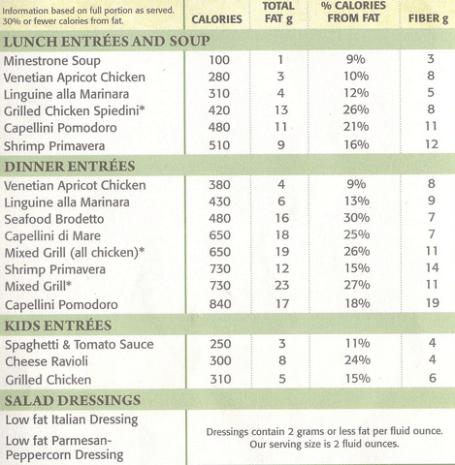
Some restaurants have already complied with one new regulation that requires them to show caloric values next to items on their menu. I noticed that Panera is already on board and my wife reminded me that Olive Garden has done the same. This is a bold move and it confirms that anything Alfredo is both the best and worst thing that Olive Garden serves.
There are some other interesting changes too; here’s an abbreviated timeline:
2012
- Employers will have to disclose the value of the benefits they provide to their employees.
- Tighter restrictions on corporate payments to individuals and other corporations, designed to prevent tax evasion and raise an estimated $17 billion over 10 years.
2013
- Individual salaries over $200,000 and families with income over $250,000 will see a tax increase of 0.5%.
2014
- Insurers can’t discriminate against individuals with pre-existing conditions.
- Insurers can’t set annual spending caps.
- Chain restaurants and vendors with 20 or more locations are required to show calorie count on menus and displays (additional nutritional info must also be available upon request).
- Expand eligibility for Medicaid.
- Changes to tax-free contribution limit on flex spending accounts.
- Require that everyone has health insurance.
- Penalize companies with more 50 full time employees if they do not provide insurance to those employees.
2017
- States can apply to waive certain sections of the law if they mandate coverage that is as comprehensive and affordable.
2018
- Existing health insurance plans must cover approved preventive care without co-payment.
- Individuals who spend more than $10,200 ($27,500 for families) annually on health insurance will see an additional tax on those “Cadillac” plans.
This list was by no means comprehensive, although I did try to include the most notable changes. The details of these changes have been abbreviated and you should see the sources for additional reading on the provisions that may affect you.
Broken Secrets
Get secret updates: Facebook | Twitter | Email | Kindle
Image: kobo4lila (cc)
Sources: The Bill Itself (PDF), Wikipedia (Patient Protection and Affordable Care Act), Library of Congress

The Fastest Way to Fold a Shirt
By Chad Upton | Editor
Whenever I see neatly folded shirts in a clothing store, I wonder how they fold the shirts so perfectly.
One time, I noticed an employee using a piece of wood to help them. But, this video demonstrates the fastest and most mind blowing way to perfectly fold a shirt.
If you’re viewing this post on a device that doesn’t support video, pinch the shirt in the two locations shown in the following photo.
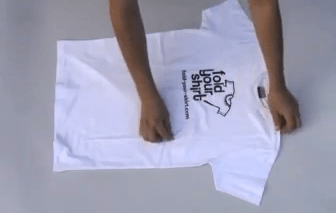
Then, carry your left hand over your right hand and pinch the bottom of the shirt inline with the two pinch points you already have. Then, lift up and let the shirt fall into a perfect square. Place the lowest edge on a table and fold over that edge so the front logo is facing up.
Voila.
Broken Secrets
Military Tanks are Named after Water Tanks
By Chad Upton | Editor
Characterized by its large size, rugged capabilities and literally bulletproof exterior, the military tank is the reference standard for anything that embodies similar qualities.
That’s why it’s so interesting that the military tank is actually named after the water tank.

There’s no technical relationship between the two, the name actually stems from the top secret project that spawned the tank.
Whenever something needs to be kept secret, whether in the military or even consumer culture, code names are often assigned so subjects can be referenced without spilling any important information.
According to Churchill’s authoritative biography, the project was code named “water tank for Russia.”
Follow us: Facebook | Twitter | Email | Kindle
Sources: Wikipedia
Photo: Jason Trommetter (cc)
March Madness Teams are Paid for Performance
By Kaye Nemec
For the most part NCAA tournaments are money making events – for the NCAA. But the Division 1 Men’s Basketball Tournament is actually the only NCAA tournament that gives all of its revenue back to the schools that participate. Although millions of dollars in revenue from the BCS Football Championship are given back to the schools and conferences involved, it is important to note that the BCS Football championship is not an NCAA event. In fact, it is the only NCAA sport that does not have an annual NCAA sanctioned championship event.
 Back to basketball. The T.V. contract for March Madness brings in billions of dollars and that money is divided up among the participating schools as follows:
1/6 of the money is given to the schools based on how many different sports they play.
- A division 1 school must play 14 sports in order to qualify for Div.1 status.
- They are given one share of money for each sport starting with 14.
1/3 of the money is given based on how many scholarships each school awards.
- 1 share for each of the first 50 scholarships.
- 2 shares for each of the next 50.
- 10 for each of the next 50.
- 20 for all scholarships after the first 150.
½ of the total money is divided among each of the participating conferences based on how well they each did in the previous six tournaments.
- 1 share for each team getting into the tournament.
- 1 share for each win outside of the Final Four.
In the past five tournaments, $409 million dollars were awarded to participating teams and conferences. The U.S. Secretary of Education and the Knight Commission on Intercollegiate Athletics is proposing a change in profit division to better reward academic accomplishment. Of the $409 million, 44 percent of that money was awarded to schools that are on track to graduate less than 50 percent of their players.
Broken Secrets
Subscribe: Facebook | Twitter | Email | Kindle
Sources: Wikipedia, Knight Commission of Intercollegiate Athletics
Photo: Kevin H.
Sunscreen and Sunblock are Not the Same Thing
By Chad Upton | Editor
Sunscreen, sunblock, suncream, sun lotion or whatever you want to call it, is much more complicated than most people realize.
The basic idea is well known: a number known as the “SPF” (sun protection factor) is used to describe its effectiveness at blocking sunlight.
Ultraviolet radiation from the sun can burn your skin with too much exposure. Understanding UV rays and SPF ratings is important if you want to prevent sunburns, long term skin damage and skin cancer.
There is a common misconception that SPF values refer to the extended amount of time they allow you to spend in the sun. For example, one myth suggests that an SPF 30 rated lotion would allow someone to stay in the sun 30 times longer without burning, compared to when they were not wearing sunscreen.
Time would be a nice and easy way to calculate it, and it’s fairly close, but the SPF cannot accurately relate to the time of sun exposure because there are a couple factors that affect how long it takes to get a sunburn, whether you’re wearing sunscreen or not.
- Time of Day
- Skin Type
Time of Day
Due to the angle of the sunlight in the morning and late afternoon, our atmosphere filters out more radiation at those times. You will burn more slowly at these times than during midday.
Skin Type
The Fitzpatrick scale divides skin types into six levels of sensitivity to sunlight. Type 1 is characterized by very fair white skin with freckles — it cannot tan, only burns. Type 6 is very dark brown or black skin that does not darken in sunlight. The in-between types demonstrate varying degrees of natural darkness and increased darkening when exposed to sunlight.
SPF and UVA/UVB
The SPF number reflects the relative amount of protection the product provides against UVB exposure.
An SPF 15 product would allow 15 times more exposure to UVB rays than when not wearing it. As mentioned above, this is not a measurement of time since there are other factors that can change the protection level and therefore the time. In addition to time of day and skin type, activities such as swimming can also reduce protection since they can reduce the amount of sunscreen on the skin.
Also, sunscreen and sunblock are not the same thing, although they are often used interchangeably. Sunblock is opaque and usually contains zinc oxide. It doesn’t normally need to be reapplied throughout the day. Sunscreen is usually transparent and needs to reapplied every two hours since the active ingredients break down over time while being exposed to sunlight. This obviously has a huge affect on how much protection time the product adds since it dramatically loses effectiveness after a couple hours.
Another problem with SPF numbers is that they don’t account for UVA rays in most countries. While UVB rays cause visible changes to your skin (tan/burn), UVA rays cause damage that may be invisible initially. Since UVA damages DNA, it increases the risk of malignant melanomas, a potentially life threatening issue. Some countries require a minimum level of UVA protection in sunscreen and more countries should adopt this regulation since the effects of UVA are not well known.
In fact, most countries lack thoughtful regulations on sun protection in general, so be weary of sunscreens that claim to offer broad spectrum protection. Unless the product contains zinc oxide, avobenzone or ecamsule, it doesn’t likely provide good UVA protection.
In addition, there is also infra red rays, which some sunblocks also reduce.
Have fun in the sun.
Broken Secrets
Subscribe: Facebook | Twitter | Email | Kindle
Sources: Wikipedia (spf, skin color, NSFW – sun tanning, von Luschan scale)
Photo: Rishi Bandopadhay (cc)
Not Making Your Bed Kills Dust Mites
By Chad Upton | Editor
There’s a hot debate on whether you should make your bed or not. Some people believe it teaches children discipline, others like the look and/or feel of a made bed and tight sheets.
Regardless of your preference, there is some new information that indicates not making your bed is cleaner than making it.

Millions of dust mites can live in your bed if the conditions are right. Because dust mites can impact our health with asthma and allergies, scientists are studying mights to improve health in the future.
Dust mites survive best in warm and moist conditions. Scientists say that one of easiest ways to reduce the heat and humidity inside your bed is to leave it unmade in the morning.
Because they’re so small, less than a millimeter, it’s very easy to deprive them of heat and moisture.
Broken Secrets
Get updates from: Facebook | Twitter | Email | Kindle
Source: BBC
Photo: Wikimedia Commons
Baby Proofing Your Home on a Budget
By Kaye Nemec
For those of you with babies approaching the age of movement, it is time to start opening up your eyes to all of the dangers hidden within your once perfectly safe home.
Stores like Babies ‘R Us, Buy Buy Baby and Target have shelves full of products designed to help protect your baby from sharp edges, hot surfaces, poisonous cleaners, toilet bowls etc. Buying all these products can be expensive. There are ways to help keep your budget in check by baby proofing with products you probably already have at home.
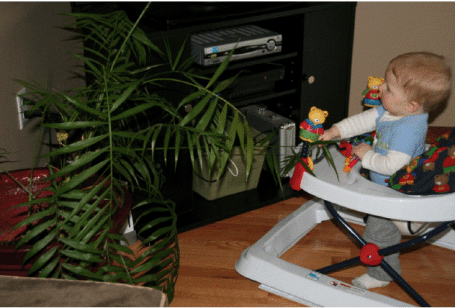
- Sharp Corners – Once you start looking for sharp corners in your house you’ll be overwhelmed by the amount of foam corner cushions you need to buy. To protect fire place corners, coffee and end table corners, counter top corners, kitchen table corners, vanity corners etc. etc. use tennis balls. Make a cut into them with a saw or very sharp knife and wedge them onto the corners.
- Cupboards – Your kitchen and bathrooms are full of cupboards that your little one will be curious about. The problem is, you need to keep him out while still being able to get in yourself. Store bought cupboard locks can be expensive and difficult to use (although you should still use them on cupboards with cleaning materials and medications). To baby proof on your own use rubber coated hairbands. Just wrap one band around both handles of the cupboard. Bungee cords or the thick rubber bands often found around produce like lettuce and broccoli also work well.
- Doors – Trying to keep your little one from opening doors and getting into our out of rooms on his own? As you close the door, place a washcloth between the door and the door frame. Place it high enough so little baby arms can’t reach it. Even if your baby is able to turn the door knob, she won’t be able to pull open the door due to the washcloth wedged between it and the frame.
- Power Outlets – For a quick and easy way to cover up outlets use Duct tape or masking tape. Tape is easy for you to move if you need to access the outlet but difficult for your baby to figure out. This is also a great way to cover outlets when you are traveling and didn’t bring outlet plugs with you.
- Miscellaneous – Velcro certainly won’t work once your baby really starts using their muscles, but it can help at early movement stages to help keep some knick knacks and small objects in place. Try using Velcro to hold down remotes, telephones, household decorations etc.
Of course you should also move sharp and dangerous objects out of reach and use baby gates or barriers to shield off-limits areas. To make sure everything is completely baby proof, take a tour of your house on your hands and knees so you can see your home from your baby’s view. Look for objects that are easy to grab, easy to run into etc.
These DIY solutions are also great for friends and family who don’t have babies, but have occasional baby visitors.
Broken Secrets
Get updates from: Facebook | Twitter | Email | Kindle
Special thanks to Daniella for suggesting this post!
Sources: Essortment.com, FreeShipping.org
How to Cure Hiccups
By Kyle Kurpinski
A hiccup, or “synchronous diaphragmatic flutter,” is a rapid involuntary contraction of the diaphragm, which results in a large volume of air rushing abruptly into the lungs. This is typically accompanied by a “hic” sound as the airflow forces the vocal chords to suddenly close. The physiology of a hiccup is much like that of a knee jerk reflex (when a doctor taps your knee with that little hammer), but the hiccup reaction occurs within a few cranial nerves that extend between the neck/head and the chest. A bout of hiccups can be brought on by a number of different stimuli including prolonged laughing, eating too rapidly, various nervous system disorders, and even chemotherapy. But far more important than how or why we get the hiccups is how we can get rid of them.
I was astonished to discover just how many hiccup “cures” there are on the web. WikiHow has a particularly awesome article listing nearly 80 different methods for curing hiccups. My immediate reaction to this was, shouldn’t ONE be enough? Unfortunately, hiccups are not well understood and many of these home remedies may work for some people but not for others, so an extensive list of alternatives is not entirely unreasonable. What really astounded me, though, was the sheer variety of proposed treatments. Here’s a small sampling:
- Drink a glass of water while upside down.
- Cough or scream when you feel the next hiccup approaching. Repeat 3-4 times.
- Suck on a lemon wedge topped with 4-5 drops of aromatic bitters.
- Lean your head back and place a penny on your forehead. The hiccups will be gone after 1-3 more times.
- Drink a half teaspoon of pickle juice every 7-10 seconds until the hiccups stop.
- Alternate a spoonful of sugar with a sip of water until the hiccups are gone.
As a whole, these remedies have no unifying theme, and I while I haven’t personally tested all of them, I have to wonder if a placebo effect (or just a coincidental cessation) might have been the genesis of more than a few. I am also bothered by the use of the phrase “until the hiccups stop” in many of the treatments on the web. There are reported cases of hiccups (albeit rare ones) that lasted years. How much pickle juice might I expect to ingest before the costs begin to outweigh the potential benefits?
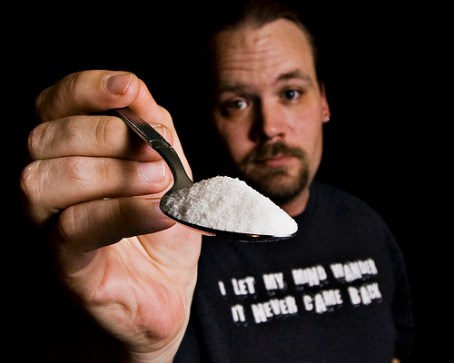
In my personal experience, the “cures” I tried never worked for me (including upside-down drinking and being startled by a friend), and I always resorted to the more apathetic method: waiting it out. That is, until recently. Several months ago, my girlfriend had a bout of hiccups and she decided to experiment with various improvised remedies. Most of her trials had no effect, but she eventually discovered a simple breathing pattern that eliminated her hiccups completely. Her method follows:
1) Take a deep breath through your nose. Fill your lungs as much as you can.
2) Hold the breath for 10 seconds.
3) Breathe out completely.
4) Repeat steps 1-3 once more.
The entire process takes less than 30 seconds, but I have used it at least five separate times now with amazing success (only one initial failure that was cured on a second attempt). While I can’t promise that it will work for everyone, it has worked for the few people I’ve shared it with so far, and it’s strikingly similar to some of the other “breathing methods” listed on the wikiHow site. In fact, a closer look at that article reveals something interesting: there are more than 10 methods devoted predominantly to breathing. Wikipedia provides some reasoning: a few researchers have theorized that hiccups may be an evolutionary remnant of amphibian breathing that is similar to gulping. More importantly, amphibian gulping is inhibited by high levels of CO2, and so are hiccups. When you consciously adjust your breathing using one of these remedies, not only are you taking more active control of your diaphragm, but you are also manipulating gas exchange in your lungs and blood. More simply, holding your breath is an easy way to increase physiological CO2.
There are also more than 15 methods listed on the wikiHow article that include some form of drinking. While these are far less likely to dramatically impact blood chemistry, they will alter your current breathing pattern, which may in turn help disrupt the involuntary reflex of your diaphragm during hiccuping. I can’t say for sure that the “pickle juice method” is complete nonsense, but I wonder if it might work just as well using plain water.
It’s hard to say exactly which methods will work for any one person, but at least a few of these cures appear to have some scientific rationale while many others seem rather arbitrary. Bottom line: next time you have the hiccups, I recommend trying any of the breathing or drinking methods before resorting to balancing a penny on your head. Good luck!
Broken Secrets
Get updates from: Facebook | Twitter | Email | Kindle
Image: Cayusa (cc)


 Broken Secrets