Posts filed under ‘ProTips’
Idling a Cold Engine Is GOOD For The Environment
You may notice when you start a cold vehicle, its exhaust is visible at first and disappears after a few minutes. Here’s why.
Technically, modern vehicles do not require much warm up time before you can drive them; advanced lubricants and materials allow the vehicles to be driven shortly after a cold weather start. Of course, you may want to warm your car for your comfort and surprisingly, to reduce emissions.
This is not intuitive, unless you understand the emission control systems on modern vehicles.
The first system is called Exhaust Gas Recirculation, and it’s probably obvious from the name: it routes exhaust gases back into the engine. The vehicle computer system monitors and controls this process to lower the amount of Nitrogen Oxides, precursors to smog and acid rain, that are created in the engine and then expelled from the tailpipe. Depending on your vehicle, this system will not operate in certain conditions, for example: low engine temperatures.
Vehicles also have a component in their exhaust system that converts various pollutants into less harmful gases with various catalysts. That conversion occurs in the catalytic converter, and that chemical reaction doesn’t happen when the catalytic converter is cold.
According to WP, some catalytic converters can take up to thirty-minutes to reach ideal operating temperature. That isn’t to suggest you should wait that long before driving your car — there are countermeasures in many cars that make it effective long before that.
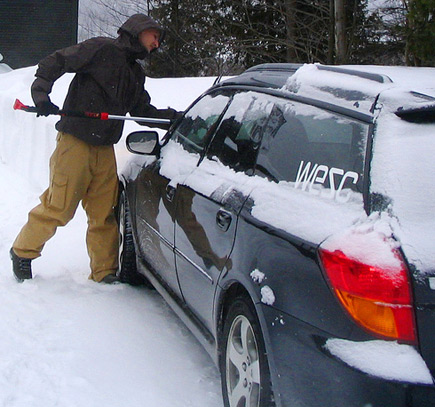
When your car is at idle, it uses less gas and releases less pollution than when you are driving it. Getting your emission system to an effective point before driving it helps reduce overall emissions. For my car, it take about 3-5 minutes before the exhaust is invisible and that’s about how long it takes to clear the snow anyway. It’s not an exact science and it varies by car and by temperature.
BrokenSecrets.com
Photo: steveyb (Creative Commons)
You Shouldn’t Drink Hot Water From Your Tap
Household tap water is usually heated in a hot water tank or by an inline water heater. Water tanks particularly, collect sediments overtime and are breeding grounds for bacteria. You might be thinking that bacteria cannot survive in hot water, but you need water above 165 degrees Fahrenheit to kill most bacteria. That’s why your meat thermometer recommends you cook chicken until that internal temperature is reached.
Hot water also dissolves contaminants such as lead that may be found in the solder of your hot water pipe. Newer copper tubing and fittings or PEX (plastic) pipes would be safer in this respect.
If you’ve ever read the manual for your coffee maker, it clearly states that you should make coffee using cold water. This is not because the temperature of the water makes better coffee, it’s because you should only consume tap water from the cold side of the tap.
If you need water that is always hot, there are food grade water heaters that you can use. For example, you may have a water cooler/heater or an installation under your kitchen sink for dispensing water that is always hot. Otherwise, always use cold water and then heat it in a kettle, microwave, pot…etc.
BrokenSecrets.com
Sources: MIT, Everything2.com, CooksRecipes.com
Photo: Malla Mi (Creative Commons)
The Fastest Way to Chill Drinks
Perhaps your guests just arrived and you forgot to put beer in the fridge. Or, maybe you just got a phone call and your hair appointment on Thursday has been canceled Either way, you need cold drinks, stat. This secret will chill your drinks in 5 minutes flat.
- Half fill a container with your drinks.
- Fill the remaining space with ice.
- Add salt and stir for 30 seconds.
- In 4.5 minutes you’ve got cold drinks.
The salt speeds the melting of the ice. The melting ice absorbs heat from the drinks which in turn makes the drinks get colder.
Here’s a little demo from down under with a fancy thermometer:
BrokenSecrets.com
Opening a Bottle of Wine Without a Corkscrew
If you’re a wine drinker, a day will come when you go camping, tailgating or romantic picnicking and forget to bring a corkscrew. Open your wine without any special tools by combining these two tricks:
1. Remove the foil using the slide technique. It briefly appears at the beginning of the following video, although I suggest also watching Gary Vaynerchuk’s video here for a specific demo of this secret.
2. Remove the cork using the ram technique. Watch the video below.
Warning: Be very careful when bashing a glass wine bottle against a tree. As you can see in the video, you don’t have to do it very hard.
BrokenSecrets.com
You Can Request a Mini Fridge in Your Hotel Room
I’m not talking about minibars that are jammed with overpriced, undersized hickory peanuts and watermelon spritzers. I’m talking about an empty mini fridge that you can stack with caffeine boosting morning starters and gut busting dinner leftovers.
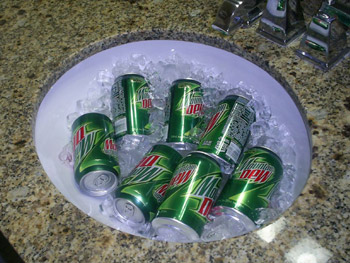
It’s fun to go all MacGyver and use the sink as a cooler, but that loses its cool when you want to use the sink as a sink. That’s why hotels keep mini fridges on-hand for special requests. I discovered this little secret last year, and I travel a fair amount for work so I’ve tried it in many hotels since then — it held true for almost every one.
When you book the room, ask for a mini fridge (or add it to the notes if you book online). Chances are good they will have it in the room for you when you arrive. If you get to your room and there is no fridge there, call the front desk and kindly request one. Don’t mention you already asked for one unless they’re all out, then tell them you requested one when you booked the room, you’d like a discount and you’d like the next fridge that becomes available (when someone who has one checks out). With this approach, I’ve never waited more than a day for a fridge ; I’ve never been given the discount either.
Party On.
BrokenSecrets.com
Photo Credit: DewKnight (Creative Commons)
Keeping Takeout Food Warm While You Drive Home
As I mentioned here, when you put warm food on a cold surface, it gets cold. If you pickup Chinese, Pizza or your favorite restaurant food then you don’t want it to get cold while you drive home.
 Allow me to share a secret: seat heaters are not just for keeping your butt warm, they also make a great warming zone for your takeout.
If your car doesn’t have seat heaters then you have some other options. If it’s hot outside, put the food in your trunk. It’ll stay warmer there than inside your car (where you’re trying to keep cool with the A/C). If it’s cold outside and you’ve got frozen food, you can also put them in the trunk.
If you do takeout a lot, consider buying a cooler/warmer that plugs into your cigarette lighter socket. Some vehicles even have these coolers/warmers built in.
Oh, and don’t be afraid to have some bag fries during the ride.
BrokenSecrets.com
Photo credit: Spitzgogo Chen (Creative Commons)
How to Properly Pour a Cup of Coffee
Coffee shops use this little secret to pour your coffee quickly. If everyone did this, fewer trees would become stir-sticks. Watch the 15 second video for a demo.
For those who can’t watch videos, add your cream and/or sugar first, then add the coffee to mix the contents without a stir-stick.
BrokenSecrets.com
Why Restaurant Food Stays Hot on Your Plate
Here’s a good secret for Thanksgiving dinner or the next meal you cook. I learned this during a cooking class from the experts:
Never serve hot food on a cold plate!
 Have you ever sat on a bench when it’s cold outside? Your butt gets cold almost instantly! The same thing happens to your really hot food when you put it on a (comparatively) cold plate.
When you’re at a restaurant, what does the server say whenever they bring your food? “Watch this plate, it’s extremely hot.” They’re not trying to burn you, they just want your food to stay hot while you eat it.
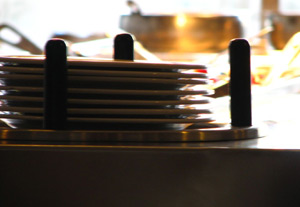
Even buffets respect the warm plate. You know the hole at the end of the buffet that the plates magically rise from (see photo)? That’s not there for ergonomics, that’s a plate warmer.
So, if you’re not doing it already, here is a list of ways to get your plates warm.
- Buy a plate warmer ($35 and up).
- Many ovens have a warming drawer underneath. No, that isn’t a cookie-sheet graveyard.
- Set your cook-top on low heat and lay the plates on top.
- Rinse the plates in really hot water, then dry them.
- Some dishwashers have a plate warmer function, otherwise run the rinse cycle on high heat with a heated dry cycle.
- Put them in the microwave for a short time.
I should also say that the opposite is true, don’t serve cold food on hot plates. For example, when you go to a buffet and they have hot bowls for your “hard” ice cream.
Happy Thanksgiving to my US readers!
Disclaimer: some dishes may not be suitable for some of these methods. Check with the manufacturer to be sure.
Photo Credit: LexnGer (flickr/creative commons/attribution)
BrokenSecrets.com
Stringless Banana Peeling
You’ve probably peeled hundreds of bananas in your lifetime. But, have you ever peeled one and not left any strings behind? Next time, try peeling a banana like a pro… try peeling like a monkey. Watch the video.
PS – This is not me; however, I am concerned for this man’s safety since he has band aids in the kitchen.
BrokenSecrets.com
You CAN Use Foil in the Microwave
Foil can be used in your microwave and I’ll bet you’ve already done it without knowing.
Continue Reading November 19, 2009 at 4:45 am Chad Upton 25 comments


 Broken Secrets