Posts filed under ‘History and Origins’
The Real Names of Brand Name Products
By Kaye Nemec
The weather is getting cold and the air is getting dry. We’re going through more Kleenex and additional Chapstick. We’re cooking warm meals in our Crock Pots and soon we’ll be getting out the wrapping paper and Scotch Tape to prepare for the holidays.

Kleenex, Chapstick, Crock Pots and Scotch Tape are all things that have become common, household names and most of us don’t think twice before calling them by these titles. Like many other popular products, the brand names have become more widely used than their original names. Replacing generic names with brand names has become so common that they have even coined a term for it – Genericide.
Below is a list of items that we commonly use the brand name for instead of the actual name. (more…)
Why It’s Called Black Friday
By Chad Upton | Editor
The term “Black Friday”, originally referred to Friday, September 24 1869, when the value of gold plummeted. It happened because a couple of speculators allegedly drove the price up, telling investors it would increase in value because the government was going to buy it, but the federal government actually sold a significant amount of their gold, which flooded the market and caused the value to plummet. For many investors, it was their financial doomsday.
The contemporary meaning of “Black Friday” refers to the day after US Thanksgiving. This meaning comes from Philadelphia Police, cab and bus drivers. They called it black Friday because they are overwhelmed as huge numbers of people go shopping and cause havoc to their normal routines.
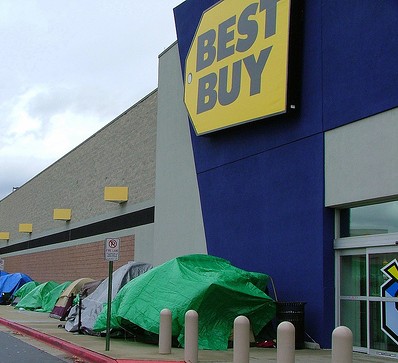
It’s often referred to as the busiest day of the year for retailers, but that’s not entirely true. It is the day when they have the highest number of people in their store, but it’s not normally the highest day of sales for the year, although it’s usually in the top ten.
Update: A couple of comments mentioned the idea that the “Black Friday” name refers to the time when retailers finally turn a profit for the year, moving from “red” ink into “black” on their income statement. Before researching this post, I thought that was the reason too. Wikipedia does mention this idea as an “alternative” explanation that emerged sometime after the term was coined by police, cabs and bus drivers in Philadelphia. Unfortunately, Wikipedia does not provide any sources to indicate that this is a fact for retailers. Although there are many sources that mention this idea, I cannot find any hard data that indicates any retailer operates without profit until the last 6 weeks of the year. If anyone finds any data that shows this, I’d love to include it in this post — it would definitely have significance in the meaning of “Black Friday.”
Broken Secrets
Subscribe on: Facebook | Twitter | Email | Kindle
Photo: Richard Roberson (cc)
Sources: Wikipedia (Black Friday 1869, Black Friday Shopping)
Birthdays Were Not Always Celebrations
By Chad Upton | Editor
Although traditions can vary widely, annual birthday celebrations are pretty common around the world.
In the beginning, only Kings and other royalty were thought to be important enough to have birthday celebrations. At the time, birthdays were not celebrations for common people. They believed that evil spirits searched for people on their birthday, so friends and family would gather to protect the birthday person from the evil spirits. Singing songs and using noise makers was thought to scare the spirits away and gifts were given for good luck.
Of course, modern birthdays are much different. One of the highlights is the cake and the tradition of serving birthday cake comes from Ancient Rome. Originally, cakes were much like bread, the only difference being that cakes were sweeter.
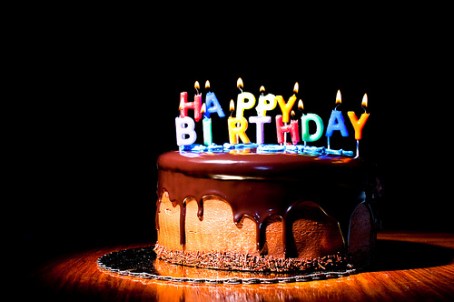
With culinary advancements in the 17th century, cakes began to look more like their contemporary counterparts. At the time, they were a privilege of the wealthy and not until the industrial revolution were the materials and tools affordable and widely available enough for commoners to have birthday cakes too.
Although candles originated in China around 200 BC, it was the Europeans who popularized decorative candles. Candles made their way onto birthday cakes around the 18th century in Germany. Many cultures put enough candles on the cake to equal the age of the person, some cultures adding one more for good luck.
Some cultures also celebrate the birthday of a historical leader or religious figure. One of the most popular is Christmas, which commemorates the birth of Jesus. In the United States we also celebrate Presidents Day on the third Monday of February, which honors George Washington’s birthday (February 22, 1732). Although most people celebrate the day they were born, there are some cultures in Europe and Latin America that also celebrate one’s name day. In that case, if you were named after a Saint, you would celebrate on that Saint’s name day (sometimes in addition to your birthday, other times in place of it — depending on the country).
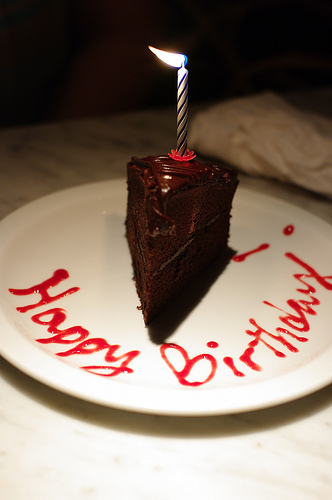 There are many other birthday traditions from around the globe, some are current and others have long passed. In some South American cultures, it was tradition to pull on the earlobes of birthday children, once for each year they have lived. In India, icing from the cake is sometimes rubbed on the face of the birthday person.
In Mexico, a Piñata is a colorful container, often shaped like a star or an animal, that is filled with treats. The birthday person, usually a child, is given a stick to break the piñata or in some countries there are strings to pull open a trap door. Although this is well known, there are many other countries, such as Denmark, India, Sri Lanka, the Philippines, Argentina, Brazil, Japan and others who have similar traditions involving clay pots or other containers that are broken to release treasures.
PS – Today, we are celebrating a very special birthday. Exactly one year and 235 secrets ago, I posted the first secret on BrokenSecrets.com — You Can Use Foil in the Microwave.
Broken Secrets
Subscribe on: Facebook | Twitter | Email | Kindle
Photos: Omer Wzir (cc), Joe Gray (cc)
Sources: BirthdayCelebrations.net, Wikipedia (Birthday, Birthday Cake, Candles, Pinata)
Broccoli is Manmade
By Chad Upton | Editor
The word broccoli is the plural form of broccolo (Italian), which refers to “the flowering top of cabbage.” Of course, that’s because Broccoli is from the same family as cabbage. Kale, closely related to wild cabbage, was carefully bred into a variety of vegetables such as broccoli and cauliflower over a period of 2000 years.
Broccoli is kind of a super vegetable since it contains a ton of lutein, arguably the most important source of vitamin A in the human diet (which is also found in kale and spinach).

So, even if you are genetically predisposed to dislike broccoli, you could try some other popular vegetables in the same family: cabbage, cauliflower, turnip, rapeseed, radish and horseradish.
Broken Secrets
Subscribe on: Facebook | Twitter | Email | Kindle
Photo: Rick Harris (cc)
Sources: Indiana Public Media, Science Daily, Wikipedia (Broccoli, Brassica, Brassicaceae, Cruciferous, Kale, Phenylthiocarbamide)
Bozo the Clown was the First Ronald McDonald
By Kaye Nemec
Weather Man Willard Scott is well known as Bozo the Clown, but what most people may not know is that he is also the man who created Ronald McDonald.
Scott started his show business career on the Joy Boys radio show in 1955 and remained a co-host until 1974. In the 1960’s, Scott began his television career by appearing in children’s programs as Commander Retro and Bozo the Clown. In 1970 his weatherman career officially kicked off when he became the weekday weatherman on WRC-TV. He is also well known for his Smucker’s birthday segment on NBC’s The Today Show.

Original Ronald McDonald Costume
In 1963 a local McDonald’s franchise in Washington D.C., where Scott was living, asked him to create a children’s character for their restaurant chain. He came up with “Ronald McDonald” and appeared in three different television spots in the Washington D.C. area using the phrase, “Ronald McDonald, the Hamburger-Happy Clown.”
In the movie Super Size Me, Eric Schlosser says that McDonald’s decided to replace Scott with someone who wasn’t as overweight because they were concerned about the image they were sending if their mascot did not appear healthy and fit.
Although there are hundreds of actors who play Ronald all around the country, the company likes to keep the illusion that there is only one Ronald. In an effort to create this illusion, all actors are trained on specific mannerisms before performing as Ronald.
Ronald McDonald is still very popular and a widely recognized character today. According to McDonald’s statement about Ronald McDonald, 96% of all school aged kids in America recognize him.
Broken Secrets
Subscribe on: Facebook | Twitter | Email | Kindle
Sources: Wikipedia
Photo: partly cloudy (cc)
The Meaning of “Sport” in Ritter Sport Chocolates
By Kaye Nemec
In 1912, two chocolate lovers fell in love with each other and started the Alfred Ritter Cannstatt Confectionery Factory in Bad Cannstatt, Germany.
By 1919, Alfred and Clara Ritter were ready to take their chocolate to the world. They were very successful and within 11 years, they were already at their third location, which was in Waldenbuch, Germany. In 1932, Clara Ritter had an idea for a new kind of chocolate bar: a chocolate square. Her idea was to have a square of chocolate that fit neatly in the pocket of a gentleman’s sports jacket. It didn’t extend out of the pocket and it didn’t break during daily activities that preceded chocolate eating.
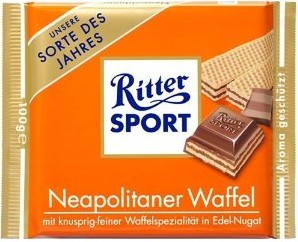
It was a huge hit with consumers and gave birth to the next generation of Ritter products.
Alfred passed away in 1952 and his son, Alfred Otto Ritter, took over the business. In 1966 Clara also passed away and Alfred Otto remained in charge of the family business. By 1960 some items in their product line had begun to fizzle out and Alfred began focusing all efforts on the square chocolate bar, officially creating the Ritter Sport brand.
By 1982, the squares were available in a variety of flavors and each flavor had a uniquely colored package. The original size square had become so popular, the family decided to introduce a new, smaller version of the original. Twenty-two years later the mini chocolate square was followed up by the chocolate cube, available in 6 different flavors.
In 2001 the “RITTER SPORT Chocolate Shop” Visitors’ Center opened in Waldenbuch, Germany. At the Chocolate shop, visitors learn all about Ritter Sport’s history and watch the chocolate get produced. The Chocolate Shop is the first part of what later became the Ritter Sport Museum, which opened in the fall of 2005. The museum stays true to Ritter’s square tradition by showcasing square contemporary art. Most of the art pieces belong to Marli Hoppe-Ritter, a co-owner of Ritter Sport. One of the main collections at the museum is titled, “Homage to the Square” and consists of nearly 600 pieces.

Clara was clearly onto something when she dreamed of the chocolate square, although I doubt she knew how many nights her dream would last or how big such a small chocolate could be.
Broken Secrets
Subscribe on: Facebook | Twitter | Email | Kindle
Sources: Ritter Sport, Ritter Sport Museum
Photos: Museum Ritter
Commonly Misquoted Phrases
By Chad Upton | Editor
Admittedly, I am not an English professor. There are many occasions when readers have corrected me, and I appreciate it, that’s what this site is all about — learning new things.
I’ve noticed a few common phrases that frequently get misquoted in conversations. Even if you know the correct phrase, you might not know it’s meaning or origin. If you’ve got others, share it in comments at the bottom.
Tide over
common misquotes: tie over, tied over
The word “tide” is an obsolete word for time, although it’s still with us in words like “Yuletide” (Christmas Time).
The phrase comes from sailors who had to anchor (or compromise progress) when there was no wind to fill their sails — to prevent the tide from pushing them backwards or off course. The earliest recorded use of the phrase can be found in A Sea Grammar (1627), “To Tide ouer to a place, is to goe ouer with the Tide of ebbe or flood, and stop the contrary by anchoring till the next Tide.”
Down the pike
common misquote: down the pipe
If you’re talking about something in a pipeline, whether it’s literal or metaphorical (like a sales pipeline), then “pipe” does make sense. But, if you’re talking about anything else, then it’s probably “coming down the pike.”
The etymology is pretty straight forward, in this context, “pike” simply refers to “turnpike”, which is a major roadway, usually a toll road. In other words, it just means that something is coming down the road.
Flesh Out
common misquote: flush out
Much like, “coming down the pipe“, “flush out” is a real phrase. But, “flush out” is often used when people actually mean, “flesh out.”
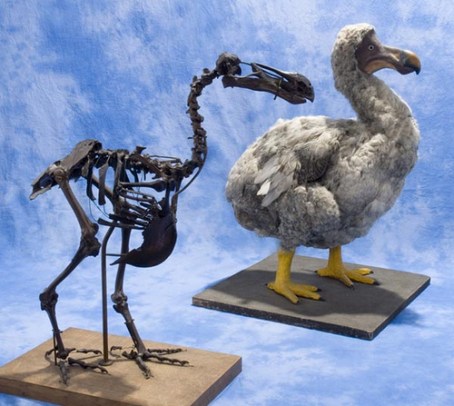
To “flush out”, means to expose or release something, like flushing the toilet. It comes from bird hunting, where one flushes out a flock of birds. To “flesh out” is to bring something to life, to make it real. If you take an idea and make it real, you have put flesh on a skeleton.
Broken Secrets
Subscribe on: Facebook | Twitter | Email | Kindle
Photos: skipnclick (cc), MuseumWales (cc)
Sources: The Free Dictionary (turnpike), Google (pike), UsingEnglish, phrases.org.uk, Wikipedia (Tide), Paul Brians (Washington State University)
The History of Halloween
By Kaye Nemec
Although Halloween has religious roots in Celtic, Roman and Catholic celebrations, it became a more secular holiday in the 19th century.
Two thousand years ago, Celts celebrated New Years on November 1st in the festival of Samhain. Due to the changing climate, that date symbolized the end of summer and the beginning of the cold, dark winter. They associated winter with death and believed that New Year’s Eve, was the night when ghosts of the dead would return to Earth. They believed the presence of the dead allowed priests to better predict the future and their prophecies were taken very seriously. In order to support the priests, the Celts would celebrate Samhain by wearing costumes and building bonfires where they made sacrifices by burning crops and animals.
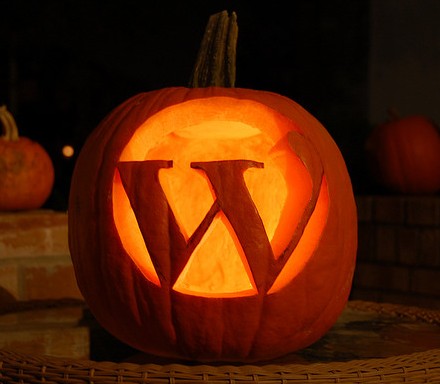
By 43 A.D., the Romans had taken most of the Celtic land and combined some of their traditions with the Celtic festival of Samhain. Romans celebrated Feralia, an event to commemorate the passing of the dead, at the end of October. They also celebrated the Roman goddess of the trees, Pomona, around this time. Pomona’s symbol was an apple and it is believed this celebration is where “bobbing for apples” originated.
Eventually Christian beliefs began making their way through Celtic land and Pope Boniface IV declared November 1st All Saints’ Day, which was also known as All-hallows (All-hallows Eve began to replace the festival of Samhain). About 200 years later, the Catholic Church named November 2nd All Souls’ Day which was a day to honor the dead. All Souls’ Day and Samhain had similar celebrations – costumes and bonfires. Collectively, All-hallows Eve, All Saints’ Day and All Souls’ Day were referred to as Hallowmas.
When Europeans immigrated to America, they brought their Hallowmas traditions; in the late 1800’s the traditions of ghosts and honoring the dead become more family-friendly events like trick-or-treating and neighborhood parties. Hallowmas became Halloween and grew into the child oriented, secular holiday that we are familiar with today.
The “Halloween Capital of the World” is Anoka, Minnesota — a small city near the Twin Cities of Minneapolis and St Paul.
In 1920 Anoka hosted the first documented Halloween celebration and parade in the United States. The Halloween celebration was planned as an alternative to the pranks that had become common around Halloween. Prior to the organized Halloween celebration, troublemakers would let cows out of their enclosures, tip over outhouses and soap windows. City officials wanted to end the pranks and start a more positive Halloween tradition.
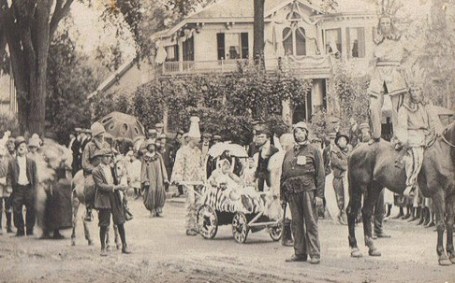
An official Halloween committee was formed and began planning a big event. When the time came, a parade made its way down Main Street and treats like popcorn, candy and peanuts were handed out. In true Hallowmas fashion, the night concluded with a huge bonfire. Seventeen years later, Anoka city officials convinced the United States Congress to grant them the official title, “Halloween Capital of the World.”
Since 1920, Anoka has hosted a huge Halloween celebration every year, except for 1942 and 1943, when it was canceled due to World War II. The city continues the tradition with their annual Halloween celebration. Just like the first year, a Halloween committee is formed, although now it is known as the Anoka Halloween Board of Directors.
This year’s event includes three parades, a pumpkin carving contest, a costume contest, BINGO, house decorating and of course, a bonfire.
Broken Secrets
Subscribe on: Facebook | Twitter | Email | Kindle
Pictures: Eric Martin (cc), Steve Chasmar (cc)
The History of Valentine’s Day
By Chad Upton | Editor

Where did Valentine’s Day come from?
I’d like to say that some marketing genius at Hallmark was looking for a good reason to sell cards between Christmas and Easter, but that’s not the case. Although, they’re not shy about making the best of it — Valentine’s Day is the second most popular holiday for sending cards (Christmas is the leader). Approximately one billion Valentine cards are sent each year.
In elementary school, we used to decorate giant Valentine’s Day envelopes and hang them from our desks. Then we would buy a box of Valentine Cards and write a nice message for every person in our class, except the ones we didn’t like. After that, we’d walk around the room and drop the cards in each others envelopes. That was usually the end of the day, but just before we left, the teacher would feed us cake until we were mad and turn us loose on the neighborhood. (more…)


 Broken Secrets