Posts filed under ‘History and Origins’
The Incident – Why Buses Open Their Door at Railroads
By Chad Upton | Editor
Although it was required by law for school bus drivers to stop at railway crossings in 1938, drivers were not required to open their door.
On December 1st of that year a gruesome accident changed that. It was a blizzard in Salt Lake City, Utah and a school bus driver stopped his bus at a railway crossing. Because of the snow, the visibility was terrible and the driver was not able to see an approaching freight train.
24 of the 40 passengers died, including the driver. According to surviving passengers, the train was broadsided without notice. Although the driver was familiar with the train schedule, the weather had delayed the train which should have passed two hours earlier. To make matters worse, the train was travelling faster than normal to make up for lost time.
Unfortunately, the same crossing saw accidents in 1995, 1997 and 2002. Thankfully, it is now closed.
The snow ultimately led to the horrific crash in 1938, but investigators wanted to know if any precautions could have prevented it. Stopping the bus and looking for trains works great when the visibility is good, but it’s useless in snow and fog. Opening the bus door (and driver’s window), allows the driver to hear trains.

Today, opening the door and/or driver side window is law in many parts of the United States and Canada. The same law is also extended to trucks that carry hazardous materials.
Some crossings do not require these vehicles to stop and they are marked with an “Exempt” sign. This is typical if the crossing is no longer active.
Railroad crossing signals do fail and there are thousands of collisions each year between trains and cars, many of which end in fatalities. Although the signals are fairly reliable, it doesn’t hurt to pay close attention when you approach railway crossings.
Broken Secrets
Get secret updates: Facebook | Twitter | Email | Kindle
Sources: The Pittsburgh Press, NSC.org, Deseret News
Photo: You Need Style (cc)
Toilets: Taboo for TV Until 1957
By Kaye Nemec
Prior to the very well thought out Leave It to Beaver pilot episode in 1957, it was considered taboo to show a toilet on television. If you consider how frequently bathroom scenes (some racier than others) appear in movies and on TV shows now, it is hard to imagine that it was unheard of 54 years ago.
Leave It to Beaver’s pilot episode, Captain Jack, was the first network TV program to bring bathrooms out of hiding when it included a scene with Wally and the Beave with a baby alligator they had ordered through the mail. Assuming a pet alligator would not have been approved, they hid it in the toilet tank.
The toilet scene is at about 3:20
When it was originally filmed, the whole toilet was included in the scene, but CBS refused to air the episode as is. Unable to figure out an alternative place to hide the alligator, the production company was finally able to compromise with CBS and very tight camera angles were used to make sure the seat was kept hidden and only the toilet tank appeared on screen.
The ban on toilets continued even into the late 1970’s when people using toilets on TV was simply not part of scripts. However, during this era All in the Family was the first show to air the sound of a flushing toilet.
Broken Secrets
Get updates from: Facebook | Twitter | Email | Kindle
Sources: The Toilet Museum, Snopes
Secrets of the Red Carpet
By Chad Upton | Editor
The most famous red carpet was rolled out last night for the 83rd Annual Academy Awards. I find the red carpet fascinating, but it has nothing to do with what people are wearing.
While it looks like a random flow of people entering an award ceremony, it’s actually a well choreographed vehicle for publicity — publicity for the event itself and for the people and projects they are involved in.
I walked the red carpet at last year’s Webby Awards, where all of you helped me win a Webby for Broken Secrets. One thing that surprised me was the timing of the red carpet. While it looks like a casual flow of people entering the gala, it’s actually a regulated flow of people selected to pass by the cameras.

Not everyone who attends the event walks the red carpet. Usually, just the guest representing a project will walk the red carpet. Each guest walks at a scheduled time. These times are staggered to maintain an even flow of attendees moving along the press line.
In some cases, the event’s press liaison may provide the press with a list of red carpet attendees so they can decide who they want to interview and produce stories about. If you see someone with an attendee on the red carpet, it is likely their spouse or publicist. A publicist usually walks ahead of their client and decides which media outlets will do the next interviews with the person they represent.
Guests who do not walk the red carpet, escape the press circus by entering through another entrance.
The earliest known reference to “walking a red carpet” is from a play called Agamemnon (458 BC) by Aeschylus. When the hero returns from Troy, his chariot stops at a crimson path for him to walk on. So, like a god, his feet will never touch the earth again.
Broken Secrets
Get updates from: Facebook | Twitter | Email | Kindle
Photo: Ian Muttoo (cc)
Eight US Presidents Were Born British
By Chad Upton | Editor
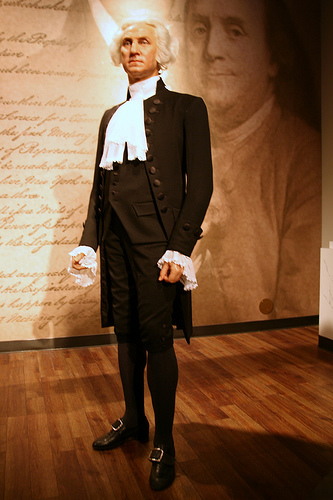
The United States declared its independence from the Kindgom of Great Britian on July 4, 1776. Eight of the first nine Presidents were born before the United States even existed.
They were born in British America, the area that would later make up parts of the United States and Canada. Therefore, these men were technically British subjects at birth.
| Name | Birthday | Birthplace |
| George Washington | 2/22/1732 | Westmoreland, Virginia |
| John Adams | 10/30/1735 | Quincy, Massachusetts |
| Thomas Jefferson | 4/13/1743 | Shadwell, Virginia |
| James Madison | 3/16/1751 | Port Conway, Virginia |
| James Monroe | 4/28/1758 | Westmoreland, Virginia |
| John Quincy Adams | 7/11/1767 | Quincy, Massachusetts |
| Andrew Jackson | 3/15/1767 | Waxhaws Area (NC/SC) |
| William Henry Harrison | 2/9/1773 | Charles City County, Virginia |
*Some of the birthplaces mentioned above were not known by these same names at the time of their birth.
These were all consecutive presidents, except for Harrison. He succeeded Martin Van Buren, who was born in 1782, making him American by birth.
Broken Secrets
Get updates from: Facebook | Twitter | Email | Kindle
Photo: Cliff (cc)
Sources: Wikipedia (USA, US Presidents)
Where the Phrase “Face the Music” Came From
By Kaye Nemec
Have you ever heard someone say, “Well, you better face the music?” Face the music? What does that mean – where did that phrase come from?
The phrase “face the music” has a military history. When disgraced or dishonored soldiers were being relieved of their duties and stripped of their rank their final march was accompanied by drums – it is commonly referred to as “drumming out.”
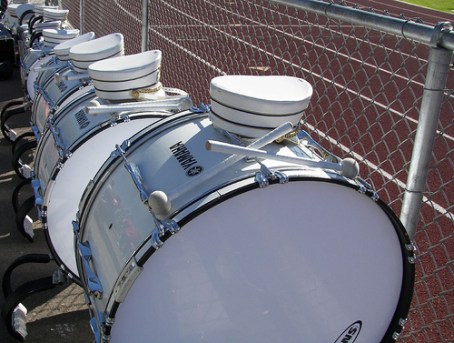
During the Civil War some officers had their heads shaved before drumming out. Although their fellow officers were not permitted to touch them as they passed by, several cases were reported in which the discharged soldier was later found dead.
Some historical references claim that soldiers were forced to sit on their horse backwards as they were marched passed their comrades so they could see and hear the drums – therefore facing the music.
Broken Secrets
Get updates from: Facebook | Twitter | Email | Kindle
Sources: Big Site of Amazing Facts, Wikipedia
Photo: Duane Matsen (cc)
The Word “Nerd” Was First Written by Dr. Seuss
By Kaye Nemec
Although many of us know Dr. Seuss as a children’s author, it was his 15 year career in advertising that really made him famous.
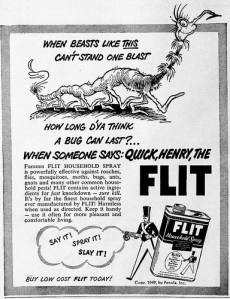
He started working as a freelance writer and illustrator when his talents caught the eye of the ad industry. His first big hit came when he coined the popular catchphrase, “Quick, Henry, the Flit!” Today, it would be comparable to, “There’s an app for that.”
Realizing he had a gift for both illustrating and writing, Seuss wrote his first children’s book, And to Think That I Saw it On Mulberry Street. After submitting it to 27 publishers and receiving 27 rejections, Mulberry Street was finally published with the help of a friend at Vanguard Publishing.
It was a huge hit among teachers and librarians so Houghton Mifflin and Random House asked Seuss to write a children’s book using new-reader vocabulary. They gave him 400 words but told him to cut the list in half. Nine months later, the result was the widely popular, The Cat in the Hat (1957). It uses 223 of the words on the original list and 13 words that are not. Of the 236 words used, 221 are monosyllabic. In three years, about 1 million copies of The Cat in the Hat were sold.
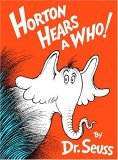 After the success of The Cat in the Hat, Seuss’ editor, Bennett Cerf, bet him that he could not write a children’s book using only 50 different words – 186 fewer words than he used for The Cat in the Hat. In 1960 Seuss won the bet when he published Green Eggs and Ham, a story of only 50 words, 49 of which have only one syllable. It has since become one of the best-selling children’s books of all time.
Dr. Seuss wrote and illustrated several children’s books, most of which have unique histories or quirky facts associated with them. The first time the word ‘nerd’ was used in print was in If I Ran to the Zoo. That wasn’t his first new word, ‘Grinch’ became mainstream after Seuss used it in How the Grinch Stole Christmas.
Broken Secrets
Get updates with: Facebook | Twitter | Email | Kindle
Photos: Joe (cc), davemc500hats (cc)
Sources: Seussville.com, Wikipedia – Green Eggs & Ham, Wikipedia – The Cat in the Hat, Barnes & Noble
Magazine Mastheads Have a Nautical History
By Kaye Nemec
At the beginning of most magazines and newspapers, somewhere near the editorial page, you’ll find the masthead — the page of a publication that lists who is responsible for the magazine “behind the scenes.” Everyone from editors and writers to advertising staff and designers are listed on the masthead. It may also include history of the publication, advertising rates, subscription and circulation information, contact names and numbers. So, why does this source of information have a clearly nautical name?
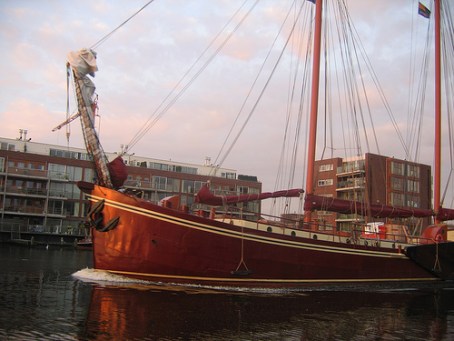
The term masthead did indeed derive from a nautical origin. Specifically, it came from a tradition within the shipping industry where brass plates were commonly displayed on the main mast of ships to showcase the owner of the ship, information about the ship and/or the location of its home port.
Broken Secrets
Get updates on: Facebook | Twitter | Email | Kindle
Photo: hans s (cc)
Why It Is Called a Swan Song
By Kaye Nemec
If you’ve been watching NBC’s The Sing Off, you’re probably familiar with the term “swan song.” At the end of each episode, the group that gets voted off leaves the stage as they perform what host Nick Lachey refers to as their swan song.
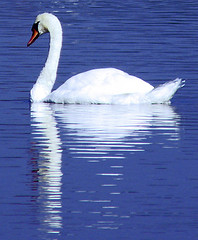 A swan song is used in reference to any final theatrical or dramatic performance. It can also be said that a political candidate is singing his/her swan song during their final political campaign or final term of office.
The term “swan song” comes from the belief that Mute Swans (Cygnus olor) were completely silent until the last few moments of their life, when they would sing a beautiful song. Although this is an ancient myth and was proven to be false, as far back as 77A.D., the legend has lived on and the term swan song has become mainstream.
Although Mute Swans do have a straight trachea that prevents them from making loud noises and, although they are usually pretty quiet, they are not mute. They make hissing, whistling, snorting and soft bark-like noises.
Broken Secrets
Get updates on: Facebook | Twitter | Email | Kindle
Photo: Christian Roberts (cc)
Sources: University of Michigan, Wikipedia
Why We Clink Glasses When We Toast
By Chad Upton | Editor
Many of you will be clinking glasses with family and friends this time of year and there are a number of theories about where this custom started.
One belief is that ancient societies believed that noise would scare away the demons (that they believed) were lurking around every corner. Firecrackers and noise makers are popular instruments to ring in the New Year, also believed to stem from the idea that noise would scare away evil spirits, clearing the way for good things to happen. Wedding bells and clinking glasses are other examples of this belief in practice.
Another legend says that nobles used to try to poison each other, so drinks were clinked to slosh liquid from one drink to the other, demonstrating that the guest’s drink was safe if the host was willing to drink from his now “contaminated” drink. Among trusted associates, table members adopted the “drink clink” to signify their trust that drinks were not poisoned without making a mess of the table — it was a sort of handshake.

A fairly reputable website, Snopes.com, disputes this theory, claiming that poisoning was not common enough for it to change the behavior of society. They also believe that too much liquid would be wasted for it to be practical. I generally trust snopes and usually agree with their proof and supporting statements, but their explanation on this matter has much more proof against than for it.
First of all, the argument that it was messy isn’t very strong. If you believed your life was at stake, you wouldn’t consider it a waste to spill some wine in exchange for your health.
Secondly, there is plenty of proof that poisoning was very common throughout history. The BBC says, “During the age of the Roman Empire, poisoning became a common activity at the dinnertable, especially in the high circles of society. It was certainly a convenient way of getting rid of unwanted family members, as [Emperor] Nero demonstrated.” They have a well researched article that demonstrates poisoning as a common occurrence and a popular anxiety among royals and high society for much of recorded history.
In fact, poisoning wasn’t just common in medieval times, it’s still popular now. There are multiple homicide and suicide cases every year that involve poisoning. In 1998, food was poisoned at a village festival in Japan, killing 4 and injuring 40 others. Recent intelligence has suggested that Al Qaeda groups have discussed poisoning buffets.
Poisons have changed a lot over the years, although arsenic was popular for more than ten centuries, until a method became available to detect it in the deceased. Many modern poisons are actually prescription drugs, including fentanyl — one of the drugs found in Michael Jackson body during the autopsy.
Regardless of poison threats, we continue to clink our glasses as a way to connect with each other. This has been nearly ubiquitous for more than 100 years. In fact, glass makers actually consider the sound that glasses make an important design element. So, Pay attention during your next toast, the sound may be as sweet as the sauce.
Broken Secrets
Subscribe on: Facebook | Twitter | Email | Kindle
Photo: AL404 (cc)
Sources: Snopes, Wine Intro, BBC, CNN
Why They’re Called White Elephant Gift Exchanges
By Chad Upton | Editor
Among friends and co-workers, gift exchanges are popular, especially during the holidays. In the United States, a popular style of gift exchange is called a “White Elephant Gift Exchange.” I’ve done similar gift exchanges outside of the US where they don’t necessarily go by that name, but follow similar rules.
In fact, there are many variations of the rules, but basically, it involves bringing a fun or humorous gift for an anonymous person. In some cases, the rules allow other people to “steal” the gift or switch it for the gift they received. Regardless of the specific rules, I wanted to understand where “white elephants” fit in to these gift exchanges.
Historically, white elephants were sacred among Southeastern monarchs in Thailand, Cambodia, Laos and Burma (and still are in some areas).

This belief comes from a tale that Buddha’s mother had a dream the night before giving birth to him. The dream depicted a white elephant giving her a lotus flower, a divine symbol of purity. For this reason, it was thought that white elephants were sacred, and laws were made to protect them from labor.
Because white elephants couldn’t be put to work, their maintenance costs were out of proportion to their usefulness. Modern day white elephants include kitchen gadgets that seem useful, but take up useful space in your cupboards and rarely get used. (more…)


 Broken Secrets