Posts filed under ‘History and Origins’
The New World Trade Center Remembers What We Lost
By Chad Upton | Editor
It has been ten years since the terrorist attacks on September 11th, 2001. Although the attacks happened in the United States, they were an attack on freedom everywhere. It is not an anniversary we want to remember, it’s an anniversary we never want to forget. That is the spirit on which the redevelopment of the World Trade Center is built.
When complete, the World Trade Center (WTC) will include a train station, performing arts center, retail space, five new office towers, a memorial site and museum. The tallest and most tributary building is Tower 1, nicknamed “The Freedom Tower.” That’s not a superficial name, the new tower embodies freedom and pays homage to the structures that came before it, a common device in architectural design.
The top floor of the new Tower 1 will reach 1,362 feet (415 meters), the same height as the former WTC South Tower. A glass enclosed observation deck will float just above that at 1,368 feet (417 meters), the same height as the original WTC North Tower. An illuminated antenna will reach further, bringing the total height to 1,776 feet (541 meters). The height is a significant symbol of freedom; 1776 being the year the US declared independence from Great Britain.

The antenna’s design draws inspiration from the torch on the nearby Statue of Liberty, a symbol of freedom itself. The blinking aircraft warning light at the top will blink in a slightly irregular pattern, repeating one long flash followed by one short flash. This is Morse code for the letter “N” for “New York.”
Aesthetics frequently differ among structures, but Tower 1 is unique on the inside too. Slated to open in late 2013, this 105 story building will feature a fortified structural base. Basically, the lowest 19 floors don’t contain any inhabitable space. Instead, they form a reinforced concrete pedestal intended to protect the building from ground based terrorist attacks similar to the truck bomb attack in 1993.
The rest of the building employs a redundant steel moment frame with an additional 3 feet (91 cm) thick reinforced concrete shear wall around the inner spine of the building. The core contains elevators, stairwells, electrical risers and sprinkler systems. These structural features and redundancies make it the strongest skyscraper ever built.
There are some additional safety considerations too. The building is situated 65 feet (20 m) away from the street, nearly triple the distance the twin towers were from the street. Additionally, the windows nearest the road will be made of a special blast-resistant plastic. The ventilation system contains biological and chemical filters and there are extra-wide emergency stairs exclusively for firefighter use.
There are seventy elevators, including some super high-speed elevators that travel at 33 feet per second (10 m/s). Some elevators are exclusively for emergency and non-ambulatory use. For safety, elevators will have their own backup power supplies and stairways will be pressurized to keep smoke from entering them.

Looking at the site plan, you may notice that WTC 6 is missing. WTC 1 is on the former site of WTC 6, so there will not be a new WTC 6. Although this plan calls for a WTC 5, the future of that tower is in question. The plans for WTC 5 were scrapped in 2008 when the major tenant pulled out in favor of another location in midtown manhattan. Tower 5 may get built, but there are no concrete plans at this time.
At the center of the site, a beautiful memorial has been created in the space that was once occupied by the twin towers. The memorial will be dedicated on September 11th, 2011 and be open to families who lost someone in the terrorist attacks. It will open to the public the following day.
Architects also designed the site so that every September 11th, between 8:46 am and 10:28 am (the time the first plane hit to the time the second tower collapsed), the alignment of the Earth and Sun will create a bright wedge shaped highlight that focuses light toward the memorial plaza.
The two footprints of the original towers will be represented by square shaped waterfalls, some of the largest man-made falls in the world. The names of nearly 3,000 victims of the 1993 and 2001 terrorist attacks will be memorialized in a bronze bezel that will surround the two square waterfalls. Over 400 trees have been brought in from around New York, Pennsylvania and Washington, DC, to honor those who died in the WTC, on Flight 93 and in the attack on the Pentagon. Among these trees, there is one that was actually on-site when the towers collapsed.
Known as the “Survivor tree,” this callery pear tree was burned by the fires and covered by the rubble when the towers collapsed. The tree was uncovered weeks later and taken to a nearby nursery. It was not expected to survive, but after tender care and pruning, it has grown 30 feet tall and returned to the World Trade Center site. While the waterfalls, and the names around them, represent what we lost, the survivor tree represents the courage, growth and perseverance that remains.
Broken Secrets | Facebook | Twitter | Email | Kindle
Images: Silverstein Properties (fair use), wikimedia commons (gnu)
Sources: Lower Manhattan Development Corporation, LowerManhattan.info, WTC.com, NYPost, 911 memorial, dna info, wikipedia (1 world trade, World Trade Center Site), popsci
Only One Plane Was Allowed to Fly After Flights Grounded on Sept 11th 2001
By Chad Upton | Editor
After the planes hit the twin towers on 9/11/2001, all commercial air traffic was grounded. But, a cross country flight was the only thing that could save one man’s life.

A couple hours after the terrorist attacks in New York and Washington, Lawrence Van Sertima, a snake handler of 40 years, was about to get his first snake bite. He was handling a Taipan snake, one of the most deadly in the world, when it became uncooperative and bit his thumb. He instantly knew he was in trouble.
Since air traffic was grounded, he could not be taken to the hospital by helicopter. It took 40 minutes to get to Miami’s Baptist Hospital by ambulance.
The venom from this particular snake attacks the blood, muscles, kidneys and heart. It’s one of the worst possible scenarios. Within hours he was in critical condition and soon bled from his eyes and mouth.
Miami-Dade’s Fire Rescue has a snake bite unit called “Venom 1.” They had 5 vials of a polyvalent antivenin, designed to treat multiple types of snake bites. It helped, and was barely keeping Van Sertima alive. He needed the monovalent antivenin, made from the venom of the Taipan snake, as soon as possible. Unfortunately, there were only two places that it existed: New York and San Diego.
The chances of getting clearance for a plane to take off from New York were unlikely, so they tried San Diego. The FAA in Washington granted permission for the flight, although it had to be escorted by two fighter jets. Within 45 minutes of landing, the antivenin was being administered.
Van Sertima recovered and learned about the terrorist attacks a few days later.
Bonus: Anti-venom and antivenin are the same thing.
Broken Secrets | Facebook | Twitter | Email | Kindle
Image: thefixer (cc)
Sources: discovery.com, jacksonville.com, clickorlando.com
The First IBM ThinkPad Was a Paper Notebook
By Chad Upton | Editor
IBM’s first notebook computer went on sale in 1992. The name ThinkPad was borrowed from a notebook they already made — a paper notebook.
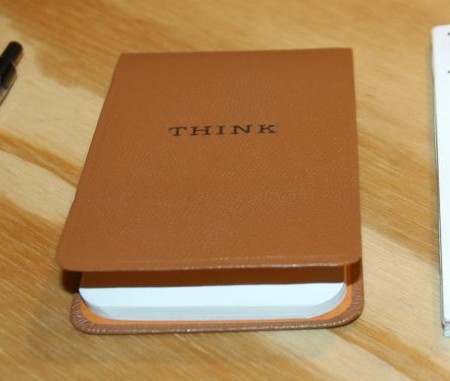
In the 1920s, IBM’s corporate slogan was “THINK!”
For inspiration, employees and customers were given paper notebooks with the word “THINK” embossed in the cover.
While on a coffee break, IBM researcher Denny Wainwright was inspired by the notepad and came up with the name for their notebook computer line, “ThinkPad.” In fact, the idea for the notebook computer was first conceptualized on the paper inside one of the brown leatherette notepads.
In 2005, IBM sold the ThinkPad brand for approximately $1.75 billion. While they’re not known for style, both IBM and Lenovo manufactured ThinkPads are renown for high quality and reliability.
Broken Secrets | Facebook | Twitter | Email | Kindle
Photo: Chris Metcalf
The Origin of Father’s Day
By Chad Upton | Editor
Although I often think about how lucky I am, I rarely take the opportunity to thank my dad. I’m sure most people are the same and that’s one of the reasons why we take one day every year to honor our fathers.
The first Father’s Day was celebrated on July 5, 1908 in Fairmont, West Virginia. It was inspired by two recent events. Several months earlier, 210 men died the Monongah Mining Disaster, many of whom were fathers. Also, the first Mother’s Day celebration took place nearby only a few months prior.
But, the founding of Father’s Day is often credited to Sonora Dodd, who independently started her own Father’s Day celebration in Spokane, Washington two years after the first one in Fairmont, West Virginia. Her father was a widowed single dad who raised six children on his own. This was unusual for the time since widowed men typically remarried quickly or found others to care for their children. The heroism of Sonora’s dad inspired her to create a day that recognized fathers.
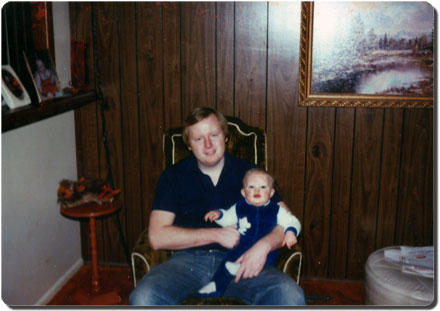
Father’s Day is celebrated all over the world at different times of the year, although most countries recognize it at some point during the summer months. Father’s Day celebrates all fathers, paternal bonds and the influence of father’s on society.
You don’t have to buy your dad an awesome gift, you can give him something that he probably tried to give you: food, fun and great memories. If possible, go visit your dad and do something that he will enjoy.
I’ll give you a few ideas. You could take him to visit a childhood home and remember the good times you had there. You might go for dinner at one of his favorite greasy spoon restaurants or buy a load of fireworks and set his deck on fire again.
On that note, perhaps you and your father don’t get along well. But, hopefully you can find an example of some positive contribution your father has made to your life and be thankful for that. If nothing else, try to let him know that you appreciate that.
I wish that everyone could be as lucky as my brother and I, to have a great dad who has made many sacrifices, along with our mom, to give us wonderful experiences, beneficial opportunities and unconditional love.
Thank you.
Broken Secrets | Facebook | Twitter | Email | Kindle
Sources: Wikipedia, TimeAndDate.com
Starbucks is Named After a Moby Dick Character
By Chad Upton | Editor
In 1971, an English teacher, a history teacher and writer started a coffee roasting business in Seattle.
It’s not surprising that such an intellectual group would have an affinity for classics like Moby Dick. In fact, Starbucks was nearly called Pequod, the name of the whaling ship in Moby Dick. Thankfully, one of the partners rejected the name. Instead, they went with Starbucks, the name of Pequod’s first mate.

Although Starbuck was a fictional young quaker from Nantucket, there were a number of real sailors from that era named “Starbuck.” Naming a coffee company was not the first time the Starbuck name was borrowed either. There is an island in the South Pacific, a popular region for whaling, called Starbuck Island.
Starbuck Island was heavily mined for phosphate in the late 1800s and many ships were wrecked there. The high frequency of shipwrecks was probably caused by the reefs that surrounded the island, but there is a mythical explanation too.
In Greek Mythology there are seductresses who lure sailors to shipwreck on the coast of their islands. These mythical creatures are called Sirens and the Starbucks logo contains one.
Broken Secrets | Facebook | Twitter | Email | Kindle
Images: Wikimedia (Starbucks)
Sources: Wikipedia (Starbucks, Moby Dick, Starbuck Island, Siren)
Indy 500 Winners Celebrate with Milk
By Chad Upton | Editor
Forget champagne this Sunday, one of the most popular car races in the world will award the winner an unusual prize: milk.
This Indiapolis 500 tradition was inspired by Louis Meyer. After winning his second Indy in 1933, he requested a glass of buttermilk. He requested another glass after his third win in 1936, but was given a bottle instead.
A photographer captured Meyer holding up three fingers, signifying his third win, and holding his glass of milk in the other hand. A dairy executive saw the photo and realized the marketing potential by promising the winner of future races a bottle of milk.

The tradition has persisted to this day, apart from 1947 to 1955 and two other exceptions when drivers declined to drink the milk. Most notably, in 1993, Emerson Fittipaldi drank orange juice instead of milk. He owned orange groves in his native Brazil and wanted to promote the citrus industry. The self promotion and break from tradition earned criticism from fans.
Although Meyer started the tradition with buttermilk, that’s not an official option — the winner can choose between skim, 2% or whole milk. However, the winner can buy a lot of buttermilk with the cash prize, estimated around $1.5 million.
Broken Secrets | Facebook | Twitter | Email | Kindle
Photo: Tim Hohm (cc)
Sources: Wikipedia (Indy 500, Emerson Fittipaldi), Yahoo, about.com
Shakespeare Coined Hundreds of Words and Phrases In Use Today
By Kyle Kurpinski
Among high schoolers (and even among many adults) William Shakespeare’s writing has a reputation for being horrendously confusing. Consider this quote from The Tempest (IV, i, 51-54):
Look thou be true; do not give dalliance
Too much the rein: the strongest oaths are straw
To th” fire i’th” blood: be more abstemious,
Or else, good night your vow!
I am well out of high school, but passages like that remind me why I majored in Engineering and not English Lit.
Yet, the Bard’s reputation for using baffling and “archaic” language isn’t necessarily well-deserved. Estimates vary as to the exact number of unique words found in Shakespeare’s complete works, but there is a general consensus that his plays and poetry contain approximately 1,700 words never previously seen in print, and not all of them are obscure relics like crant (garland/crown) or rigol (circle). Here is just a small sampling of “everyday” words originally given to us by William Shakespeare:
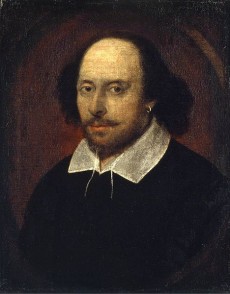 Bloody
- Bump
- Critic
- Eyeball
- Gloomy
- Gossip
- Housekeeping
- Hurry
- Laughable
- Lonely
- Obscene
- Road
- Skim milk
If that wasn’t enough of a contribution, the Bard also created phrases such as:
- Wear one’s heart upon one’s sleeve
- Love is blind
- Good riddance
- Heart’s content
- Discretion is the better part of valour
- A foregone conclusion
Shakespeare didn’t necessarily invent all these bits of language; he wrote at a time when English was rapidly evolving and mass publishing was in its early stages, so in some cases he may have only been the first to print them. But even if he didn’t coin all these terms from scratch, most scholars seem to agree that he was probably responsible for a fair share. Confounding verses and outdated words aside, Shakespeare should be remembered for what he was: one heck of an incredible writer and a pioneer of new language. To see more of Shakespeare’s commonly used words and phrases, click on the sources below.
Broken Secrets | Facebook | Twitter | Email | Kindle
Source: No Sweat Shakespeare, Shakespeare-Online, WordSpin, The Phrase Finder, Wikipedia
Image: Wikipedia
What Does Esquire Mean?
By Chad Upton | Editor
It’s a magazine. It’s a watch brand. It’s a title or a suffix that may follow a person’s name.
Throughout time, the precise meaning of the title has fluctuated.
In medieval times, an Esquire (or “Squire”) was the rank below Knight, generally a Knight in training. Later, it symbolized a noble man, usually born with wealth and power.
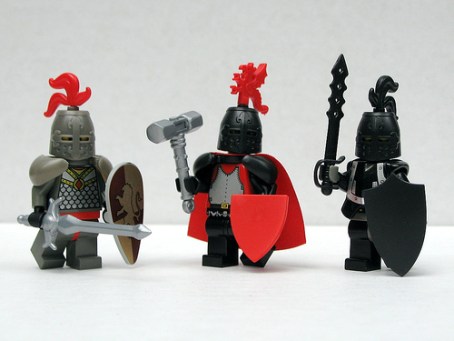
Today, Esquire has a different meaning. Although it’s not particularly common, when it is seen, it is usually follows a person’s name (ex Johnnie Cochran, Esq).
In that case, it identifies him as a laywer — more specifically a barrister (although this distinction is not generally made in some countries such as the US). It may also designate judges or other town officials.
In England, it may be used to describe any man, but it also has more formal uses. For example, when British men are invited to Buckingham palace, their mailing address will include the Esquire suffix, while foreign men will be addressed as “Mr.”
It is bad form for one to identify themselves with the Esquire title, it should only be used in reference to someone else. Also, it supercedes all other titles. In other words, if “Esq” follows a name, “Mr” should not precede it.
Broken Secrets
Get secrets on: Facebook | Twitter | Email | Kindle
Sources: Random House, Princeton.edu, Wikipedia (Esquire), Esquire.com
Photo: Andrew Becraft (cc)
Motel 6 Charged $6.00 for Motel Rooms
By Kaye Nemec
In 1962 a couple of building contractors decided to open up a chain of motel rooms that would be available at extremely low rates. It took two years for their business plan to be developed and, in the end, they decided to market themselves as a “no-frills” motel chain, offering customers an alternative to the higher-end hotels that were becoming popular. The budget-saving strategies included black and white, coin operated TV’s in the rooms, basic room décor and no on-site restaurants. The low cost plan allowed them to charge only $6.00 per night for a room.

Today corporate policy still states that Motel 6 will always have the lowest rates of any national chain.
On a related note, Super 8 was opened in 1972 with rates starting at $8.88 per night.
Broken Secrets
Subscribe on: Facebook | Twitter | Email | Kindle
Sources: Wikipedia, Wikipedia (Super 8)
Photo: J. Stephen Conn
Why Some Restaurants Provide Wet Towels at Meals
By Chad Upton | Editor
If you’ve ever flown first class or eaten at a first class restaurant, you’ve probably been handed a wet towel. The first time this happens, you’ll probably be confused and look to others for guidance on what to do with it.
Generally, it is used to clean your hands. This tradition comes from Japan, where “oshibori” (wet towels) are handed out before meals, to clean hands. In Japanese restaurants, they may be hot or cold, depending on the season. Some people may also use the towels to clean their face.
This tradition has been expanded outside of Japanese restaurants where the practice varies greatly. In Western restaurants, wet towels may be served beforeand/or after the meal — to clean your fingers and around your mouth. According to Etiquette Scholar, it is not polite to clean beyond these areas, such as your neck or behind your ears, in a restaurant.
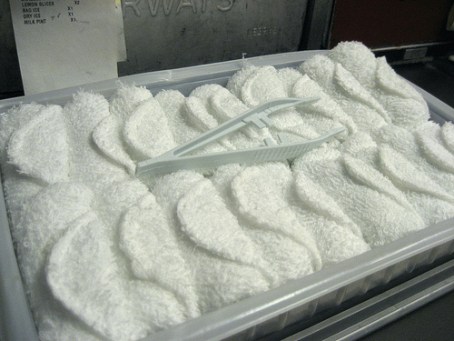
Many airlines offer wet towels, particularly in first class. They are sometimes offered immediately after takeoff, which is standard in first class on British Airways, among others. These towels are usually hot, but may be cold if you’ve just boarded from a particularly hot environment or if the cabin air conditioning is out-of-order. At this time, they are useful to clean your hands before eating or to clean the travel sweat off your skin (forehead, back of your neck, etc.). On longer flights, wet towels may also be served after a meal or just prior to landing.
Wet towels are traditionally made from cotton and moistened with water. Lemon juice is sometimes added to the water for its fragrance and degreasing properties. In recent years, pre-moistened disposable towels have gained popularity and are often wrapped in a plastic package. These towels come unscented and in a variety of fragrances. They sometimes contain other cleaning solutions such as alcohol.
The next time you’re given a wet towel, you can tell everyone what it’s for and where this tradition came from.
If you’re interested in a particularly long, fairly humorous and sometimes snobby discussion about wet towels, you’ll love this thread on FlyerTalk.com.
Broken Secrets
Get secrets via: Facebook | Twitter | Email | Kindle
Photo: Christopher Doyle (cc attribution)
Sources: FlyerTalk.com, PlanetTokyo, Wikipedia, Airline Towels, Etiquette Scholar


 Broken Secrets