Posts filed under ‘Health and Beauty’
How to Save 25% on Medical Bills
By Kaye Nemec | Contributor
If you’ve recently undergone some sort of medical procedure and are nervous about the number of digits when the bill arrives, relax. Medical bills aren’t necessarily black and white; some frugal patients have discovered a secret.
According to a recent New York Times article, most hospitals and doctor’s offices are willing to negotiate price if it means at least part of their bill actually gets paid. In a time when the economy isn’t exactly booming and some people can’t afford health care, more and more medical bills are left untouched. If you’re looking to steer clear of collection agencies and maintain your credit, you may be able to benefit from other people’s “dine & ditch” version of medical procedures.
So what’s the trick? Haggle.
Call your doctor, hospital, dentist etc. and ask them to give you a discount if you pay your entire bill immediately over the phone. Angie’s List recently performed a consumer survey about this topic and found that 74% of people received a discount on medical bills simply by asking for it.

If you’re the planning ahead type, check out the website HealthCareBlueBook.com before scheduling a medical procedure. They’ll give you an estimate of what some of the most common procedures should cost, that way you can shop around and see how much various providers are charging. Once you find the best deal, schedule the appointment, then call afterward to haggle your discount. Check out their section on How to Negotiate Healthcare Prices for even more tips on lowering your bill.
Even if you’ve never used the salesperson of the month parking spot, it’s easy to ask for a discount. The worst that can happen is: they say, “no”
Your request can be as simple as, “Hello. I have a labor and delivery bill from your hospital for $1,700.00 and I heard that if I pay it in full over the phone I can get a 25% discount. I’d like to go ahead and do that today.”
I’m wondering, could this also work at the vet? If you thought medical bills for humans were outrageous, try having a puppy and you’ll soon learn what astronomical looks like.
Broken Secrets
Subscribe on: Facebook | Twitter | Kindle
Sources: NYT, CBSNews.com, Angie’s List, HealthCareBlueBook.com
Photo: Maxios (cc)
Cats Cannot Taste Sweetness in Food
My favorite classic science fair exhibit is the taste buds booth.
It’s like going to the electronics department in Costco — you eat free food samples while some kid tells you stuff you’ll never remember because all you’re thinking about is how you can get away from the booth without it looking like you just came over for the free food samples.
Taste has been studied for a long time. In 1901, Harvard professor Edwin G. Boring published a paper that stated different taste receptors can be found on different parts of the human tongue. His last name was Boring, but his work was not. In fact, his work is slightly controversial since all areas of the tongue are sensitive to all tastes; however, some areas are more sensitive than others.
Some wine and beer glasses are shaped to encourage the liquid to hit certain parts of your tongue first, this is supposed to deliver the ideal taste sensation for that drink.
 There are five generally accepted taste sensations:
- Sweet
- Bitter
- Savory
- Salty
- Sour
Most mammals can experience all of these sensations. There are some exceptions, particularly with sweetness. New world monkeys do not perceive aspartame as sweet. Humans, apes and old world monkeys do. Cats cannot taste sweetness at all.
Broken Secrets | By: Chad Upton
Subscribe on: Facebook | Twitter | Kindle
Sources: Wikipedia (taste buds, sweetness, wine glass), Scientific American
Why Chocolate is Dangerous for Dogs and Not Humans
Whether it was your idea or not, your dog or cat may swallow chocolate at sometime in their life.
You want to avoid that since there are two toxins in chocolate that can have adverse affects on your pets: caffeine and theobromine.
Both of these drugs are very similar, but chocolate contains a lot more theobromine than caffeine. Theobromine does not affect the human nervous system as much as caffeine, nor is it as addictive as caffeine. But, theobromine is still addictive and believed to be the agent that causes Chocolate addiction. It is also believed to be responsible for chocolate’s notoriety as an aphrodisiac.
 Although theobromine increases heart rate in humans, it also dilates blood vessels, which reduces blood pressure. In fact, it is superior to codeine at suppressing cough and can be helpful in relaxing muscles to alleviate symptoms of asthma.
Humans are able to consume chocolate in moderation because we can breakdown theobromine fairly quickly. In dogs, cats, rats and other species, they cannot digest it efficiently. This leads to a buildup of this toxin and is known as theogromine poisoning. Actually, this can also happen to elderly people who consume large quantities of chocolate.
For animals, a dangerous quantity of chocolate depends on the type of chocolate. Milk chocolate is not as dangerous as semisweet chocolate and it’s not as dangerous as cocoa powder.
Milk chocolate contains approx 44-64 milligrams of theobromine per ounce. Semi-sweet chocolate is about 150-160 mg/oz. Cocoa powder is 800 mg/oz.
A toxic dose for pets is 100-200 mg/kg of body weight (1 kg = 2.2 pounds). That said, problems can still be evident with smaller doses.
Signs of toxicity include:
- Excitement, nervousness, trembling
- Vomiting or diarrhea
- Excessive thirst
- Muscle spasms
- Seizures
- Coma
- Death (usually a result of other problems caused by the toxin)
As much as people like to treat their pets like humans, they are not human and should not be treated like humans when it comes to diet. There are many other human foods that are not recommended and poisonous to pets:
- Alcohol
- Avocado
- Coffee
- Fatty Foods
- Onions
- Raisins and grapes
- Salt
- Yeast dough
- Garlic
- Artificial sweetener
Pet’s digestive systems are very different from humans. Checkout Vetinfo for more details on why some of the above foods should not be fed to your animals.
Thanks to Ryan W for suggesting this secret.
Broken Secrets | By: Chad Upton
Subscribe on: Facebook | Twitter | Kindle
Sources: Wikipedia (Theobromine), About.com, Vetinfo
How to Buy the Right Shoes for Your Feet
Considering how much time you spend wearing shoes, how much time have you spent understanding what’s unique about your feet?
Unless you’re an avid runner or maybe work at a shoe store, you probably don’t know how to buy shoes that compliment your feet and the way you use them. It can be hard enough to find a shoe that looks good, fits on your foot and feels comfortable, but it takes even more to find a pair that fits your arch and the angle of your ankles. But there is a way.
Even if you don’t run, you can still benefit from buying the right running (or walking) shoes — especially if you spend a lot of time on your feet at work or at play.
For example, the only “running” I do is running errands, but I often wear running shoes because they’re comfortable and lightweight. With the right shoes, there is less stress on your feet, ankles, knees and hips.
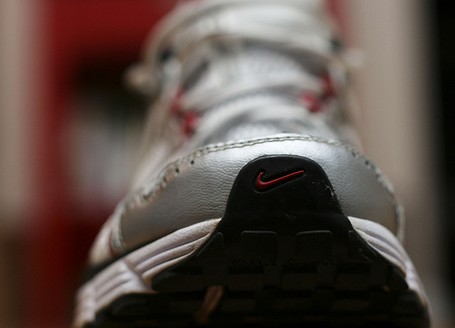
When you walk, the heel of your foot will touch the ground first and as you roll your foot forward, your weight will be transferred to the front of your foot. Depending on the angle of your foot, you may be putting more weight on the inside or outside of your foot. Doing that hundreds or thousands of times a day can lead to pain and discomfort in your feet and other parts of your body.
If your hips, knees or ankles produce external rotation, you will be more likely to angle your feet as you walk (known as pronation of the foot). Your shoes can compensate for natural irregularities or make them worse and that’s why it’s important to get the right shoes.
Good shoe stores will help determine your arch type and level of pronation. Once you know your arch type and pronation, there are different shoes that will suit you. A local running shop is a good place to start, they’re generally the most knowledgeable retailers of shoes. Some websites with good fitting advice are: Road Runner Sports, Zappos, Dick’s and New Balance.
One way to determine your arch type is by standing (to put weight on your feet), then sliding your index finger under your arch. If you get your finger up to 1/2 an inch under your foot then you’ve got a low arch. 1/2 inch to 1 inch is a medium arch. More than an inch is a high arch.
The other way to determine arch type is the paper bag test. You wet your feet and stand on a paper bag. Looking at your wet footprint and the size of the gap left by your arch, you can tell if you have a low, medium or high arch. This way is pretty common, but it’s a bit more subjective than the index finger method.
To determine your pronation (ankle roll), you’ll need the help of a friend. They will stand behind you to see how your ankles behave as you walk. If your ankles stay very straight, then you have neutral pronation. If they roll slightly inward or outward then you’re considered an under-pronator. If they roll inward excessively, then you’re an over-pronator.
Another way to determine pronation is to put a used pair of your running shoes on a flat surface and see if the shoes tilt inward towards each other, or tilt outward, away from each other.
 Shoes are divided into three categories for different feet type: stability, motion control and neutral. Stability shoes are for under-pronators. Motion control shoes are for severe over-pronators and perhaps obviously, neutral shoes are for neutral pronation.
Most online retailers categorize shoes into these groups. A good shoe store will be able to tell you which shoes are your type as well.
The other approach to running footwear is: barefoot. There is a popular book on running called Born to Run which suggests that we are literally born to run in our bare feet and the best runners in the world come from tribes of barefoot runners who run well into old age without injury.
For now, I think I’ll stick with my runners.
Thanks to Kristen for suggesting this secret!
Broken Secrets | By: Chad Upton
Subscribe on: Facebook | Twitter | Kindle
Sources: Wikipedia (Foot type), New Balance (Running Gait), Zappos, Dick’s
Photo: Jason Alley (cc)
The Three Plants That Will Improve Your Home Air
Spring is here and the garden centers are open. It’s time to get some plants, especially for inside your home.
Indoor plants are really important. There are chemicals in and on almost everything you buy. If your air is not replenished with fresh air, it can be mildly toxic. But, with the right mix of plants, your air can be cleaned and oxygenated around the clock.

With as little as these three plants, you can have this perfect mix:
- Areca palm – (Chrysalidocarpus lutescens)
- Snake plant or mother-in-law’s tongue – (Sansevieria trifasciata ‘Laurentii’)
- Golden pothos or Devil’s ivy – (Scindapsus aures or Epipremnum aureum)
The “Areca Palm” removes CO2 and converts it into oxygen during the day. The “Snake Plant” converts CO2 into oxygen at night. The “Golden pothos” removes formaldehyde and other chemicals from your air.
Using these plants has shown significant oxygen level improvements in real world situations. Having these plants in your home can increase blood oxygen levels by 1% in 10 hours. They can reduce headaches, eye irritation, asthma and other respiratory problems.
These three plants are just a few of the many plants that are considered Air Filtering Plants. NASA has identified a number of similar plants in it’s Clean Air Study — an attempt to understand natural ways to purify air in closed spaces, on earth and beyond.
Read about the other plants or watch Kamal Meattle’s talk at TED for more info.
Broken Secrets | By: Chad Upton
Subscribe on: Facebook | Twitter | Kindle
Photo: Leto A (cc)
Sources: TED, Air Filtering Plants
You Can’t Grow Hemp in the US But You Can Import It
Hemp is a plant with a long and interesting history, especially in the United States.
Farmers cannot freely grow hemp in the US, but many companies import hemp products for resale, mostly from Canada and the UK.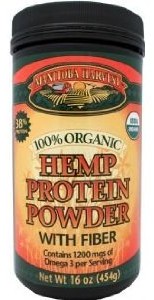
The problem is that hemp is from the same plant family (genus) as marijuana. But hemp is not a drug, it is a raw material that is used much like cotton. We all know that cotton is great, we use it for making: t-shirts, socks, denim for blue-jeans, fishnets, coffee filters, paper and many other things. Considering everything we use it for, it’s a miracle plant.
But, cotton has some limitations. It can only be grown in areas that get a lot of sunshine, have consistent rainfall and long frost-free periods. Cotton also requires a lot of pesticides: 50% of the world’s pesticides are sprayed on cotton.
Imagine a plant with all the benefits of cotton, but it has even stronger fibers, could be grown anywhere in the country and doesn’t require pesticides or herbicides.
That plant is called hemp.
At the risk of sounding like a huge hippie, hemp is a perfect plant. Frankly, I am not a hippie — I only own one hemp product: hemp protein powder.
Hemp as a food source is one example of why it’s so perfect. The seeds contain all of the essential fatty acids and essential amino acids required for a human to be healthy. It also contains a lot of fiber, another essential part of the human diet.
When used as a textile, hemp is stronger and more mildew resistant than cotton. For that reason, hemp is an excellent material for making canvas boat sails, and it was used for that exact purpose by Christopher Columbus. (more…)
Caffeine Makes Headache Medicine Work Faster
Not all, but some medicine actually contains caffeine to make it work faster, particularly headache relief medications.
I went to CVS pharmacy and snapped this picture of their headache relief formula.
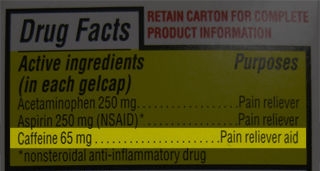 As you can see, the main ingredients are acetaminophen (aka “Tylenol”) and Aspirin. But, there is a significant amount of caffeine too.
At 65 mg, that’s about the same amount of caffeine as a cup of coffee. Caffeine allows faster absorption of these drugs and makes them 40% more effective according to Web MD. That means you don’t need to take as much, saving you some money and reduces side effects.
Although it reduces the amount of painkiller you need to take, it raises the amount of caffeine you consume. This creates a slight risk of additional headaches due to caffeine withdrawal when you stop. Be sure to read the package directions and not take more than recommended.
Broken Secrets | Written By: Chad Upton
Sources: Web MD, International Coffee Organization, WP Caffeine, WP Codeine,
Vocal Throat Spray for Singers
Most high end sports cars and almost all race cars use synthetic lubricants in their engines. Between the really high temperatures, extreme pressure and intense friction, plain old oil just doesn’t cut it.
Lap after lap, hour after hour, there’s a lot of wear from all that horsepower.
Although I was surprised to learn about this secret weapon of professional performers, it only makes sense that high performance voices get their own brand of lubricant for their motors too. If you’re going to take your vocal chords for a lap, you might want to grease the wheels with vocalist throat spray.

It’s not just singers who can benefit from these sprays. (more…)
How to Sterilize Your Toothbrush
Whether you plan to buy your own dental tools, or clean baby bottles, you should understand how to sterilize some important household items.
The purpose of sterilization is to remove fungi, bacteria, viruses and spores. Some people believe exposure to some bacteria is a good thing, and they might be right, but exposure to some varieties of these organisms can be very bad for you.
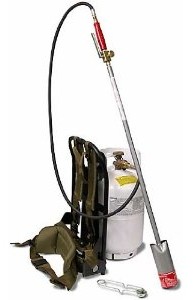 There are a number of ways to perform sterilization using: heat, chemicals, radiation, pressure and filtration.
Heat is probably the most misunderstood method of sterilization. It is a popular practice to boil baby products in water and if the duration is long enough, it may disinfect them but it does not sterilize them. The boiling method is really good at removing particles, which can be a source of bacteria, but is not great at killing the bacteria itself. If you do use this method, be sure to start with cold water since hot water from your tap is already a bacteria risk (see: why you shouldn’t drink hot water from your tap).
To sterilize with heat, you need a holding time of 3 minutes at 273 °F (134 °C). Water turns to steam at 212 °F (100 °C), so you can’t use water to sterilize something directly. But, you can use steam. In fact, that’s basically what hospitals use inside a device called an autoclave. It is like a small dishwasher that uses steam and pressure to sterilize items. Color changing tape is used inside to tell the operator when optimal sterilization conditions have been met. Some new dishwashers and clothes washing machines have steam cycles too.
How to Clean an LCD Screen
Between televisions and computer screens, most readers likely have at least one LCD screen to clean. It’s really important to know how to clean one, but maybe even more important is how NOT to clean one.
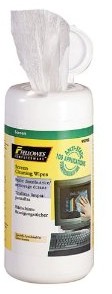 DO NOT use the following:
- Paper products
- Glass cleaner
- Tap Water
The first suggestion I would make is to check your manual for exact cleaning instructions. In many cases, they will recommend their own expensive cleaning solution (more on the contents of that later) but they may also warn about using alcohol or some other cleaners.
Your computer screen will probably get much dirtier than your TV screen, since you cough and sneeze very close to it. Not to mention, whenever somebody else points to something on your screen it is traditional to leave a finger print — that is so you remember exactly where they were pointing until you clean it off during your Friday afternoon time wasting routine. (more…)


 Broken Secrets