Posts filed under ‘Food and Drink’
Why We Clink Glasses When We Toast
By Chad Upton | Editor
Many of you will be clinking glasses with family and friends this time of year and there are a number of theories about where this custom started.
One belief is that ancient societies believed that noise would scare away the demons (that they believed) were lurking around every corner. Firecrackers and noise makers are popular instruments to ring in the New Year, also believed to stem from the idea that noise would scare away evil spirits, clearing the way for good things to happen. Wedding bells and clinking glasses are other examples of this belief in practice.
Another legend says that nobles used to try to poison each other, so drinks were clinked to slosh liquid from one drink to the other, demonstrating that the guest’s drink was safe if the host was willing to drink from his now “contaminated” drink. Among trusted associates, table members adopted the “drink clink” to signify their trust that drinks were not poisoned without making a mess of the table — it was a sort of handshake.
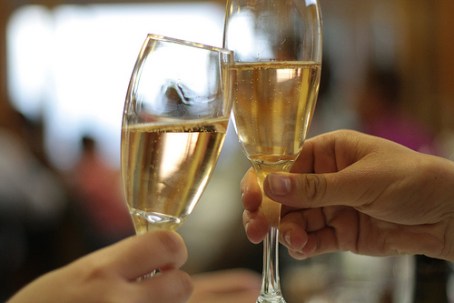
A fairly reputable website, Snopes.com, disputes this theory, claiming that poisoning was not common enough for it to change the behavior of society. They also believe that too much liquid would be wasted for it to be practical. I generally trust snopes and usually agree with their proof and supporting statements, but their explanation on this matter has much more proof against than for it.
First of all, the argument that it was messy isn’t very strong. If you believed your life was at stake, you wouldn’t consider it a waste to spill some wine in exchange for your health.
Secondly, there is plenty of proof that poisoning was very common throughout history. The BBC says, “During the age of the Roman Empire, poisoning became a common activity at the dinnertable, especially in the high circles of society. It was certainly a convenient way of getting rid of unwanted family members, as [Emperor] Nero demonstrated.” They have a well researched article that demonstrates poisoning as a common occurrence and a popular anxiety among royals and high society for much of recorded history.
In fact, poisoning wasn’t just common in medieval times, it’s still popular now. There are multiple homicide and suicide cases every year that involve poisoning. In 1998, food was poisoned at a village festival in Japan, killing 4 and injuring 40 others. Recent intelligence has suggested that Al Qaeda groups have discussed poisoning buffets.
Poisons have changed a lot over the years, although arsenic was popular for more than ten centuries, until a method became available to detect it in the deceased. Many modern poisons are actually prescription drugs, including fentanyl — one of the drugs found in Michael Jackson body during the autopsy.
Regardless of poison threats, we continue to clink our glasses as a way to connect with each other. This has been nearly ubiquitous for more than 100 years. In fact, glass makers actually consider the sound that glasses make an important design element. So, Pay attention during your next toast, the sound may be as sweet as the sauce.
Broken Secrets
Subscribe on: Facebook | Twitter | Email | Kindle
Photo: AL404 (cc)
Sources: Snopes, Wine Intro, BBC, CNN
What the Toaster’s Bagel Button Actually Does
By Chad Upton | Editor
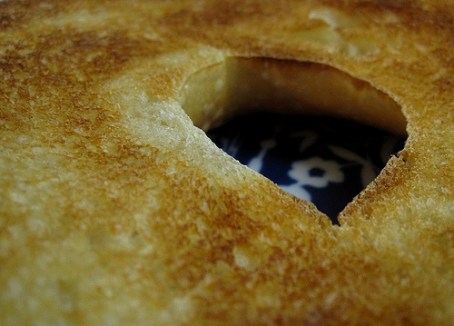
Some toasters have a bagel button and it’s obviously meant for when you want to toast a bagel. But, what does that button actually do?
Firstly, it increases the toasting time since bagels are thicker. Secondly, it increases the heat of the inner elements and decreases the temperature of the outer elements so you don’t burn the outside of the bagel.
It’s also useful for English muffins or other thick items.
Broken Secrets
Subscribe on: Facebook | Twitter | Email | Kindle
Photo: wintersoul1 (cc)
Source: Oster
The Shoulder is the “Butt” and the Butt is the “Ham”
By Kaye Nemec
As you browse through your local grocery store’s meat department you’ll see various cuts of pork including pork shoulder, pork loin, pork chops, spareribs, pork hocks, ground pork etc. Most of these cuts of meat are self explanatory and, you’d think, the same goes for the package labeled “pork butt.” Seems pretty obvious right? Thankfully, it’s not.
Pork butt actually comes from the upper portion of the shoulder of the hog. It is a large cut of meat with a thick consistency. Typically the entire pork butt will weigh 6-10 pounds and can be sold either bone-in (with part of the shoulder blade) or boneless.
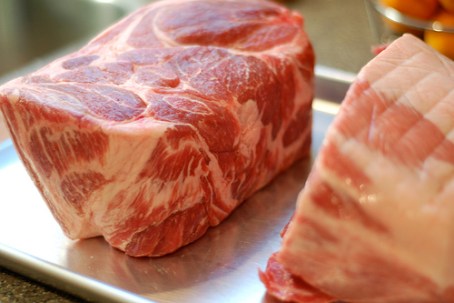
Pork butt most likely got its name because it use to be that nicer cuts of meat, those that were “high on the hog” were packed into barrels for shipping that were called “butts.”
Especially popular in the Southern United States, pork butt is most commonly used in barbecue recipes like pulled pork sandwiches. Its high fat and connective tissue content make it very tender and moist after slow-cooking.
Other common names for pork butt include Boston Butt (pre-revolutionary New England is where packing meat into “butts” originated), Boston shoulder roast, Boston roast, shoulder butt and shoulder blade roast.
On the other hand, ham comes from the rear of the hog, the hind leg. A whole ham is the entire rear leg of the ham. A half ham is either the butt end, the top of the thigh, or the shank end which is the lower part of the leg.
Broken Secrets
Subscribe on: Facebook | Twitter | Email | Kindle
Sources: VirtualWeberBullet.com, Wikipedia
Photo: Luis Ramirez (cc)
How to Taste Defective Wine
By Chad Upton | Editor
If you order wine at a fine restaurant, it can be expensive. So, you don’t want to pay big bucks for a bad bottle.
At some restaurants, the wine waiter or sommelier will usually pour a small sample and pass you the cork. Both of these gestures are done for the same reason, but not everyone knows what to do.
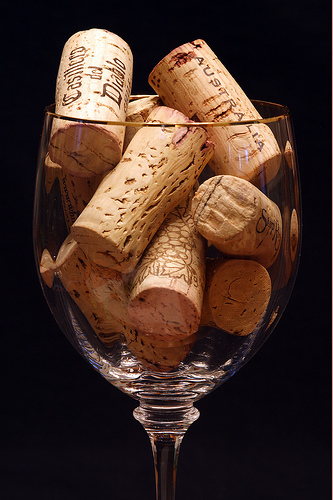 Basically, this is your chance to determine if the wine is faulty. It’s not a matter of whether you like it or not, it’s about if the wine has spoiled. It is estimated that 5% of wine is defective, so you’ll come across a bottle sooner or later.
There are a few things that can caused a wine to spoil before it’s opened.
- Oxidation
- Heat
- Sulfur Dioxide
- Cork Taint
Some people smell the cork, but the idea is actually to feel the cork, to ensure that it is moist all the way around the bottom (the end that was inside the bottle). The cork, or a synthetic material with similar properties, is meant to protect the wine by sealing it from outside air. Wine should be stored on its side, so the cork stays moist and doesn’t dry out. If it dries out, the air tight seal can be broken and the wine can be ruined. (more…)
The Most Popular Types of Liquor
If you’re throwing a party or just having some friends over, you may want to have the basics in your home bar.
A good place to start is with the most popular types of liquor.
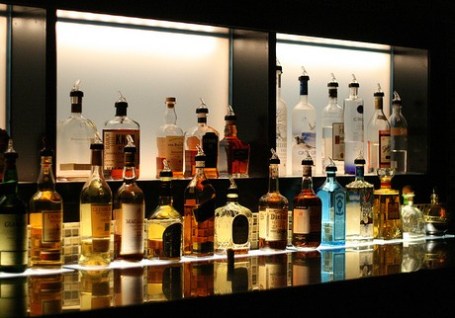
At a real bar, there is often a stock of liquor at waist height below the bar with the most commonly commonly requested liquors. This is called the “speed rail” and it is normally stocked with:
- Vodka
- Gin
- Rum (light)
- Tequila
Many popular drinks can be made with these liquors but bars frequently stock these other popular liquors in the speed rail too:
- Scotch (Whiskey)
- Bourbon (Whiskey)
- Triple Sec
- Vermouth
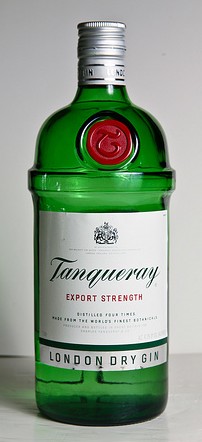 Here’s a secret if you’re short on space or cash, or if you run out of Triple Sec. Triple Sec is an orange flavored liquor, so you can substitute other popular orange flavored liquors like: Grand Marnier, Cointreau or Curaçao. When it comes to selecting whiskey, click here to read more about Whiskey.
If you want to go all out with your bar, pick up some of the following and none of your guests will be unsatisfied:
- Irish Whiskey
- Canadian Whiskey
- Tennessee Whiskey
- Dark Rum
- Brandy
- Baileys
- Agostura bitters
You’ll also want to stock popular tonics and mixers such as: Coke, ginger ale, club soda and cranberry juice. By the way, the Tanqueray Gin bottle was designed to look like a London fire hydrant.
Broken Secrets
Subscribe on: Facebook | Twitter | Email | Kindle
Photos: Jeff Simms (cc), Megan Morris (cc)
Sources: Orange Liqueurs, Hub Pages, Totally Free Bartending, Crunkish
White Wine also Stains Teeth
By Kaye Nemec
We’ve long been told that coffee, marinara sauce and red wine will leave our teeth stained and in need of whitening. Dentists have warned us about letting these foods sit on our teeth for too long without brushing. But, it turns out we also need to be cautious when drinking white wine if we want our pearly whites shiny and bright.
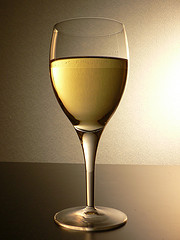 It’s not just the color of red wine that affects our teeth, it is also the acidic nature of wine that helps stain and darken our teeth. In fact, red wine and white wine are equally acidic. The acids erode tooth enamel, which is there to protect your teeth.
Because red wine contains dark pigments that will stain your teeth, you get a two-for-one deal when drinking it. Not only will the acid rough up the surface of your teeth, but it will also clear an immediate path for the red pigments to settle in and stain. White wine, on the other hand, will simply make way for stains and is more dangerous if paired with or consumed in a diet that also contains red sauce, coffee or cola.
Apparently, citrus drinks like orange and grapefruit juice, sodas and energy drinks also contain enough acid to have the same, damaging effect on the enamel of teeth. Because coffee, sodas, juices and energy drinks have become so popular, whitening agents and toothpastes have also increased dramatically in popularity over the last few years. It seems that dentists agree, it is OK to use a toothpaste with a whitening agent in it; however, it is recommended that you do not brush your teeth immediately after drinking wine. As mentioned above, the acid in the wine will weaken the enamel on your teeth. The weakening process will last about an hour so if you brush before that hour is up you risk brushing away bits and pieces of your weakened enamel causing further damage.
Broken Secrets
Subscribe on: Facebook | Twitter | Email | Kindle
Sources: ToothMingle.com, NPR, DentalHealth.org
Photo: Danielle Bauer (cc)
Birthdays Were Not Always Celebrations
By Chad Upton | Editor
Although traditions can vary widely, annual birthday celebrations are pretty common around the world.
In the beginning, only Kings and other royalty were thought to be important enough to have birthday celebrations. At the time, birthdays were not celebrations for common people. They believed that evil spirits searched for people on their birthday, so friends and family would gather to protect the birthday person from the evil spirits. Singing songs and using noise makers was thought to scare the spirits away and gifts were given for good luck.
Of course, modern birthdays are much different. One of the highlights is the cake and the tradition of serving birthday cake comes from Ancient Rome. Originally, cakes were much like bread, the only difference being that cakes were sweeter.

With culinary advancements in the 17th century, cakes began to look more like their contemporary counterparts. At the time, they were a privilege of the wealthy and not until the industrial revolution were the materials and tools affordable and widely available enough for commoners to have birthday cakes too.
Although candles originated in China around 200 BC, it was the Europeans who popularized decorative candles. Candles made their way onto birthday cakes around the 18th century in Germany. Many cultures put enough candles on the cake to equal the age of the person, some cultures adding one more for good luck.
Some cultures also celebrate the birthday of a historical leader or religious figure. One of the most popular is Christmas, which commemorates the birth of Jesus. In the United States we also celebrate Presidents Day on the third Monday of February, which honors George Washington’s birthday (February 22, 1732). Although most people celebrate the day they were born, there are some cultures in Europe and Latin America that also celebrate one’s name day. In that case, if you were named after a Saint, you would celebrate on that Saint’s name day (sometimes in addition to your birthday, other times in place of it — depending on the country).
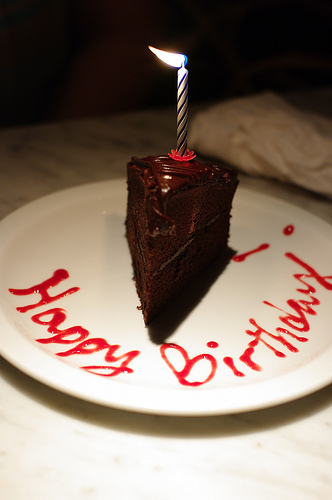 There are many other birthday traditions from around the globe, some are current and others have long passed. In some South American cultures, it was tradition to pull on the earlobes of birthday children, once for each year they have lived. In India, icing from the cake is sometimes rubbed on the face of the birthday person.
In Mexico, a Piñata is a colorful container, often shaped like a star or an animal, that is filled with treats. The birthday person, usually a child, is given a stick to break the piñata or in some countries there are strings to pull open a trap door. Although this is well known, there are many other countries, such as Denmark, India, Sri Lanka, the Philippines, Argentina, Brazil, Japan and others who have similar traditions involving clay pots or other containers that are broken to release treasures.
PS – Today, we are celebrating a very special birthday. Exactly one year and 235 secrets ago, I posted the first secret on BrokenSecrets.com — You Can Use Foil in the Microwave.
Broken Secrets
Subscribe on: Facebook | Twitter | Email | Kindle
Photos: Omer Wzir (cc), Joe Gray (cc)
Sources: BirthdayCelebrations.net, Wikipedia (Birthday, Birthday Cake, Candles, Pinata)
Broccoli is Manmade
By Chad Upton | Editor
The word broccoli is the plural form of broccolo (Italian), which refers to “the flowering top of cabbage.” Of course, that’s because Broccoli is from the same family as cabbage. Kale, closely related to wild cabbage, was carefully bred into a variety of vegetables such as broccoli and cauliflower over a period of 2000 years.
Broccoli is kind of a super vegetable since it contains a ton of lutein, arguably the most important source of vitamin A in the human diet (which is also found in kale and spinach).

So, even if you are genetically predisposed to dislike broccoli, you could try some other popular vegetables in the same family: cabbage, cauliflower, turnip, rapeseed, radish and horseradish.
Broken Secrets
Subscribe on: Facebook | Twitter | Email | Kindle
Photo: Rick Harris (cc)
Sources: Indiana Public Media, Science Daily, Wikipedia (Broccoli, Brassica, Brassicaceae, Cruciferous, Kale, Phenylthiocarbamide)
Chewing Gum Digests Within a Few Days
By Chad Upton | Editor
An old wives tale states that gum stays in your stomach for up to seven years, but that is far from the truth.
 Although it’s pretty sticky between your fingers, a single piece of gum doesn’t present a great challenge to your digestive enzymes — gum generally moves through your digestive system pretty quickly.
Food digests in as little as a few hours, and although gum can move at the same speed, it is sometimes slower than normal food, and it passes through our digestive system within a few days at the most.
The confusion comes from the fact that gum cannot be broken down. It’s the same as small coins, they cannot be broken down but they usually pass through within a couple of days. That earns gum the designation of “indigestible”, but that doesn’t mean it won’t pass through the digestive system, it just means it can’t be broken down into smaller pieces. I guess it goes in the same category as corn.
That means habitual swallowers can suffer from blockages and constipation if a large amount of gum builds up, especially children who swallow gum frequently. But, a single piece of gum usually passes without a problem.
Broken Secrets
Subscribe on: Facebook | Twitter | Email | Kindle
Sources: Scientific American, Snopes, How Stuff Works
The Meaning of “Sport” in Ritter Sport Chocolates
By Kaye Nemec
In 1912, two chocolate lovers fell in love with each other and started the Alfred Ritter Cannstatt Confectionery Factory in Bad Cannstatt, Germany.
By 1919, Alfred and Clara Ritter were ready to take their chocolate to the world. They were very successful and within 11 years, they were already at their third location, which was in Waldenbuch, Germany. In 1932, Clara Ritter had an idea for a new kind of chocolate bar: a chocolate square. Her idea was to have a square of chocolate that fit neatly in the pocket of a gentleman’s sports jacket. It didn’t extend out of the pocket and it didn’t break during daily activities that preceded chocolate eating.
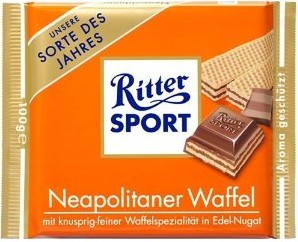
It was a huge hit with consumers and gave birth to the next generation of Ritter products.
Alfred passed away in 1952 and his son, Alfred Otto Ritter, took over the business. In 1966 Clara also passed away and Alfred Otto remained in charge of the family business. By 1960 some items in their product line had begun to fizzle out and Alfred began focusing all efforts on the square chocolate bar, officially creating the Ritter Sport brand.
By 1982, the squares were available in a variety of flavors and each flavor had a uniquely colored package. The original size square had become so popular, the family decided to introduce a new, smaller version of the original. Twenty-two years later the mini chocolate square was followed up by the chocolate cube, available in 6 different flavors.
In 2001 the “RITTER SPORT Chocolate Shop” Visitors’ Center opened in Waldenbuch, Germany. At the Chocolate shop, visitors learn all about Ritter Sport’s history and watch the chocolate get produced. The Chocolate Shop is the first part of what later became the Ritter Sport Museum, which opened in the fall of 2005. The museum stays true to Ritter’s square tradition by showcasing square contemporary art. Most of the art pieces belong to Marli Hoppe-Ritter, a co-owner of Ritter Sport. One of the main collections at the museum is titled, “Homage to the Square” and consists of nearly 600 pieces.

Clara was clearly onto something when she dreamed of the chocolate square, although I doubt she knew how many nights her dream would last or how big such a small chocolate could be.
Broken Secrets
Subscribe on: Facebook | Twitter | Email | Kindle
Sources: Ritter Sport, Ritter Sport Museum
Photos: Museum Ritter


 Broken Secrets