Posts filed under ‘Food and Drink’
Big Mac Sauce is Not Just Thousand Island Dressing
There is no shortage of McDonald’s secrets. In a previous post, I talked about the secret markings on McDonald’s cups that indicate proper ice and soda levels.
Now, I want to talk about the Big Mac. It was invented by Jim Delligatti, one of the earliest McDonald’s franchisees. It was so popular at his restaurants, McDonald’s made it a national menu item in 1967. (more…)
Food Nutrition Labels are Not Accurate
In 1990, the US Congress mandated that certain nutritional information be placed on packaged foods. There are some exceptions, especially for small manufacturers. Otherwise, every food product you buy has a label that lists the ingredients and nutritional value of those ingredients. Most other developed countries use a similar or even superior system.
This makes a lot of sense. Consumers can read packages and have a good understanding of what they’re eating so they can make healthy decisions. Unfortunately, this data is often inaccurate and intentionally misleading.

The misleading packages are easy to pick out if you’re looking, but often go unnoticed. These are usually products that you buy for a snack and consider to be a single serving, perhaps a small bag of chips or a small bottle of soda/pop. You read over the calories, fat and sugar content and while it doesn’t look great you know what you’re getting into. At least, you think you do until the person next to you that points out that is “per serving” and there are two servings per bag. Or worse, when there are 2.5 servings. What is 73 calories times 2.5? (more…)
The Massive Underground Vault Near the North Pole
By Chad Upton | Editor
Imagine your computer caught a really bad virus and you lost all of your files.
You lost all of the documents you’ve worked so hard on, all of the family photos you never printed and all the desktop icons you never clicked on. Hopefully, that never happens to you; if it does you’d probably be devastated, unless you have a thorough backup. Unfortunately, many people do not have a proper backup.

Now imagine our food crops or oxygen producing plants were being killed off by an aggressive virus that we couldn’t stop. If that happened, and it’s possible, how would we produce food to eat or air to breath?
Luckily, some smart people are keeping “backups” of as many plants as possible, so we can grow them again in the event of some man-made or natural disaster that wipes out existing crops and seeds.
These facilities are called seed banks. (more…)
Shop at Off-Peak Hours for Time Savings
I’ve said it before, I love bananas. But there is one kind of bananas I do not like, busy grocery stores!
I went to my local supermarket yesterday to pickup a few things. Being Super Bowl Sunday, it was pretty much the worst day to go grocery shopping. Normally, I would just go another day but I needed some things for later in the day (like most other people there I’m sure).
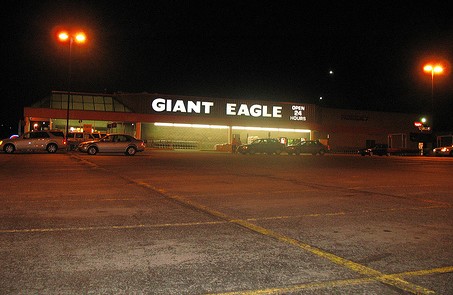 All the cart bumping and line shoving could have been avoided if I just went early in the morning or late the night before. That’s what I usually do — try to go shopping around 8pm-9pm, that includes any stores that are open late (ex. Target). Many stores are now until 10pm and some are open 24 hours. I try to take advantage of these hours since I usually get the store to myself. It actually makes shopping peaceful and efficient. (more…)
Starbucks Drink ID Codes
By Chad Upton | Editor
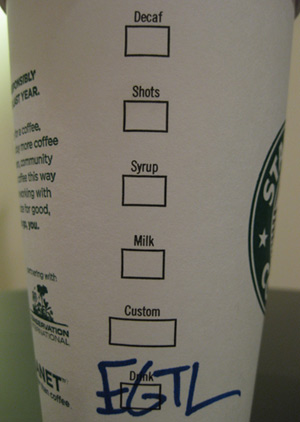
If you’re a Starbucks customer, you’ve probably noticed the column of check boxes down the side of your cup. The boxes are labeled: Decaf, Shots, Syrup, Milk, Custom and Drink.
It’s pretty obvious these boxes are used to record your drink order. Sometimes I look at the writing in these boxes and try to match the secret codes with the options I requested. Most are pretty self explanatory, but some of the codes are not.
In fact, I didn’t even know what the entire “custom” box was for.
Today I found out. You see, I got a special delivery today. It started last week during my regular search for secrets, I had an idea. I wanted to know how easily I could get a Starbucks employee training manual. About ten minutes later I had purchased one from the used book section of Amazon. There was only one copy available.
I got it, and I’m going to share its secrets with you. (more…)
How to Accelerate and Slow Banana Ripening
I love bananas.
They are a nearly perfect fruit. They taste great. They’re fairly inexpensive. They have their own protective skin and they contain many nutrients such as: vitamins A, B1, B2, B3, B5, B6, B9, C, Calcium, Iron, Magnesium, Phosphorus, Potassium and Zinc.
But, if I had to register a complaint about bananas, it would be their shelf life. Keeping them perfectly ripe is a fine art — one worth mastering.
The first trick is something my wife, Kristen, taught me: don’t buy all your bananas from the same bunch! Pick a couple green ones and a couple that are ripe/near ripe. Then you have some you can eat right away and others that will be ripe when you’re ready for them.
The interesting part is that those two bunches are likely the same age. You assume the less ripe ones are newer, but the food distributors control ripeness. They have large, air tight banana ripening vaults that give them very precise control over banana ripening. They’re usually divided into multiple sections, so bananas can be kept at different stages of ripeness. If they’re selling a lot of bananas, they can accelerate the ripening so they will be ripe when they arrive at the store. If sales are slow, they can slow ripening to avoid waste.
How do they do that? (more…)
Why Do People Eat Organic Food?
I have always enjoyed visiting my grandparents, something I probably didn’t and still don’t do often enough.
I have a lot of great memories from those times and spending time in my grandmother’s vegetable garden is one of my favorites. She had a huge backyard, almost half of it was a garden.
I didn’t actually like vegetables back then, but she had a secret raspberry patch. It was tucked away in the back of the garden, behind the shed. I’m not sure if she was trying to hide it, or just keep it separate from the main garden — raspberry plants are locally invasive, they can take over your entire garden if not pruned.
 I could spend the whole day eating raspberries, fresh off the bush.
Some days, I did.
It was nature’s 7-11, a store full of squishy red candy, at the right height and the right price for a child.
I wouldn’t dare say they were “free” since there was a price to pay — raspberry bushes are very prickly. There are thornless cultivars available now, but it worked out OK. The thorns slow you down enough to swallow one raspberry before you pick the next. I’m sure that’s why nature put the pricks there. (more…)
How to Order at Starbucks
I like Starbucks.
I don’t love it the way some people do, but I can see why they make daily trips or spend their afternoons there. The big smiles and attention to detail make you feel special, like you’re the only one who orders a drink that way. It’s like being part of an exclusive club that has its own language and club houses all over the world.
Actually, I’m sitting in a Starbucks while I write this. This is the first time I have written from Starbucks, or any cafe for that matter. I thought it was important for accuracy and inspiration — wait, my London Fog is ready.
OK, I’m back.
Jamie, the barista, says “hi” (barista is Italian for “bartender”).
A London Fog is basically a latte, with an earl grey tea bag and a shot of vanilla syrup. Not every Starbucks makes this drink well, but they’re really good about taking drinks back if you don’t like them, so don’t be afraid to try something new or let them know they made a mistake.
If you’re looking for “London Fog” on the menu, it has been renamed to reduce confusion. You’ll find it labeled as “Earl Grey” under “Tea Lattes.” (more…)
Peanuts Are Not Actually Nuts
Sorry, this is not about Charlie Brown. I’m talking about the peanuts that some of us love to eat and others are deathly allergic to. Those peanuts are seeds and they belong to the legume family, along with beans, peas, alfalfa, lentils and others.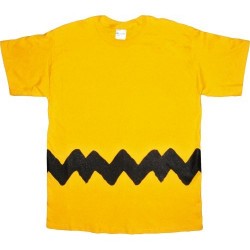
In fact, many things we typically consider nuts, do not meet the botanical definition of a nut. Try to pick out the non-nuts from this list:
- Almonds
- Brazil Nuts
- Cashews
- Coconuts
- Macadamia Nuts
- Pine Nuts
- Pistachios
- Walnuts
You probably guessed that coconuts are not actually nuts, and you’re right. If you guessed any of the others are not nuts, you’re right too — none of them are real nuts!
A nut is a hard shelled fruit that comes from a plant whose fruit does not open to release its seed. A nut is a composite of the fruit and seed, some examples of true nuts are: acorns, beechnuts, chestnuts and hazelnuts.
Some people avoid nuts because they are high in fat, but that’s actually the reason nuts are such a nutritious fruit. The Omega 3 fatty acids in nuts are believed to lower lipid levels (the “bad cholesterol”). Nuts also contain linoleic and linolenic acids, which are important for healthy growth, hair, skin, blood pressure, and immunological response. They are also rich in protein, folate, fiber, magnesium, phosphorus, potassium, copper and selenium.
So, if you’ve been avoiding them, forget about it!
Go nuts.
Broken Secrets
Written By: Chad Upton
[available on Kindle]
.
Sources: Nuts, Dehiscence
Organic Food May Contain Non-Organic Ingredients
Back in 5th grade, my school had cupcake sales. There were thousands of cupcakes. I don’t remember what we were raising money for, but I ate a lot of cupcakes and that was memorable.
Baking all of these cupcakes was a lot of painstaking work, but my mom was a really hard worker. She always made chocolate cheesecake cupcakes, which the parents and teachers ate up, literally.
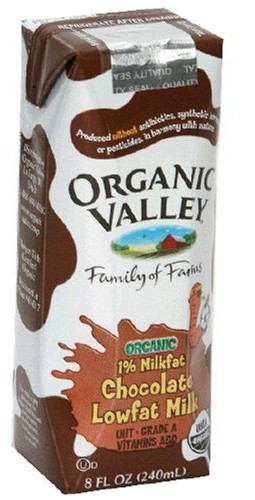 They weren’t covered in icing sugar, they didn’t have multicolored sprinkles or glitter and that’s exactly what the kids looked for: sugar. If you’re punny, you might say the kids had more refined palettes.
Some of my favorite cupcakes were the ones decorated with those tiny silver balls. It turns out the FDA now considers them inedible, due to the small amount of metal in them. Now, they’re sold “for decoration only,” except in California where they’ve been banned since 2003.
They were considered edible back then, but that still doesn’t mean they were food. I ate LEGO a couple times back then too. Again, not food.
Real food isn’t made in a laboratory, although laboratories do produce some really tasty stuff. In an earlier post, I talked about the differences between natural sugar and synthetic sugar made from corn (high fructose corn syrup).
Experts believe that your body can’t control its absorption into your bloodstream, in an attempt to control your blood sugar, your body quickly converts it into fat, which happens much slower with natural sugar. This could be extremely dangerous, and its addition to thousands of foods over the past 35 years could be partially responsible for the obesity epidemic.
Last month, a research paper was published, focusing on one genetically modified type of corn. This study shows that pesticide residue was still evident on this type of corn and it causes organ failure in rats. Genetically modified food has a bad reputation and it isn’t always bad, there are many success stories and it occurs in nature too (not just laboratories). But, this study shows a clear example of genetically modified food at its worst.
Because of these dangers, there are a lot of people who try to eat natural foods whenever possible. Food labeled “organic” is one way to identify real food. Many food products contain a lot of synthetic ingredients, growth hormones, pesticides and antibiotics. On the other hand, Organic foods generally do not contain any of these.
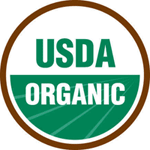 At least, that’s what I thought. I don’t buy a lot of organic food, but when I do buy a product stamped with the “USDA Organic” logo, I assume that it’s entirely organic. The truth is, the USDA actually has a list (PDF) of non-organic ingredients that are allowed in products that carry the “organic” label.
Here is a very small sample of some non-organic ingredients and some uses for them:
- Fish Oils (dairy, egg, sauces, jam, jelly, snack foods)
- Gelatin (yogurt, production of tea and wine, thickening agent)
- Orange Shellac (glazing or polishing organic fruits and vegetables)
- Enriched Inulin (baking, nutritional bars, yogurt, cereal)
- Whey Protein Concentrate (yogurt, protein supplements, baby food)
- Carnauba Wax and Wood resin (chewing gum, candy coatings, juice, cosmetics)
The USDA has approved these ingredients (and many others) because the organic food producers that rely on them have filed petitions asking for approval. The petitions usually cite a non-existent or inadequate supply of that ingredient in organic form. In other words, organic food contains 100% organic ingredients when those ingredients are available as organic products.
Written By: Chad Upton
Broken Secrets
[Available on Kindle]
.
Images: USDA,
Sources: The Daily Green, Dragee, International Journal of Biological Sciences, USDA Food List, HFCS


 Broken Secrets