Posts filed under ‘Demystified’
Quantum Teleportation is Real
By Chad Upton
We know a lot about the world around us. We have a pretty good understanding of forces such as gravity and magnetic fields. We know a lot about barely visible subatomic particles and even invisible energy such as radio waves.
We can control and measure most of these amazing things and they really are amazing. Think back over a thousand years. Could you imagine what it was like when magnets were first discovered? The amazement, confusion and challenge to explain how they worked.

Due to recent developments, we are in a similar state of fascination.
When you read “quantum teleportation” in the title, you probably had visions of something from Star Trek where people and objects are transported from one location to another. That is teleportation but it’s not quantum teleportation.
In quantum teleportation, no visible object is moved from one place to another. Rather, quantum information is moved from one place to another.
It starts with entanglement of two atoms or particles such as ions or photons. In simple terms, they are “tied” together. When separated, something amazing can be observed. Changing the state of one, the state of the other changes to match. This phenomena has been observed when the two have been separated by a distance of a few meters (10 feet), 16 km (10 miles) and even 144 km (89 miles).
No, it won’t let you visit your grandma in Montana and your other grandma in Malta on the same day, but the potential is still amazing.
You’ve probably seen a satellite interview on TV noticed there is a huge delay between the two people talking. That’s what happens when shipping information to space and back on each side of the screen. But, Quantum information moves extremely fast so there would be negligible delay if it could one day be used for communication (it can’t for now).
Although a bit awkward sometimes, we can live with delayed satellite interviews. But, as we try to explore deep space, communication delays could become a factor that prevents or severely delays exploration. One day, cell phones might use this technology to eliminate dropped calls and dead zones. In communications, the possibilities are endless.
We can’t even imagine how this might affect other areas of science and that’s because we don’t really understand how it works. But, scientists believe these entangled particles exist in nature and there are potentially billions of them. Of course, we don’t know which ones they are or where the other half of their entangled pair is. Maybe there is some truth behind the notion that one twin feels something when their identical twin experiences something traumatic. Maybe there’s even some science to prove it.
Broken Secrets
Subscribe on: Facebook | Twitter | Kindle
Sources: Wikipedia (QT), Quantum (Entangled QT, First QT), The Future of Things , Ars Technica
Photo: Thomas Shahan (cc)
Tea Contains Less Caffeine Than Coffee
By Chad Upton
This is one of those things that a lot of people know and a lot people get wrong.
Most coffee has 60-100 milligrams of caffeine per cup. Here’s a list of the most popular coffees and their caffeine content:
| Coffee (16oz) | Caffeine (mg) |
| Starbucks | 330 |
| Caffè Americano (Espresso) | 225 |
| Tim Hortons | 160 |
| McDonald’s | 145 |
| Store Brand (Drip) | 145 |
| Dunkin Donuts | 143 |
| Store Brand (Brewed) | 108 |
| Decaf | 2-5 |
As you can see, Starbucks coffee is the strongest with 330 mg of caffeine in a 16oz serving. It is followed by Starbucks Caffè Americano, which has three shots of espresso in it and more than 100 mg less caffeine in the same size serving. Most of the other brands have about 110-160 mg in a 16oz serving..
So, how does that compare to tea? Let’s have a look:
| Tea (16oz) | Caffeine (mg) |
| Starbucks Tazo Chai | 94 |
| Black | 90 |
| Green | 40 |
| White | 30 |
| Starbucks Tazo Red | 0 |
As we can see, Tea generally has much less caffeine than coffee.
Of course, there are always exceptions. There are some coffees that have less caffeine than most teas, particularly decaf coffee. That might be an unfair comparison since decaf is a man-made product. Although, it might not be that way forever. Caffeine free coffee beans have been discovered, although they’re too bitter for most people’s taste buds.
There are also some black teas that have up to 140 mg of caffeine per 16 oz, which is more than the same size coffee at Dunkin’ Donuts (or Dunkin’ Coffee as they call it in Spain).

Dunkin Donuts - Barcelona, Spain
There are many other caffeinated beverages that are popular, how do those stack up?
| Product | Serving (oz) | Caffeine (mg) |
| Jolt Energy | 24 | 280 |
| Red Bull | 8 | 80 |
| Mountain Dew | 12 | 55 |
| Mountain Dew Code Red | 12 | 54 |
| Diet Coke | 12 | 45 |
| Coca-Cola Classic | 12 | 35 |
| Sprite | 12 | 0 |
| 7-Up | 12 | 0 |
Caffeine is found in many other foods, such as chocolate. It is also found in guarana beans, which are very similar to coffee beans according to Brett’s Energy Drinks. So, be careful of those guarana filled energy drinks, caffeine is a hell of a drug.
Thanks to Kristen for suggesting this one and Ian for adding front lines insight.
Broken Secrets
Subscribe on: Facebook | Twitter | Kindle
Sources: Mayo Clinic, Brett’s Energy Drinks, Energy Fiend,
Secret Codes in Public Places
By Chad Upton | Editor
I was at Walmart today and I realized, I absolutely love that place — I feel like a supermodel in there.
While there, I heard an announcement for “Code C” and I had to know what it was.
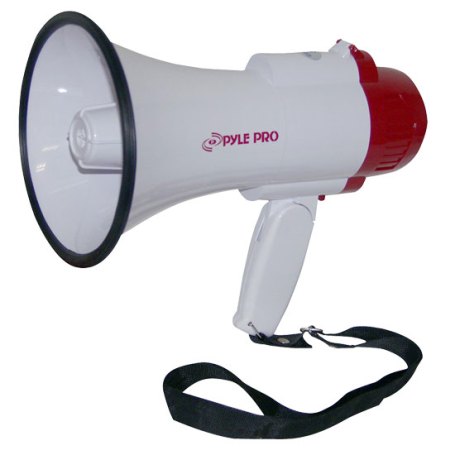 You see, airports, retail stores and hospitals all have secret codes to announce information to staff without causing alarm to the general public.
Walmart actually has a lot of these codes and for good reason. Perhaps the most well known code is “Code Adam.” It was invented by Walmart 1984 and it’s now used by many different companies, all over the world.
It’s named after Adam Walsh, son of America’s Most Wanted TV host John Walsh. Adam was kidnapped from a Sears store in 1981 and murdered. Walmart actually has a very strict policy about this code. All employees drop what they’re doing, some watch the doors and other sweep the store looking for the child. Employees do nothing else until the child is found.
Other Walmart Codes:
- Code Black – Severe weather (ex. tornado warning)
- Code Blue – Bomb threat
- Code Brown – Shooting
- Code Green – Hostage situation
- Code Orange – Chemical spill
- Code Red – Fire
- Code White – Accident
- Code C – Customer service or cashier needed
- Code 300 or Department 51 – Security
Walmart also has color coded pillars in their stores:
- Blue – Telephone
- Red – Fire extinguisher
- Orange – “Spill-O-Magic” station
Boat/Ship/Vessel Codes
- Code Oscar or Mr. MOB – Man overboard
- Bravo, Bravo, Bravo – Serious incident such as a fire
- Mr Skylight – Minor incident
- Code Blue – Medical emergency
Hospital Codes
- Code Blue, Code 90, Code 45 – Cardiac arrest
- Code Red, Dr Red, Dr Pyro, Dr Firestone – Fire
- Code Grey, Code Silver – Combative or violent person
- Code Orange – Mass casualty incident
- Code Black, Code Brown – Extreme weather warning
These are the most common codes, obviously some of these codes will be known by other code names in certain places. Some countries such as Australia, Canada and the United States have standards for these codes, but they differ from each other and many other countries do not have standards.
Broken Secrets
Subscribe on: Facebook | Twitter | Email | Kindle
Sources: Wikipedia, Google Answers, Wal-mart Info, UPHAA, Vessel Emergency Codes, Hospital Codes
Trap Doors on Car Bumpers
From satellite navigation to chilled cup holders, modern cars are full of high-tech developments that get you from point A to point B without getting lost and with colder refreshments. Overall, car technology has improved the handling, efficiency, style, safety, comfort and entertainment of our cars.
There are even high-tech bumpers out there. If you see bumpers with three or four dimples aligned across the back bumper, those are likely sensors for the backup warning system.
If you see small rectangular patches, that’s what this secret is about. They’re actually pretty low-tech, but still cool.
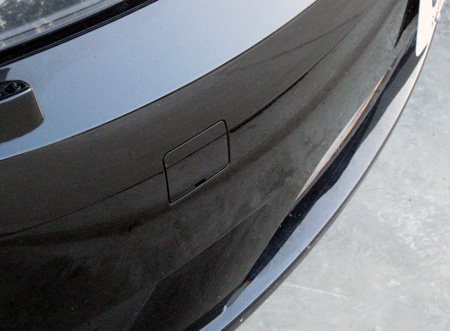
Even if your car doesn’t have them, maybe you’ve noticed them on other cars while you’re sitting at a red light (they may be found on front and/or rear bumpers).
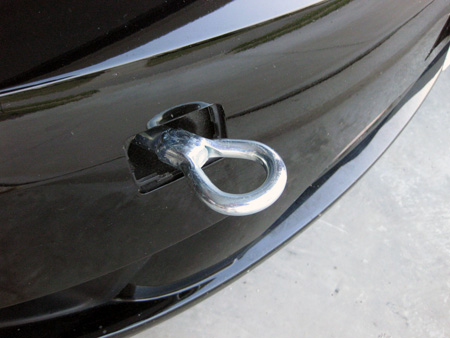
They look like trap doors that cartoon characters fall through long after the audience spots them and screams at their television to warn the carbon impaired being of the obvious hazard and their impending doom. In reality, they cover anchor points where you can insert a towing eye (aka “tow hook”).
Check your car out during the summer and if you need them in the winter, you’ll know if they’re there. The towing eye is usually stored with the spare tire and/or jack and it screws in behind these covers.
Like all of the secrets on this site, there will be somebody reading who already knows this one — that’s cool, you can brag (or complain) about it in the comments, or retweet it and say you knew this, “like 10 years ago.”
Broken Secrets | By: Chad Upton
Run When It’s Raining to Stay Drier
Sooner or later, everybody gets caught outside when it starts raining.
 I used to have a long walk to school. I mention this because walking to school has the same affect on rainfall as washing your car — it only rains at the worst possible time and it stops immediately after you stop caring.
When you’re stuck in the rain, you might think about whether it would be better to run or walk. When you run, you collide with more rain but you also reduce the amount of time you are exposed to the rain. When you walk, you collide with less rain but for a longer duration. So which is better?
It turns out that running is the better option, assuming you run fast enough to reduce the time you are exposed to rain. Myth Busters tested this in episode 38 if you want to check it out.
Broken Secrets | By: Chad Upton
Subscribe on: Facebook | Twitter | Kindle
Sources: Myth Busters, Wise Geek
Dog’s Mouths Are Not Cleaner Than Human’s
This probably shouldn’t be a secret. If you think about the things that dogs lick and humans don’t, then this should be pretty obvious. But, the myth that dog’s mouths are cleaner than human’s is perpetually propagated.
 There is an old tale that you should let a dog lick your wounds to speed healing. The wounds may actually heal faster; that’s because the licking will stimulate circulation and clear away dead tissue, but it’s not because their saliva is cleaner than ours.
Some say that dog’s saliva is more acidic than humans so they break down bacteria better. Others look at the fact that dogs rarely get cavities or gum disease as proof.
The fact is, dogs have a similar amount of oral bacteria to humans. But, the types of oral bacteria varies between dogs and humans.
That’s why dogs rarely get cavities or gum disease, the types of bacteria that cause these problems are only found in about 5% of dogs. In fact, viruses and bacteria that affect humans usually don’t bother dogs and vice versa. For that reason, you may actually have a higher risk of becoming sick from kissing a human than kissing a dog. But, that doesn’t mean their mouths are cleaner.
Broken Secrets | By: Chad Upton
Subscribe on: Facebook | Twitter | Kindle
Sources: A Moment of Science, ABC, Life’s Little Mysteries
The Real Reason Cell Phones are Banned on Planes
I should start by saying that smartphones and simple cell phones are not banned on planes everywhere. Air France started allowing passengers to use their cell phones in 2008. Since then, a few Eastern airlines have followed suit.
These airlines use an in flight system that mimics cell phone towers found on the ground. The system relays the call/text/email to a satellite and back to the ground from there. Similar systems have been on cruise ships for years. On cruise ships, they use these systems because there aren’t any ground based cell phone towers in the middle of the ocean.
When you drive in a car, your cell phone call may jump from tower to tower as you travel out of range from one tower and into range of another. These jumps used to cause an echo with early cell phone networks, but it is pretty seamless today. Well, at least in your car it is. Airplanes move much more quickly and the network cannot pass your call from tower to tower at that speed. That’s why airplane systems typically bounce your call off a satellite, which it can easily maintain a connection to.
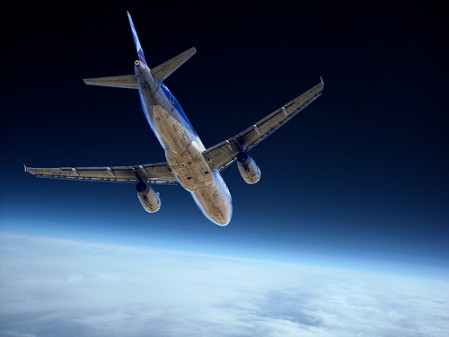
An unintended benefit of having the cellular connection on the plane is that the cell phone doesn’t require a lot of power to connect the call, so your battery will last longer and there will be less electromagnetic radiation in the plane. If you phone was attempting to connect to ground based towers it would have to amplify the signal much more and that consumes more battery power.
So, the technology exists. Why don’t most airlines allow it?
Firstly, there is the myth that cell phones cause interference with navigational equipment. Most people aren’t going to try to test it either, no phone call is important enough to take that risk. But, if you fly a lot then chances are good that you’ve realize mid-flight that you forgot to turn your phone off. It doesn’t appear that there have been any equipment problems. You seem to be flying in the right direction and you haven’t heard any complaints from the cockpit.
I asked an airline insider about this and they checked with some pilots and filled me in on the details. They said that old analog cell phones may have caused problems, but there is no evidence that digital phones cause any problems. Like I said before, Air France has been doing it for two years now without incident and there have been a number of studies that failed to find any incompatibilities between aircraft systems and cell phones. In fact, the problems are more likely with the ground based systems as they scramble to route your call to the nearest tower as you pass a new tower every few seconds in an airplane.
Here’s where it gets really interesting, many planes already have equipment to route in-flight cell phone calls without going to ground based towers (similar to what Air France uses to properly route cell phones through satellites). This equipment is often part of the system that planes use to offer in-flight wifi. Many US carriers currently offer that service and much of that equipment has cellular capability, it’s just not enabled right now.
If it was truly a problem with airplane systems, the FAA (Federal Aviation Administration) would surely support the ban of cell phones. Instead, the FAA blames the FCC (Federal Communications Commission) for the in-flight cell phone ban.
The FCC regulates all electronics that are sold in the United States and they readily admit they’re cautious about changing the rules on this issue. Their main goal is to prevent electronics from interfering and causing problems with each other, especially with emergency and government systems. They say that limited information is available on the safety of using cell phones on airplanes. They also note that consumers don’t want cell phones on planes.
They’re probably right about cell phone calls on the plane, although I’m not sure if that is their decision to make. I could see a war between airlines who adopt the technology and those who promote their flights as cell phone free.
The interesting thing about the technology is that the airlines can control which services the passengers can use. They can disable calls, but allow text messages and emails/data to be transferred. Disabling calls would maintain a flight environment similar to what we have now and that would ensure that screaming babies retain their exclusive right to prevent you from sleeping on red-eye flights.
As more airlines install the equipment for in-flight wifi, they’ll be itching to generate revenue from in-flight cell phone usage too. I wouldn’t be surprised to see the airlines lobbying the FCC for the right to offer these services. When they do, sign me up for the deluxe service package: 1 piece of luggage, cellular usage, 1 meal, 1 life vest during an emergency and 1 bathroom break — not necessarily in that order.
Thanks to Gina for suggesting this secret!
Related: Why Airlines Dim the Lights Before Night Landings
Broken Secrets | By: Chad Upton
Subscribe on: Facebook | Twitter | Kindle
Sources: Live Science, ABC, OnAir
Photo: lrargerich
Stock Market Analysis Began with Rice in 18th Century Japan
The past few years have proven that the world economy lives and dies on the success of major financial markets around the world.
Traders use sophisticated software to analyze trends, make predictions and purchases. There is one legendary trader, who made billions of dollars analyzing market trends.
His name was Munehisa Homma and the only thing he traded was rice. His billions in earnings are in today’s dollars and he may have known more about market analysis in the 1700s than our smartest people do now.

He began trading rice in Osaka, where the rice market was very sophisticated, it even traded rice futures. Coupons were sold that promised the delivery of rice at a specific price in the future. Homma was believed to have created a personal network of 100 men located about 6km apart from each other to move market information between Osaka and Sakata.
He wrote the first book on market psychology in 1755, The fountain of Gold – The Three Monkey Record of Money. I have no idea what the title means, hopefully somebody is working on a movie adaptation and we can see it in 3D. Maybe it could be a prequel to 12 Monkeys?
Seriously though, Homma was a genius. He invented the candlestick chart, which is still used by traders today.
 This handy chart combines four pieces of data into each plot point on a date axis. For example, you can look at a single day of trading of a specific stock and see the open and close price of the stock on that day (the candle body), along with a low and high range of prices at which it traded throughout the day (the candle wick). The candle body is solid when the open price is represented by the top line and the close price is the bottom line. It is hollow when it’s the opposite, indicating whether the price increased or decreased that day.
For a single date, this gives the reader a lot of information. But, it becomes a fountain of gold when you put multiple days together — that’s when patterns can be spotted. The great master could read the chart and predict how the market would behave in the future. Understanding these patterns is how he made his billions.
Charles Dow recognized the value of candlestick charts around 1900 and included them in his studies. You may have heard of him, he’s the guy who co-founded Dow Jones & Company, The Dow Jones Industrial Average and The Wall Street Journal.
He was obviously a brilliant man, but it was the research of Steve Nison in the early 1990s that popularized candlestick charts in North America. If you want to know more about these charts, you should look at his work.
Homma is still recognized as the greatest trader of all time. It is believed that he made more than $100 billion (today’s dollars). He once said, when all are bearish, there is cause for prices to rise.
Broken Secrets | By: Chad Upton
Subscribe on: Facebook | Twitter | Kindle
Sources: Trader’s Log, Candlestick Forum, Wikipedia (Candlestick, Charles Dow, Homma Muneshisa)
Images: Wikipedia (Candlestick Chart, Candlestick Definition)
Coupons You Get at Grocery Stores are Based on Your Purchases
In the United States it is very common for supermarkets to offer discounts to shoppers who present their loyalty card at the checkout. Price tags in the aisles often quote two prices, with and without the discount card.
The loyalty cards are usually provided by the retailer at no charge. However, they’re not free.
Although you don’t pay any money for these cards, you do handover your entire purchase history at that store. Your information is often used immediately at your time of purchase to determine which coupons should be printed out for your next visit.
Marketers frequently target consumers who buy their competitors products. For example, if you frequently buy Uncle Ben’s Rice, you may get a coupon from Rice-A-Roni. The manufacturer is trying to entice you to buy their brand the next time you shop.
Purchase history may also be used to determine the dollar value of the coupons you receive. For example, if you normally buy Dannon yogurt, then Yoplait may offer you $0.50 off your next Yoplait purchase. If you’re already a Yoplait customer, you may only get a $0.10 coupon or none at all.
Obviously, you don’t need a loyalty card for the store to recognize that you’re buying Uncle Ben’s today, but it is important if they want to know if you have bought that brand before or if you typically buy another brand.
When you sign up for a loyalty card, you often fill out a short survey of personal information, including your home address. They say they want your address so they can mail other offers to you, which they may. More importantly, your address allows them to understand a lot about you, including the average income of your neighborhood and even how much you paid for your house. In some cases, these programs are run by outside companies. Your address will help them combine your shopping information from multiple stores, assuming you always use the same name and address.
By comparing your personal information with information about other people’s shopping habits, average income and other demographic information, they can predict which products you’ll most likely try if they provide a coupon a for it.
Many stores will give you their loyalty card and let you use it right away, then they send you home with a survey to fill out and mail in to register for the card. I can tell you from experience that you can use your loyalty card for years without ever mailing the survey in. Although they’re collecting your shopping history, they don’t know much else about you.
There are also studies that show stores with loyalty cards don’t always have the best price, even when you use your frequent shopper card. In fact, one study even showed that sale prices went up after the introduction of a loyalty shopping card. It’s a good idea to keep track of the prices of a few items you commonly purchase to see if the regular price is better at other nearby stores.
I usually shop at a co-op, which does not use a loyalty card but has better prices than any other store around. They even have better prices than Target on items that they both carry, although that is one of the few places I cannot use my credit card to get cash back — they only accept cash or debit, one way they try to keep their costs down.
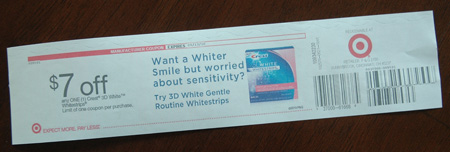
It’s not just grocery stores that provide you with sponsored coupons. I stopped at target yesterday to pick up some envelopes, on my way to the cash I spotted a new iced coffee drink. From other posts, you know I am addicted to coffee, so I couldn’t resist. At the register I was given a $7 off coupon for Crest Whitening strips. I doubt the envelopes triggered that.
Broken Secrets | By: Chad Upton
Subscribe on: Facebook | Twitter | Kindle
Sources: Seattle Press, No Cards, an Industry Insider


 Broken Secrets