Posts filed under ‘Demystified’
How Does Information Get On a CARFAX Report?
By Chad Upton | Editor
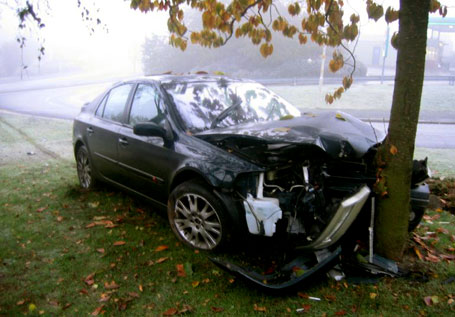
It’s not unusual for somebody to completely destroy their car and walk away unharmed.
This happens because newer cars are designed to crumple on impact, just like a bike helmet made from dense foam. The frame, hood and even the power train components absorb the energy from the impact in order to help protect the occupants. Of course, air bags may also deploy, which protect the occupants from hitting hard surfaces inside the vehicle.
When an insurance company declares a car as a “total loss” it means they are not going to pay to fix the car; although, they may sell the vehicle to somebody who plans to use it for spare parts. That person may then fix the car and try to sell it.
Unfortunately, a car that has been in a major accident may have hidden safety and reliability problems. So, if you’re buying a used car, you’ll want to know its history.
If you’ve ever looked at a used car, you’ve probably come across CARFAX.
It’s a service that provides historical information about used cars. For $35 or less, you can enter the VIN (vehicle identification number) of a used car and get a report about its ownership, accident history, mileage discrepancies, lemon status, flood damage, fleet use (taxi, police…etc) and many other things the seller may not want you to know.
I think this is a great idea, but I’ve always wondered how they get all the information.
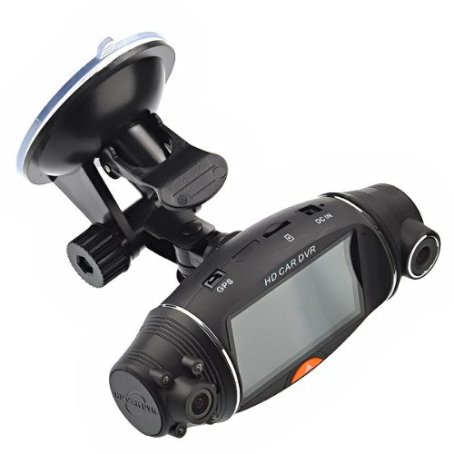
I was talking to a guy that runs an auto body shop, so I asked him. He said that he has done work on cars that were nearly totaled and the information did not show up on CARFAX; he had also done minor work that has shown up.
He said that CARFAX buys info from insurance companies and other sources. Some insurance companies have a non-disclosure agreement, where they will not disclose information about your car and its accidents while other insurance companies are willing to sell that information to make money.
I verified this information with CARFAX and it’s true. CARFAX gets information from thousands of sources and has over 6 billion records on file. They have deals with motor vehicle bureaus in every US State and Canadian Province, where they get information about mileage, flood damage, titles, lemon buybacks, accidents, thefts, liens and ownership transfers.
They also get information from auto auctions, car dealers, repair and service facilities, rental companies, state inspection stations, fire departments, law enforcement, car manufacturers, import/export companies and many others. That’s not to say that all companies of these types provide this information, but many do.
In some cases, they have mutually beneficial relationships. For example, car dealers may provide information about vehicles they service, but they may also request information about used cars that they want to take as trade-ins, buy at auctions or sell to their customers.
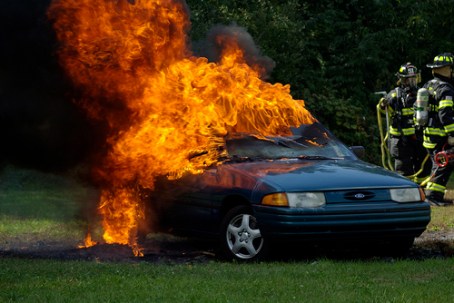
In any case, CARFAX warns that they may not always have all of the information, since there are many sources that they do not have access to. In 2005, they had 6,100 sources of information. Now, they have grown to over 34,000 sources.
CARFAX does provide a couple of free services that may be worth while if you’re purchasing a used car. The Lemon Check is one of them. This free service, will tell you if the car you’re about to buy was ever declared a lemon, meaning it was serviced for the same problem 3 times and bought back from the owner by the manufacturer. You definitely want to avoid a lemon.
You can also perform a record check with CARFAX for free. This will tell you how many records they have on file for the VIN you entered. If you’re thinking about buying a CARFAX report, you should try this free option first to see if it’s worth buying the report about the car you’re interested in.
Broken Secrets | Facebook | Twitter | Email | Kindle
Sources: CARFAX (Data Sources) MSN, MyVin
Photo: Ian Hampton (cc), jasonbolonski (cc)
The White Dashes at the Top of a TV Picture
By Chad Upton | Editor
They may appear as rapidly flashing dots, dashes, lines or boxes across the top of your TV screen.
The white lines are more prevalent on HDTVs, although they can show on older standard definition sets too.
They often appear while watching an HD channel that is broadcasting a standard definition signal, which frequently happens during commercial breaks and shows that are not available in high definition.
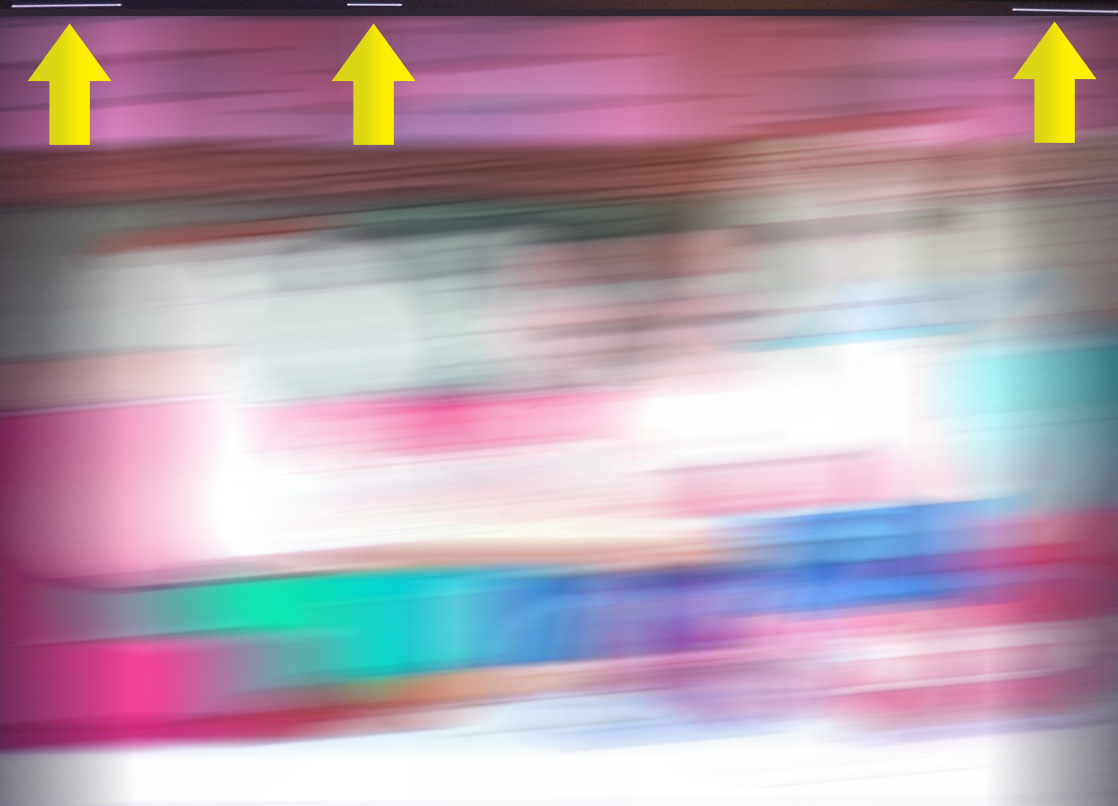
The lines are supposed to be there, you’re just not supposed to see them. If you have seen them, they will vary in size and shape depending on your TV.
These lines are like barcodes embedded in the picture. Closed captioning, teletext and programming guide information is represented by these white lines. Your TV can interpret them and display the information in a format that you can read.
Although this primarily affects HDTVs, it stems from variances in old Tube TVs (Cathode Ray Tubes). In the early days of television, there were extreme variances in production of television sets — some would cut off more of the picture than others.
Broadcasters overcame this problem by trying to keep all titles and important actions away from the very edges of the screen, in case they were cut off on some TVs. That extra space that you don’t see is called the overscanned image (because of the way that CRTs would paint an image on the screen by scanning side to side sixty times per second).
The overscan area became a good place to hide extra information when closed captioning data was added to TV signals.
HDTV signals do not overscan. Their signals are newer and were designed to encapsulate extra information from the beginning. But, you may still see these lines on an HDTV if the broadcaster is showing content that has the lines.
Most good televisions have the option to adjust overscan, including hdtvs. You’ll have to consult your manual, but this option will allow you to adjust the picture so the white lines are not visible.
Broken Secrets
Subscribe on: Facebook | Twitter | Kindle
August is the Most Popular Month for Births
By Kaye Nemec
Worldwide, there are around 140 million births each year (down from 173 million in the late 1990s). That’s about 4 births every second.
The United States accounts for more than 4 million of those annual births.
Around the world, more babies are born during the month of August than any other month. India and China have the most August newborns at 19.5% and 11.6% of babies born during August respectively. That’s 6 and 4 times more than we have in the United States during August; however, it still remains our highest birth month. In general, more babies arrive in late summer and early fall than any other time of year, but the most recent data puts August at the top of the list.

If you do the math and count nine months back from August, you’ll land at November. It is starting to get colder and the holiday season is in full swing. One school of thought believes these factors explain why August is such a popular birth month. Others believe it comes down to planning. There are people who try to plan their childbirth to coincide with summer vacations and lighter summer work schedules.
In contrast, the month of February has the lowest birth rate.
If you ask Malcolm Gladwell, author of The Tipping Point, he outlines in another best selling book, Outliers, why January and February may be the most beneficial month for your baby to be born.
Apparently, if you look at professional Hockey and Soccer players, 67% of them are born in January or February. He believes this is not a coincidence, because of age/date cutoffs, players born in these months get an extra 6 months experience compared to the other kids in the same age group, giving them a huge advantage. This advantage is most beneficial at an earlier age when the kids are streamed into more and less advanced leagues.
At a young age, 6 months development makes a big difference, giving the slightly older kids more coaching and more opportunity to develop higher level skills. This cycle repeats itself each year, raising the slightly older kids with years of better opportunities to improve.
More interesting facts:
- Wednesday has more births than any other day of the week.
- Sunday has the fewest births.
- With 21 babies born for every 1,000 people, Utah continues to have the highest birth rate in the United States.
- The State of Virginia has the lowest birth rate with 10 babies born for every 1,000 people.
- Congo has the highest birth rate of any country at 49.6 births per 1,000 people.
- Hong Kong and Macau are tied for the lowest birth rate at 7.6 / 1,000 people.
Broken Secrets
Subscribe on: Facebook | Twitter | Kindle
Sources: DidYouKnow.org, BabyCenter.com, Business Week, Wikipedia (Birth Rates, World Population)
Photo: treyevan (cc)
What is the Thirty Mile Zone?
By Chad Upton | Editor
Thirty Mile Zone or The Studio Zone, these terms refer to the area within 30 miles (48.3 km) of downtown Los Angeles, specifically the intersection of Beverly Boulevard and North La Cienega Boulevard.
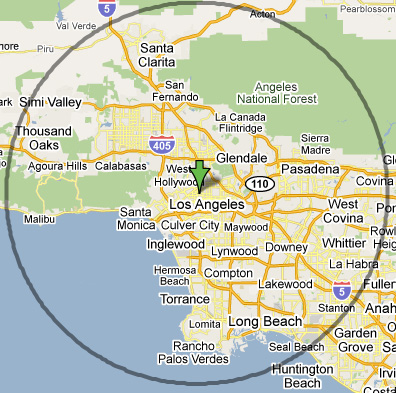
That intersection is significant because it was the home of the Academy of Motion Picture Arts and Sciences, which was originally formed to mediate labor disputes between studios and workers.
The Academy is no longer stationed there, but it remains the center point of The Studio Zone. And yes, this is the same Academy that Oscar winners always thank in their acceptance speeches.
The Studio Zone is important to the entertainment industry in Southern California. It was created to establish a reasonable distance that union workers should be expected to travel to and from the production location without additional compensation.
Productions outside of this area require higher wages to union workers and therefore many productions remain in the Studio Zone. Productions outside the zone are often referred to as runaway productions.

The Studio Zone is responsible for a land-rush during the early part of the 20th century when studios acquired ranches and other large parcels of land within the zone. In the 1920s, Westerns movies were popular, and the ranches were great locations for these pictures. Because they were in the zone, “Studio rates” were paid to the workers, which helped keep the costs down. When a picture is shot outside of the zone, the studio may pay “distant location rates” in addition to travel time and mileage, depending on the agreement.
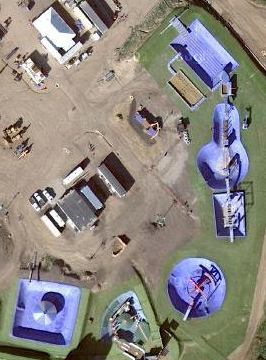 There is one exception, MGM’s Conejo movie ranch. It was a few miles outside of the Thirty Mile Zone, but the Academy considered it part of the zone for labor purposes. Why? It’s hard to say, but it’s probably worth mentioning that the Academy was started by Louis B. Mayer, the second “M” in MGM. The MGM ranch is now a nature preserve and a housing development.
Although Western movies are no longer popular, movie ranches still are. Because many of them are in the zone, they help keep costs low. Productions are bigger than ever, even TV shows use movie ranches for large elaborate sets. Click the embedded image to visit the google maps location of the Wipeout set (under construction at time of picture).
The celebrity news show TMZ stands for “Thirty Mile Zone” — that’s where they capture most of their footage.
Broken Secrets
Subscribe on: Facebook | Twitter | Kindle
Sources: California Film Commission, Wikipedia (The Studio Zone, AMPAS, Movie Ranch, Wipeout), Shapell Homes,
Photos: ezioman (cc), Film LA, Google – Imagery GeoEye, US Geological Survey, DigitalBloge, USDA Farm Service Agency, Map data
eInk Doesn’t Use Power to Maintain an Image
By Chad Upton | Editor
eInk or electronic paper, is a modern display screen technology used in consumer electronics.
The most popular products that use electronic paper screens are eReaders such as the Amazon Kindle, Barnes and Noble Nook and Sony eReader.
When you first see an electronic paper display, the most striking thing is how much it looks like real paper. Not so much in texture, but definitely in readability. That’s because there really is an inky black dye inside the screen. Electronic paper displays are the perfect screen type for eReaders, for two main reasons.
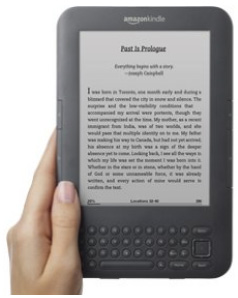 Electrical charges repel particles, forcing the ink near top of screen where it appears black, or toward the bottom of the display where it appears white. This provides very sharp text, just like a real book. It also means the display reflects light the same way a real book does, rather than generate its own light like typical television and cell phone display technologies. This makes the electronic paper easy on the eyes over long periods of time and easy to read in sunlight.
The surprising thing about this technology is that is doesn’t use any energy to hold a static image on the screen — it only requires energy while drawing a new image on the screen. This is perfect for devices that don’t require the display to be updated constantly, such as eReaders. Even if you’re a very fast reader, it’s going to take you at least 10 seconds to read a page. That means you’re only using the battery for a fraction of a second to update the display and then the battery can mostly rest until the next page turn.
That is great, because it means the battery last for a very long time. It also means that the display shows an image when the device is off and not consuming power. When the Kindle battery dies, it switches the screen to indicate the battery is dead. So, even though you can’t turn it on, you know exactly why.
One of the main drawbacks is that electronic paper is a black and white technology. Technically, color ePaper exists, but it is not in widespread use. Additionally, the screen refreshes slowly when compared to other display types, such as LCDs.
Slow refresh is no problem for eReaders, it can paint a new page on the screen faster than you can turn a page of a real paper book. But, it’s not good for devices that require motion graphics. Amazon is working on games and applications to run on the Kindle, similar to iPhone and BlackBerry apps. But, you won’t likely see any fast action games on electronic paper devices anytime soon.
Broken Secrets
Subscribe on: Facebook | Twitter | Kindle
Sources: Wikipedia (Electronic Paper, Kindle)
White Chocolate is Real Chocolate
By Chad Upton | Editor
Somebody once told me that White Chocolate is not really chocolate. The argument is that white chocolate is not made from chocolate liquor and white chocolate does not contain cocoa solids; therefore, it is not real chocolate.
That is not necessarily true.
 Chocolate was discovered by Aztecs in Central Mexico, at least three hundred years ago. The name comes from the Nahuatl word, “chicolatl” meaning “beaten drink.” It is derived from, “chicoli”, which means “beating stick” and “atl”, meaning “water.”
To make chocolate, the seeds of the tropical cacao tree are harvested. They are bitter and must be fermented to make the flavor more palatable. The fermented beans are then dried, roasted and shelled to expose cacao nibs (you can buy cacao nibs, they’re an interesting balance between slightly bitter and mildly sweet — click on the photo for amazon link).
The nibs are ground to produce cocoa mass, which is melted to create chocolate liquor (not to be confused with chocolate liqueur). When chocolate liquor cools, it forms what we commonly refer to as baking chocolate.
At this stage, the chocolate is about 53% cocoa butter (fat), the rest is carbohydrates, protein, tannins and theobromine.
Theobromine is in the same family of chemical compounds as caffeine and is believed to be the proof that chocolate is addictive. Healthy humans can break down reasonable amounts of this compound, but many animals cannot. This is why chocolate can be harmful to pets. White chocolate contains only trace amounts of theobromine, which is what gives other chocolate its brown color.
White chocolate is made from cocoa butter, milk solids, milk fat and sugar. According to the FDA, white chocolate must contain at least 20% cocoa butter to be called “White Chocolate.” The European Union has adopted the same standard for cocoa butter requirements, but there are some other regulations around milk and sweetener contents that differ between the US and the EU.
Confectionery items that look and taste similar to white chocolate, such as “Almond Bark” are not white chocolate. In fact, they’re not chocolate at all. They are usually made from solid or hydrogenated vegetable and animal fats instead of real cocoa butter.
White Chocolate is real chocolate when it’s made from cocoa butter.
Broken Secrets
Subscribe on: Facebook | Twitter | Kindle
Sources: FDA, WP (Cocoa Butter, Chocolate, White Chocolate, Chocolate Liquor, History of Chocolate, Aztec, Theobromine)
Disney World has Many Legal Powers of a City
By Chad Upton
Disney World is the size of a small city, make that two small cities.
Many people believe that Walt Disney World Resort is in Orlando Florida, but that’s not exactly correct. While it is near Orlando, The City of Bay Lake and the City of Reedy Creek (now the City of Lake Buena Vista) are incorporated into the lands of Walt Disney World Resort.
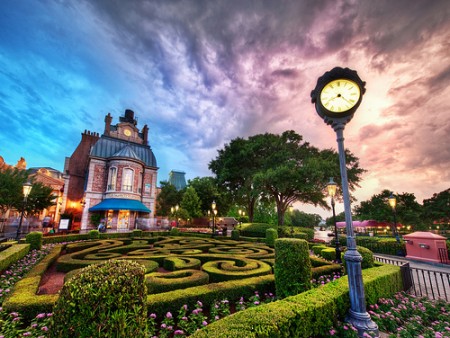
When the Disney World was announced, Walt Disney explained that a special district would need to be created for it to succeed. Due to the massive construction effort to build Disney World, Walt believed the park would need to have powers similar to a city in order to manage construction efficiently and secure control over its future.
On May 12, 1967, legislation forming the Reedy Creek Improvement District was formed. This legislation provides Disney World with immunity from county and state land-use laws, giving them eminent domain and ultimate control over what they build inside the park. Property taxes and elevator inspections are the only items that the district submits to the county and state.
Broken Secrets
Subscribe on: Facebook | Twitter | Kindle
Sources: Wikipedia (Walt Disney World Resort)
Photo: Stuck in Customs (cc)
The Magic Kingdom is Built on a Series of Tunnels
By Chad Upton
Walt Disney World Resort near Orlando Florida is the largest resort in the world at 100 km squared (39 sq miles).
It started off as mostly swamp land. In fact, there were many people who owned pieces of that land before Walt Disney secretly bought it all up. He didn’t want people to know he was buying the land because he feared prospectors would buy it up and hold out for exorbitant figures.
In order to secretly buy this land without attracting attention, a number of dummy corporations were formed. Some of the company names included M. T. Lott Real Estate Investments (“empty lot”), Ayefour Corporation (“I 4” because the resort is near Interstate 4) and many of them were owned by “Mr. M. Mouse.” In hindsight, it seems pretty obvious. But, nobody caught on until someone leaked the information to the Orlando Sentinel in October of 1965. Many of these names can be found on a window on Main St in the Magic Kingdom.
Walt Disney World Resort includes a number of theme parks, but the oldest and most well known is The Magic Kingdom. It’s crown jewel is Cinderella’s Castle.
The castle is directly across the park from the front gate. In fact, if you look at the castle from inside the front entrance, you can tell the castle is built one story higher than the gate — Main St gradually slopes up to the castle. This gives the castle a grand presence and it also accommodates a big secret below the park.
If you look at the picture of the Magic Kingdom Railroad Station (below) which is just beyond the front gate, you can see that it is one level above ground level. The elevation of the train station and the castle exist because concrete utility corridors (“utilidors”) are built at ground level and the rest of the park is built on top of these tunnels.
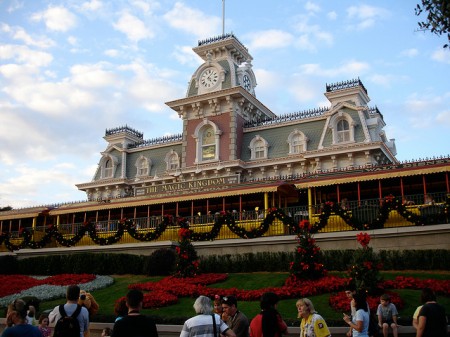
The Seven Seas Lagoon, in front of the Magic Kingdom, is a man made lake. 1.5 million square meters (5 million square feet) of dirt was excavated to create the lake — that dirt was used to build up the ground around the utilidors to make the Magic Kingdom seem like it is at ground level. The main tunnel starts just on the other side of the railroad station and runs below Main St, leading directly to Cinderella’s Castle.
There are entrances into the utilidors all over the park (see the attached map). The main entry is behind “It’s a Small World” at the back of the park where there is a large loading area for people and supplies to enter the tunnel system. There are 2.5 km (1.5 miles) of tunnels below the park. They’re not just for moving around, there are many other features built in to the tunnels: break rooms, restrooms, locker rooms, “Kingdom Kutters” (hair cutting), “Mouseketeeria” (cafeteria), makeup room, first aid facility, money room and training rooms.
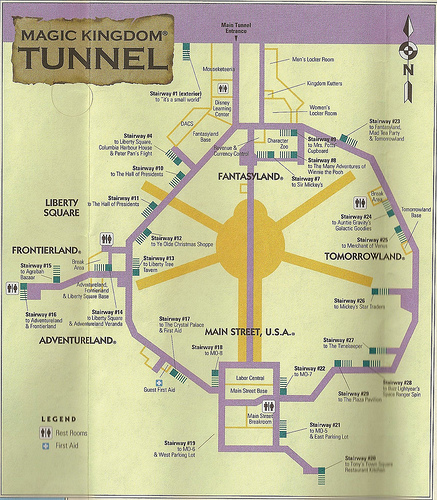
The tunnels make it efficient for cast members and utility crews to move around the park without disrupting park guests. It prevents guests from seeing characters in parts of the park where they don’t fit in, although visitors can pay for a tour that includes a look behind the scenes of some shows and a trip through the utilidors. This is an all day tour of Walt Disney World Resort called the Backstage Magic Tour and it costs $238 per person. If it’s just the tunnels you want to see, watch this video for free.
Guests under the age of 16 are not allowed in the Utilidors because Disney is worried about ruining the magic if a child sees two of the same character together or two characters from different stories talking together. The walls of the tunnels are labeled and color coded to make navigation easy.
Just like other places, Disney World has it’s own secret language, including terms such as “Protein Spill” (vomit) and “Alpha Crew” (first aid). These codes allow them to communicate on radios without spoiling the magic for guests within earshot.
There are many secrets that make the Magic Kingdom seem so magical — I’ll share more again soon.
Broken Secrets
Subscribe on: Facebook | Twitter | Kindle
Sources: Hidden Mickeys, Wikipedia, Explore the Magic
Photos: Daryl Mitchell (cc), John Corigliano (cc)
That Falling Feeling When Going To Sleep
By Chad Upton
When you’re falling asleep, do you ever get that sensation of falling, sometimes followed by a jerk reaction?
It’s pretty normal for this to happen occasionally. Irregular sleep schedules are one known cause and the explanation behind it is pretty interesting.
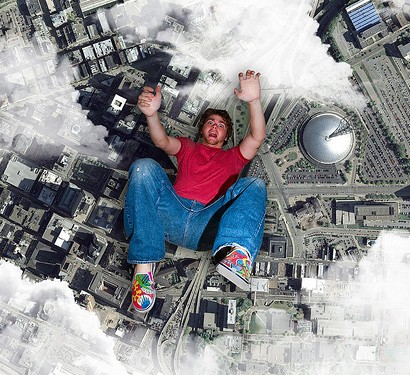
During REM sleep, your muscles go into a state called atonia. Essentially, all of your muscles except those in your eyes and those used for breathing are temporary paralyzed. You brain blocks signals that are normally sent to these muscles. This is true for humans and common among most other warm blooded mammals.
This is the reason why your muscles don’t actually move when you’re dreaming about them moving. It’s a self preservation mechanism, preventing you from hurting yourself and other people while you’re asleep, which is obviously good for your safety but it also prevents you from waking yourself, ensuring a proper sleep.
If your REM sleep is interrupted, your muscles resume from atonia and your mind returns to consciousness at roughly the same time. But, it is possible for your consciousness to resume before muscle control. You’ll be awake, but paralyzed. This is called “sleep paralysis” and as many as 60% of people will experience it at least once in their lifetime. It can be scary, but it normally occurs for a very brief period of time, sometimes it is so short that you may not even realize it happened.
This sensation is often described with feelings of fear or dread and described like an out of body experience. Auditory and visual hallucinations have been reported and are part of the mythology of some cultures, attributing this feeling to supernatural forces, demons, UFO encounters and so on. There are also people who believe this state is a doorway to the inner mind and they try to remain in this state as long as possible.
Waking up into sleep paralysis a single time is not usually something to worry about, but if it happens more frequently then it could be a symptom of a more serious problem such as narcolepsy and you should see a doctor. Sleep paralysis occurs more commonly when people are on their backs, but doctors do not know why.
Sleep paralysis can also happen while you’re falling asleep. Your mind may realize that you are awake but your body is paralyzed. That disconnect can cause the feeling of falling, which is startling and often accompanied by a hypnic jerk.
Super thanks to Dr Ryan W, the Broken Secrets neurology expert, for his help with this post and for his great work in neurology.
Broken Secrets
Subscribe on: Facebook | Twitter | Kindle
Sources: Dr Ryan W, Sleepdex, brynmawr.edu, Wikipedia (Hypnagogia, Hypnic Jerk)
Photo: NewEndProductions (cc)
Shoes on Power Lines
By Chad Upton
Tying shoes together by their laces and throwing them onto overhead lines is known as “shoefiti” (shoe + graffiti).
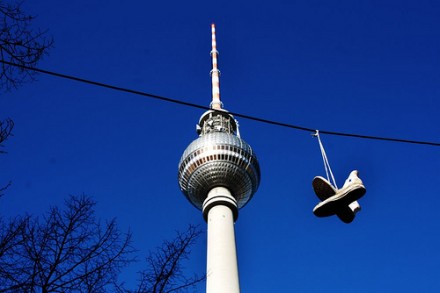
Shoefiti started in the United States and spread throughout the world, the photo above was taken in Berlin.
There is no single reason why people do this, there are many reasons.
When sneakers are festooned on power lines in rough neighborhoods, the conclusion for their presence is often crime related. Some believe they mark crack houses where you can get your fix or some free shoes via ladder. Others say they are shoes that belong to (or hang in memory of) a murder victim. Some say they are for marking gang turf, but Tucson Arizona police have denied that and flagged the turf marker idea as myth.
They did mention that many shoes are removed each week, since they are unsightly and can cause damage to the lines.
They also said that the volume of shoes increases during the summer break from school. A couple of stories have been told that may support this. One is that of tradition, shoes are thrown on power lines to celebrate the last day of school or graduation. Teenage boys have also been said to do this when they lose their virginity.
Perhaps the oldest story about the origin of shoefiti claims it was tradition for soldiers to hang their boots on the power lines at base when they completed basic training, went home on leave or left the service entirely.
In some movies, it’s the school bully who steals your shoes and throws them onto the lines. There are also stories of kids retiring their own shoes when they get a new pair.
Chances are good that the people who are doing it now have no idea why their predecessors did it.
Some people may think it’s a harmless tradition, but the shoes can disrupt utility services by adding weight to the lines which causes them to sag and potentially touch other lines or trees, which could also result in fire.
If you want to remove shoes from the lines, because you want your kicks back or you just want to clear the eyesore, you should call the utility company to do it — a few Darwin Award candidates have earned their nomination trying to DIY their shoes back.
Broken Secrets
Subscribe on: Facebook | Twitter | Kindle
Sources: About.com, Snopes, Straight Dope, Wikipedia
Photo: edkohler


 Broken Secrets