Posts filed under ‘Demystified’
The Swastika Was Once a Symbol of Good Luck
By Chad Upton | Editor
Today, the swastika is frequently associated with one of the most horrible and unfortunate times in human history — it was the symbol of Nazi Germany (1933-1945).
Because its recent history is awful, the swastika is nearly taboo in many cultures. But, the symbol has been around for thousands of years, most of those years as a very peaceful symbol.

The name “swastika” comes from the Sanskrit word svastika, meaning “lucky” or “well being.” It is generally used on people and things to denote good luck or wish well being. It goes by many names in many different places: hook cross, crooked cross, angled cross, sun cross, sun wheel, hakenkreuz (German), among others.
The swastika can be traced back about 11,500 years, to the Neolithic period. It’s past and present are deeply rooted primarily in Eastern religions although there are many examples of it in other religions. Long before it had any negative connotation, it was popular in religions and cultures including: Christianity, Buddhism, Hinduism, Chinese and Japanese art and many others.
Many people are unfamiliar with the swastika’s relationship to Christianity. They used it to symbolize Christ’s victory over death. Some cathedrals built during the Romanesque and Gothic eras are decorated with swastikas, including the tile floor of this Roman Catholic Church in France (Amiens Cathedral).

Matilde Moisant, the second woman to get her pilot’s license, wore a swastika pendant on her 1912 uniform for good luck. This was a common practice among early aviators and test pilots.
Although the swastika is generally associated with an awful time, its original meaning is still an important symbol in many cultures, so it’s important to understand that it was a positive symbol for most of its life.
Broken Secrets
Subscribe on: Facebook | Twitter | Email | Kindle
Sources: About, Wikipedia (Swastika, Matilde Moisant, Amiens Cathedral)
Studios Pay to Have Movies Rated
By Chad Upton | Editor
I always find it funny when movies come out on video and they’re advertised as “unrated.”
 The “unrated” designation seems to imply that the film is so outrageously sexual, horrific or crude that there’s no rating that could possibly classify how extreme it is. But, that’s not usually true.
While the unrated release may be more sexual, horrific or crude than the rated version, it also may not be. To me, it’s just like doing a math test, not handing it in and calling it “ungraded.” In either case, it doesn’t necessarily reflect the nature of the content — it just means that it didn’t get a stamp from somebody with elbow patches.
The movie rating process varies by country. In some places, such as Australia, movies are rated by the government. In other places, such as the United States, an independent organization handles ratings.
In the US, the Motion Picture Association of America (MPAA) actually has a trademark on the ratings known as: G, PG, PG-13, R and NC-17. That means those ratings cannot be used without the permission of the MPAA. That adds credibility to the rating system, but it also adds digits to their bottom line. You see, when a filmmaker or studio submits a film for rating, they pay $2,500 – $25,000 to have their film rated (based on cost of the film and the annual revenue of the studio).
 The MPAA also has an agreement with the major studios: that all theatrical films will be submitted for rating. That’s why most movies that you see in the theater have a rating. It’s not a legal requirement, at least not in most places. In fact, it’s a business decision.
Even though it costs a lot of money to have a film rated, it can be well worth it. The rating that a film receives can dramatically impact the film’s success at the box office. For many films, the lower the rating, the wider the audience. But, in the case of movies that are targeted at older teenagers and adults, higher ratings may be more appealing. This is part of the phenomenon that contributes to the status of the “unrated” marker.
The rating a movie gets is so important that studios will often re-cut and resubmit a film for rating multiple times, until it receives the rating that they want. It’s all marketing, they know how they’re going to promote the film and the rating has a lot to do with it. Each time they resubmit a film, it costs $2,500.
The factors that contribute to ratings include: sexual content, violence, profanity, drug use and other material that may offend some audiences. The interesting part is that films released internationally are often re-cut for each country or cultural area. Sexual content in America generally pushes the rating up while the same content in France and Germany is more socially acceptable and does not necessarily increase the rating there. On the other hand, extremely violent films may be re-cut and toned down for those same markets where intense violence is less acceptable to ensure a lower rating.
 The ratings board is made up of 9 people (mostly men), ranging in age from 44 to 61. More recently, the board has been accused of “ratings creep” — the idea that movie ratings are becoming more lenient over time. A Clockwork Orange originally received an X rating in 1971, reserved for films that are recommended for adults over the age of 18. But the X rating is not part of the MPAA rating system that we know today. A Clockwork Orange was later given an R rating, which suggests that viewers under the age of 17 by accompanied by an adult. Clearly, it got a much lower rating the second time around.
The marketing of “unrated” films suggests they are similar to old X rated films. If you want to see an unrated film, check out some recent releases: The Hangover, Get Him to the Greek and Hot Tub Time Machine.
Broken Secrets
Subscribe on: Facebook | Twitter | Kindle
Sources: Filmbug, FilmRatings.com, Wikipedia (MPAA, MPAA rating system)
Modern Chewing Gum is Made in a Lab
By Chad Upton | Editor
Chewing gum has been around for a long time. The first form of chewing gum was birch bark tar, dating back about 5000 years in Finland.
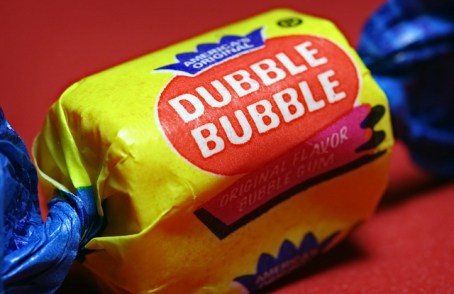
Ancient Greeks chewed a gummy substance from the mastic tree. Aztecs and Mayans chews chicle from the chicle tree.
Chicle is responsible for modern chewing gum. In fact, the famous brand of gum, Chiclets, is named after chicle. Wrigley originally used chicle from a number of natural sources in Central America. But, just like sugar, we found a way to create chicle in a lab, saving the expense of importing it.
In 1937, some scientists at Standard Oil (now ExxonMobil), developed Butyl Rubber, which is almost exactly the same as chicle. It’s also used to make rubber tires, basketballs, footballs, soccer balls and many rubber components used for home construction on roofs and around HVAC fixtures.
Global supplies of butyl rubber primarily come from two companies ExxonMobil and LANXESS, a spin off of Bayer Pharmaceuticals.
Chicle is still used for chewing gum in some markets, such as Japan.
Broken Secrets
Subscribe on: Facebook | Twitter | Kindle
Photo: Darren Hester (cc)
Sources: Wikipedia (Chicle, Chewing Gum, Polyisobutylene)
How to Tell Which Printing a Book is From
By Chad Upton | Editor
Books were once a luxury.
That changed with the printing press, making duplication of books faster and cheaper, which made books more accessible to common people. Eventually, public libraries made books available to everyone in a community.
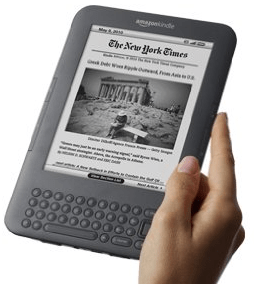 The way we access books is changing again, by eReaders like the Kindle and iPad.
If you browse the Kindle forums on Amazon.com, you may notice that eBook snobs refer to normal books as DTBs (Dead Tree Books). While eBooks are a status symbol now, they may eventually be the way common people access books, making paper books a luxury once again, reserved for expensive hardcovers and collector editions.
For some people, the only books they have ever read were the ones they had to read in school. This year, many high schools and colleges are using iPads and Kindles to distribute reading materials. It’s not because they’re fancy, it’s actually quite practical.
Although the initial cost of the device is high, the cost to create and distribute electronic books is almost negligible. The cost of a Kindle ($139) is about the price of two or three large college textbooks. At that rate, the device could pay for itself in the first semester.
Because it is much cheaper, faster and easier to download books, eBooks may eventually replace paper books as the primary way we read. Like I said, the reading devices are expensive, but even if people don’t want to buy a dedicated device, chances are good they already own one that is compatible. Amazon has already made software that allows Kindle books to be downloaded and read on Windows and Mac computers, iPads and iPods, along with all of the major smartphone platforms (iPhone, Blackberry and Android).
The future of books may be eBooks. In the meantime, it’s hard to know how popular paper books are, unless you know this secret.
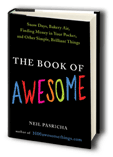 When a book is printed for the first time, the publisher doesn’t know how well it will sell. They print a limited number of books to minimize the risk of their investment. If the book sells well, they can always print more.
Most publishers list the number of the printing in an ambiguous format on the publishers copyright page near the front of the book. They put the numbers 1 through 10 on their own line near the bottom of the copyright page. Sometimes, they’re in left to right order from 1 to 10. Other times, the numbers alternate from left side to right side, with 10 in the center.
The lowest number you can see on this line is the printing that the book is from. When a book goes into its second printing, the number 1 is removed. On the third printing, the number 2 is removed and so on.

1st Printing

9th Printing
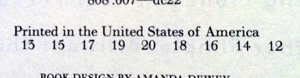
12th Printing
You can see that the numbers alternate from left to right. They sometimes do that so the remaining numbers stay centered without adjusting the printing of the remaining numbers. If you see them in a book and they are not alternated, the remaining numbers will be off to one side instead of being centered (they don’t normally adjust the type to re-center it).
Sometimes, printings are confused with editions. A book may go through many printings and still be considering the “First Edition.” Generally, the edition doesn’t change unless the content in the book or the publisher changes.
The images above are from one of my favorite books, The Book of Awesome. As you can see, this book has been extremely successful — it’s in its 12th printing! Frankly, it is an awesome book and I’m not just saying that because I’m trying to be funny or because I’m in the book — the sales speak for themselves, it is a great book.
Broken Secrets
Subscribe on: Facebook | Twitter | Kindle
Sources: Travelin Librarian, Between the Covers, Wikipedia (Books), Kotaku
Some Eggs Do Not Need Refrigeration
By Chad Upton | Editor
Eggs are incredibly versatile. They can be prepared many different ways and appear in thousands of recipes, from salad dressings to dessert puddings.
While eggs taste great, they can also be dangerous if not treated properly. In the United States, about 1 in 20,000 eggs may contain salmonella — a bacteria that can make people very sick and possibly lead to death. In fact, approximately 142,000 cases of salmonella poisoning are reported each year and approx 30 of those cases result in death.
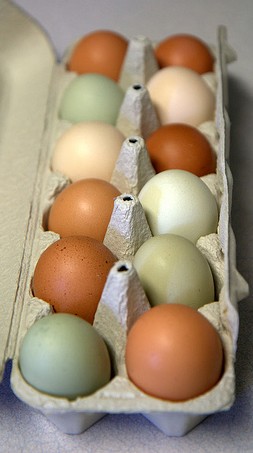 In many countries, eggs lay on supermarket shelves completely unrefrigerated. In other countries, eggs must be refrigerated when they are shipped, stored and sold.
Eggs have a natural protective layer on the outside of them which preserves the egg for a long period of time without refrigeration. Unfortunately, eggs can become contaminated with salmonella. This happens by contacting feces or other environmental contaminants during production. It can also be caused by the ovaries of an infected hen.
Because of this risk, countries such as the US and Canada insist that eggs be washed before they are sold. The advantage of this is that potential bacteria is removed from the outside of the egg. The disadvantage: the natural protective coating will also be removed, which requires that eggs be refrigerated to mitigate the risk of other contamination.
Although rare, there is also a risk that the egg yolk is infected. Refrigerating eggs prevents the potential bacteria from multiplying further, which reduces the risk of illness if a contaminated egg is consumed.
Typical egg care varies by country. If you buy eggs that are refrigerated, you should refrigerate them at home. If the eggs are not refrigerated at the time of purchase, you may optionally refrigerate them at home to extend the shelf life.
Room temperature eggs are recommended for hard boiling, experts say the shell is easier to remove because the outer membrane (just inside the shell) is weaker.
Many chefs suggest that refrigerated eggs should be at room temperature before they are mixed for baking, salad dressings and mayonnaise. The yolk in a cold egg is more firm, so they mix better at room temperature. Therefore, cold eggs are ideal for poaching or frying, reducing the chance that the yolk will break open during preparation.
Broken Secrets
Subscribe on: Facebook | Twitter | Kindle
Sources: USDA, Chow, Banderas, Ochef, Wikipedia (Salmonella)
Photo: chizang (cc)
Why Most New Stuff Comes Out on Tuesday
By Chad Upton | Editor
It’s always exciting when your favorite band releases a new album. But, why do they always come out on Tuesday?
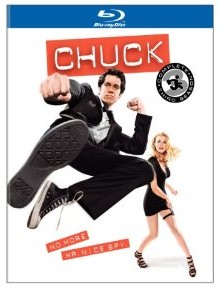 It’s because DVD, Bluray, CD and video game sales are tracked by SoundScan, a company that compiles sales data on these items. They’re like Nielson TV ratings, except for music, movie and video game sales. In fact, SoundScan is even owned by Nielson.
They measure the number of weekly sales starting on Tuesday through to the following Monday. Publishers release new items on Tuesday so the first week of sales data is seven days; that means sales from that week can be compared to sales data from following weeks in an accurate way.
New movies hit theaters on either Wednesday or Friday. Friday is popular for big movies because a lot of people want to see them on the weekend and it will make the three day ticket sales look more impressive, making the movie sound like a hit. Wednesday is popular for movies that don’t want to compete with the Friday blockbusters.
Here’s a list of popular media and the days they come out:
Movies: Wednesday and Friday (Theater), Tueday (DVD and Bluray).
Music: Tuesday.
Video Games: Tuesday.
Books: There is no standard, although Tuesday is fairly common since they are also tracked by Nielson. They are often on shelves before their official release date, unless there is a large advertising campaign that indicates a specific date.
Comic Books: Wednesday.
Broken Secrets
Subscribe on: Facebook | Twitter | Kindle
Sources: Comic Books (Yelp), Music and Movies (Artists House Music), Nielson, Movie Scoop,
Why Suit Jacket Pockets are Sewn Shut
By Chad Upton | Editor
Men’s suit jackets have their pockets sewn shut at the factory.
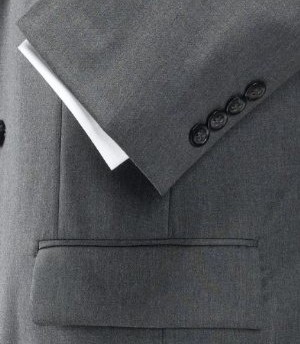
If the jacket does have real pockets, the question is: to use the pockets, or not to use the pockets?
There are two camps on this issue.
Some say the pockets are there to be used for movie tickets, opera programs, cigars and other sleek items. In other words, definitely open your pockets up.
 On the other hand, using the pockets can stress the seems and ruin the jacket over time. The jacket can also be easier to press without open pockets. So, you’ll have to pick a side.
If you’re on team open pockets, then you can ask your tailor to open the pockets, especially when you buy the jacket. If you’re a DIY kind of person, you can use a seam ripper to, well, rip the seam. You could also use a pair of nail clippers or fine scissors to cut the threads.
Broken Secrets
Subscribe on: Facebook | Twitter | Kindle
Sources: Mens Warehouse, Ask Men
Why You Shouldn’t Wear White After Labor Day
By Chad Upton | Editor
Labor Day is a popular holiday in the United States and Canada, observed on the first Monday of September.
According to the US Department of labor, it’s “a creation of the labor movement.” Therefore, it only seems fitting that we celebrate by not going to work — it is a Federal holiday in both the US and Canada.
Labor Day also marks the last day people should wear white (until Memorial Day in May). About 10 years ago, I was schooled on this manner of etiquette.
I was walking downtown by myself and it was pretty late. As I turned the corner onto another street I saw two tough guys walking toward me. I noticed that one guy got visibly angry when he saw me. I didn’t know the guy and I didn’t know what problem he could possibly have with me.
I held my ground and I kept walking toward them, trying not to look at them. But, just as we were passing I looked up, either to say “hey” in a friendly way or just to block a punch if that was the case. The one guy yelled at me, “Don’t wear white after labor day.”
I was really surprised. Based on the his outfit, I would not have guessed he was the fashion police, but maybe he was undercover.
That’s a completely true story and I laugh about it now, but at the time I was pretty scared when I saw his reaction to me.
In my defense, I was wearing khaki.
Historically, the rule only applied to white dress shoes and high heels. In the 50s and 60s, the middle class extrapolated this rule to include other clothing.
Some believe it was practical advise, since white clothing would be tough to keep clean in the winter. Others say that white clothing was typical dress for members of high society during summer holidays and was too casual for getting back to serious business when summer had finished. In the 1950s, the middle class was growing and they were given simplified rules of high society to help them fit in, including the rule about white after labor day.
In the latest edition of Emily Post’s Etiquette, the ban was lifted on wearing white after labor day. In fact, some now consider it very fashion forward to do so.
If you’re old fashioned and are shy about trading in this tradition, you should know that cream colored wool has always been exempt. So, go ahead and wear cream (at your own risk).
Broken Secrets
Subscribe on: Facebook | Twitter | Kindle
Sources: Dept of Labor, Wikipedia, Wise Geek, Time, Yahoo
Japanese Theft Deterrent
By Chad Upton | Editor
They sit on the counter in many Japanese stores, but they are not for sale.
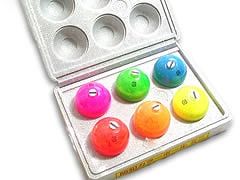 At the size of a baseball, these bright spheres are placed in public view to deter theft. They’re not magical, they’re highly practical.
If a store or bank is robbed, the employees throw the baseballs at robbers as they leave the shop. Bright paint covers the thief, making it easy to identify them as they flee the scene and potentially prove their guilt when caught.
Although orange is the most popular color, they’re actually available in a variety of colors. They’re known as bohan balls, and they cost about 1500 yen ($18 USD).
The paint is brightly colored, glows in the dark and carries a strong odor. The odor is embarrassing, but more importantly, police dogs are trained to track it.
Oh and you can get a semi-automatic gun to shoot the balls too.

It’s called the Chaser because you can follow the criminals and still paint them or their getaway car from a safe distance.
Sources: Stippy, Urlesque, Great Geek Manual, Ring-G, Rakuten, Toyokuni









 Broken Secrets