Posts filed under ‘Demystified’
Design and History of the Northface Logo
By Kaye Nemec
Northface is a performance apparel, equipment and footwear company that started over 40 years ago. Although most of their products are geared towards mountaineers, climbers and hikers, the company was, ironically, started on a beach. In 1966 two young men with a passion for hiking were living in San Francisco’s North Beach neighborhood; they decided to turn their hobby into a living by starting a small, mountaineering retail business. Today, they are known around the world as a leader in endurance products among outdoor performance enthusiasts.
The name North Face was chosen because the north face of a mountain is the coldest and most treacherous side and the goal was to create gear that would assist climbers in successfully traversing these conditions.

The logo they chose for the The North Face company is an interpretation of Yosemite National Park’s Half Dome, a rock formation rising 8,800 feet above sea level. In 1865 Half Dome was declaredto be completely inaccessible to anyone and this was believed to be true until 1875 when George Anderson was the first person to successfully reach the summit.
Today thousands of people reach the summit every year and several of them are likely using North Face gear while they do it.
Broken Secrets
Subscribe on: Facebook | Twitter | Email | Kindle
Sources: The North Face: Our Story, Dinesh.com, NPS.gov
Why Airplane Shades Must Be Up for Takeoff and Landing
By Chad Upton | Editor
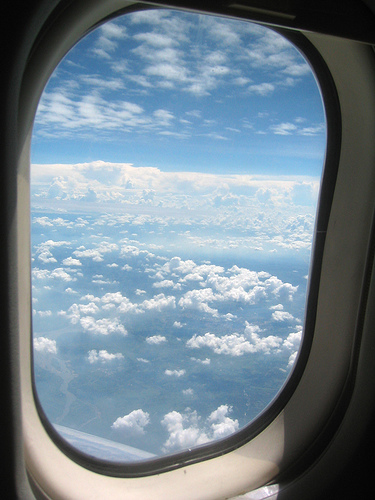 You may not have heard of this, but it’s law in some countries and it’s growing in popularity around the world. The reason is similar to why the airlines dim the interior lights during takeoffs and landings at night.
In short, it’s for safety in the event of an accident. With the window shades up, passengers and crew can spot dangers outside the planes before they open an emergency exit. Dangers like fire, water and running airplane engines can be hazardous if someone opens an emergency exit right into them.
During bright daylight, it also allows your eyes to adjust to the brightness outside, which could be critical during an accident.
Broken Secrets
Subscribe on: Facebook | Twitter | Email | Kindle
Photo: contraption (cc)
Sources: Airliners.net, Straight Dope
Why It’s Called Black Friday
By Chad Upton | Editor
The term “Black Friday”, originally referred to Friday, September 24 1869, when the value of gold plummeted. It happened because a couple of speculators allegedly drove the price up, telling investors it would increase in value because the government was going to buy it, but the federal government actually sold a significant amount of their gold, which flooded the market and caused the value to plummet. For many investors, it was their financial doomsday.
The contemporary meaning of “Black Friday” refers to the day after US Thanksgiving. This meaning comes from Philadelphia Police, cab and bus drivers. They called it black Friday because they are overwhelmed as huge numbers of people go shopping and cause havoc to their normal routines.
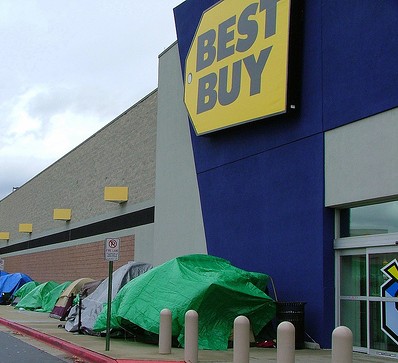
It’s often referred to as the busiest day of the year for retailers, but that’s not entirely true. It is the day when they have the highest number of people in their store, but it’s not normally the highest day of sales for the year, although it’s usually in the top ten.
Update: A couple of comments mentioned the idea that the “Black Friday” name refers to the time when retailers finally turn a profit for the year, moving from “red” ink into “black” on their income statement. Before researching this post, I thought that was the reason too. Wikipedia does mention this idea as an “alternative” explanation that emerged sometime after the term was coined by police, cabs and bus drivers in Philadelphia. Unfortunately, Wikipedia does not provide any sources to indicate that this is a fact for retailers. Although there are many sources that mention this idea, I cannot find any hard data that indicates any retailer operates without profit until the last 6 weeks of the year. If anyone finds any data that shows this, I’d love to include it in this post — it would definitely have significance in the meaning of “Black Friday.”
Broken Secrets
Subscribe on: Facebook | Twitter | Email | Kindle
Photo: Richard Roberson (cc)
Sources: Wikipedia (Black Friday 1869, Black Friday Shopping)
Why Some Cars Have Fake Convertible Roofs
By Chad Upton | Editor
Have you ever seen a car that appears to be a convertible, but you’re almost certain that car is not available as a convertible? Chances are, you were looking at a “landau” car.
Large sedans, town cars and of course hearses are popular cars for Landau conversions, although the occasional sport sedan or midsized car is fashioned with it too. I say “conversions,” because there are no mainstream automobile manufacturers who currently offers this option. In the past, the Detroit automakers offered it on some vehicles from the 1960s through the 1990s. To understand why, we have to go back a century.
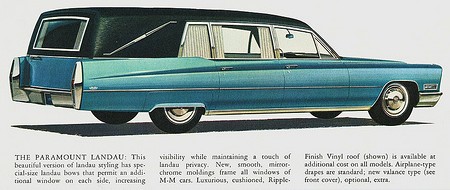
Cars replaced horse drawn carriages as the way to travel long distances. Convertible carriages were named “Landau” carriages after the city of Landau (Germany), where convertible carriages were first produced. Landau carriages typically had soft tops that were stored behind the passenger seats and deployed to cover the back, top and sides of passengers for privacy and protection from uncomfortable weather — this exact feature is still evident on contemporary baby carriages (aka strollers, buggies, prams, push chairs). (more…)
Birthdays Were Not Always Celebrations
By Chad Upton | Editor
Although traditions can vary widely, annual birthday celebrations are pretty common around the world.
In the beginning, only Kings and other royalty were thought to be important enough to have birthday celebrations. At the time, birthdays were not celebrations for common people. They believed that evil spirits searched for people on their birthday, so friends and family would gather to protect the birthday person from the evil spirits. Singing songs and using noise makers was thought to scare the spirits away and gifts were given for good luck.
Of course, modern birthdays are much different. One of the highlights is the cake and the tradition of serving birthday cake comes from Ancient Rome. Originally, cakes were much like bread, the only difference being that cakes were sweeter.
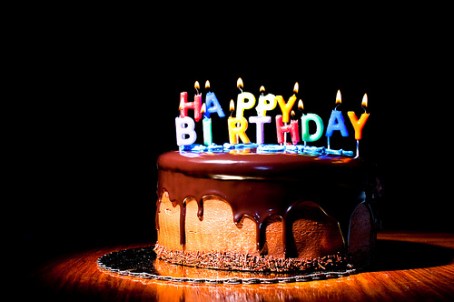
With culinary advancements in the 17th century, cakes began to look more like their contemporary counterparts. At the time, they were a privilege of the wealthy and not until the industrial revolution were the materials and tools affordable and widely available enough for commoners to have birthday cakes too.
Although candles originated in China around 200 BC, it was the Europeans who popularized decorative candles. Candles made their way onto birthday cakes around the 18th century in Germany. Many cultures put enough candles on the cake to equal the age of the person, some cultures adding one more for good luck.
Some cultures also celebrate the birthday of a historical leader or religious figure. One of the most popular is Christmas, which commemorates the birth of Jesus. In the United States we also celebrate Presidents Day on the third Monday of February, which honors George Washington’s birthday (February 22, 1732). Although most people celebrate the day they were born, there are some cultures in Europe and Latin America that also celebrate one’s name day. In that case, if you were named after a Saint, you would celebrate on that Saint’s name day (sometimes in addition to your birthday, other times in place of it — depending on the country).
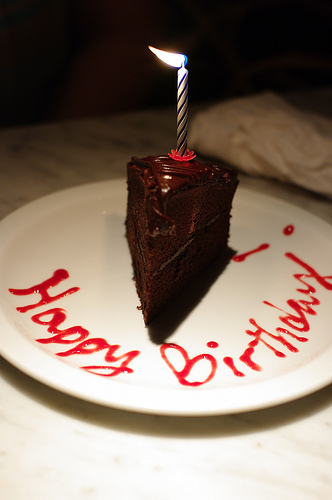 There are many other birthday traditions from around the globe, some are current and others have long passed. In some South American cultures, it was tradition to pull on the earlobes of birthday children, once for each year they have lived. In India, icing from the cake is sometimes rubbed on the face of the birthday person.
In Mexico, a Piñata is a colorful container, often shaped like a star or an animal, that is filled with treats. The birthday person, usually a child, is given a stick to break the piñata or in some countries there are strings to pull open a trap door. Although this is well known, there are many other countries, such as Denmark, India, Sri Lanka, the Philippines, Argentina, Brazil, Japan and others who have similar traditions involving clay pots or other containers that are broken to release treasures.
PS – Today, we are celebrating a very special birthday. Exactly one year and 235 secrets ago, I posted the first secret on BrokenSecrets.com — You Can Use Foil in the Microwave.
Broken Secrets
Subscribe on: Facebook | Twitter | Email | Kindle
Photos: Omer Wzir (cc), Joe Gray (cc)
Sources: BirthdayCelebrations.net, Wikipedia (Birthday, Birthday Cake, Candles, Pinata)
Babies Blink Less Than Adults
By Kaye Nemec
I was rocking my son, trying to get him to sleep, staring at his wide-eyes as he stared back at me. I noticed that he rarely blinked and each time I blinked, I wondered if we had done it at the same time and I just missed him doing it. But, that type of coincidence can’t possibly happen every time I blink for 20 minutes, so I did some research.
It turns out, babies blink much less often than adults. Studies have found that babies, on average, blink less than twice per minute while adults blink, on average, 10 to 15 times per minute.
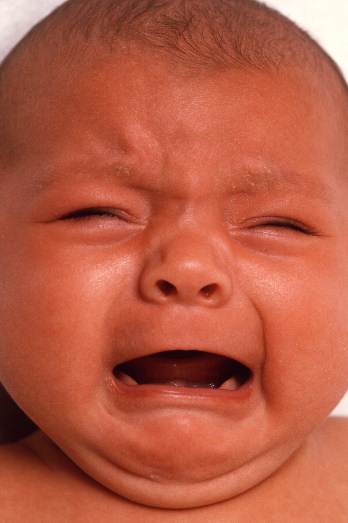 There are a couple of theories about why babies blink less than adults. One theory is that, because babies’ eyes are so much smaller, there is a much smaller opening through which things like dust, dirt and debris can pass. If fewer foreign particles enter the eye, less blinking and tears are needed to wash it away.
Another suggests that the more sleep a person gets, the less blinking is required. Since babies may have their eyes shut for as much as 15 hours per day, they are not as prone to dry eyes as adults, who often get 6 to 8 hours of sleep per day. When eyes are dry, blinking moisturizes them, so if babies don’t have dry eyes, there is no need to blink as often.
It is also interesting that babies do not produce tears until around the age of one month, when their tear ducts have developed. Even after that one month milestone, babies may continue to cry without tears for awhile. During the first few months, babies tend to save their tears for times when they are especially adamant about what they want or when they are in pain. So, if the purpose of blinking is to clear the eye of debris and lubricate it with tears, there is really no need for a baby to blink until they begin producing that cleansing agent.
Broken Secrets
Subscribe on: Facebook | Twitter | Email | Kindle
Sources: New York Times, The Register, Parenting
Photo: bbaunach (cc)
Differences Between Major Over-The-Counter Pain Drugs
By Chad Upton | Editor
There are many over-the-counter pain killer choices and although they are often used interchangeably, they each have unique strengths and weaknesses. Knowing their differences can be extremely beneficial for choosing the most effective one for each situation.
This kind of information needs an upfront disclaimer, so I’ll warn you that this post is provided for information purposes only and it should not be taken as medical advice. Everybody is different and various medications can affect each person differently, be sure to seek professional advice before taking any medications. Also, read the sources listed at the bottom of this post for more detailed information.
Due to the cost of over-the-counter pain medication, they are often used in large doses for chronic pain. Therefore, it may be helpful to know that Tylenol and Ibuprofen do not interact with each other, so if you reach the maximum allowable intake of each per day, you can actually alternate them to increase the pain killing effects. Again, consult your doctor before doing this.
All of these pain relievers are generally used to relieve the same types of pain and symptoms: headache, arthritis, fever, menstrual pain, back pain, etc. But, each one has unique pros and cons. Hopefully, this comparison will help you ask your doctor the right questions to help find the right one for each scenario.
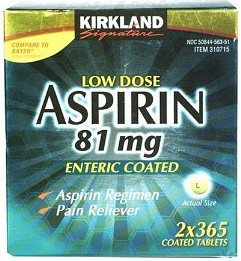 Aspirin
Uniqueness: Antiplatelet drug that improves arterial circulation. Small daily doses and/or large emergency doses are sometimes used to reduce risk of heart attack, stroke and blood clots in certain patients.
Warnings: Potential for allergic reactions, asthma complications, ulcers and stomach bleeding (especially in higher doses). If taking aspirin, doctors may recommend a break before taking ibuprofen. Should not be used to control flu, chickenpox or other viral symptoms in children and adolescents due to a risk of Reye’s syndrome.
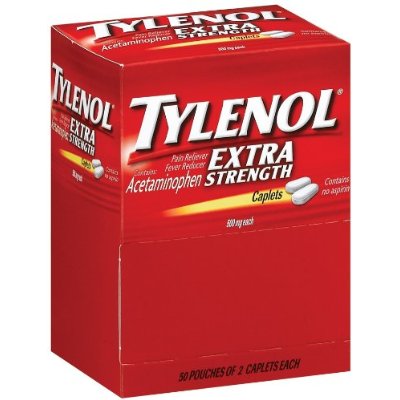 Tylenol (Acetaminophen)
Uniqueness: Alternative for those with Aspirin allergies. Some acetaminophen products contain caffeine, especially ones that are marketed for headache and migraine relief. The caffeine makes the drugs more effective, which means you need less of them, which reduces cost and side-effects.
Warnings: Potential for liver damage, especially in high doses.
 Advil (Ibuprofen)
Other Common Names: Nurofen (UK), Brufen, Motrin.
Uniqueness: Is better at reducing fever than Tylenol. Although it is an antiplatelet drug, its antiplatelet properties are mild and short-lived when compared to aspirin. One of the scientists who developed the drug, Dr Stewart Adams, discovered its hangover mending capabilities first hand shortly after the drug was finally approved for treatment of rheumatoid arthritis.
Warnings: Should not be used during last trimester of pregnancy. If taking aspirin, doctors may recommend a break before taking ibuprofen. Can cause upset stomach.
Aleve (Naproxen)
Uniqueness: Powerful anti-inflammatory properties. Doesn’t just relieve pain, may reduce the inflammation that is causing the pain.
Warnings: Should not be used by nursing mothers. Can cause upset stomach.
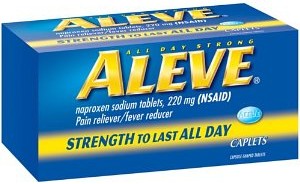
All of the above drugs, except for Tylenol, are non-steroidal anti-inflammatory drugs (NSAID). That means they are generally better at treating pain caused by inflammation than pain killers that do not reduce inflammation. They are a very popular form of pain killer, in 2001 there were more than 30 billion NSAID doses purchased over-the-counter and over 70 million prescriptions in the United States alone.
Broken Secrets
Subscribe on: Facebook | Twitter | Email | Kindle
Sources: Wikipedia (Advil, Tylenol, Aleve, Aspirin, NSAID), PubMed (Ibuprofen, Acetaminophen, Naproxen, Aspirin), Manufacturers (Tylenol) Consumer Reports (PDF), Vaughn’s Summaries
Relevant
Taking medications in excess, even if the drugs involved are over-the-counter ones, may also require substance abuse treatment later on.
Daylight Saving Time Was Funded by 7-11
By Chad Upton | Editor
Spring forward, fall back — that’s the phrase that moves our clocks the right way.
Most of North America, Europe, New Zealand and parts of Australia, South America and Africa currently observe Daylight Saving Time (DST). The days and times at which individual countries actually make the shift, varies widely.
In the following image, the blue zones currently observe DST. Orange zones no longer do and red zones never have. It should be noted that the further away from the equator, the more likely a country is to support DST since the daylight hours are more greatly affected.

Daylight saving time was invented by two people in different parts of the world at around the same time. The first man was George Vernon Hudson, an Australian, who proposed the idea in 1895. He wanted longer afternoons following work to spend collecting and studying butterflies and other bugs. The second man was William Willet, who proposed the idea in 1905 and wanted longer afternoons to play golf. He had no knowledge of Hudson’s proposal since he was half way around the world in London, England. Hudson was actually born in London but moved to Australia when he was 14, so two men from London invented daylight saving time on two different continents to enjoy more of life.
Although both men were seeking extra daylight hours for pleasure, the benefit of the idea was electrical savings. Since people would be awake for more daylight hours, they would run their electric light bulbs less.
Since that was a primary use for electricity, this was a big concern all over the world. In fact, there was a time when most of the world observed daylight saving time. But, that’s the not the case anymore: much of Asia and parts of Africa, Australia and South America no longer observe DST.
It’s a surprisingly controversial topic.
Although it was conceived in 1895 and it was a good idea, it didn’t actually get used until Germany saw a need for it in April of 1916. They started using it during World War I because it allowed them to run generators less, which helped ration coal and handle air raid blackouts. The United Kingdom started using it a month later. The United States started using it in 1918 and other countries followed.
When the war ended, many countries abolished its use, including the United States. It was reestablished in 1966 and has continued to grow ever since.
In the mid 1980s, Fortune magazine estimated that 7-Eleven stores could benefit an additional $30 million per year if daylight saving time was seven weeks longer. In 1987, 7-Eleven and Clorox funded the Daylight Saving Time Coalition that sought to extend the length of daylight saving time. More sunlight was good for retail business.
There have been many controversies over the benefits of daylight saving time.
Light bulbs currently account for about 3.5% of energy consumption in the United States and Canada. With the adoption of compact fluorescent bulbs, that number will decrease. In other words, it’s not a significant part of power consumption any longer. Some studies show that daylight saving time actually increases energy costs in some places due to a shift in peak energy consumption patterns and prices. There are many conflicting reports on whether DST really saves any electricity at all.

There are other benefits, such as fewer traffic accidents. It has been shown, and it seems reasonable to expect, that fewer traffic accidents occur during daylight. So, the longer the daylight lasts after work, the fewer accidents occur. But, it can a negative impact on some farming. For example, grain harvesting is best done after dew evaporates, which requires sunlight. But, the field workers go home after an hour less sunlight in the summer, reducing the number of hours that harvesting can take place.
Daylight saving time can also disrupt electronic devices. Most of them are set to change times automatically, but some don’t and some have problems doing it correctly. There was a recent problem in Europe and Australia with iPhones not changing time correctly, causing those who rely on their phone’s alarm clocks to be late for work.
Given all the controversy, perhaps the only concrete thing we can say about Daylight Savings Time is similar to what we already know from Wearing White After Labor Day: summer is for leisure and winter is for business.
Broken Secrets
Subscribe on: Facebook | Twitter | Email | Kindle
Sources: Engadget, Wikipedia (Daylight Saving Time, George Vernon Hudson)
Photos/Images: Wikimedia Commons (gnu license), Richard Yuan (cc)
The Meaning of the PlayStation Button Symbols
By Chad Upton | Editor
We are surrounded by symbols and they’ve been around for a very long time.
In public places, where people may speak many different languages, we often see symbols instead of words. Some examples include signs for bathrooms and restaurants and even many road signs.
In the West, we have a some common symbols in writing. Check marks often mean correct or yes and an X usually means incorrect or no. In Japan, they have four symbols that are commonly used in surveys: X, Triangle, Circle and Double Circle (circle within circle). These four symbols make up a four point scale, although sometimes the double circle is omitted for a three point scale. The circle means good or satisfactory and the double circle means excellent. The X means no or bad. The triangle means average (or below average on the four point scale when the double circle is being used). These symbols are just as common as the checks and Xs in the West.
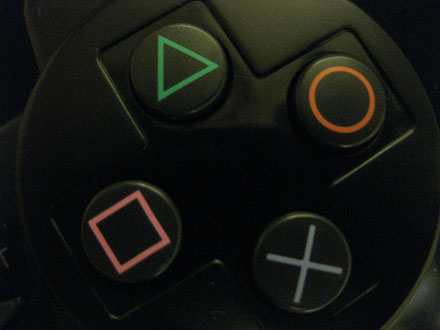
So, when Sony charged Teiyu Goto with designing the original PlayStation, he wanted the buttons to represent ideas rather than label them with arbitrary letters like everybody else. It didn’t take long for him to settle on the triangle, circle, X, square icons.
They were easy to remember because they were associated with meaning. The triangle represents a user’s viewpoint or perspective, making it a great button to launch maps or change the game perspective. The square represented a piece of paper, making it ideal for showing navigation lists and menus. The circle and the X mean yes and no, and they’re meant for navigating yes and no operations.
When asked about the impact of the design, Goto replied, “”Getting to use such simple symbols in a design is an extremely rare opportunity, and it was really a stroke of luck to me.”
Broken Secrets
Subscribe on: Facebook | Twitter | Email | Kindle
Sources: 1up, Japanese Translator
The History of Halloween
By Kaye Nemec
Although Halloween has religious roots in Celtic, Roman and Catholic celebrations, it became a more secular holiday in the 19th century.
Two thousand years ago, Celts celebrated New Years on November 1st in the festival of Samhain. Due to the changing climate, that date symbolized the end of summer and the beginning of the cold, dark winter. They associated winter with death and believed that New Year’s Eve, was the night when ghosts of the dead would return to Earth. They believed the presence of the dead allowed priests to better predict the future and their prophecies were taken very seriously. In order to support the priests, the Celts would celebrate Samhain by wearing costumes and building bonfires where they made sacrifices by burning crops and animals.
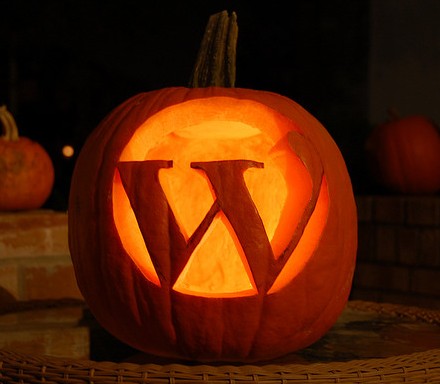
By 43 A.D., the Romans had taken most of the Celtic land and combined some of their traditions with the Celtic festival of Samhain. Romans celebrated Feralia, an event to commemorate the passing of the dead, at the end of October. They also celebrated the Roman goddess of the trees, Pomona, around this time. Pomona’s symbol was an apple and it is believed this celebration is where “bobbing for apples” originated.
Eventually Christian beliefs began making their way through Celtic land and Pope Boniface IV declared November 1st All Saints’ Day, which was also known as All-hallows (All-hallows Eve began to replace the festival of Samhain). About 200 years later, the Catholic Church named November 2nd All Souls’ Day which was a day to honor the dead. All Souls’ Day and Samhain had similar celebrations – costumes and bonfires. Collectively, All-hallows Eve, All Saints’ Day and All Souls’ Day were referred to as Hallowmas.
When Europeans immigrated to America, they brought their Hallowmas traditions; in the late 1800’s the traditions of ghosts and honoring the dead become more family-friendly events like trick-or-treating and neighborhood parties. Hallowmas became Halloween and grew into the child oriented, secular holiday that we are familiar with today.
The “Halloween Capital of the World” is Anoka, Minnesota — a small city near the Twin Cities of Minneapolis and St Paul.
In 1920 Anoka hosted the first documented Halloween celebration and parade in the United States. The Halloween celebration was planned as an alternative to the pranks that had become common around Halloween. Prior to the organized Halloween celebration, troublemakers would let cows out of their enclosures, tip over outhouses and soap windows. City officials wanted to end the pranks and start a more positive Halloween tradition.
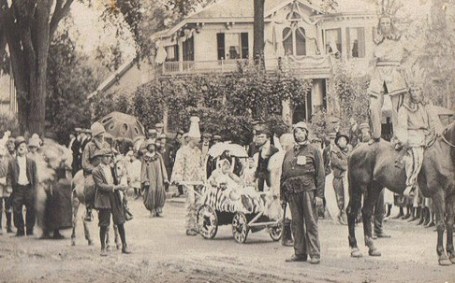
An official Halloween committee was formed and began planning a big event. When the time came, a parade made its way down Main Street and treats like popcorn, candy and peanuts were handed out. In true Hallowmas fashion, the night concluded with a huge bonfire. Seventeen years later, Anoka city officials convinced the United States Congress to grant them the official title, “Halloween Capital of the World.”
Since 1920, Anoka has hosted a huge Halloween celebration every year, except for 1942 and 1943, when it was canceled due to World War II. The city continues the tradition with their annual Halloween celebration. Just like the first year, a Halloween committee is formed, although now it is known as the Anoka Halloween Board of Directors.
This year’s event includes three parades, a pumpkin carving contest, a costume contest, BINGO, house decorating and of course, a bonfire.
Broken Secrets
Subscribe on: Facebook | Twitter | Email | Kindle
Pictures: Eric Martin (cc), Steve Chasmar (cc)


 Broken Secrets