Posts filed under ‘Demystified’
There is a Standard Symbol for Product Life Expectancy
By Chad Upton | Editor
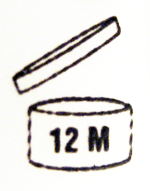 Finding the shelf life or expiry date on something in your fridge can be challenging. It’s much easier to find the product life on personal items like shampoo, mouthwash, body wash, cosmetics, etc. You won’t find it on all products of this type in North America, but it is a requirement in Europe so you will see it on many products that share global packaging.
The “Period After Opening Symbol” is a standard icon that indicates how many months (M) or years (Y) the product is good after opening. The product must remain harmless to its user within this period.
Now, you just have to remember when you opened it.
Broken Secrets | Facebook | Twitter | Email | Kindle
Sources: wikipedia (PAOS)
Do Hotel Key Cards Contain Personal Info?
By Chad Upton | Editor
I’ve been saving hotel key cards for years because I want to see exactly what is on them.
Years ago, somebody told me that hotel room access cards contained personal info and credit card data. The rumor was that this info was necessary for you to charge items to your room during your stay.
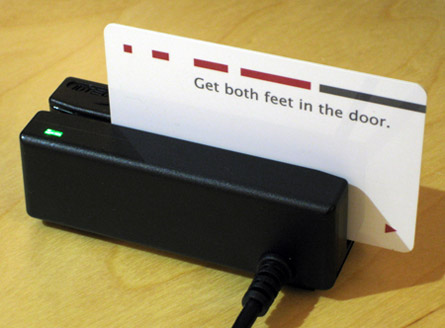
I recently got my hands on a magnetic card reader and started swiping all my old cards. The results fit into three categories.
1. 77% of all the cards could not be read at all. This should not be a surprise to anyone who has ever stayed in a hotel with magnetic card keys; some are notoriously poor at holding their magnetic charge. Another reason they may appear blank is that some systems use non-standard data encoding which make it difficult for an ISO card reader to extract information. Whether the charge is weak, distorted or proprietary, specialized card readers may be able to extract data from these cards. Still, that data would likely fall into one of the two following categories. (more…)
Some People Believe Running an Electric Fan in a Closed Room Can Kill You
By Chad Upton | Editor
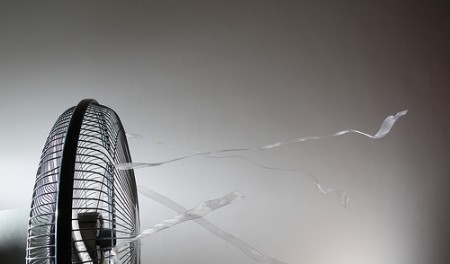
In South Korea, it is a commonly held belief that an electric fan can cause death if it is blowing on you overnight in a closed room.
To prevent “fan death”, the Korean government’s Consumer Protection Board urges everyone to leave a door or window open and use the oscillate function or a timer that automatically shuts the fan off. They also list fan death as one of the top five fatal summer accidents.
The exact origin of this phenomenon is not known for sure, although it allegedly emerged in the 1970s. Some people believe the Korean government may have created this ideology in an effort to save energy during the energy crisis. Oh, and fan death is not limited to just fans, it also includes air conditioners.
South Korean media outlets credit fans and air conditioners for deaths too. In fact, between 2003 and 2005, some 20 deaths were reported to Korea’s Consumer Injury Surveillance System.
Many experts in South Korea firmly believe in fan death, including respected doctors and scientists. South Koreans don’t always agree on why fans can cause death but the following theories are often cited. (more…)
“Raisin Fingers” May Be an Evolutionary Advantage
By Kyle Kurpinski
If you have ever gone swimming for several hours or taken a really long bath, then you are probably familiar with the phenomenon referred to as “pruney fingers” or “raisin fingers.” A common explanation for this wrinkling of the hands (and feet) is that the skin absorbs excess water when submerged, which causes it to expand. This expansion increases the surface area of the skin, thereby resulting in wrinkles. So while these pruney fingertips may have the appearance of being shrunken or shriveled, they are actually larger than they were when dry. It has been suggested that fingers and toes are more susceptible to this effect than other areas of the body due at least in part to a lack of hair follicles, which produce sebum – an oily secreted substance that may act as a temporary protective barrier against water absorption.
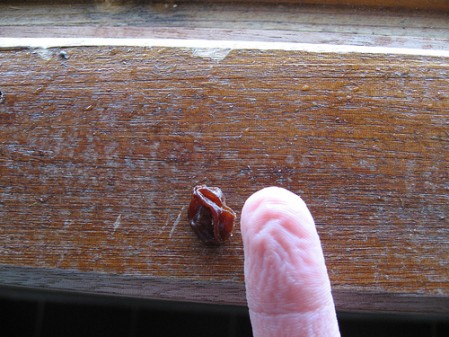
But water uptake is only part of the story. As early as the 1930s, scientists noted that patients with palsy-related nerve damage in their hands showed no signs of water-induced wrinkling in the areas specifically affected by the impaired nerves. This insight suggested that the nervous system is actively involved in the wrinkling process, and additional research has shown that vasoconstriction – narrowing of the blood vessels – plays a role as well. A modern view of raisin fingers goes something like this: prolonged immersion leads to excess water uptake by the skin; the resulting electrolyte imbalance causes neurons to fire more rapidly, which causes blood vessels to constrict, thereby reducing blood flow underneath the skin and leading to a decrease in skin tension, thus causing wrinkling. This process is clearly more complicated than simple water-induced swelling, which is probably why most people have never heard about it. The complete physiological mechanism of action is likely a combination of water-induced swelling and vasoconstriction.
But none of this explains why fingers that look like little dried fruits should be a part of our biology in the first place. A new theory (put forth in a recent article in the journal Brain, Behavior and Evolution) proposes that wrinkles on the fingers and toes may actually act as miniature drainage channels to displace water and increase grip in wet conditions, similar to the rain treads on the tires of a car. In other words, when your fingers and toes get really wet, they wrinkle up to counteract the slickness of the water. Additional work still needs to be done for the theory to become more widely accepted, but it appears that the raisiny morphology may be an evolutionary adaptation for life in slippery environments.
As a professional bioengineer I feel inclined to run my own experiments, but I’m still waiting for my hot tub/climbing wall grant to go through.
Broken Secrets | Facebook | Twitter | Email | Kindle
Sources: Amazing Health Trivia, WonderQuest, Wikipedia, Nature, 1Mark Changizi, et al
Image: Brian Zambrano (cc)
Measuring Speed in Knots Started With Tying Knots in Rope
By Chad Upton | Editor
Sailors have it easy these days — an inexpensive GPS will tell you how fast your ship is travelling. Heck, even your smartphone can do it if you have the right app. That’s how I clocked the car ferry on Lake Michigan at 35 mph (56 km/h) last summer.

However, a blackberry could not measure your speed 450 years ago. That required a “chip log” (aka “ship log” or “log”). This was a spool of rope attached to a small piece of wood. The sailors would place the wood in the water where it would drag in the water, unspooling the knotted rope. One sailer count the knots passing over the haul and another would use a 30 second sandglass to measure the time. They had a table to lookup the speed (“knots”) based on the number of knots that passed by.
Although the method has changed significantly, the units are still called “knots.” To put that in a way that might have more meaning, one nautical mile translates to 1.151 miles or 1.852 km.
Broken Secrets | Facebook | Twitter | Email | Kindle
Sources: wikipedia (knots, chip log)
Photo: Rémi Kaupp (gnu license)
The QR in QR Code Means Quick Response
By Chad Upton | Editor
Although we typically use QR codes with our mobile phones, they were actually invented by a Japanese company (Denso) for tracking products during manufacturing. Even though they’ve been around since 1994, QR codes have only started to become popular in North America in the past few years. They’re also known as “matrix”, “2d” or “square” barcodes.

Traditional 1 dimensional barcodes are very limited in the amount of information they can store in a small space, generally an 8-24 digit number. The number in a traditional bar code is really only useful if you have a database or table where you can lookup that number to get more meaningful information, such as the price of the item at a grocery store. QR codes can contain a lot more data.
They’re called Quick Response codes because the data is in the code and it doesn’t have to be looked up in a table to be meaningful. For example, the QR code in this article contains a URL to another post on the blog related to bar codes. When you scan it with your phone’s QR app, your phone can decode the image into the URL, no remote lookup is required. QR codes can also be used to get text or send sms text messages and dial phone numbers.
Carrots Do Not Improve Eyesight
By Chad Upton | Editor
Like many kids, I didn’t like vegetables — especially carrots and broccoli. Adults frequently told me that carrots would improve my eyesight, so that seemed like a good reason to try liking them.
There was one person who didn’t tell me this, he actually told me the opposite. My grand father overheard somebody tell me that carrots would improve my eyesight and he let me in on a little secret — it was all a big lie. Carrots do not improve your eyesight.
Sure, carrots and many other foods do contain beta-carotene, which metabolizes into Vitamin A and everyone agrees that is essential for maintaining eye health, but it does not improve it. If you are not consuming enough vitamin A, any number of sources could help restore your vitamin A supply. Carrots themselves are not unique or magical in this way. In fact, carrots have less beta-carotene per 200 calorie serving than red peppers, kale and lettuce.

If lettuce, kale and red pepper have more beta-carotene than carrots, why do carrots get all the eyesight credit?
How Steve Jobs Got His 2009 Liver Transplant So Quickly
By Chad Upton | Editor
When I was about 7 years old, my grade school classroom had an Apple II computer stashed in the corner of the room. I remember the excitement when our teacher said we could use the computer after we finished all of our work, even though I had no idea how to use it. Nobody knew how to use it, except for Woody.
Woody was the only kid who had a computer at home and it too was an Apple II. Since that was the first affordable mass-market computer, if any home or small business had a computer, it was usually an Apple.
Steve Jobs and Steve Wozniak started the personal computer revolution. There’s no doubt it would have happened without them, but who knows when. Steve Wozniak had the drive to build prototypes of computers just for fun while his partner Steve Jobs had the vision and drive to sell them to people who didn’t know how to use them, like some other products Apple has recently been successful with.
When Steve Jobs passed away, his assets were estimated to be around $6 billion. With that kind of wealth, you could buy almost anything. So, when he received a liver transplant in 2009, a lot of people suggested that he bought his way to the top of the waiting list. How else could he have skipped ahead of 16,000 other people?
His wealth did help him, but not in the way that some have implied.

He was on the transplant waiting list. Well, he was actually on more than one waiting list. Some have even speculated that he was on all of the waiting lists.
So, why doesn’t everyone do this? The rule at the time was that you needed to be within 4 hours of the transplant hospital. For most people, that significantly reduces the number of transplant lists you could be on. But, if you’re a billionaire with a private jet on standby, you’re within 4 hours of a lot of places.
Even still, with so many people waiting, how did he get to the top of the list so quickly?
The United Network for Organ Sharing (UNOS) audits the transplant centers to ensure fair treatment. So, he didn’t likely get to the top of the list because of his wealth or social status.
Since his jet gave him access to almost any transplant center in the country, he did what any smart analytical person would do: he figured out which transplant center had the shortest wait and made sure he was on that list. That’s how a guy who lives in Northern California ends up with a liver transplant in Tennessee. It turns out, the median wait time in Tennessee was 85% shorter than the national average.
The technology that Steve brought us will fade, but his approach to everything, including saving his own life, is the real gift he gave us. When Steve rejoined and began to rejuvenate Apple in 1997, the slogan was, “think different” and that sentiment is Steve’s real legacy.
Rest in peace.
Broken Secrets | Facebook | Twitter | Email | Kindle
Sources: digital journal, cnn, slate, the daily beast
The Plastic End of a Shoelace is Called an Aglet
By Chad Upton | Editor
Originally and occasionally still, Aglets are made from metal, often copper or brass.
The word Aglet (or Aiglet) comes from an old french word, aguillette and it’s root word is aguille, which means needle. This makes sense since aglets make it easy to thread laces through eyelets in garments and shoes.

Metal aglets can still be found on garments, although usually as decorative accents rather than functional fasteners. Some of these decorative aglets are made from stone or glass and even shaped like small figurines. These go back to at least the fifteenth century, even Shakespeare references an “aglet baby” in The Taming of the Shrew.
Broken Secrets | Facebook | Twitter | Email | Kindle
Sources: wikipedia (aglet), dictionary.com
The New World Trade Center Remembers What We Lost
By Chad Upton | Editor
It has been ten years since the terrorist attacks on September 11th, 2001. Although the attacks happened in the United States, they were an attack on freedom everywhere. It is not an anniversary we want to remember, it’s an anniversary we never want to forget. That is the spirit on which the redevelopment of the World Trade Center is built.
When complete, the World Trade Center (WTC) will include a train station, performing arts center, retail space, five new office towers, a memorial site and museum. The tallest and most tributary building is Tower 1, nicknamed “The Freedom Tower.” That’s not a superficial name, the new tower embodies freedom and pays homage to the structures that came before it, a common device in architectural design.
The top floor of the new Tower 1 will reach 1,362 feet (415 meters), the same height as the former WTC South Tower. A glass enclosed observation deck will float just above that at 1,368 feet (417 meters), the same height as the original WTC North Tower. An illuminated antenna will reach further, bringing the total height to 1,776 feet (541 meters). The height is a significant symbol of freedom; 1776 being the year the US declared independence from Great Britain.

The antenna’s design draws inspiration from the torch on the nearby Statue of Liberty, a symbol of freedom itself. The blinking aircraft warning light at the top will blink in a slightly irregular pattern, repeating one long flash followed by one short flash. This is Morse code for the letter “N” for “New York.”
Aesthetics frequently differ among structures, but Tower 1 is unique on the inside too. Slated to open in late 2013, this 105 story building will feature a fortified structural base. Basically, the lowest 19 floors don’t contain any inhabitable space. Instead, they form a reinforced concrete pedestal intended to protect the building from ground based terrorist attacks similar to the truck bomb attack in 1993.
The rest of the building employs a redundant steel moment frame with an additional 3 feet (91 cm) thick reinforced concrete shear wall around the inner spine of the building. The core contains elevators, stairwells, electrical risers and sprinkler systems. These structural features and redundancies make it the strongest skyscraper ever built.
There are some additional safety considerations too. The building is situated 65 feet (20 m) away from the street, nearly triple the distance the twin towers were from the street. Additionally, the windows nearest the road will be made of a special blast-resistant plastic. The ventilation system contains biological and chemical filters and there are extra-wide emergency stairs exclusively for firefighter use.
There are seventy elevators, including some super high-speed elevators that travel at 33 feet per second (10 m/s). Some elevators are exclusively for emergency and non-ambulatory use. For safety, elevators will have their own backup power supplies and stairways will be pressurized to keep smoke from entering them.

Looking at the site plan, you may notice that WTC 6 is missing. WTC 1 is on the former site of WTC 6, so there will not be a new WTC 6. Although this plan calls for a WTC 5, the future of that tower is in question. The plans for WTC 5 were scrapped in 2008 when the major tenant pulled out in favor of another location in midtown manhattan. Tower 5 may get built, but there are no concrete plans at this time.
At the center of the site, a beautiful memorial has been created in the space that was once occupied by the twin towers. The memorial will be dedicated on September 11th, 2011 and be open to families who lost someone in the terrorist attacks. It will open to the public the following day.
Architects also designed the site so that every September 11th, between 8:46 am and 10:28 am (the time the first plane hit to the time the second tower collapsed), the alignment of the Earth and Sun will create a bright wedge shaped highlight that focuses light toward the memorial plaza.
The two footprints of the original towers will be represented by square shaped waterfalls, some of the largest man-made falls in the world. The names of nearly 3,000 victims of the 1993 and 2001 terrorist attacks will be memorialized in a bronze bezel that will surround the two square waterfalls. Over 400 trees have been brought in from around New York, Pennsylvania and Washington, DC, to honor those who died in the WTC, on Flight 93 and in the attack on the Pentagon. Among these trees, there is one that was actually on-site when the towers collapsed.
Known as the “Survivor tree,” this callery pear tree was burned by the fires and covered by the rubble when the towers collapsed. The tree was uncovered weeks later and taken to a nearby nursery. It was not expected to survive, but after tender care and pruning, it has grown 30 feet tall and returned to the World Trade Center site. While the waterfalls, and the names around them, represent what we lost, the survivor tree represents the courage, growth and perseverance that remains.
Broken Secrets | Facebook | Twitter | Email | Kindle
Images: Silverstein Properties (fair use), wikimedia commons (gnu)
Sources: Lower Manhattan Development Corporation, LowerManhattan.info, WTC.com, NYPost, 911 memorial, dna info, wikipedia (1 world trade, World Trade Center Site), popsci


 Broken Secrets