Posts filed under ‘Demystified’
Why do Some Cars Have Blue Headlights?
Traditionally, cars have had yellowish headlights. Now, many cars have light blue colored headlights. Some cars come with those headlights from the factory and other times, owners will install similar systems or similar looking systems.
The factory blue headlights are known as HID (high intensity discharge) headlights. Just like the name describes, they’re brighter than normal halogen headlights.
Traditional lights heat a small metal filament to produce light while HID lights create a plasma discharge arc between two tungsten electrodes. It is this plasma discharge that creates the blue color. But, this technology is not new, it’s very similar to the bright lights that illuminate stadiums and roadways.
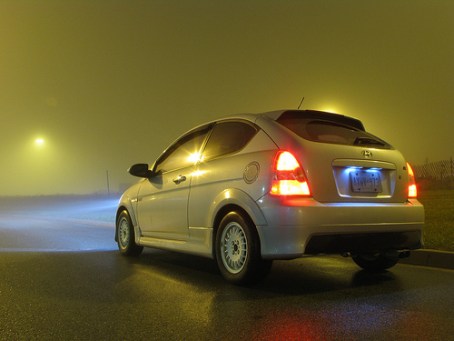
The brightness is the main advantage of these lights. Like rear fog lights, these headlights were popularized in Europe where fog, rain and curvy roads create demanding driving conditions. Because HID lights are brighter, they penetrate fog, rain and snow better than halogen lights — an advantage when the conditions are not ideal.
HID headlights are also more energy efficient than halogens, which isn’t a major concern in vehicles right now, but as we move to battery powered cars that will become very important — the less power accessories consume, the further the vehicle can drive on a single charge. (more…)
The Origin of April Fools’ Day
Tomorrow is Tom Foolery’s birthday. Well, not exactly, but you should be suspicious if someone is serving cake.
Your spouse or roommate may hide your keys, unscrew all the light bulbs or take the batteries out of the TV remote. Maybe Google will have another ruse about free printing or postdated emails. No matter who pranks you tomorrow, you’ll want to know how it all started.
 April 1st is “April Fools’ Day” in many countries around the world. In some countries such as the UK, Australia and South Africa, the jokes end at noon. Someone who plays a joke after noon is considered an “April Fool.” In North America, Brazil and much of Eastern and Southern Europe, the jokes last all day.
The shenanigans can be traced back as far as Chaucer’s Canterbury Tales (1392). The tale is set “Syn March bigan thritty dayes and two.” It was supposed to mean 32 days after March (May 2nd) which is the anniversary of the engagement of King Richard II of England to Anne of Bohemia. But, readers misunderstood it as March 32nd, which of courses doesn’t exists and was interpreted as April 1st. In the tale, Chauntecler is tricked by a fox. (more…)
How to Sterilize Your Toothbrush
Whether you plan to buy your own dental tools, or clean baby bottles, you should understand how to sterilize some important household items.
The purpose of sterilization is to remove fungi, bacteria, viruses and spores. Some people believe exposure to some bacteria is a good thing, and they might be right, but exposure to some varieties of these organisms can be very bad for you.
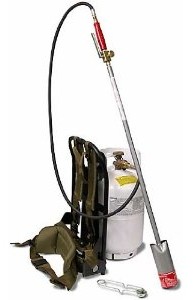 There are a number of ways to perform sterilization using: heat, chemicals, radiation, pressure and filtration.
Heat is probably the most misunderstood method of sterilization. It is a popular practice to boil baby products in water and if the duration is long enough, it may disinfect them but it does not sterilize them. The boiling method is really good at removing particles, which can be a source of bacteria, but is not great at killing the bacteria itself. If you do use this method, be sure to start with cold water since hot water from your tap is already a bacteria risk (see: why you shouldn’t drink hot water from your tap).
To sterilize with heat, you need a holding time of 3 minutes at 273 °F (134 °C). Water turns to steam at 212 °F (100 °C), so you can’t use water to sterilize something directly. But, you can use steam. In fact, that’s basically what hospitals use inside a device called an autoclave. It is like a small dishwasher that uses steam and pressure to sterilize items. Color changing tape is used inside to tell the operator when optimal sterilization conditions have been met. Some new dishwashers and clothes washing machines have steam cycles too.
How to Clean an LCD Screen
Between televisions and computer screens, most readers likely have at least one LCD screen to clean. It’s really important to know how to clean one, but maybe even more important is how NOT to clean one.
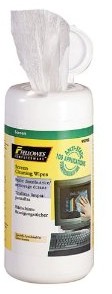 DO NOT use the following:
- Paper products
- Glass cleaner
- Tap Water
The first suggestion I would make is to check your manual for exact cleaning instructions. In many cases, they will recommend their own expensive cleaning solution (more on the contents of that later) but they may also warn about using alcohol or some other cleaners.
Your computer screen will probably get much dirtier than your TV screen, since you cough and sneeze very close to it. Not to mention, whenever somebody else points to something on your screen it is traditional to leave a finger print — that is so you remember exactly where they were pointing until you clean it off during your Friday afternoon time wasting routine. (more…)
The Purpose of Beer Bottle Bumps
Many people have noticed the small bumps on the side of beer bottles, near the base (the “heel”). They’re not just on beer bottles either, every glass bottle in my house has them, which are mostly beer bottles.
These are typically called “mold codes” or “heel codes” and there are many different ideas about what these are for, but I could only confirm one.
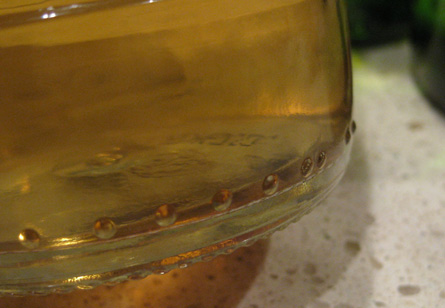
It is a popular notion that these bumps help the bottler know how many times the bottle has been reused. I couldn’t find any proof that they are used for this. In fact, I’m not sure how these dots would convey that information since they are made when the bottle is molded.
This rumor seems to confuse the heel code with bottle date codes, which are traditionally found on the neck of the bottle. On newer bottles, date codes are stamped with ink. On older bottles, they were part of the glass mold and were often beside an embossed logo from the glass producer or bottler. Dating on older bottles helped bottlers know how long they had been in circulation. (more…)
3D TVs are Available Now
I was at my local big-box electronics store on the weekend where they had a 55″ Samsung 3D TV running. The picture looked funny to me, but one of the other customers, who I suspect had been sitting there for a while, immediately handed over his 3D glasses and told me to try it out. It was awesome.
It was the kind of experience that was once limited to theme parks and special events.
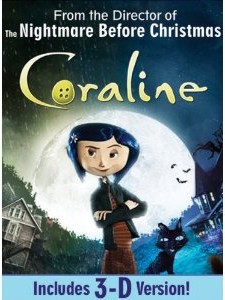
3D media in general is not new; the first 3D camera was patented in the year 1900. Many early prints and movies used red/blue glasses to present 3D images. This technique is called Anaglyph. The color filters are a basic way to present separate images to both your eyes from a single frame, which gives you the perception that some objects are closer than others. The downside is that everything is either red or blue.
I remember Captain EO at Disneyland back in the 80s, that was the first 3D film I saw without the red/blue lenses (although they were invented in the 1950s). In most cases, theaters use glasses with polarized clear lenses. The polarized lenses are different, each one filters out light waves that do not oscillate in the same orientation as the polarization. The projection system projects two images, one that will be filtered out by right lens and one for the left. This allows us to have a full color 3D experience. Although the projection system is very expensive, polarized glasses are fairly cheap and that’s why they’re the primary choice for theaters.
In 2003, 3D films started gaining in popularity, showing up in regular and IMAX theaters. Now, many local theaters have at least one 3D projection system. Some of the films in this time have included: Bugs! (2003), The Polar Express (2004), Chicken Little (2005), Nightmare Before Christmas (2006), Beowulf (2007), Meet the Robinsons (2007), Bolt (2008), Coraline (2009), Up (2009) and of course Avatar (2009).
There were many more, but those are some of the more popular ones. Since there have been so many 3D movies in the theaters, 3D home theater will let you enjoy those movies in all their glory over and over again. (more…)
Why Beer Bottles are Green, Brown or Clear
St. Patrick’s day was last week and it wasn’t deathly cold that night so I was going to start the evening by finally taking down my Christmas lights. Luckily, I got a much warmer offer from my friend Chris who invited me over for green beer.
Chris’s wife Jeanne was turning yellow beer into green beer using blue food coloring and Jeanne’s daughter was there too. We got talking about import beers and how many of them are in green bottles. Chris pointed out that Moosehead was maybe the only green bottled beer that he liked (and one of the few Canadian beers we get in America). That lead to a conversation about why beer bottles came in three different colors: clear, brown and green.
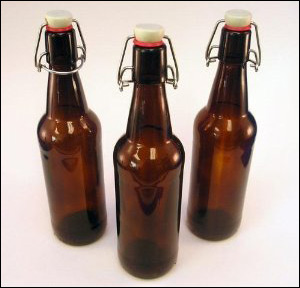
Chris mentioned the color of the glass protected the beer from light, which was a secret to me, so I read more about it and here’s what I found: (more…)
State Health Care in Hawaii Since 1975
While the federal health care reform bill passed in the House of Representatives last night, Hawaii and Massachusetts have had state regulated health care since 1975 and 2006 respectively.
Whether you support government regulated health care or not, there is a good chance it will soon be an option for most Americans (the bill still has a number of steps before it is official). In the meantime, let’s have a look at the impact of health care reform on two other states.
Depending on where you get the numbers from, 85-89% of Americans have health insurance.
Before 1975, 70% of Hawaiians had health insurance, which made it the highest insured state at the time. On January 1, 1975 the Hawaii Prepaid Health Care Art was passed, bringing the state to 92% coverage.
In Massachusetts, the introduction of State health care raised the insurance rate to approx 94% of residents in 2006. The following year, it went up to 97%. In the next two years it dropped a point and Massachusetts now has the lowest number of uninsured residents at 4.1%.
The Hawaiian and Massachusetts systems are quite different from each other. One of the key differences is who pays for it. In the Hawaiian system, employers are required to provided health insurance to employees who work more than 20 hours per week. (more…)
Australian Toilets Do Not Flush in the Opposite Direction
Despite what you may believe, being in the secret business is not glamorous. Nothing in school prepares you for this many late afternoons, drinking whipped cream topped drinks at Starbucks.
Actually, college did prepare me for that, but it’s still not glamorous. Take my word for it. Just the other day I was sitting by the pool thinking, “what am I going to write about for tomorrow?” I couldn’t come up with anything at all.
For inspiration, I moved to the hot tub — maybe some bubbles would help. You wouldn’t believe it, I still couldn’t come up with an idea! It usually comes naturally and the hardest part of my day is answering repetitive questions like, “what is it like to be such a handsome and successful blogger?”
I’m kidding of course, except about the lack of glamor, not that you really expected it to be glamorous anyway. The truth is, I don’t sit by any pool or hot tub and I rarely drink whipped cream topped drinks at Starbucks. I work a normal day job and write this blog at night.
It’s probably a lot more work than you may realize; even before I start writing I spend a lot of time digging for ideas and accurate sources to come up with something I think you’ll find interesting, and sometimes really helpful. The most common real question I get is, “where do you get all of your ideas?” There are two main sources. (more…)
How Restaurants Make Taco Shell Bowls
If you’re ever ordered a taco salad, it has probably been served in a giant bowl made from a taco shell. Nachos are often served with smaller versions of these tortilla bowls to hold sour cream and salsa.
My friend Scott worked in a restaurant back in our high school days. While we were having dinner one night I asked him how they did it.
For the smaller sized dipping bowls, they would take two ladles, put one ladle cup inside of the other while sandwiching a small tortilla shell between them. Then they would hang on to the handles and dip the other end into the deep fryer. After a short amount of time they would remove the ladles from the fryer; as the tortilla cooled, it would hold its shape. It was a good bowl, but it was a great deep fried bowl shaped nacho when that last bit of salsa was left at the bottom.


 Broken Secrets