Posts filed under ‘Be Frugal’
How to Get the Best Price When Shopping Online
The internet has completely changed bargain hunting and finding the best price couldn’t be any easier.
I like to use Google products (formerly known as “Froogle”). It compares prices at thousands of retailers and show you the best deals along with ratings for each retailer.
Google products also searches sites like ebay. Although, it’s worthwhile checking ebay independently, there are lots of auctions for new products or if you’re willing to take a used one then you’ll get a great deal. If you’ve looking for something that doesn’t ship well, such as appliances, be sure to check craigslist.org or kijiji.com (owned by ebay). They let you search for products in your area so shipping is not necessary.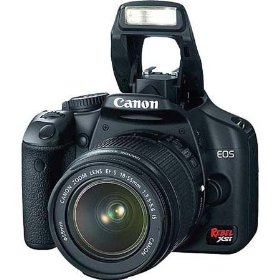
Sometimes the best price is at a website you’ve never heard of. This is when customer ratings and common sense are really helpful. If you’ve never heard of the retailer and can’t find a phone number for the office on the site, then I probably wouldn’t order from them. Amazon might be the only exception to this and in fact they’re one of my favorite online retailers, they frequently have the best price and their shipping and customer service are great.
If you’re searching for cameras, be weary of small companies based in New York City. They usually have the best price on camera equipment, but there are lots of online horror stories about some of these companies.
The Ideal Vehicle Speed for Best Fuel Economy
The precise number varies by car and environmental conditions, but the sweet spot is generally between 40-60 mph (65-95 km/h). Most small and medium size cars get the best mileage at about 50 mph (80 km/h).
A lot of factors affect the fuel economy of your car. Some of them don’t vary much with speed, such as the resistance of the engine pumps and accessories. Other factors, like the size of the frontal area and the drag coefficient create increasing resistance with speed.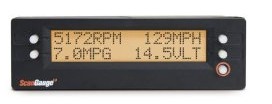
The faster you drive, the more energy is needed to overcome the aerodynamic resistance of the car. Up to 40 mph, that isn’t really even a factor. So, if you’re driving a box then your best fuel economy is likely closer to 40 mph than 50. If you’re driving a teardrop shaped eco-car, then you’re likely closer to 60 mph. Of course, engine size and other factors are involved too. (more…)
Some Rechargable Products Use Standard Batteries
I normally shave the old fashioned way, with shaving cream and a razor. Although, a couple times a week I use a rechargeable electric razor.
It doesn’t shave as close as a straight blade or cartridge razor, but it does shave time off my morning routine. It’s an easy way to catch up when I’m running behind or anxious to get working earlier.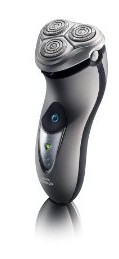
I’ve had the same electric razor for about 10 years. I got it as a gift and it has worked really well, but its ability to hold a charge has degraded significantly since it was new. When it was new, I could travel for a week and not recharge it. Recently, it has required a charge after every use.
A couple weeks ago, it failed to run for more than a few seconds. I charged it again, and had the same result.
The internal rechargeable battery had finally failed. (more…)
You Can Buy Your Own Dental Tools
A couple weeks ago, I mentioned that you can buy your own tamper proof screwdrivers. Ownership of tamper proof screwdrivers ups your do-it-yourself status to a new level; but, you can’t earn your DIY badge without having your own set of dental tools.
Maybe you’ve got a deep pocket in a molar that you can’t floss or brush clean, or maybe you just want to descale your pet’s gum line. 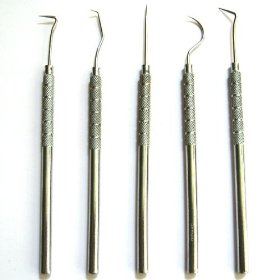
There are so many uses for dental tools. Hobbyists use them for carving, cleaning and hooking small objects. Technicians and mechanics may use them for removing tiny o-rings and gaskets. Perhaps you will use them to pick locks or scratch lotto tickets, poke the CD-ROM eject hole or spread glue in a hairline crack on the ceramic you broke last summer.
I found a 5 piece set on Amazon at a great price. Heck, for $2 (see “other sellers”), I’m not sure there is a more versatile set of tools for your toolbox. Best of all, you probably don’t own these tools yet and we all know it’s fun to get new tools.
Buying a new tool is like buying a new skill. It empowers you to put yourself in the way of new dangers and abstain from doing new things that you never dreamed of avoiding before.
So go ahead, have your popcorn and eat it too.
Broken Secrets
Written By: Chad Upton
PS – I’m really excited for fellow blogger Neil Pasricha’s new book: The Book of Awesome. Pre-order it now (or if you’ve been living under a rock and haven’t already, at least checkout the blog)!
The Meaning of the Numbers Inside the Recycling Symbol
By: Chad Upton | Editor
I remember going to the grocery store as a small child. It seemed like we were there for hours before finally packing all of our purchases into large brown paper bags. A few years later they phased out paper bags over concern for the trees required to make the bags. They were replaced with plastic bags and we have used them almost ever since. But, A few years ago, paper bags started appearing once again. Although they’re made from trees, those are pretty easy to grow compared to the raw materials of plastic.
It seems like everything is made from plastic now. I did a bit of dumpster diving tonight to find out how much. I went through my recycling bin looking for things with the recycling symbol on them — I guess that probably doesn’t really count as “dumpster diving.” These numbers only appear inside the recycling symbol on plastic products.
Plastic is a petroleum product, meaning the raw material used to create plastic is oil. It’s no secret that oil is one of the most in-demand natural resources and for a variety of reasons oil prices have sharply increased over the past 10 years. It’s not just the fuel companies who are affected by the increasing price of oil, but also plastic manufacturers. Both of these groups have to pass those increased costs on to their customers, and those businesses pass it on to their customers. Somewhere down the line, that customer is you and you’ve obviously noticed at the gas pump.
But, you may not have noticed the increase on plastic prices, at least not directly. Depending on where you live, you may have noticed a big or small push for you to use (or buy) reusable grocery bags. Of course these are great for the environment, but they also save the grocery store a lot of money on plastic bags, which have become significantly more expensive in the past few years. In some places, you even have to pay extra if you want plastic bags. (more…)
How to Accelerate and Slow Banana Ripening
I love bananas.
They are a nearly perfect fruit. They taste great. They’re fairly inexpensive. They have their own protective skin and they contain many nutrients such as: vitamins A, B1, B2, B3, B5, B6, B9, C, Calcium, Iron, Magnesium, Phosphorus, Potassium and Zinc.
But, if I had to register a complaint about bananas, it would be their shelf life. Keeping them perfectly ripe is a fine art — one worth mastering.
The first trick is something my wife, Kristen, taught me: don’t buy all your bananas from the same bunch! Pick a couple green ones and a couple that are ripe/near ripe. Then you have some you can eat right away and others that will be ripe when you’re ready for them.
The interesting part is that those two bunches are likely the same age. You assume the less ripe ones are newer, but the food distributors control ripeness. They have large, air tight banana ripening vaults that give them very precise control over banana ripening. They’re usually divided into multiple sections, so bananas can be kept at different stages of ripeness. If they’re selling a lot of bananas, they can accelerate the ripening so they will be ripe when they arrive at the store. If sales are slow, they can slow ripening to avoid waste.
How do they do that? (more…)
Why Do People Eat Organic Food?
I have always enjoyed visiting my grandparents, something I probably didn’t and still don’t do often enough.
I have a lot of great memories from those times and spending time in my grandmother’s vegetable garden is one of my favorites. She had a huge backyard, almost half of it was a garden.
I didn’t actually like vegetables back then, but she had a secret raspberry patch. It was tucked away in the back of the garden, behind the shed. I’m not sure if she was trying to hide it, or just keep it separate from the main garden — raspberry plants are locally invasive, they can take over your entire garden if not pruned.
 I could spend the whole day eating raspberries, fresh off the bush.
Some days, I did.
It was nature’s 7-11, a store full of squishy red candy, at the right height and the right price for a child.
I wouldn’t dare say they were “free” since there was a price to pay — raspberry bushes are very prickly. There are thornless cultivars available now, but it worked out OK. The thorns slow you down enough to swallow one raspberry before you pick the next. I’m sure that’s why nature put the pricks there. (more…)
How To Make Your Laptop Battery Run Longer
When your laptop is new, you can run on battery power for hours! But, as the battery gets older it doesn’t hold a charge like it used to. Ideally, you would just buy a new battery, but laptop batteries are expensive. From the manufacturer, they range from $80 to $150. Aftermarket batteries are often 50% – 70% of the manufacturer’s price. I’d recommend searching eBay or Amazon for new aftermarket batteries.
If you buy a new battery, keep your old one. I used to travel almost every week for work and I always had a second laptop battery with me. At times, the second battery was old, and only ran for 45 minutes, but that was a lifesaver on an airplane when you’re trying to finish some work (or watch the end of a movie you brought).

I usually buy the aftermarket batteries and never have problems with them. I did have a problem with an aftermarket power supply cord once; it died after three months. But, even with that $13 loss, buying aftermarket laptop accessories has saved me a lot of money over the years.
If you travel a lot, a second power cord is paramount. You should have one that you always leave in your computer bag, that way it’s impossible to leave behind when you travel. Have you ever tried to find a computer power cord at a retail store? If you are lucky enough to find one, it’s going to cost at least $60. If you can’t find one, and you need one for work — it’s a disaster. (more…)
There Are Only 14 Possible Calendar Configurations
At the beginning of every year, I get a tropical island wall calendar. During the winter, it makes the days seem warmer; during the summer, it inspires me to enjoy the long sunny days.
 Until a few days ago, my January 2010 calendar was really small. I hadn’t bought a new calendar yet, so I was squinting at the tiny January 2010 layout in the corner of my December 2009 calendar.
If only I kept my 1999 calendar, I could have used that this year.
You see, there are only 14 possible calendar configurations. This year, January first was a Friday and next year, it’s a Saturday. In 2012 it’s a Sunday, but in 2013 it’s a Tuesday. (more…)
Getting The Most For Your Charitable Donation
By Chad Upton | Editor
With the recent disaster in Haiti, I have been thinking a lot about charitable donations. My wife and I wanted to make a donation, but had no idea where to start. We wanted our donation to provide as much aid as possible by giving to a trustworthy charity with minimal administration costs and decent buying power. Our questions was: which charity meets our standards and how much should we give?
I have done some research, learned some secrets and wanted to pass them along. This should be helpful for making any type of charitable donation, not just Haiti relief.

Give Cash
It might be tempting to buy blankets for a homeless shelter or give food to a food bank, but it’s actually better to give cash. Firstly, you don’t know what that charity needs most. The homeless shelter may have more than enough blankets, but not enough soap. If you give cash, they can buy what they actually need. Of course, if you already have a stack of blankets, call first to see if they can use them or if you should hang on to them for a later donation.
Secondly, your buying power is minimal. If you brought $50 worth of food to the food bank, they’d be very grateful. But, if you gave them $50, they combine that with their other cash donations to get a bulk discount and get more food with your $50 than you can.
Texting Is Actually a Slow Way to Donate
While it is extremely fast for you to initiate a donation by texting from your mobile phone, it can take 2 – 3 months for that money to get to the Charity. From the time you send the text to the time you pay your bill, 30-45 days may pass. That’s the first delay, the second delay is your mobile carrier. According mgive.com, the mobile giving foundation, carriers release donation money to mgive every 60-90 days. Then mgive takes 10% (processing fee) and distributes the money to the charities. Most of the charities take donations at their website, this is the fastest way to turn your money into help and cut out the middle man.
Know What You’re Buying
If you can’t decide how much to give, it may help to understand what your money can buy. Here are some of examples of what a donation to Unicef can get.
- $67.79 – Water purification tablets, cleans 50,000 liters of water
- $232.86 – School in a box, enough school supplies for 80 children
- $500 – Water pump, provides clean water for an entire community
- $1,994.77 – Maternity kit, enough supplies to safely deliver 50 babies
In other words, you’re not giving $68, you’re giving 50,000 liters of clean water.

Donate To a Reputable Charity
There are some great websites to help you find a charity that provides the help you want to give. These sites also rank the charities and provide transparency by including information such as charitable institution’s financial statements. Here are some sites, and what I like most about each one:
- Charity Navigator – Helpful ranking of charities. Good list of Haiti charities and their ranking.
- Network for Good – Quick links for some of the most popular charities.
- Just Give – Great search engine for finding a charity in your own community, also has a wedding registry for charitable donations.
You Don’t Need Money To Donate
Many local charities can use your time. Use Just Give to find a charity in your community.
The Largest Charities Are Not Always The Highest Rated
The largest charities usually do the best job of raising awareness, but that often means less of your money actually goes to the cause itself. That’s not necessarily a bad thing, awareness is a very important part of fund raising, and many charities allow you to designate your gift. This is ideal if you want to ensure your money is used for aid rather than further fund raising.
Click here for a list of some of the highest rated charities you can donate to, all of these are rather large charities but few of them are charities you usually hear about. Click here for a list of the charities participating in Haiti relief (4 star charities are at the top).
Privacy
Using some of the sites I mentioned above, you can ensure your charity of choice has a written privacy policy that will protect your information. It is especially important that your information is not sold to other charities — they know you’ve given before and your phone will be ringing off the hook.
Avoid scams
The FBI recently released some tips to avoid charity scams. It is very important that you don’t reply to or click on links in any spam email. Donate directly to the charity when possible, not through third parties. Verify the legitimacy of the charity with one of the sites I mentioned above. The rest is common sense, but you can read the entire list by clicking here.
Tax Benefits
One of the best parts about giving is the tax benefit. Most donations are tax deductible and many people also take advantage of a free efile, further adding to their refund. For a few countries, I have provided links to better understand the tax benefits and implications of giving to charities: USA, Canada, UK
Giving to a charity that you believe in can be one of the most rewarding things you do, for you and the people that you help.
Broken Secrets
Get updates from: Facebook | Twitter | Email | Kindle
Photos: Zoriah, DVIDSHUB (creative commons)
Sources: Charity Navigator, Just Give, Network for Good, mgive, school in a box, Unicef Health, Unicef Water,


 Broken Secrets