Posts filed under ‘Be Efficient’
How to Increase Shower Water Pressure
There is nothing worse than a low pressure shower. Actually, 1000AwesomeThings said it best, “Not much affects your day every day as much as a good shower.”
In a lot of cases, there is something you can do about it. For example, if a nearby faucet has good pressure then you can probably improve your shower pressure in about 5 minutes.
Modern shower heads contain a flow restriction plate to decrease the amount of water you consume, which saves you money and ensures the city can produce enough clean water for everyone. It’s basically a rubber or Teflon disc that has a small hole in it. The smaller the hole, the less water can travel through it and onto your head. If you want to know what that restrictor looks like, click here to see a 10 pack of them on amazon (great if you own a lot of showers and have a problem with too much pressure).
 Sometimes, these flow restrictor get clogged with debris, which reduces the flow further. Other times, they’re too small for your home’s water pressure. In either case, you can remove the restrictor, clean it and put it back in. If it’s not dirty then it may be too restrictive for your water pressure. If that’s the case, you can leave it out entirely or drill the hole so it is slightly larger. (more…)
Why do Some Cars Have Blue Headlights?
Traditionally, cars have had yellowish headlights. Now, many cars have light blue colored headlights. Some cars come with those headlights from the factory and other times, owners will install similar systems or similar looking systems.
The factory blue headlights are known as HID (high intensity discharge) headlights. Just like the name describes, they’re brighter than normal halogen headlights.
Traditional lights heat a small metal filament to produce light while HID lights create a plasma discharge arc between two tungsten electrodes. It is this plasma discharge that creates the blue color. But, this technology is not new, it’s very similar to the bright lights that illuminate stadiums and roadways.
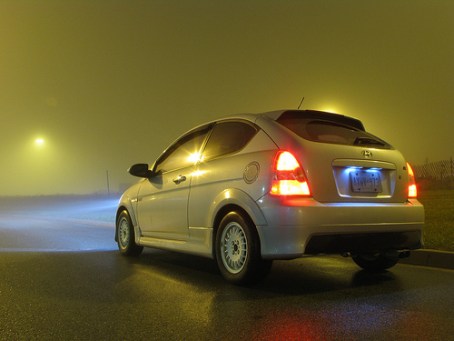
The brightness is the main advantage of these lights. Like rear fog lights, these headlights were popularized in Europe where fog, rain and curvy roads create demanding driving conditions. Because HID lights are brighter, they penetrate fog, rain and snow better than halogen lights — an advantage when the conditions are not ideal.
HID headlights are also more energy efficient than halogens, which isn’t a major concern in vehicles right now, but as we move to battery powered cars that will become very important — the less power accessories consume, the further the vehicle can drive on a single charge. (more…)
You Shouldn’t Use Fabric Softener on Towels
I have a love-hate relationship with fabric softener.
The hate comes from all of the embarrassing moments they are responsible for. I remember being at work when a co-worker pointed out in front of a bunch of other people that a dryer sheet was hanging out of the bottom of my pant-leg. They all thought it was pretty funny of course, and I think most people have been there. I have a few other embarrassing dryer sheet stories, but the great things about them are more interesting.

Fabric softener is really useful in your laundry and understanding what it does and how it affects fabric is important to knowing when to use it.
Most modern washing machines have a reservoir that can automatically add fabric softener liquid to the load during the rinse cycle. Of course, fabric softeners are also available in my favorite form: dryer sheets. (more…)
The Mall of America Does Not Have a Central Heating System
By Chad Upton | Editor
In case you’re not familiar with the Mall of America, it’s a 2.5 million sq. ft. shopping center in Bloomington Minnesota, a suburb of the “Twin Cities” (Minneapolis and Saint Paul). The mall opened in 1992 and contains more than 520 stores, two seven story parking garages with a total of 20,000 parking spaces, a giant aquarium and of course an indoor amusement park.

Photo by Dave Wallick
I was there in 1993 on a big family road trip and it was amazing. A building of this size seems like it should have a massive heating system to stay comfortable during winter months. But, the engineers had a much more creative solution in mind. (more…)
The Ideal Vehicle Speed for Best Fuel Economy
The precise number varies by car and environmental conditions, but the sweet spot is generally between 40-60 mph (65-95 km/h). Most small and medium size cars get the best mileage at about 50 mph (80 km/h).
A lot of factors affect the fuel economy of your car. Some of them don’t vary much with speed, such as the resistance of the engine pumps and accessories. Other factors, like the size of the frontal area and the drag coefficient create increasing resistance with speed.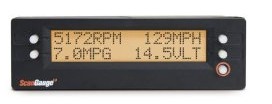
The faster you drive, the more energy is needed to overcome the aerodynamic resistance of the car. Up to 40 mph, that isn’t really even a factor. So, if you’re driving a box then your best fuel economy is likely closer to 40 mph than 50. If you’re driving a teardrop shaped eco-car, then you’re likely closer to 60 mph. Of course, engine size and other factors are involved too. (more…)
Warm Your Car Up Faster
My friend Todd told me about this secret many years ago. He has rebuilt more cars in his suburban home garage than anyone I know.
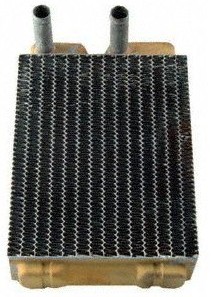 I met Todd at my first part time job, we used to work early weekend mornings during high school. I was too young to have a driver’s license, so my dedicated parents would always drive me.
That was before remote starters, so I would usually start the car a few minutes before leaving. Actually, that’s not true — my Dad was usually the one starting the car a few minutes before I was ready to leave, which was about 10 minutes after I told him I would be ready to leave.
It didn’t make much difference to the car — it was still cold for at least half the trip. On the rare occasion that I started the car, I would turn the heater to its hottest setting and turn the fan to full blast. That’s actually the slowest way to warm the car, so lets talk more about the fastest way. (more…)
The Meaning of the Numbers Inside the Recycling Symbol
By: Chad Upton | Editor
I remember going to the grocery store as a small child. It seemed like we were there for hours before finally packing all of our purchases into large brown paper bags. A few years later they phased out paper bags over concern for the trees required to make the bags. They were replaced with plastic bags and we have used them almost ever since. But, A few years ago, paper bags started appearing once again. Although they’re made from trees, those are pretty easy to grow compared to the raw materials of plastic.
It seems like everything is made from plastic now. I did a bit of dumpster diving tonight to find out how much. I went through my recycling bin looking for things with the recycling symbol on them — I guess that probably doesn’t really count as “dumpster diving.” These numbers only appear inside the recycling symbol on plastic products.
Plastic is a petroleum product, meaning the raw material used to create plastic is oil. It’s no secret that oil is one of the most in-demand natural resources and for a variety of reasons oil prices have sharply increased over the past 10 years. It’s not just the fuel companies who are affected by the increasing price of oil, but also plastic manufacturers. Both of these groups have to pass those increased costs on to their customers, and those businesses pass it on to their customers. Somewhere down the line, that customer is you and you’ve obviously noticed at the gas pump.
But, you may not have noticed the increase on plastic prices, at least not directly. Depending on where you live, you may have noticed a big or small push for you to use (or buy) reusable grocery bags. Of course these are great for the environment, but they also save the grocery store a lot of money on plastic bags, which have become significantly more expensive in the past few years. In some places, you even have to pay extra if you want plastic bags. (more…)
Shop at Off-Peak Hours for Time Savings
I’ve said it before, I love bananas. But there is one kind of bananas I do not like, busy grocery stores!
I went to my local supermarket yesterday to pickup a few things. Being Super Bowl Sunday, it was pretty much the worst day to go grocery shopping. Normally, I would just go another day but I needed some things for later in the day (like most other people there I’m sure).
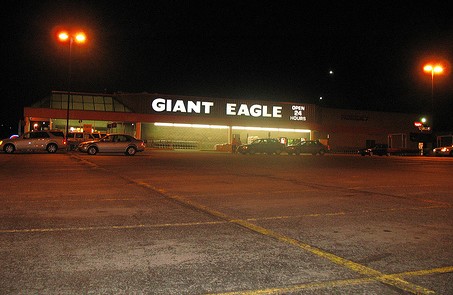 All the cart bumping and line shoving could have been avoided if I just went early in the morning or late the night before. That’s what I usually do — try to go shopping around 8pm-9pm, that includes any stores that are open late (ex. Target). Many stores are now until 10pm and some are open 24 hours. I try to take advantage of these hours since I usually get the store to myself. It actually makes shopping peaceful and efficient. (more…)
Sarcastic Secret: The Left Lane is for Passing
This is another one of those things that shouldn’t be a secret, but every time I go on the highway it seems like nobody knows about it.
I assume all my readers are perfectly safe drivers, only driving in the left lane when they need to pass another car, or in gridlock when proper traffic flow isn’t possible anyway. But if you know someone who blocks the left lane then you can share this with them as a subtle hint. Oh, and if someone shared this with you, they probably think you hate left lane bandits just as much as them.
We are constantly reminded by highway signs that say, “slower traffic keep right.” But, it’s not just the law, it’s common courtesy — we all need to share the road.
Keeping the left lane clear is important. Not just because it’s the other driver’s right to pass you, but because it is safer. When everyone plays by the same road rules, then everything is more predictable, there are fewer surprises and fewer accidents — that’s why these laws exist, they’re not just for fun.
One of these laws, at least in North America, is to pass on the left. If everyone did this, you would never have a car approach you from behind on your right side. Which, isn’t a big deal if you’re going to make a planned lane change, if you didn’t notice the car approach then you would see them when you check your blind spot anyway. But, if you need to make an emergency maneuver, it’s nice to be able to count on the fact that nobody will be there and you’ve got a safe “Plan B.” (more…)
How to Accelerate and Slow Banana Ripening
I love bananas.
They are a nearly perfect fruit. They taste great. They’re fairly inexpensive. They have their own protective skin and they contain many nutrients such as: vitamins A, B1, B2, B3, B5, B6, B9, C, Calcium, Iron, Magnesium, Phosphorus, Potassium and Zinc.
But, if I had to register a complaint about bananas, it would be their shelf life. Keeping them perfectly ripe is a fine art — one worth mastering.
The first trick is something my wife, Kristen, taught me: don’t buy all your bananas from the same bunch! Pick a couple green ones and a couple that are ripe/near ripe. Then you have some you can eat right away and others that will be ripe when you’re ready for them.
The interesting part is that those two bunches are likely the same age. You assume the less ripe ones are newer, but the food distributors control ripeness. They have large, air tight banana ripening vaults that give them very precise control over banana ripening. They’re usually divided into multiple sections, so bananas can be kept at different stages of ripeness. If they’re selling a lot of bananas, they can accelerate the ripening so they will be ripe when they arrive at the store. If sales are slow, they can slow ripening to avoid waste.
How do they do that? (more…)


 Broken Secrets