Posts filed under ‘Automotive’
Idling a Cold Engine Is GOOD For The Environment
You may notice when you start a cold vehicle, its exhaust is visible at first and disappears after a few minutes. Here’s why.
Technically, modern vehicles do not require much warm up time before you can drive them; advanced lubricants and materials allow the vehicles to be driven shortly after a cold weather start. Of course, you may want to warm your car for your comfort and surprisingly, to reduce emissions.
This is not intuitive, unless you understand the emission control systems on modern vehicles.
The first system is called Exhaust Gas Recirculation, and it’s probably obvious from the name: it routes exhaust gases back into the engine. The vehicle computer system monitors and controls this process to lower the amount of Nitrogen Oxides, precursors to smog and acid rain, that are created in the engine and then expelled from the tailpipe. Depending on your vehicle, this system will not operate in certain conditions, for example: low engine temperatures.
Vehicles also have a component in their exhaust system that converts various pollutants into less harmful gases with various catalysts. That conversion occurs in the catalytic converter, and that chemical reaction doesn’t happen when the catalytic converter is cold.
According to WP, some catalytic converters can take up to thirty-minutes to reach ideal operating temperature. That isn’t to suggest you should wait that long before driving your car — there are countermeasures in many cars that make it effective long before that.
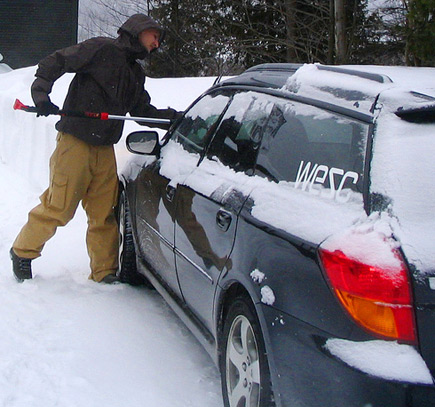
When your car is at idle, it uses less gas and releases less pollution than when you are driving it. Getting your emission system to an effective point before driving it helps reduce overall emissions. For my car, it take about 3-5 minutes before the exhaust is invisible and that’s about how long it takes to clear the snow anyway. It’s not an exact science and it varies by car and by temperature.
BrokenSecrets.com
Photo: steveyb (Creative Commons)
Keeping Takeout Food Warm While You Drive Home
As I mentioned here, when you put warm food on a cold surface, it gets cold. If you pickup Chinese, Pizza or your favorite restaurant food then you don’t want it to get cold while you drive home.
 Allow me to share a secret: seat heaters are not just for keeping your butt warm, they also make a great warming zone for your takeout.
If your car doesn’t have seat heaters then you have some other options. If it’s hot outside, put the food in your trunk. It’ll stay warmer there than inside your car (where you’re trying to keep cool with the A/C). If it’s cold outside and you’ve got frozen food, you can also put them in the trunk.
If you do takeout a lot, consider buying a cooler/warmer that plugs into your cigarette lighter socket. Some vehicles even have these coolers/warmers built in.
Oh, and don’t be afraid to have some bag fries during the ride.
BrokenSecrets.com
Photo credit: Spitzgogo Chen (Creative Commons)
Rear Fog Lights
Most North American cars have one set of bright lights on the back, of course those are the brake lights. But some American cars and most European cars have other bright lights on the rear: rear fog lights.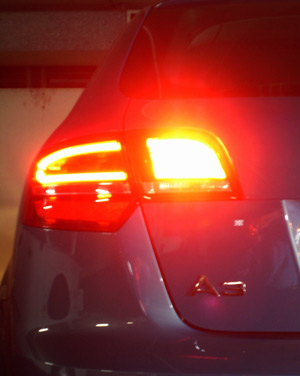
If you’re not familiar with this concept, then you probably assumed their lights were malfunctioning or their break lights were “stuck.”
Rear fog lights make it much easier for the vehicle behind you to see your car when fog, rain or snow is heavy.
Some rear fog lights are a pair of lights mounted low on the rear bumper. Other cars have a single light, mounted near the driver’s side rear turn signal.
There are debates about the validity of rear fog lights. Some claim they can be confused with brake lights, others agree but believe that is still safer than not seeing the vehicle until it is too late.
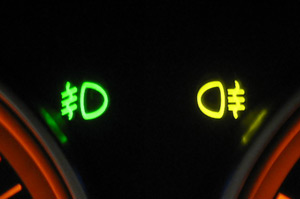
In the photo of the instrument cluster, the icon on the left is the front fog light indicator and on the right is the rear fog light indicator.
Some cars have separate switches for front and rear fogs, other cars have one switch that activates both.
Studies have shown that in North America more people inappropriately use their fog lamps in dry weather than use them properly in poor weather
BrokenSecrets.com
Photo Credit: mroach (Creative Commons)
Sources: DriveAndStayAlive.com Wikipedia SAE


 Broken Secrets