Posts filed under ‘Automotive’
Diesel Fuel Nozzles Don’t Fit in Standard Fuel Cars
Diesel cars are not popular in North America. But, diesel engines are fairly popular in pickup trucks and are becoming more popular in North American cars.
Although they have a limited history in America, foreign car manufacturers sell many diesel models in Europe.
Diesel engines are generally very efficient and that behind their new found demand. As diesel becomes more popular, you will likely see more diesel pumps.
This is good if you have a diesel car, potentially bad if you don’t. Diesel pumps present a slight risk to your standard gasoline vehicle — you do not want to put diesel fuel in a car that uses standard unleaded fuel.
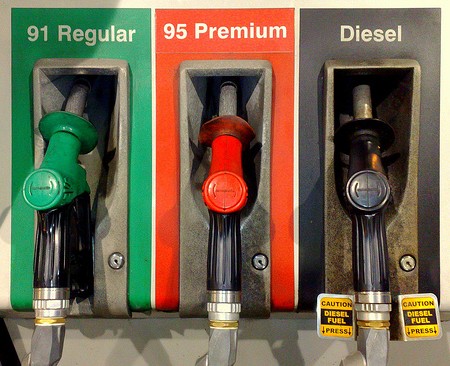
Standard engines use spark plugs to burn the fuel, diesel engines use pressure and heat to cause a reaction in diesel fuel. That means standard engines will not burn diesel fuel. If you inadvertently put diesel in an unleaded car, the engine will stop very quickly. It’s not usually a total loss, the fuel system will have to be cleaned, filters will need to be changed and the whole process can cost as much as $600.
But, there is an easy way to avoid this costly mistake. First, diesel fuel dispensers are usually clearly marked with text and with a special color handle (the color varies by station).
Second, the nozzle on the end of a diesel fuel pump is slightly larger than a standard fuel nozzle. That means it won’t fit in your car’s gas hole, at least not that way you’re used to a pump nozzle fitting. If you notice that the nozzle isn’t going as far in as it usually does, check the pump, you might be holding a diesel trigger.
This same principle was used in the 80s when we transitioned from leaded to unleaded fuel. Leaded fuel nozzles wouldn’t not fit in unleaded gas holes.
Checkout some other gas related Broken Secrets:
- The gas arrow
- Locking the gas pump trigger (be careful)
Broken Secrets | By: Chad Upton
Subscribe on: Facebook | Twitter | Kindle
Sources: Answer Bag, WTSP, Dixon Nozzles (PDF)
Photo: teachernz (cc)
Inactive Cell Phones Can Still Call 911
Over half of 911 calls originate from cell phones. This number will only increase as traditional phone service declines and cell phone adoption rates continue to rise.
In the US and Canada, wireless phone operators are required by law to connect all calls to 911 services, whether the customer account is active, past due or even canceled.
 Even if you don’t need a wireless phone for your social life, it may be a good idea to keep an old phone in your glove box in case of an emergency. There is even an organization called AmericanCellPhoneDrive.org where you can donate an old phone or request a free phone for this exact purpose.
If you have a disabled phone without a service contract and want to use it for 911 service, you may want to test it. DO NOT just dial 911 to test it, they will likely send help, even if you say it was just a test. The proper way to test 911 service is to call the non-emergency number for your local public safety answering point (PSAP) office and schedule a 911 test. That way, they will be expecting your call and know for sure that it is a test. In the US, there is a list of non-emergency contact numbers for PSAPs listed here.
When you call 911, you should be aware that your location will also be transmitted to the operator.
Some cell phones have built in GPS receivers, allowing them to receive radio signals from space and accurately determine a very precise location on earth. But, GPS is rarely available when indoors and obviously many calls originate indoors. Calls to 911 may not use GPS location data, because the phone does not support it or because a GPS signal cannot be found (typical when indoors).
When GPS is not available, the wireless provider can get a fairly accurate location of the phone by analyzing it’s signal and the location of the towers that are receiving it. Current regulations require that a phone carrier can pinpoint a cell phone within 300-600 meters, depending on the technology the phone is using. By 2012, phone carriers should be able to pinpoint you location within 50-300 meters.
Broken Secrets | By: Chad Upton
Secrets on: Facebook | Twitter | Kindle
Sources: 911 Wireless Service, FCC
Police Do Not Have a Speeding Ticket Quota
A friend of mine is a cop and I’ve been lucky enough to go on a few ride-along trips with him. It’s pretty interesting to get a firsthand look at the job of a police officer. It gives you a lot of respect for the tough job they do.
When they’re not responding to calls, they’re doing paperwork and enforcing speed limits. On one particular ride-along, we spent a couple of hours trying to catch speeders. This was of great interest to me since I am a chronic speeder.
The first thing I wanted to know, what is the deal with quotas?
He said they don’t have a quota. Although, he added that if he didn’t write any tickets then it wouldn’t look like he was doing his job. Also, there are some cops who are trying to get promoted and write a lot of tickets, so if the other cops don’t write a fair amount of tickets then they come across as slackers. So, while there isn’t an official quota, these are the reasons why cops are driven to write tickets.
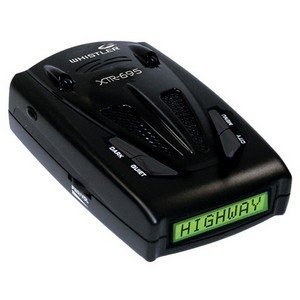
There are many tools that cops use to catch speeders. There are two speed measuring technologies, doppler radar and laser (aka Lidar, Ladar and “Laser Radar”). Doppler radar technology is the same technology that is used by meteorologists to analyze clouds and predict weather patterns. It’s also used at many stores to control automatic doors. Doppler radar units for law enforcement, come in many varieties: hand-held, vehicle mounted and automated photo-radar. (more…)
One US Highway Uses Kilometers Instead of Miles
Mile markers line our highways. Like many other things, they were invented in ancient Greece. Originally, they were called “milestones” because they were stone posts engraved with the number of miles to and from the next town. They were made from granite, marble and other materials; they can look a lot like modern day tombstones and originals still exist in many places.
 If you’re not familiar with mile markers, they are small signs next to the highway that indicate the distance from the beginning of the highway. If you’ve ever seen small signs that only contain a number, it’s likely a mile-marker.
In the United States, most even-numbered interstates have mile markers that start at zero on the west coast and increase as the highway runs east. Along odd-numbered interstates, which run north/south, the mile-markers start at zero in the south and increase as the highway goes north. In most States, exit numbers are determined by the nearest mile marker number.
In Canada, the system is similar, although kilometers are used for the mile markers and exit numbers. In India, the markers also indicate the total distance between the two cities where the marker is located. Systems similar to these exist in most other countries.
There are some inconsistencies in the United States where exits are numbered sequentially rather than by mile markers. States that number in this way are Connecticut, Delaware, Massachusetts, New Hampshire, New York, Rhode Island, and Vermont.
There is also one interstate where the mile markers are actually labeled in kilometers. Interstate 19 in Arizona, between Tucson and the Mexican border, uses kilometers for mile markers and destination signs. Speeds are still posted in miles-per-hour.
The metric signs were installed in the 1980s when it looked like the United States was converting to the metric system. Complete conversion to metric never happened, but most of the signs along this interstate still stand. Going forward, metric signs will be replaced with US standard unit signs (“miles”) as construction projects along the highway are complete. As of 2009, one such project has been completed.
Broken Secrets | By: Chad Upton
Sources: Interstate System, Trans-Canada, Route Markers, Milestone, I19
Photo: amandabhslater (cc)
Start Your Lawn Mower in One Pull
If your mower is hard to start or runs rough, this secret is for you.
I get a lot of these secrets from my dad and he gave me this one last spring. My mower ran a little rough and it took a couple hard pulls to get it going. Within a few starts after this secret, it was starting with one easy pull.
The secret is pretty simple: use premium gasoline!

I know what you’re thinking, “I’m not made of money!” But, this is a very affordable experiment to try. In your car, it costs significantly more to use premium fuel, so you’re probably not going to use it unless you have a high performance car that requires it. But, the fuel your lawn mower burns might only cost a few extra dollars per year for premium.
The benefits to your mower are as easy as 1, 2, 3:
- Starts easier
- Runs smoother
- Lasts longer
The proof is in the pull. Now that it starts easily and runs smoothly, I know it’s going to last longer and that’s worth a few more dollars per year.
The same applies to your car. If your car engine runs rough, you should give mid-grade or premium fuel a try. Your engine may sound noticeably better, idle smoother and start much easier too. If not, then it’s a waste of money.
In fact, the FTC says that premium fuel is a waste of money unless your car requires it or runs rough without it. If neither your mower nor car engine improve with premium fuel, then stop using it.
Broken Secrets
Written By: Chad Upton
Photo: yewenyi (cc)
Sources: Louisiana.gov, FTC
The Gas Arrow
Rent, borrow or commandeer an unfamiliar car and you’ll need to gas it up eventually.
You know your own car like the back of your TV remote, but you’ve got nothing on this car. The gauge is near empty when you realize you have no idea which side the gas cap is on.
You’ve got a 50/50 chance, so you wing it. Unfortunately, there’s nothing that says, “this ain’t my car” better than stopping on the wrong side of the pump.
That’s why they invented the gas arrow. Look for the arrow on the gas gauge, it points to the side of the car where the gas hole is.
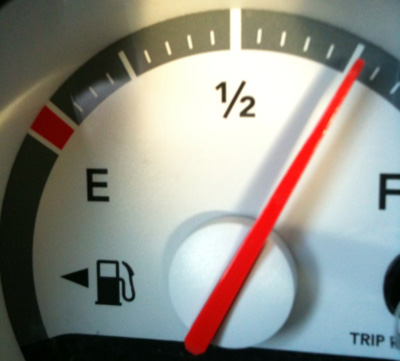
Of course, not all cars have this arrow. Some people will also say that the pump icon indicates the side of the gas cap with the pump handle, but that’s not universally true.
My Dad shared this secret with me a few years ago. I shared it with a few friends, some of them shared with a few friends and if all goes well, everybody will know about the gas arrow and other little known facts. That’s what this site is all about.
Broken Secrets
Written By: Chad Upton
Source: My Dad
Why U-Hauls Have Arizona License Plates
Most U-Haul vehicles have Arizona license plates. Here’s a typical example.
The following picture was taken in the Toronto area, the information on the side is about Newfoundland and the license plate is, of course, from Arizona.
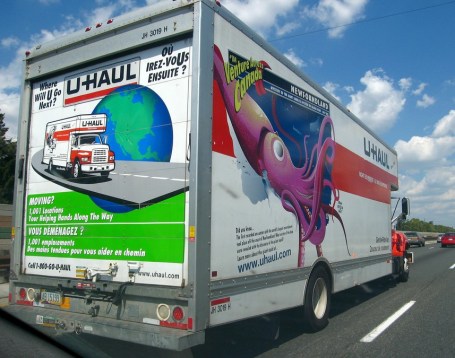
That might seem unusual, but most U-Hauls in Canada actually have Arizona plates too. The fact is, all corporate owned U-Haul rental vehicles in the lower 48 States and Canada have Arizona license plates. That’s right, Alaska and Hawaii don’t have Arizona plates, but all of Canada does. There are actually a few good reasons for this.
When I first noticed this trend, I assumed that U-Haul got a sweetheart deal in Arizona. It turns out their head office is in Phoenix, so it seems reasonable that they would register vehicles there. They also get a really sweet deal there, but this deal is not exclusive to U-Haul, it’s good for anyone with a billing address in Arizona. (more…)
Why do Some Cars Have Blue Headlights?
Traditionally, cars have had yellowish headlights. Now, many cars have light blue colored headlights. Some cars come with those headlights from the factory and other times, owners will install similar systems or similar looking systems.
The factory blue headlights are known as HID (high intensity discharge) headlights. Just like the name describes, they’re brighter than normal halogen headlights.
Traditional lights heat a small metal filament to produce light while HID lights create a plasma discharge arc between two tungsten electrodes. It is this plasma discharge that creates the blue color. But, this technology is not new, it’s very similar to the bright lights that illuminate stadiums and roadways.
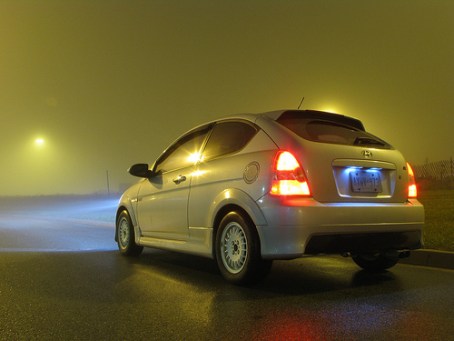
The brightness is the main advantage of these lights. Like rear fog lights, these headlights were popularized in Europe where fog, rain and curvy roads create demanding driving conditions. Because HID lights are brighter, they penetrate fog, rain and snow better than halogen lights — an advantage when the conditions are not ideal.
HID headlights are also more energy efficient than halogens, which isn’t a major concern in vehicles right now, but as we move to battery powered cars that will become very important — the less power accessories consume, the further the vehicle can drive on a single charge. (more…)
The Ideal Vehicle Speed for Best Fuel Economy
The precise number varies by car and environmental conditions, but the sweet spot is generally between 40-60 mph (65-95 km/h). Most small and medium size cars get the best mileage at about 50 mph (80 km/h).
A lot of factors affect the fuel economy of your car. Some of them don’t vary much with speed, such as the resistance of the engine pumps and accessories. Other factors, like the size of the frontal area and the drag coefficient create increasing resistance with speed.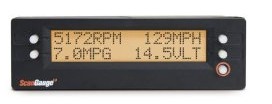
The faster you drive, the more energy is needed to overcome the aerodynamic resistance of the car. Up to 40 mph, that isn’t really even a factor. So, if you’re driving a box then your best fuel economy is likely closer to 40 mph than 50. If you’re driving a teardrop shaped eco-car, then you’re likely closer to 60 mph. Of course, engine size and other factors are involved too. (more…)


 Broken Secrets