Posts filed under ‘Around The House’
Keeping Secrets Safe at Home
You probably have things in your home that you want to keep safe: cash, checks, credit cards, jewelry, computer data, documents and other valuables.
In case of fire or theft, the best place to put them is in a fireproof safe. This might sound like overkill, but affordable models start around $30.
Safes are an obvious place to put valuables, so you want a bolt-down model — thieves don’t usually have time to open a safe during a robbery but they’ll want to take it with them and open it later.
If you’re looking for a less obvious hiding place, there are many options. You can buy “diversion safes” that look like everyday objects such as: canned food, bleach, candles, books, clocks and many other items.
 If you’re going to use one of these safes then you should store it with other similar items; it doesn’t work well if there is a can of fruit in your sock drawer.
The fake bleach container and candle are both good since there are many places you might find those in your house. The bleach container could make a good hiding spot for the spare key in your garage.
The other thing about these “safes” is that they’re not always that safe. For example, they’re not fireproof and they’re very easy to get into, but they can be useful for storing a bit of spare cash when thin-mint go on sale.
If you don’t want to buy a diversion safe, you can make your own. Pringles cans work well.
Sometimes, it just comes down to location. Reader’s Digest interviewed a number of convicted burglars to find out their secrets to successful home robberies and among other things, the robbers revealed that they rarely ever go into kids rooms. Simply putting stuff in your kids rooms may be secure enough, although you may never find it again either.
The same interviews revealed that robbers don’t go near your house if they see a flickering TV or hear a radio because that’s a sure sign that somebody is home. You can buy a small device that emulates a flickering TV and it’s much cheaper to buy and operate on a timer than a real TV.
Although these hiding places would be great for an Easter egg hunt, they shouldn’t be used for really valuable items. The best place for that stuff is in a proper safe, safety deposit box or federally insured instrument such as a bank account.
Broken Secrets | Written By: Chad Upton
Sources: Reader’s Digest, Reader’s Digest, FakeTV.com
Pure Vanilla Extract is 35% Alcohol
I made vanilla crème brulée a few weeks ago and I used a lot of pure vanilla extract, almost twice the amount the recipe suggested. I did a Grand Marnier flambé on top and although it tasted great, the best part was the excuse to buy a blowtorch.
 Now, when you buy something labeled “pure”, you expect it to match the definition of pure, “unmodified by an admixture; simple or homogeneous.” But, that’s not what you get with pure vanilla extract.
In the United States, the FDA requires Pure Vanilla Extract to contain alcohol if it’s going to be called “pure.” Specifically, it must contain at least 35% alcohol and 13.35 ounces of vanilla bean per gallon.
It turns out this is not a rip off, alcohol actually helps extract the flavor from the vanilla beans. Not only that, vanilla extract gets better with age, maturing in about 2 years.
Alcohol free versions are available, but will not be labeled as “pure.”
Broken Secrets | Written By: Chad Upton
Sources: dictionary.com, wikipedia, FDA, Arizona Vanilla
Photo: Jocelyn | McAuliflower (cc)
Start Your Lawn Mower in One Pull
If your mower is hard to start or runs rough, this secret is for you.
I get a lot of these secrets from my dad and he gave me this one last spring. My mower ran a little rough and it took a couple hard pulls to get it going. Within a few starts after this secret, it was starting with one easy pull.
The secret is pretty simple: use premium gasoline!

I know what you’re thinking, “I’m not made of money!” But, this is a very affordable experiment to try. In your car, it costs significantly more to use premium fuel, so you’re probably not going to use it unless you have a high performance car that requires it. But, the fuel your lawn mower burns might only cost a few extra dollars per year for premium.
The benefits to your mower are as easy as 1, 2, 3:
- Starts easier
- Runs smoother
- Lasts longer
The proof is in the pull. Now that it starts easily and runs smoothly, I know it’s going to last longer and that’s worth a few more dollars per year.
The same applies to your car. If your car engine runs rough, you should give mid-grade or premium fuel a try. Your engine may sound noticeably better, idle smoother and start much easier too. If not, then it’s a waste of money.
In fact, the FTC says that premium fuel is a waste of money unless your car requires it or runs rough without it. If neither your mower nor car engine improve with premium fuel, then stop using it.
Broken Secrets
Written By: Chad Upton
Photo: yewenyi (cc)
Sources: Louisiana.gov, FTC
Stop Cords from Falling Behind Your Desk
At some point, everyone with a rechargeable gadget will curse gravity as the cord falls behind their desk. This is extremely annoying, mostly because you never want to go under your desk if you don’t have to; although, you’ll probably find some other lost treasures when you do.
A friend shared this secret with me recently and it blew my mind: use binder clips to catch the cables.

I bought a pack of Medium Binder Clips at Staples (24 @ $2.79) and I weaved my cables through — they work perfectly. If your cable slides through easily, you may need to tie a very loose knot in the cable or even better, put a couple zip-ties around the cable to stop it from falling through.
Broken Secrets | Written By: Chad Upton
Aluminum Foil Retainers
Aluminum foil is amazing when you think about it.
It’s indispensable in the kitchen and all the good Halloween costumes require it. So, it’s no surprise there are a lot of aluminum foil secrets. For example, most people don’t realize there is a proper use for aluminum foil in the microwave, the FDA even has guidelines for it.
But, there is one aluminum foil secret that everyone needs to know about: the aluminum foil retainers. There are perforated retainer tabs on the side of the aluminum foil box. When pushed in, these tabs hold the roll in place while you unroll it.
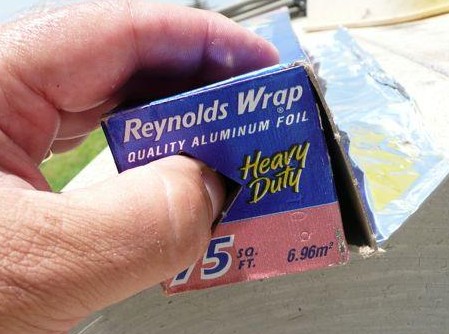
Maybe it’s too much to ask, but I wish they pre-pushed these tabs at the factory — I went years without noticing them. Then again, maybe it’s the manufacturer’s inside joke; now that has been foiled.
Broken Secrets | Written By: Chad Upton
Photo: redbell20j
How to Increase Shower Water Pressure
There is nothing worse than a low pressure shower. Actually, 1000AwesomeThings said it best, “Not much affects your day every day as much as a good shower.”
In a lot of cases, there is something you can do about it. For example, if a nearby faucet has good pressure then you can probably improve your shower pressure in about 5 minutes.
Modern shower heads contain a flow restriction plate to decrease the amount of water you consume, which saves you money and ensures the city can produce enough clean water for everyone. It’s basically a rubber or Teflon disc that has a small hole in it. The smaller the hole, the less water can travel through it and onto your head. If you want to know what that restrictor looks like, click here to see a 10 pack of them on amazon (great if you own a lot of showers and have a problem with too much pressure).
 Sometimes, these flow restrictor get clogged with debris, which reduces the flow further. Other times, they’re too small for your home’s water pressure. In either case, you can remove the restrictor, clean it and put it back in. If it’s not dirty then it may be too restrictive for your water pressure. If that’s the case, you can leave it out entirely or drill the hole so it is slightly larger. (more…)
How to Sterilize Your Toothbrush
Whether you plan to buy your own dental tools, or clean baby bottles, you should understand how to sterilize some important household items.
The purpose of sterilization is to remove fungi, bacteria, viruses and spores. Some people believe exposure to some bacteria is a good thing, and they might be right, but exposure to some varieties of these organisms can be very bad for you.
 There are a number of ways to perform sterilization using: heat, chemicals, radiation, pressure and filtration.
Heat is probably the most misunderstood method of sterilization. It is a popular practice to boil baby products in water and if the duration is long enough, it may disinfect them but it does not sterilize them. The boiling method is really good at removing particles, which can be a source of bacteria, but is not great at killing the bacteria itself. If you do use this method, be sure to start with cold water since hot water from your tap is already a bacteria risk (see: why you shouldn’t drink hot water from your tap).
To sterilize with heat, you need a holding time of 3 minutes at 273 °F (134 °C). Water turns to steam at 212 °F (100 °C), so you can’t use water to sterilize something directly. But, you can use steam. In fact, that’s basically what hospitals use inside a device called an autoclave. It is like a small dishwasher that uses steam and pressure to sterilize items. Color changing tape is used inside to tell the operator when optimal sterilization conditions have been met. Some new dishwashers and clothes washing machines have steam cycles too.
How to Clean an LCD Screen
Between televisions and computer screens, most readers likely have at least one LCD screen to clean. It’s really important to know how to clean one, but maybe even more important is how NOT to clean one.
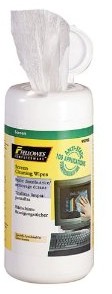 DO NOT use the following:
- Paper products
- Glass cleaner
- Tap Water
The first suggestion I would make is to check your manual for exact cleaning instructions. In many cases, they will recommend their own expensive cleaning solution (more on the contents of that later) but they may also warn about using alcohol or some other cleaners.
Your computer screen will probably get much dirtier than your TV screen, since you cough and sneeze very close to it. Not to mention, whenever somebody else points to something on your screen it is traditional to leave a finger print — that is so you remember exactly where they were pointing until you clean it off during your Friday afternoon time wasting routine. (more…)
The Purpose of Beer Bottle Bumps
Many people have noticed the small bumps on the side of beer bottles, near the base (the “heel”). They’re not just on beer bottles either, every glass bottle in my house has them, which are mostly beer bottles.
These are typically called “mold codes” or “heel codes” and there are many different ideas about what these are for, but I could only confirm one.
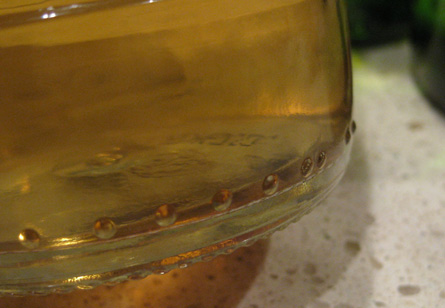
It is a popular notion that these bumps help the bottler know how many times the bottle has been reused. I couldn’t find any proof that they are used for this. In fact, I’m not sure how these dots would convey that information since they are made when the bottle is molded.
This rumor seems to confuse the heel code with bottle date codes, which are traditionally found on the neck of the bottle. On newer bottles, date codes are stamped with ink. On older bottles, they were part of the glass mold and were often beside an embossed logo from the glass producer or bottler. Dating on older bottles helped bottlers know how long they had been in circulation. (more…)
3D TVs are Available Now
I was at my local big-box electronics store on the weekend where they had a 55″ Samsung 3D TV running. The picture looked funny to me, but one of the other customers, who I suspect had been sitting there for a while, immediately handed over his 3D glasses and told me to try it out. It was awesome.
It was the kind of experience that was once limited to theme parks and special events.
3D media in general is not new; the first 3D camera was patented in the year 1900. Many early prints and movies used red/blue glasses to present 3D images. This technique is called Anaglyph. The color filters are a basic way to present separate images to both your eyes from a single frame, which gives you the perception that some objects are closer than others. The downside is that everything is either red or blue.
I remember Captain EO at Disneyland back in the 80s, that was the first 3D film I saw without the red/blue lenses (although they were invented in the 1950s). In most cases, theaters use glasses with polarized clear lenses. The polarized lenses are different, each one filters out light waves that do not oscillate in the same orientation as the polarization. The projection system projects two images, one that will be filtered out by right lens and one for the left. This allows us to have a full color 3D experience. Although the projection system is very expensive, polarized glasses are fairly cheap and that’s why they’re the primary choice for theaters.
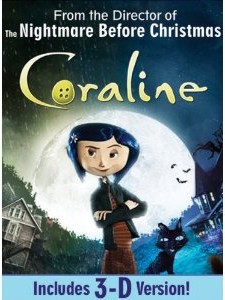
In 2003, 3D films started gaining in popularity, showing up in regular and IMAX theaters. Now, many local theaters have at least one 3D projection system. Some of the films in this time have included: Bugs! (2003), The Polar Express (2004), Chicken Little (2005), Nightmare Before Christmas (2006), Beowulf (2007), Meet the Robinsons (2007), Bolt (2008), Coraline (2009), Up (2009) and of course Avatar (2009).
There were many more, but those are some of the more popular ones. Since there have been so many 3D movies in the theaters, 3D home theater will let you enjoy those movies in all their glory over and over again. (more…)


 Broken Secrets