Posts filed under ‘Around The House’
How to Remove Skunk Smell from Pets, Clothes, etc.
When I was a teenager, I heard an awful noise in our backyard. It was a loud and fearful shriek, like nothing I had heard before; it was followed by the yelping of our yellow Labrador.
Our dog Trooper had just been sprayed by a skunk and he was not happy about it. Frankly, nobody on our block was happy that warm spring night. I could hear the neighbors disgust as they went from room to room and shut their windows.
My mom bathed the dog in the backyard and I went to buy tomato juice. We bathed him in Tomato juice for a while and it was mildly effective.
But, there are some better alternatives.
The home remedy is a foaming mixture:
- 1 Quart Hydrogen Peroxide (3%)
- 1/4 Cup Baking Soda
- 2 Tbsp Dish-washing Soap (not dishwasher detergent)
 The baking soda and hydrogen peroxide will create oxygen bubbles that react with the thiols in skunk oil to neutralize the smell. Be sure to use the mixture right away, while it is foaming, before the bubbles dissolve. This was proven to be more effective than tomato juice by Myth Busters in episode 16. This potion can be used on clothing, people and animals.
If you you’re a planner or have a time to go to a local pharmacy, you can pickup a product called Tecnu — I found many internet users who claim it is more effective than the homemade brew while Myth Busters found the home brew concoction to be more effective than commercial products.
Regardless of which method you choose, you should use a proper eye cleaning solution for your pet’s eyes and put cotton balls in their ears to prevent these solutions from getting in their ears.
Broken Secrets | Chad Upton


Sources: eHow, Skunk Removal Recipe, Myth Busters
Desktop Snacking Without a Greasy Keyboard
With more work and less help, it’s no surprise that nearly 70% of Americans eat lunch at their desks. At 61% the majority of people also snack at their desk throughout the day.
All that food is one reason keyboards and mice are have more bacteria than most toilet seats. Also, office toilet seats are usually sanitized daily, when was the last time your keyboard or mouse were?
This tip is helpful because your hands never touch your food. This prevents your keyboard from getting dirtier and it keeps your hands from passing bacteria to your mouth.
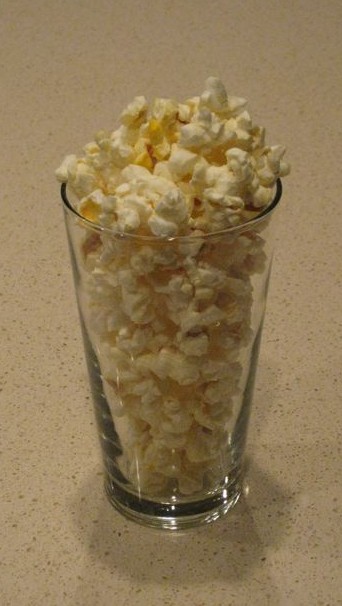
1. Pour bite-size snacks into a cup or glass.
2. Angle cup into your mouth so bite-size snacks fall into your mouth.
3. Chew, swallow and repeat from step 2.
Broken Secrets | By: Chad Upton
Subscribe on: Facebook | Twitter | Kindle
Sources: Home Food Safety Org, ABC News
How to Chop Food Quickly, Safely and Easily
The difference between an amateur and a professional is their technique and practice.
In this case, it’s fairly easy to do it like a pro. You just need to know the right technique.
For a quick tutorial, watch this video from Chef Jacob (if you can’t watch the video, read below).
When you’re slicing, dicing and chopping vegetables, you’ll place one hand on the knife and use your other hand to hold the food and guide the knife. The knuckles on your guide hand will maintain constant contact with the side of the knife. You will curl your fingers under your knuckles to protect them from the cutting edge of the knife. Your thumb will oppose your knuckles and stabilize the food. You can see the correct hand position in the photo below:
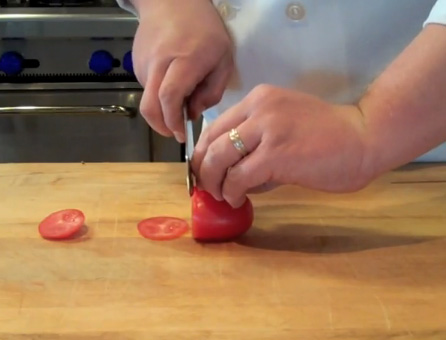
For those of us who have never been to culinary school or worked in a restaurant, this is a tip that we can really benefit from.
Thanks to Chef Jacob of FreeCulinarySchool.com.
Broken Secrets | By: Chad Upton
Subscribe on: Facebook | Twitter | Kindle
Source and Photo: @ChefJacob
Dog’s Mouths Are Not Cleaner Than Human’s
This probably shouldn’t be a secret. If you think about the things that dogs lick and humans don’t, then this should be pretty obvious. But, the myth that dog’s mouths are cleaner than human’s is perpetually propagated.
 There is an old tale that you should let a dog lick your wounds to speed healing. The wounds may actually heal faster; that’s because the licking will stimulate circulation and clear away dead tissue, but it’s not because their saliva is cleaner than ours.
Some say that dog’s saliva is more acidic than humans so they break down bacteria better. Others look at the fact that dogs rarely get cavities or gum disease as proof.
The fact is, dogs have a similar amount of oral bacteria to humans. But, the types of oral bacteria varies between dogs and humans.
That’s why dogs rarely get cavities or gum disease, the types of bacteria that cause these problems are only found in about 5% of dogs. In fact, viruses and bacteria that affect humans usually don’t bother dogs and vice versa. For that reason, you may actually have a higher risk of becoming sick from kissing a human than kissing a dog. But, that doesn’t mean their mouths are cleaner.
Broken Secrets | By: Chad Upton
Subscribe on: Facebook | Twitter | Kindle
Sources: A Moment of Science, ABC, Life’s Little Mysteries
Mosquitoes are Attracted to Men More Than Women
Female mosquitoes bite mammals for their blood. They don’t do it for food, they need proteins in the blood to form eggs that will eventually make baby mosquitoes.
When it comes to people, they don’t necessarily prefer men to women, but it’s generally easier for mosquitoes to find men than women.
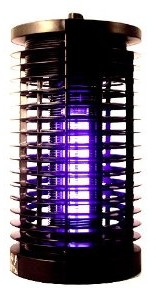 Mosquitoes detect mammals by picking up two chemicals: CO2 and 1-Octen-3-ol. CO2 is obviously in our breath when we exhale. 1-Octen-3-ol is a type of alcohol and it’s naturally in our breath and our sweat. Mosquitoes can detect these chemicals up to 36 meters (118 feet) away.
The more air you exhale and the more sweat you generate, the easier it is for mosquitoes to find you. Typically, men are: larger than women, have higher body temperatures, sweat more and exhale more CO2.
Larger women are also at a higher risk of mosquito bites than smaller women. In fact, a study found that pregnant women are twice as likely to attract mosquitoes than non-pregnant women.
The most effective way to repel mosquitoes is with a product that contains DEET. There are some natural alternatives to DEET: lemon eucalyptus and lemon grass are popular and reasonably effective, although there are other alternatives too. Unfortunately, none of them are as effective as DEET on the skin. DEET provides 100% protection for up to two hours, the natural alternatives need to be reapplied every 30-60 minutes.
Nepetalacton, the active ingredient in Catnip, is nearly 10 times more effective than DEET at repelling mosquitoes. However, it is not effective when applied to skin.
When a mosquito bites you, or when your skin is punctured in general, there is a complex reaction in your body that tries to stop the bleeding. Mosquitoes inject their saliva which contains a number of compounds, one of which is designed to prevent this reaction from happening. That prevents the blood from clotting and allows them to easily extract it. These compounds are the reason mosquito bites are itchy.
Researchers are studying the anti-clotting compounds in mosquito saliva since they could be effective in treating life threatening blood clots and heart-related diseases that affect humans.
Broken Secrets | By: Chad Upton
Subscribe on: Facebook | Twitter | Kindle
Sources: Annals of Internal Medicine, Wikipedia (Mosquito, DEET, 1-Octen-3-ol), NYT
Cats Cannot Taste Sweetness in Food
My favorite classic science fair exhibit is the taste buds booth.
It’s like going to the electronics department in Costco — you eat free food samples while some kid tells you stuff you’ll never remember because all you’re thinking about is how you can get away from the booth without it looking like you just came over for the free food samples.
Taste has been studied for a long time. In 1901, Harvard professor Edwin G. Boring published a paper that stated different taste receptors can be found on different parts of the human tongue. His last name was Boring, but his work was not. In fact, his work is slightly controversial since all areas of the tongue are sensitive to all tastes; however, some areas are more sensitive than others.
Some wine and beer glasses are shaped to encourage the liquid to hit certain parts of your tongue first, this is supposed to deliver the ideal taste sensation for that drink.
 There are five generally accepted taste sensations:
- Sweet
- Bitter
- Savory
- Salty
- Sour
Most mammals can experience all of these sensations. There are some exceptions, particularly with sweetness. New world monkeys do not perceive aspartame as sweet. Humans, apes and old world monkeys do. Cats cannot taste sweetness at all.
Broken Secrets | By: Chad Upton
Subscribe on: Facebook | Twitter | Kindle
Sources: Wikipedia (taste buds, sweetness, wine glass), Scientific American
Why Chocolate is Dangerous for Dogs and Not Humans
Whether it was your idea or not, your dog or cat may swallow chocolate at sometime in their life.
You want to avoid that since there are two toxins in chocolate that can have adverse affects on your pets: caffeine and theobromine.
Both of these drugs are very similar, but chocolate contains a lot more theobromine than caffeine. Theobromine does not affect the human nervous system as much as caffeine, nor is it as addictive as caffeine. But, theobromine is still addictive and believed to be the agent that causes Chocolate addiction. It is also believed to be responsible for chocolate’s notoriety as an aphrodisiac.
 Although theobromine increases heart rate in humans, it also dilates blood vessels, which reduces blood pressure. In fact, it is superior to codeine at suppressing cough and can be helpful in relaxing muscles to alleviate symptoms of asthma.
Humans are able to consume chocolate in moderation because we can breakdown theobromine fairly quickly. In dogs, cats, rats and other species, they cannot digest it efficiently. This leads to a buildup of this toxin and is known as theogromine poisoning. Actually, this can also happen to elderly people who consume large quantities of chocolate.
For animals, a dangerous quantity of chocolate depends on the type of chocolate. Milk chocolate is not as dangerous as semisweet chocolate and it’s not as dangerous as cocoa powder.
Milk chocolate contains approx 44-64 milligrams of theobromine per ounce. Semi-sweet chocolate is about 150-160 mg/oz. Cocoa powder is 800 mg/oz.
A toxic dose for pets is 100-200 mg/kg of body weight (1 kg = 2.2 pounds). That said, problems can still be evident with smaller doses.
Signs of toxicity include:
- Excitement, nervousness, trembling
- Vomiting or diarrhea
- Excessive thirst
- Muscle spasms
- Seizures
- Coma
- Death (usually a result of other problems caused by the toxin)
As much as people like to treat their pets like humans, they are not human and should not be treated like humans when it comes to diet. There are many other human foods that are not recommended and poisonous to pets:
- Alcohol
- Avocado
- Coffee
- Fatty Foods
- Onions
- Raisins and grapes
- Salt
- Yeast dough
- Garlic
- Artificial sweetener
Pet’s digestive systems are very different from humans. Checkout Vetinfo for more details on why some of the above foods should not be fed to your animals.
Thanks to Ryan W for suggesting this secret.
Broken Secrets | By: Chad Upton
Subscribe on: Facebook | Twitter | Kindle
Sources: Wikipedia (Theobromine), About.com, Vetinfo
WD-40 Ingredients and Uses
By Chad Upton | Editor
WD-40 was created in 1953 by Norm Larsen. It was originally designed to prevent corrosion caused by water — the WD stands for “water displacement.” Norm’s 40th formula was successful and that’s where the “40” comes from.
The formula is so secretive, they decided not to patent it. This may sound counter intuitive, but filing for a patent would require disclosing the ingredients.
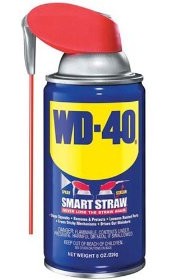 That strategy was good for a while, but many years later, the Hazardous Communication regulation required that ingredients of potentially hazardous products be made available to emergency responders.
I did some digging and found the material safety data sheet for WD-40 (PDF).
The main ingredient is Stoddard solvent, which is also known by its own brand name, Varsol. CO2 is used as a propellant and mineral oil is another main ingredient.
It was first used to protect the Atlas missile from corrosion and it became available to consumers in 1958. Since then, consumers have found over 2000 uses that the WD-40 Company endorses (and many more it doesn’t).
There is a popular email circulating that you may have seen. It states WD-40 is primarily fish oil, but that’s not true. The email also lists a number of uses, although the WD-40 company only recommends about half of those. Some of the 2000 recommended uses include:
- Stop squeaks (doors, bike chains)
- Remove and prevent rust (lawn mower blades during off season, cookie tins/sheets)
- Remove gum, glue, ink and lipstick from fabrics and other items
- Lubricate metal parts (zippers, tools, machines)
- Loosen nuts and screws
- Cleaning (shower doors, tools, lime stains in toilet bowls)
Check out the full list of 2000 uses (PDF).
PS – The WD-40 company has an affinity for product names with numbers. They also make 2000 flushes, X-14, 3-in-one-oil and a few other products.
Broken Secrets | Facebook | Twitter | Email | Kindle
Sources: Official WD-40 Uses (PDF), MSDS (PDF), Snopes
How to Make Your Grass Greener
Look outside. Every lawn on your street is a different shade of green. That’s because everybody cuts, waters and fertilizes differently, not to mention the half dozen varieties of common grasses that they may have.
I’ve never been that guy with the greenest lawn, so I asked my lawn specialist friend Mike how to make my lawn greener.
He told me the most important factor was how short I cut it. He said, “the longer you leave it, the better. Set your mower on its highest setting.” I was hesitant because I always cut my grass short and I liked the way that looked.

But, longer grass traps more moisture and reduces the sunlight that gets to the roots, which can burn the grass and dry it out.
Grass reacts to the sun like your skin does. Too much sun without protection will burn it. When you have/had a full head of hair, you don’t put sunscreen on top of your head because your hair protects your skin. The same goes for long grass, it provides shade for the roots and soil.
Long grass also develops a deeper root system which makes the grass more fit for dry and less fertile soil.
I followed Mike’s advice and my grass still looks neatly trimmed, it’s also the greenest grass I’ve ever had. But, there are other reasons why your grass turns brown or yellow. (more…)


 Broken Secrets