Posts filed under ‘Around The House’
Some Eggs Do Not Need Refrigeration
By Chad Upton | Editor
Eggs are incredibly versatile. They can be prepared many different ways and appear in thousands of recipes, from salad dressings to dessert puddings.
While eggs taste great, they can also be dangerous if not treated properly. In the United States, about 1 in 20,000 eggs may contain salmonella — a bacteria that can make people very sick and possibly lead to death. In fact, approximately 142,000 cases of salmonella poisoning are reported each year and approx 30 of those cases result in death.
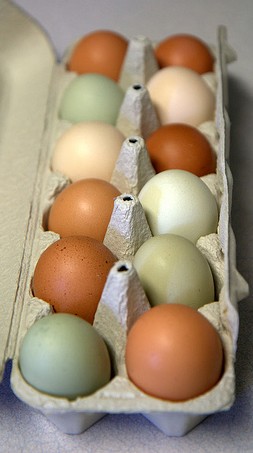 In many countries, eggs lay on supermarket shelves completely unrefrigerated. In other countries, eggs must be refrigerated when they are shipped, stored and sold.
Eggs have a natural protective layer on the outside of them which preserves the egg for a long period of time without refrigeration. Unfortunately, eggs can become contaminated with salmonella. This happens by contacting feces or other environmental contaminants during production. It can also be caused by the ovaries of an infected hen.
Because of this risk, countries such as the US and Canada insist that eggs be washed before they are sold. The advantage of this is that potential bacteria is removed from the outside of the egg. The disadvantage: the natural protective coating will also be removed, which requires that eggs be refrigerated to mitigate the risk of other contamination.
Although rare, there is also a risk that the egg yolk is infected. Refrigerating eggs prevents the potential bacteria from multiplying further, which reduces the risk of illness if a contaminated egg is consumed.
Typical egg care varies by country. If you buy eggs that are refrigerated, you should refrigerate them at home. If the eggs are not refrigerated at the time of purchase, you may optionally refrigerate them at home to extend the shelf life.
Room temperature eggs are recommended for hard boiling, experts say the shell is easier to remove because the outer membrane (just inside the shell) is weaker.
Many chefs suggest that refrigerated eggs should be at room temperature before they are mixed for baking, salad dressings and mayonnaise. The yolk in a cold egg is more firm, so they mix better at room temperature. Therefore, cold eggs are ideal for poaching or frying, reducing the chance that the yolk will break open during preparation.
Broken Secrets
Subscribe on: Facebook | Twitter | Kindle
Sources: USDA, Chow, Banderas, Ochef, Wikipedia (Salmonella)
Photo: chizang (cc)
Grocery Store Designs are Based on Psychology
By Kaye Nemec
Grocery stores design their floor-plan and shelf layouts based on sales data, practical research and even psychology.
From the placement of flower, produce and bakery departments to the detailed way each shelf is stocked, researchers have spent years studying the psychology of grocery store design in order to maximize profits. That’s right, it’s not about making the store work the best for the shopper, it’s about making the shopper work for the store.

When you walk into your local grocery store you will, most likely, walk into fresh produce and fresh flowers and you can probably see and smell the bakery just around the next corner.
Flowers and fresh baked goods are placed close to the entrance to stimulate the shopper with the varying sights, scents and tastes. These departments have very high margins, so the store is betting you’ll spend extra time browsing, take in all of the fresh sights and scents and, hopefully, picking up a few items you didn’t intend to buy. When you are exposed to such a pleasant scene at the entrance your mind is comforted with the notion that this store has fresh items. It also activates your salivary glands which makes you more likely to purchase impulse items that are not on your list.
Staple items, or the items that consumers purchase most often, such as: bread, milk and eggs, are typically placed at the very back of the store or in the corners. If you wanted to make a quick trip to get a gallon of milk and a loaf of bread, you are forced to walk past several other aisles and sections of the store that are filled with tempting items for you to toss in your cart.
If you’ve ever taken kids to the grocery store you may have noticed how easily they’re able to grab items like sugary cereal, Mac & Cheese, cookies and other highly advertised products.
The cereal aisle is a great example of how stores stock shelves so items that appeal to kids are at their eye level. Typically the “healthy” cereals, like granola and bran, are at the very top of the shelf. Towards the bottom you’ll find bulk items like bags of cereal and jumbo boxes. And right in the middle, at the eye level of your children, you’ll find things like Trix, Fruit Loops, Lucky Charms etc. Kids are able to grab these cereals themselves or beg their parents to add them to the cart.
They also happen to be some of the higher margin cereals. The same principle is used in most aisles, the items with the most profit are in the “Thigh to Eye” zone where customers will see them first.
Many stores also charge manufacturers a “listing fee” (aka Slotting Fee) to place a product on their shelves. If you’ve got a great idea for a product, you’ll probably have to cough up tens of thousands of dollars just to put that product on the shelf at your local supermarket. These fees are paid once for the lifetime of each SKU, but if the product is not selling well then the item will be not be carried any longer and you won’t get your listing fee back.
Placing a product on an aisle’s end cap is usually an additional fee that manufacturers pay when they want to further promote a product. Some stores also limit the number of brands in a specific category and companies may pay to be the exclusive brand in that category.
These are all ways that retailers make additional money and give the manufacturers some control over how you find their products.
Now that you know some grocery store secrets, you can avoid their traps. Always go to the store with a list and stick to it. Only buy the items you need; avoid walking down aisles that don’t relate to your list. If you bring kids with you, make sure they are aware of your list and don’t give in to their begging.
Broken Secrets
Subscribe on: Facebook | Twitter | Kindle
Sources: Frugal For Life, All Sands, Listing Fees
Photo: J-P F (cc)
Stainless Steel Appliances are Not Magnetic
By Kaye Nemec
Stainless steel appliances look great and are very popular. However, you may upgrade without realizing that your magnet will no longer stick to the front of these appliances.
 Stainless steel is a general name for a steel alloy that gets mixed with other metals. Because of the various mixtures, some stainless steel products have magnetic properties and some do not. The metal used for stainless steel appliances typically has a higher level of chromium added to it because chromium gives the steel its durable, stain-resistant properties. Chromium is not the only additive that reduces the alloys magnetic property, the nickel that is added to the steel destroys the metal’s natural magnetic properties.
Nickel is typically added to the stainless steel mixture in order to help enhance the qualities of the chromium and to make the stainless steel even more durable. But, the nickel prevents your appliances from holding your magnets.
Like everything else, there are exceptions to the rule. There are a few appliances that have a thin sheet of stainless over a magnetic metal, allowing these appliances to hold magnets. There are also appliances that simply give the allusion of being stainless steel but are actually made of titanium or painted silver metallic. These faux stainless appliances are still magnetic. If you’re in the market for new appliances, take some magnets shopping with you and test out your future purchase.
Here are some ways you can stick things to your non-magnetic appliances:
- If the sides of your stainless steel fridge are exposed try hanging your magnets there. Most appliances are magnetic on the sides even if they’re not on the front.
- Use suction cups, putty and other replacements.
- Hang a magnetic whiteboard.
- Order a Choopa Board suction mounted magnetic stainless panel for your appliance.
Magnetic paint is another option. You could paint a small section of a wall where it’s most useful, even in kids rooms. Magnetic paint is available at many hardware stores.
Broken Secrets
Subscribe on: Facebook | Twitter | Kindle
Sources: Physlink.com, WiseGeek.com , Domestikgoddess.com, ehow.com
Bakery Twist Tie Colors Indicate Freshness
By Kaye Nemec
You may not have noticed before, but if you look closely at the loaves of bread on your grocery store shelves you’ll see that they are sealed with twist ties in a variety of colors. The colors vary not only by brand, but also within the same brand of bread.
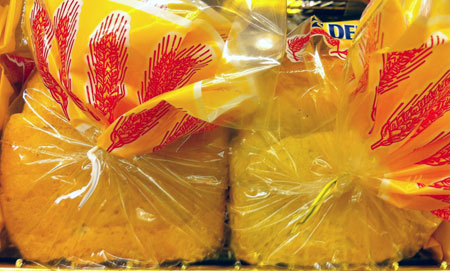
Most bread companies use varying colors of twist ties to track the freshness of bread. For example, bread that was baked on Monday may be sealed with a blue tie; Tuesday may be green, Wednesday orange… etc. The color coding makes it much easier for employees to remove stale loaves and replace them with fresh ones. It is faster to look at the color of the twist tie than it is to read the date code on each bag.
As a consumer you can use this information to get the freshest loaf. However, the color coding system is not consistent between brands, but some people claim the most common system is the following:
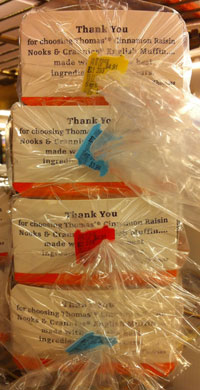 Monday: Blue twisty
- Tuesday: Green twisty
- Wednesday: (No bread delivered)
- Thursday: Red twisty
- Friday: White twisty
- Saturday: Yellow twisty
- Sunday: (No bread delivered)
Without positively knowing which colors represent which days, you’ll have no way of knowing which loaf to pick. You’ll have to pay attention to the color system used by your bread maker. Try calling the customer service number and asking them what their color coding system is. Chances are good they’ll share this info.
Most bread companies deliver fresh loaves to grocery stores several times per week. If you happen to be in the store, pay attention when the deliveries are made and even ask the delivery man.
With each delivery old loaves should be replaced with fresh, new loaves. Because of the frequent deliveries, odds are that you wouldn’t see more than two to three colors for any one brand on the shelf at one time. If you do happen upon a plethora of colors you’ll know the inside scoop and may want to steer clear of that brand unless you know their specific codes.
Some brands also use tab clips that have the date on them, these should help you learn the system fairly quickly.
This secret was also suggested by Heather, thanks for the tip. I should also mention that Shannon suggested hanging on to bread tabs for scraping food off dirty plates.
Broken Secrets
Subscribe on: Facebook | Twitter | Kindle
Sources: Snopes, Thriftyfun.com
The White Dashes at the Top of a TV Picture
By Chad Upton | Editor
They may appear as rapidly flashing dots, dashes, lines or boxes across the top of your TV screen.
The white lines are more prevalent on HDTVs, although they can show on older standard definition sets too.
They often appear while watching an HD channel that is broadcasting a standard definition signal, which frequently happens during commercial breaks and shows that are not available in high definition.

The lines are supposed to be there, you’re just not supposed to see them. If you have seen them, they will vary in size and shape depending on your TV.
These lines are like barcodes embedded in the picture. Closed captioning, teletext and programming guide information is represented by these white lines. Your TV can interpret them and display the information in a format that you can read.
Although this primarily affects HDTVs, it stems from variances in old Tube TVs (Cathode Ray Tubes). In the early days of television, there were extreme variances in production of television sets — some would cut off more of the picture than others.
Broadcasters overcame this problem by trying to keep all titles and important actions away from the very edges of the screen, in case they were cut off on some TVs. That extra space that you don’t see is called the overscanned image (because of the way that CRTs would paint an image on the screen by scanning side to side sixty times per second).
The overscan area became a good place to hide extra information when closed captioning data was added to TV signals.
HDTV signals do not overscan. Their signals are newer and were designed to encapsulate extra information from the beginning. But, you may still see these lines on an HDTV if the broadcaster is showing content that has the lines.
Most good televisions have the option to adjust overscan, including hdtvs. You’ll have to consult your manual, but this option will allow you to adjust the picture so the white lines are not visible.
Broken Secrets
Subscribe on: Facebook | Twitter | Kindle
Why Some Knives Have Serrated Blades
By Chad Upton | Editor
Good knives are expensive, but they’re money well spent when you consider they may outlive you.
There aren’t many purchases you can say that about and like anything that lasts, they need care and attention.
In fact, Japanese samurai swords endured hundreds of years of use, when properly cared for by a Togi professional — a sword polisher whose apprenticeship lasts ten years.
You’re probably aware that knives need sharpening, but do you know why they get dull in the first place?

It’s not just from repeated use, but from repeated misuse. Some misuse is expected, especially with serrated knives.
When you cut on a surface that is harder than the knife blade, that surface dulls the blade by creating a microscopic flat surface on the bottom of the blade. The flat surface is too small to see, but it makes a big difference in the cutting ability of the blade. In knife manufacturing, electron microscopes are used in quality control to inspect the sharpness of the blade.
To keep your knives sharp, it is best to cut on cutting boards made from soft materials such as various types of wood or plastic. While it’s convenient to cut directly on solid surface counter-tops such as granite and quartz, it’s not good for your knives and neither are glass cutting boards.
Plates are a common surface to cut on, but they’re bad for knives. Serrated blades help solve this dilemma; the points touch the plate but the raised edges above the points do not. Therefore, the points are dulled, but the other edges stay sharp.
Serrated blades also work well for cutting through hard rinds of some produce, and crunchy bread crusts too. The sharp points add more localized pressure, allowing better cutting penetration on the foods and act like a saw when the knife is moved back and forth.
There are other practices that can dull your knives too. Letting the cutting edge bang into other utensils in a drawer or the dishwasher can cause nicks and scratches, which adversely affect the knives’ sharpness.
To keep your knives in good repair, you should use a honing steel on the blade for about 30 seconds before each use. It helps remove scratches and bends in the blade, but it does not sharpen it.
For sharpening, a good manual or automatic sharpener should be used every few months. Professional sharpening should be done every few years. Many serrated blades cannot be sharpened, but a honing steel can be used on some.
Broken Secrets
Subscribe on: Facebook | Twitter | Kindle
Sources: Cutco, Electric Knife Sharpeners Blog, Sword Forum Mag, Wikipedia (Serrated Blade)
Your Dryer’s Lint Filter Should Be Washed
By Kaye Nemec | Contributor
Hopefully, you already know you need to clean the lint filter in your dryer after every couple uses. This maximizes efficiency and reduces a potential fire hazard. But, did you know that washing your lint filter every six months can further improve the performance of your dryer and also increase its lifespan?
A standard, tumble dryer has a fan that pulls fresh air into the dryer where it is heated to evaporate the moisture in your clothes. The warm air and the moisture then pass through
your lint filter where anything that was picked up with the tumbling motion is trapped. From there, the air is sent outside and the cycle starts over again with fresh air.
If you don’t clean your lint filter between uses, the flow of this moist, warm air is restricted and your dryer is much less efficient. What you probably didn’t know is that
the dryer sheets you throw in with each load of wet clothes are covered with a silicone based film that, overtime, also builds up on your lint filter and causes your dryer to work less efficiently.
Don’t believe me? Take your lint filter out and run some warm water over it. Is it pooling up on top and not draining through? Is there just a slow trickle of water passing through the screen? Odds are, the water is not rushing through as it would on a normal screen.
To wash your lint filter, try the following:
- Remove your lint filter from your dryer.
- Wash the screen with warm soapy water. You can use a soft brush (an old toothbrush works) but don’t put too much pressure on the screen.
- Hand dry the screen and leave it out until it’s completely dry.
- Reinstall the filter into your dryer.
You can clean your filter as needed or every 6 months to a year.
Some dryers also have moisture sensors (the black object in the photo) and the film can build up on those as well. To make sure your sensor continues to work efficiently, you can clean it with a little bit of detergent and a soft brush.
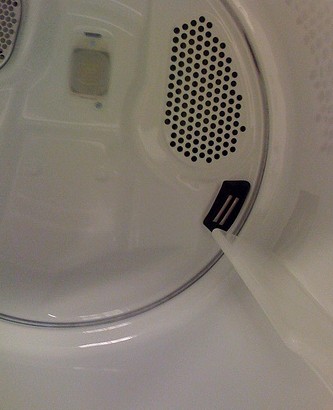
With the variety of dryers available today, you should confirm the manufacturer’s cleaning recommendations in your owner’s manual first.
Broken Secrets
Subscribe on: Facebook | Twitter | Kindle
Sources: Snopes.com, eHow.com
Photo: p0ps Harlow (cc)
Lights Use More Energy While Turning On
By Chad Upton | Editor
There is a belief that it takes more energy to turn a light bulb on than it does to leave it running. That is true.
But, in some cases it’s still more energy efficient to turn the lights off when you leave the room.
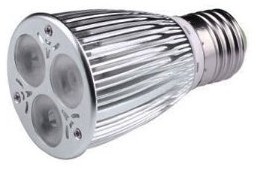 That’s because the spike of additional electricity that is used to turn on a light bulb, is very short lived. That extra energy varies depending on the type of light bulb.
For most bulb types, the extra energy is equivalent to less than one second of energy that is consumed while the light is on. That means, you’d have to leave the room and return within one second to save energy by leaving the light turned on.
The one exception is fluorescent tubes (not compact fluorescents), they require a lot more energy to turn on than they consume while running normally.
Depending on the source of the information, fluorescents use energy equivalent to 5 to 24 seconds of regular use, just to power up. Therefore, if you use fluorescent tubes, there would be times when it would be more efficient to leave them on than turn them off.
If you have a large room that is lit with fluorescent tubes and you were going to leave the room for a few minutes or less, it would be more efficient to leave them on instead of turning them off and then back on when you return. But, if you’re leaving for more than that, you should shut them off.
That said, turning lights on and off does cause wear and tear on the bulbs. LED “bulbs”, which are now available at most hardware stores, are most resilient to this type of wear and tear.
Incandescent bulbs are extremely cheap, so the cost of replacing these bulbs isn’t an important consideration, although the environmental impact may be. But, it is important to consider this wear and tear for more expensive bulbs such as compact fluorescents. It is for this reason that the EPA recommends that compact fluorescent lights are used in areas where they will usually be turned on for at least 15 minutes at a time. This will contribute to bulb lifespan.
Although I used a couple other sources for this post, Mythbusters did some great experiments on this subject and I’ve embedded the video if you’d like to watch it.
Broken Secrets
Subscribe on: Facebook | Twitter | Kindle
Sources: Mythbusters, EPA, EnergyStar (PDF)
Tires Do Not Protect You During a Vehicle Lightning Strike
By Chad Upton
I’ve always heard that a car is one of the safest places to be during a lightning strike and that is true.
The tires usually get all the credit. As the story goes, tires are rubber and rubber is an insulator, so you don’t get electrocuted in the car because you’re isolated from the ground like a bird on a wire.
It’s a pretty believable story, but it’s not the truth.
If you think about it, the lightning travels thousands of feet through thin air to reach the car — it could easily continue to travel through thin air to get around a few inches of rubber tires. Compared to the power of lightning, tires don’t really provide any protection.
Trains are struck by lightning and the people inside are fine, even though trains have metal wheels, which are great conductors.
Airplanes are regularly struck by lightning in the air. In fact, the FAA estimates that each plane gets struck about once per year.
So why are people safe in these cases?

It’s all because of a principle discovered by Michael Faraday in 1836.
Faraday demonstrated that an electrical charge exists only on the exterior of a hollow conductor and not the interior. He built a wire cage, that is now know as a Faraday cage, to demonstrate that an electrical current flowing through the cage did not produce an electrical current inside the cage. When you’re in a vehicle, with a conductive exterior shell, you’re inside a Faraday cage and the electrical charge is carried around you.
Faraday cages can also be used to shield against electromagnetic radiation. Coaxial cables are common in most households for carrying TV signals. These cables are design with what amounts to be a built in Faraday cage to protect the inner copper wire from electrical noise.
Microwave ovens are also a good example of a Faraday cage. This principle protects you from exposure to microwaves by turning the inside of the oven into a Faraday cage. The mesh you see on the inside of the door is part of that cage and explains why the glass isn’t perfectly transparent.
Broken Secrets
Subscribe on: Facebook | Twitter | Kindle
Sources: Wikipedia (Ground, Faraday Cage), Weather Imagery (Cars, Airplanes), Faraday Cage
Photo: jonathan mcintosh (cc)
ID is Not Required to Buy Cooking Wine
By Chad Upton
The laws and store policies around the products that require ID and the ones that don’t, are sometimes confusing.
I was in Target a while back and bought a can of compressed air to clean my dusty laptop. I was surprised when they asked for ID at the checkout.
Apparently some people like to get high from the propellant in canned air. It’s unfortunate, these are not recreational drugs, these are asphyxiates that displace the oxygen in the air, reducing the oxygen that reaches your brain and eventually causes death. The solution is to require ID for purchase, although even a 42 year old man died from “huffing” canned air.
Even when you’re using these products as intended, you should avoid inhaling the fumes and ensure adequate ventilation.
I was at Target a few weeks later, looking for ramekins to make Crème brûlée. I also needed a butane blowtorch to caramelize the top of the custard. It turns out that you can buy butane torches and fuel without ID. Thinking back to my teenage years, a blowtorch would have been much more fun than a can of air.
But, cooking wine has the most interesting story.
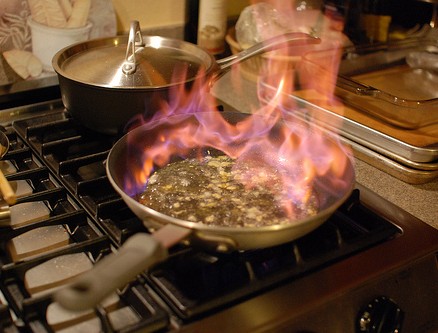
It ranges from 10%-13% alcohol and anybody can buy cooking wine at the grocery store. They even sell it in grocery stores in “dry” areas, where no alcoholic drinks are sold. In fact, Safeway requires ID to buy cough syrup, but not for cooking wine. Some cough syrup, such as NyQuil, contains alcohol. Other cough and cold medications contain a drug known as Dextromethorphan, which is a dissociative psychedelic drug.
My friend Molly told me about this cooking wine loophole and gave me a sample of the product. If you’ve ever tasted cooking wine on it’s own, you’ll understand why anyone is allowed to buy it. Nobody would ever consume it on its own, it’s simply awful.
Wine that is sold as “cooking wine” is usually grape or rice wine. It is then adulterated with salt, which makes it less suitable for cooking and even more undrinkable. If you’re making a recipe that calls for wine, use wine that you’d actually drink and use a wine that pairs well with the food you’re cooking.
Cooking wine has a lot of salt for coloring and as a preservative. Because cooking wine is consumed very slowly, the salt prevents acedic acid from forming and turning it into wine vinegar.
Oh, and if you’re going to make Crème brûlée, my friend Mike showed me that you should skip the butane and go with propane — it has a wider flame that heats more evenly, which gives much better results and in less time.
Broken Secrets
Subscribe on: Facebook | Twitter | Kindle
Sources: Wikipedia (Cooking Wine, Difluoroethane, Dextromethorphan), MSDS, Cooking Wine Without ID (1, 2), Dry Counties, NyQuil
Photo: anitasarkeesian (cc)


 Broken Secrets