Posts filed under ‘Around The House’
The Calendar is Named After The Pope
By Chad Upton | Editor
Many different calendar systems exist, but the calendar used by most modern cultures is known as the Gregorian Calendar.
It may also be called the Western Calendar, Civil Calendar or the Christian Calendar. The names Gregorian and Christian Calendar are popular because it was introduced by Pope Gregory XIII.
He introduced it in 1582 and it was quickly adopted by a handful of countries. Most others jumped on the wagon over the following centuries. It was very similar to the Julian calendar, although it more accurately represented the lunar cycle and made the dates of Easter easier to calculate. This is the main reason it was preferred by Christians. The calendar is Christian centric in other ways too, after all, the years we count are relative to the traditional Incarnation of Jesus.
Interestingly, there are exactly 14 possible calendar configurations. That makes it easy to figure out if your birthday is on the weekend this year.
Broken Secrets
Get updates from: Facebook | Twitter | Email | Kindle
Sources: Wikipedia
How to Dispose of Household Hazardous Waste
By Chad Upton | Editor
Every home has things that should NOT go in the trash. Yet, many people don’t know what to do with them or even what some of these items are.
Some examples are:
- batteries
- compact fluorescent light bulbs
- paints and stains
- pesticides and herbicides
- fertilizers and poisons
- cleaners and disinfectants
- car fluids
- medicines and prescription drugs
The main concern is that when many of these hazardous materials make it to landfills, they will eventually leech into our water supply and have potentially dangerous consequences.
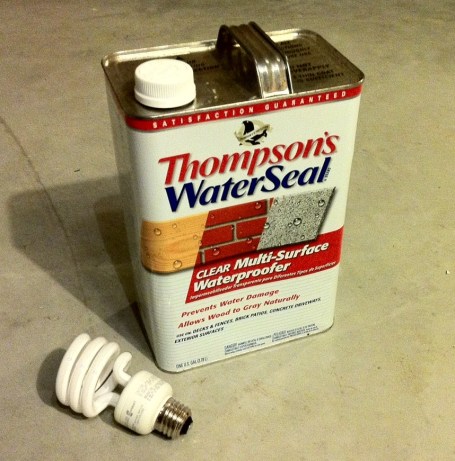
Many large retailers such as Lowe’s, Radio Shack, Best Buy, Sam’s Club, Whole Foods and many others will accept certain types of batteries, Ni-Cad and Car Batteries being the most popular types accepted. Some retailers, like Home Depot and Lowe’s, will also accept compact fluorescent light bulbs.
For most other hazardous materials, you’ll likely need to go to your city’s drop off depot. Sometimes this service is paid for by your taxes, other cities charge a usage fee depending on what you’re dropping off.
A great site to help you find a nearby retailer or city depot to recycle or safely dispose of some of these items is earth911.com. You tell it what hazardous material you have and where you are, it will try to tell you the nearest place you can take it. I got really good results for everything I tried.
For medicines, check out this previous post: How to Dispose of Medicine.
Broken Secrets
Subscribe on: Facebook | Twitter | Email | Kindle
Sources: Oregon Live, Earth 911, City of Toronto
Why We Clink Glasses When We Toast
By Chad Upton | Editor
Many of you will be clinking glasses with family and friends this time of year and there are a number of theories about where this custom started.
One belief is that ancient societies believed that noise would scare away the demons (that they believed) were lurking around every corner. Firecrackers and noise makers are popular instruments to ring in the New Year, also believed to stem from the idea that noise would scare away evil spirits, clearing the way for good things to happen. Wedding bells and clinking glasses are other examples of this belief in practice.
Another legend says that nobles used to try to poison each other, so drinks were clinked to slosh liquid from one drink to the other, demonstrating that the guest’s drink was safe if the host was willing to drink from his now “contaminated” drink. Among trusted associates, table members adopted the “drink clink” to signify their trust that drinks were not poisoned without making a mess of the table — it was a sort of handshake.

A fairly reputable website, Snopes.com, disputes this theory, claiming that poisoning was not common enough for it to change the behavior of society. They also believe that too much liquid would be wasted for it to be practical. I generally trust snopes and usually agree with their proof and supporting statements, but their explanation on this matter has much more proof against than for it.
First of all, the argument that it was messy isn’t very strong. If you believed your life was at stake, you wouldn’t consider it a waste to spill some wine in exchange for your health.
Secondly, there is plenty of proof that poisoning was very common throughout history. The BBC says, “During the age of the Roman Empire, poisoning became a common activity at the dinnertable, especially in the high circles of society. It was certainly a convenient way of getting rid of unwanted family members, as [Emperor] Nero demonstrated.” They have a well researched article that demonstrates poisoning as a common occurrence and a popular anxiety among royals and high society for much of recorded history.
In fact, poisoning wasn’t just common in medieval times, it’s still popular now. There are multiple homicide and suicide cases every year that involve poisoning. In 1998, food was poisoned at a village festival in Japan, killing 4 and injuring 40 others. Recent intelligence has suggested that Al Qaeda groups have discussed poisoning buffets.
Poisons have changed a lot over the years, although arsenic was popular for more than ten centuries, until a method became available to detect it in the deceased. Many modern poisons are actually prescription drugs, including fentanyl — one of the drugs found in Michael Jackson body during the autopsy.
Regardless of poison threats, we continue to clink our glasses as a way to connect with each other. This has been nearly ubiquitous for more than 100 years. In fact, glass makers actually consider the sound that glasses make an important design element. So, Pay attention during your next toast, the sound may be as sweet as the sauce.
Broken Secrets
Subscribe on: Facebook | Twitter | Email | Kindle
Photo: AL404 (cc)
Sources: Snopes, Wine Intro, BBC, CNN
Property Donations are Tax Deductable
By Chad Upton | Editor
While it’s pretty common to get a tax receipt for monetary donations to charity, not everyone knows you can get a tax deduction for donating household items too.
Some of these items include:
- Clothing and Linens
- Indoor and Outdoor Furniture
- Toys and Games
- Appliances and Electronics
- Tools and Automotive Items
- Books, Magazines, Movies and Music
- Musical Instruments
That’s right, you can donate magazines and musical instruments. But, don’t go raiding your Doctor’s waiting room, useful magazines in good condition are worth a maximum of $0.50 each.
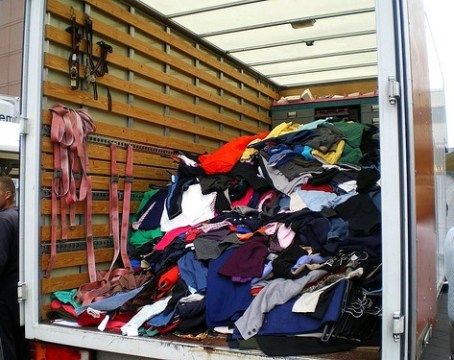
To make a claim, you need the charity or other qualified group to endorse a receipt that shows the name of the charity, the date and location of the donation and an itemized list of the articles along with the fair value of each. For donations under $250, a receipt is not required when it’s impractical to get one, such as when you deposit items in an unattended drop box. But, you’ll still need to provide the details (what, where, when, how much).
So, how do you figure out the fair market value of a book or a trombone? I recommend a free online tool from Turbotax, called ItsDeductible. They provide values based on IRS guidelines (Publication 561) and allow you to print a list that you can bring with you for the charity to sign. For full details, see the charitable donation guidelines in Publication 526.
They estimate a Fuzzy Dice to hang from a rear-view mirror is worth $3 in good condition (seriously). A good trombone is worth between $57 and $82. Do you have an extra coffee maker or microwave in storage? You could be looking at $10 or $20. Do you still have your neighbor’s tile saw? It could be worth $92 on your their tax return.
Your donations can be made to many organizations. There are the traditional charities such as: Goodwill, Salvation Army, Red Cross, CARE, United Way…etc. Donations of money or useful items also qualify for tax deductions when they are made to places of worship (churches, synagogues…etc), government (Federal, state, local), nonprofit schools and hospitals, public parks and recreation facilities, veteran’s groups, Boy and Girl Scouts, Boys and Girls Clubs of America and many other organizations.
Broken Secrets
Subscribe on: Facebook | Twitter | Email | Kindle
Big thanks to Chris for this tip.
Photo: Jen Waller (cc)
Sources: IRS (Publication 526 – Contribution Guidelines | Publication 561 – Determining Value of Donated Property), TurboTax, Money Blue Book
9 Volt Batteries Contain 6 AAAA Batteries
By Chad Upton | Editor
The batteries in most consumer electronics produce 1.5 volts each.
Different products use different numbers of batteries to achieve different voltage requirements. For example, a TV remote might be designed to run on 3 volts, so two 1.5 volt batteries will provide the necessary voltage when connected in series.
Larger devices, such as radios with large speakers or large kid’s toys, typically have larger batteries, like C and D cells. Smaller devices often use AA and AAA batteries, allowing the devices themselves to be smaller. All of these batteries output 1.5 volts, but the larger batteries have much higher capacities, meaning they last longer. D batteries have four times the capacity as AA’s. So, if you’re going to be blasting music on the beach, you’ll change fewer batteries if your radio uses D batteries.
There are many other types of batteries that are not 1.5 volts. One of the most popular is the nine-volt battery, which is technically called a PP3 battery. Smoke detectors, garage door remotes, transistor radios and a variety of other devices use these batteries.
They’re pretty convenient, giving you the voltage of six batteries after only inserting one battery. In fact, that’s exactly what they are — they’re just containers that link six smaller batteries together. Here’s a picture of a nine-volt battery that I took apart:
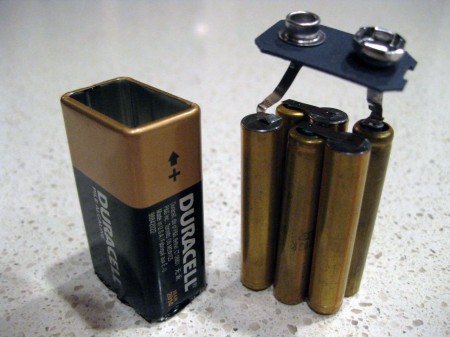
Each of the six batteries outputs 1.5 volts, giving a total of 9 volts when connected in series. The name brand nine-volt batteries usually contain six quadrouple A batteries (AAAA) which are rather uncommon in consumer electronics but find a home in medical devices such as glucose meters.
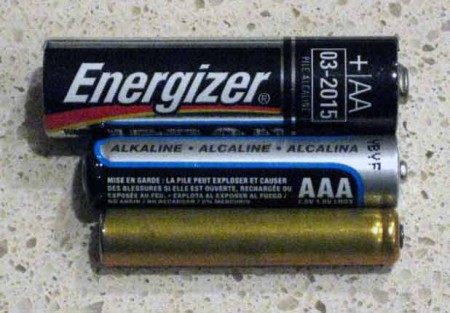
Some of the lesser known battery brands may contain 6 flat cells which are not easily reusable. As you can see in the picture above, AAAA batteries are very close in size to AAA cells. That’s worth noting since they could save the day if you’re short on AAAs:
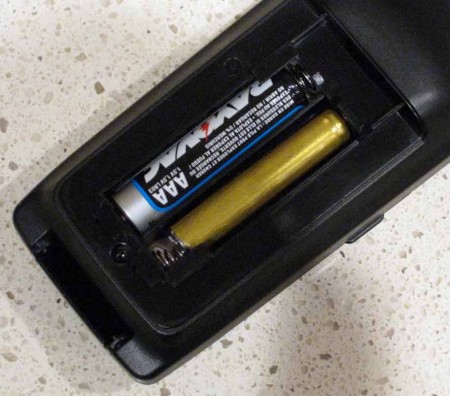
Keep in mind, device manufacturers often use standard batteries in their rechargeable products and you can replace them yourself.
Broken Secrets
Subscribe on: Facebook | Twitter | Email | Kindle
Most Medications Still Good After Expiration
By Chad Upton | Editor
If you check your medicine cabinet, chances are good you’ve got some expired medication in there. Are they still safe and effective or are they fit for the trash?
First of all, this post is for information purposes only and it is not suggesting you take any drugs after their expiration date — always check with your doctor or pharmacist before making any decisions about pharmaceuticals.
The Federal Drug Administration regulates drugs in the United States. They have extensively studied drug expiration dates for the US government. Specifically, the US military stockpiles large quantities of drugs for regular troop usage and emergencies. If those drugs are not used, the cost to replace them can be high.
The FDA found that 88% of drugs tested remained potent for a year after their expiry date; some lasted up to 14 years. Experts caution these results cannot be directly translated to your medication since the military stores their drugs in climate controlled environments that represents ideal conditions.

That said, the FDA and many in the drug industry, including one pharmacist I talked to off the record, agreed that certain drugs are still good up to a year after the expiration date.
Many popular drugs are safe after their expiration date, but there are known exceptions too. For example, Tetracycline, an antibiotic, becomes toxic and should not be taken after its expiration date. Aspirin, on the other hand, is known to be good for a while after its expiration date.
If the drugs are still good, why do drug companies put these short expiry dates on the bottles? It’s hard to say for sure, but there are a couple things we know.
1. The drug companies are required to ensure their products are 100% effective up to the expiration date. That means they need to do testing. The longer the expiration time they shoot for, the longer it will take to release a new product to market, which is bad for business and customers. In most cases, the products have at least a 1 year shelf life.
2. Every company wants you to buy as much of their product as possible. The drug companies can’t really control how much you use their product, but shorter expiration dates may convince you to buy more, even if you haven’t used all of the product yet.
To be safe, you should check with a pharmacist before taking any expired drugs. When you are ready to dispose of your medicine, check out this previous post: How to Dispose of Medicine.
Broken Secrets
Subscribe on: Facebook | Twitter | Email | Kindle
Photos: hit thatswitch (cc)
The Real Names of Brand Name Products
By Kaye Nemec
The weather is getting cold and the air is getting dry. We’re going through more Kleenex and additional Chapstick. We’re cooking warm meals in our Crock Pots and soon we’ll be getting out the wrapping paper and Scotch Tape to prepare for the holidays.

Kleenex, Chapstick, Crock Pots and Scotch Tape are all things that have become common, household names and most of us don’t think twice before calling them by these titles. Like many other popular products, the brand names have become more widely used than their original names. Replacing generic names with brand names has become so common that they have even coined a term for it – Genericide.
Below is a list of items that we commonly use the brand name for instead of the actual name. (more…)
The Most Popular Types of Liquor
If you’re throwing a party or just having some friends over, you may want to have the basics in your home bar.
A good place to start is with the most popular types of liquor.

At a real bar, there is often a stock of liquor at waist height below the bar with the most commonly commonly requested liquors. This is called the “speed rail” and it is normally stocked with:
- Vodka
- Gin
- Rum (light)
- Tequila
Many popular drinks can be made with these liquors but bars frequently stock these other popular liquors in the speed rail too:
- Scotch (Whiskey)
- Bourbon (Whiskey)
- Triple Sec
- Vermouth
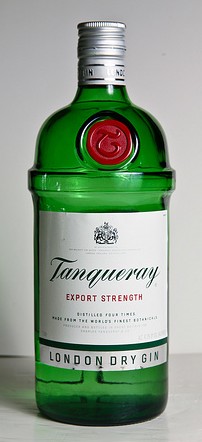 Here’s a secret if you’re short on space or cash, or if you run out of Triple Sec. Triple Sec is an orange flavored liquor, so you can substitute other popular orange flavored liquors like: Grand Marnier, Cointreau or Curaçao. When it comes to selecting whiskey, click here to read more about Whiskey.
If you want to go all out with your bar, pick up some of the following and none of your guests will be unsatisfied:
- Irish Whiskey
- Canadian Whiskey
- Tennessee Whiskey
- Dark Rum
- Brandy
- Baileys
- Agostura bitters
You’ll also want to stock popular tonics and mixers such as: Coke, ginger ale, club soda and cranberry juice. By the way, the Tanqueray Gin bottle was designed to look like a London fire hydrant.
Broken Secrets
Subscribe on: Facebook | Twitter | Email | Kindle
Photos: Jeff Simms (cc), Megan Morris (cc)
Sources: Orange Liqueurs, Hub Pages, Totally Free Bartending, Crunkish
How to Dispose of Medicine
By Chad Upton | Editor
You should regularly check your medicine cabinet for expired drugs. Because, if you’re like me, it’s probably more like a time-capsule than a medicine cabinet. Yesterday, my wife excavated a teeth whitening kit of mine that expired almost 5 years ago.
When you come across unused or expired medication, you have two options: keep it or get rid of it. There is some debate about the safety and effectiveness of expired medication, but there is no debate about the risk to pets and children when they get into unused medication. Prescription medication can be extremely dangerous, in fact: the second leading cause of death in 35-54 year olds is accidental overdose.
The best way to get rid of old medication is to give it to an organization that can properly dispose of it.
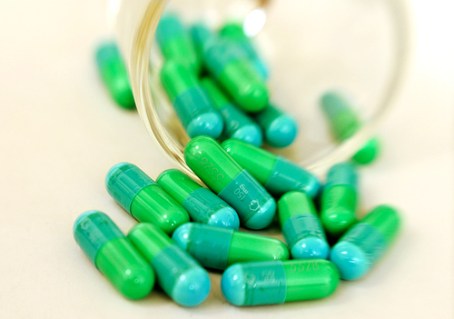
Your local police department may have take back programs where you can return drugs and they will send them away to be discarded. Some local drug stores have take back programs and others, such as Walgreens, sell special envelopes that can be used to mail your drugs to a proper disposal facility.
If professional disposal is not available to you, the next option is to discard the drugs in your own trash. The FDA, and other experts, recommend putting the discarded drugs in a small Ziploc bag and mixing item with undesirable waste such as coffee grounds or kitty litter. This reduces the chance of pets and children finding them or being interested in them if they do find them.
The FDA also maintains a small list of medications that you can flush down the toilet, because they could be potentially dangerous to pets or children if found in the trash. Some of the common ones include demerol, percocet, oxycontin and morphine.
Although flushing these drugs is better than putting them in the trash, sending the drugs away for proper disposal is always the best option. Professional disposal reduces the probability that the drugs will end up in the water supply that we, and many other species, rely on.
You may also want to read this post: Most Medication is Still Good After the Expiration Date
Broken Secrets
Subscribe on: Facebook | Twitter | Email | Kindle
Photo: Sparktography (cc)
Sources: FDA, Tylenol.com, Smarxt Disposal, Walgreens.com, Sharps
Table Salt Used to Indicate a Person’s Social Status
By Kaye Nemec
While table salt is an important flavoring ingredient in modern day cooking, it had a much more significant reputation in earlier centuries.
It wasn’t until the early 1900s that manufacturers began processing table salt to be used in salt shakers. Before then, salt was served in very elaborate containers that often resembled chairs or thrones.
These “salt chairs” were commonly placed at the head of the table closest to where the most important guest. Salt was considered an extremely important substance that was to be treated with great admiration. Important people sat “above the salt.”

In Russia it was common to have a welcoming ceremony when guests came over that included serving a piece of bread with salt. The salt was served out of the salt chair or throne. Because of the popularity of this ceremony, salt chairs became popular wedding and house warming gifts. Bigger salt chairs signified a wealthier or more prominent place in society.
Typically salt chairs were about 5 inches tall. The salt was stored in what would be the seat of the chair and a lid was placed over the salt. Because the salt could corrode silver, the seat and lid of the chair were usually gold plated. Today, antique “salt chairs” can be found selling at auctions for $500 and up.
Broken Secrets
Subscribe on: Facebook | Twitter | Kindle
Sources: Milwaukee Journal Sentinel, Association of Small Collectors of Antique Silver
Photo: Association of Small Collectors of Antique Silver
September 29, 2010 at 12:01 am Broken Secrets Leave a comment


 Broken Secrets