Posts filed under ‘Around The House’
Organic Food May Contain Non-Organic Ingredients
Back in 5th grade, my school had cupcake sales. There were thousands of cupcakes. I don’t remember what we were raising money for, but I ate a lot of cupcakes and that was memorable.
Baking all of these cupcakes was a lot of painstaking work, but my mom was a really hard worker. She always made chocolate cheesecake cupcakes, which the parents and teachers ate up, literally.
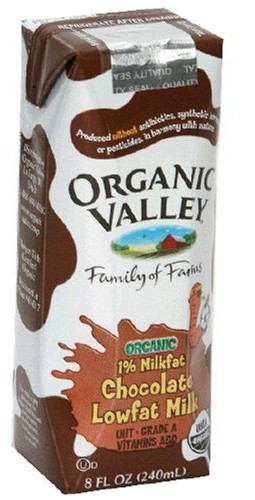 They weren’t covered in icing sugar, they didn’t have multicolored sprinkles or glitter and that’s exactly what the kids looked for: sugar. If you’re punny, you might say the kids had more refined palettes.
Some of my favorite cupcakes were the ones decorated with those tiny silver balls. It turns out the FDA now considers them inedible, due to the small amount of metal in them. Now, they’re sold “for decoration only,” except in California where they’ve been banned since 2003.
They were considered edible back then, but that still doesn’t mean they were food. I ate LEGO a couple times back then too. Again, not food.
Real food isn’t made in a laboratory, although laboratories do produce some really tasty stuff. In an earlier post, I talked about the differences between natural sugar and synthetic sugar made from corn (high fructose corn syrup).
Experts believe that your body can’t control its absorption into your bloodstream, in an attempt to control your blood sugar, your body quickly converts it into fat, which happens much slower with natural sugar. This could be extremely dangerous, and its addition to thousands of foods over the past 35 years could be partially responsible for the obesity epidemic.
Last month, a research paper was published, focusing on one genetically modified type of corn. This study shows that pesticide residue was still evident on this type of corn and it causes organ failure in rats. Genetically modified food has a bad reputation and it isn’t always bad, there are many success stories and it occurs in nature too (not just laboratories). But, this study shows a clear example of genetically modified food at its worst.
Because of these dangers, there are a lot of people who try to eat natural foods whenever possible. Food labeled “organic” is one way to identify real food. Many food products contain a lot of synthetic ingredients, growth hormones, pesticides and antibiotics. On the other hand, Organic foods generally do not contain any of these.
 At least, that’s what I thought. I don’t buy a lot of organic food, but when I do buy a product stamped with the “USDA Organic” logo, I assume that it’s entirely organic. The truth is, the USDA actually has a list (PDF) of non-organic ingredients that are allowed in products that carry the “organic” label.
Here is a very small sample of some non-organic ingredients and some uses for them:
- Fish Oils (dairy, egg, sauces, jam, jelly, snack foods)
- Gelatin (yogurt, production of tea and wine, thickening agent)
- Orange Shellac (glazing or polishing organic fruits and vegetables)
- Enriched Inulin (baking, nutritional bars, yogurt, cereal)
- Whey Protein Concentrate (yogurt, protein supplements, baby food)
- Carnauba Wax and Wood resin (chewing gum, candy coatings, juice, cosmetics)
The USDA has approved these ingredients (and many others) because the organic food producers that rely on them have filed petitions asking for approval. The petitions usually cite a non-existent or inadequate supply of that ingredient in organic form. In other words, organic food contains 100% organic ingredients when those ingredients are available as organic products.
Written By: Chad Upton
Broken Secrets
[Available on Kindle]
.
Images: USDA,
Sources: The Daily Green, Dragee, International Journal of Biological Sciences, USDA Food List, HFCS
Listerine Was Once Sold as Floor Cleaner
By Chad Upton | Editor
If you haven’t noticed, the popularity of hand sanitizer has exploded. It’s in our desks, cars, purses and homes. I have seen dispensers at subway stops, hospitals, airports and restaurants. We are obviously obsessed with killing germs and fighting viruses.
With H1N1, Mad Cow, SARS and others, you can’t blame us for being careful. It seems like hand sanitizer came out of nowhere, but it’s not new, and neither is the principle.
 The first time I saw hand sanitizer was in 1995. I worked at a restaurant and we were told to use it hourly. At the time, it seemed like a magical potion. I thought the concept was weird: I wasn’t washing anything off my hands, I was rubbing it in.
The truth is, hand sanitizer is more effective at killing bacteria than soap and water. That said, soap and water is far more effective at removing visible dirt.
For the most part, hand sanitizers use a variety of alcohols as their active ingredient. To be effective at reducing bacteria, they should contain at least 60% alcohol, and most contain 60% to 85%. A few brands (worth avoiding) contain as little as 40% alcohol and some hospital solutions have as much as 95%.
So, where did this idea start?
It began in 1867 with a British surgeon, Joseph Lister. He published a series of articles in the British Medical Journal stating that surgery patients had less tissue infection if the incisions and surgical instruments were treated with carbolic acid prior to surgery.
At the time, they didn’t wash their hands or anything else before surgery. They thought gangrene wounds were caused by stinky air. Seriously. The same stinky air they blamed for cholera, black death and bubonic plague. They later realized the stinky air was actually the result of rotting wounds, not the cause.
His work lead to the germ theory of disease. It was the equivalent of suggesting the Earth was round, when everyone else thought it was flat. Fortunately, it was very easy to demonstrate the success of his theory and it became widely accepted.
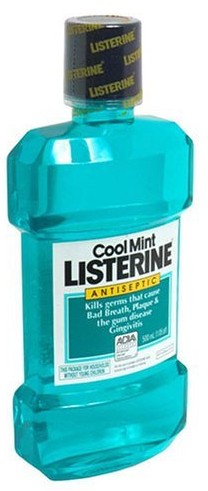
In 1879, Listerine was named after him. It was originally developed as a surgical antiseptic, but that’s a pretty small market. To increase sales, they began marketing it as a floor cleaner and a cure for gonorrhea. That brought company revenues to about $115k, but marketers had another idea in the 1920s.
In this era of patent medicines, there were products to cure every known illness. The Listerine folks weren’t going to let this bandwagon pass by. All they needed was the perfect illness, something that everyone had and Listerine could cure; so, they made up the term, “chronic halitosis” (bad breath).
You see, bad breath hadn’t been invented yet. At that time, bad breath was just known as “breath.” Their best effort was an ad campaign that suggested young people would never find marriage with a condition such as bad breath. Over 7 years, revenues skyrocketed to $8 million.
Listerine is still sold as an antiseptic today, and primarily marketed for oral health. Depending on the flavor, it contains 21.6% to 26.9% alcohol.
Broken Secrets | Facebook | Twitter | Email | Kindle
Sources: WP Hand Sanitizer, WP Lister, WP Listerine
Satellite Dishes are Gray Because…
They are primed for painting. That’s right, it’s not just any gray: it’s primer gray. That means your dish can blend in or compliment your house if you paint it.
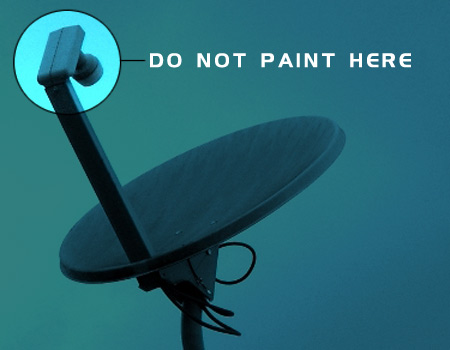
As for the type of paint, many people report good results with rust-oleum and Krylon Fusion (or similar).
If your dish is not gray then you may want to prime it first.
Tips:
- do not paint over the LNB (plastic cap at the focal point of the dish – see picture)
- only use satin/flat paint (not glossy or metallic)
- do not move the dish while painting it (unless you plan to re-aim it)
- do not hurt yourself
BrokenSecrets.com
PS – Sorry to my readers in “grey” countries. :)
Sources: Helium, DSS Geeks, Satellite Guys
Photo: angelrravelor a3r (cc)
Google Provides Free 411 Searches and Connections
Google has a lot of cool services that most people don’t know about. One of my favorite Google secrets is Google 411.
Just dial: 1-800-GOOG-411
It is just like your local telephone company’s 411 service, except it’s free and it automatically connects you to the number for free. It works from US or Canadian phones and can be used to find US and Canadian business listings.
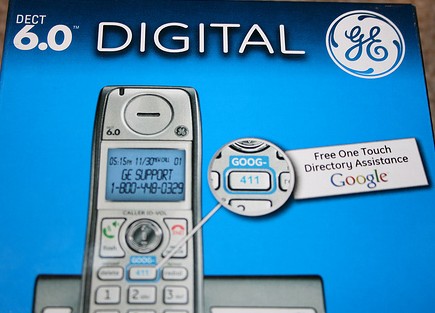
It also has some cool features. When you find a listing, you can say “text message” and Google will instantly text you the phone number, address and a map link for the address that opens in Google maps on a capable phone.
There are even cordless phones available with a dedicated button for Google 411.
Remember goog-411 the next time you need to make dinner reservations or order takeout — it couldn’t be easier or cheaper.
BrokenSecrets.com [available on kindle]
Photo: morrowplanet (cc) | Source: Google 411
How to Get Free HDTV Channels
When I say free, I don’t mean free with your paid cable or satellite package. I mean 100% free without paying for any service.
When television broadcasting began in North America, the broadcasts were completely free. The costs associated with producing TV were covered by program sponsors (advertisers). TV signals were received over the air, so all you needed was a television and an antenna (aka “rabbit ears”). This worked great at the time because TV was new and nobody knew if it was going to be successful; laying cable to distribute signals didn’t make any sense and satellites weren’t an option yet.
Once television was a proven success, viewers wanted more content on bigger and better televisions. Today, those demands haven’t changed, but the technology has.
Receiving signals over the air was not perfect, there were a limited number of channels that could fit in the airwaves. Reception was spotty, but Cable and Satellite services came along with more channels and reliable signals that didn’t require any adjustments.
The technology has changed again. The development of digital signals has allowed broadcasters to fit many channels in the same space that used to only fit one channel. Although it caused a lot of disruptions in June of 2009, the United States ceased all analog TV signals within a specific frequency range. That means the once crowded airwaves are much more useful with digital signals that can stuff more channels in the same space.
Some broadcasters have been distributing their television signal over-the-air for more than 50 years and they continue to do so, now in digital. The secret to picking up these free channels: rabbit ears.
Seriously.

To many people, this will sound like a huge step back, and in some ways it is. You’re not going to find John and Kate or Jersey Shore on the free channels, but it could be worse: you might find John and Kate or Jersey Shore on the free channels.
If you’re on a budget; or you only watch the most popular network shows; or you want to stick it to the cable-man; or you want to pickup really good HD signals on a TV without a cable box or satellite receiver, then this is an option to consider. In many cases, digital over-the-air signal quality rivals cable and satellite signals, where signals are highly compressed because of bandwidth limitations.
Digital rabbit ears are much better than the coat hangers of the past — if you’ve upgrade to a digital cordless phone in the past couple years, you’ll understand the difference in reception, reliability and clarity that digital signals offer.
Depending on where you live, your channel selection will vary. In some places, you can get 10+ HD channels and dozens of standard digital channels, all for FREE! If you live in the United States, you can enter your zipcode in AntennaWeb’s search engine to see a list of the channels you should receive. In many places, you should get most (or all) of your favorite prime time shows in free HD. All you need is an HDTV, an ATSC tuner (most HDTVs have one built in) and an antenna. Here are some examples of affordable indoor and outdoor antennas that you can buy.
BrokenSecrets.com [now available on Kindle]
Photo: Dano (cc)
Instantly Brighten Your Basement With CF Lights
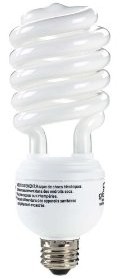 This secret is great for garages, basements, crawlspaces and outdoor spaces — where you can always use more light.
This is a cheap and easy way to give you a light boost without installing extra light sockets.
Now, it’s no secret that the beautifully spiraled compact fluorescent (CF) lights use less energy than their incandescent counterparts, which saves you money and ultimately reduces our energy demand. But, even if you don’t care about saving electricity, CF lights may still benefit you.
When you replace an old bulb with a CF, take a close look at the socket. There is usually a silver sticker that indicates the maximum wattage light that can be used in that socket. Typical light sockets will be limited to 40, 60 or 100 watts.
You can replace a 100 watt incandescent bulb with a 26 watt fluorescent bulb, which gives you the same amount of light while using 25% of the energy the old bulb used. But, if you use a 42 watt compact fluorescent, you’ll still be well below the 100 watt max and the light will output the equivalent to a 150 watt bulb. Because the compact fluorescent produces more light per watt, you’ve got a much brighter room.
I use two of these lights in my garage light sockets and it makes a huge difference when I’m working out there. I also have one in my basement, which makes a big difference compared to the 100 watt incandescent it replaced — especially since there are no windows in the area.
I’ll remind you that it is extremely important to check the socket or fixture maximum and be sure the compact fluorescent bulb’s consumption is equal or lower (although the “equivalent” wattage will likely be higher, giving you more light).
BrokenSecrets.com
Use Hot Water To Make Crystal Clear Ice Cubes
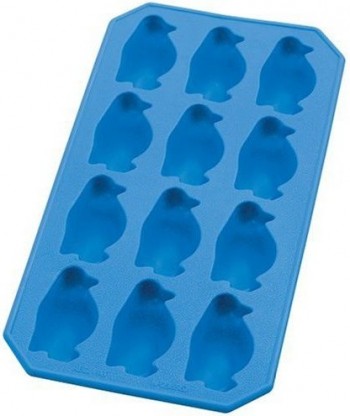 Ice made from cold water looks cloudy because air that is trapped in the water become suspended in the ice. If you boil water before pouring it in the ice cube trays, you release most or all of the air that would otherwise be trapped in the water — making the ice cubes crystal clear.
Crystal clear ice cubes look great when used with designer ice cube trays. For any holiday or event, designer ice cubes are a cool thing to entertain guests and spark conversation.
Ikea has a few designer ice cube trays that you can pickup or Amazon has hundreds available for delivery, including: Christmas Trees and Snowmen, Penguins, Ice Invaders, Peace Signs, Hearts, Homer Simpson, Stewie (Family Guy), Stars, Skull and Crossbones, Butterflies, Dinosaurs …etc. They even have molds to make Shot Glasses and Stir Sticks out of ice.
Another secret: the ice cube trays can also be used as Jello molds!
Remember, you’ll have to boil water to make it hot because you can’t use hot water from the tap – explained here.
BrokenSecrets.com
Sources: Illinois Dept Physics
Prevent Snow Buildup on Your Shovel
Snow can be wet and sticky. Shoveling that heavy snow is bad enough without extra snow buildup on the shovel. The secret is to lightly spray the inside of your dry shovel with WD-40.
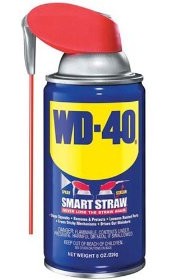 “WD” stands for Water Displacement and it is the fortieth attempt at developing a substance to prevent rust and corrosion on the Atlas missile and rocket family. Basically, it was developed by rocket scientists. So, if you need to displace water (snow) then this is your answer.
There is a rumor that WD-40 is based on fish oil, but it is in fact a petroleum based product. The exact formula is such a big secret, it is not even patented, which means the ingredients are not publicly documented. Although, with some digging I found a Material Safety Data Sheet, which is required in some countries in case someone swallows it or gets it in their eyes. The two main ingredients are Aliphatic Hydrocarbon and the Petroleum Base Oil.
It also looks like they brought some of those rocket scientists back to develop a straw that is impossible to misplace (see photo).
Broken Secrets | By: Chad Upton
How Mechanics Keep Their Hands Clean
It’s pretty simple, they don’t get them dirty in the first place.
Imagine how dirty our feet would be if we walked around in bare feet. Socks and shoes keep our feet clean. Professionals who work with their hands wear gloves for the same reason. At the end of the day, take off the gloves and your hands are clean.
Work gloves in most homes consist of gardening and rubber cleaning gloves. But why stop there? Pickup a box of latex gloves, they’re great for all kinds of dirty jobs such as:
- Painting
- Automotive repairs
- Cleaning the garage
- Organizing the attic
- Caulking and other home maintenance
Latex gloves are extremely cheap, they’re disposable and they don’t reduce dexterity like thick rubber gloves.
If you’ve ever seen a race-car garage, they’re usually immaculate. So are the mechanic’s hands.
There are even specialized gloves for mechanics. Frankly, if you’ve been paying attention at your local hardware store, work gloves have become very advanced and extremely specialized. I’ve made a short list of some specific types of job specific gloves that are available, along with an amazon link if you want to check them out:
Some of the electrician’s gloves are made from Kevlar to prevent cuts from sharp wires. The carpenter’s gloves reduce splinters and vibration when hammering.
I have a good pair of work gloves and a box of latex gloves. I wear the work gloves when I’m working in my garage. They keep my hands clean and free of cuts when I’m doing manly stuff. I find the latex gloves really great for spray painting outdoor furniture and other items, since I always get spray paint on my index finger, which usually lasts for at least a week.
Depending on your needs, many of these gloves are even available in insulted, wind proof and water proof versions.
BrokenSecrets.com
Defog Your Bathroom Mirror In 30 Seconds
You’re running late, so you try to have a quick shower. Then you get out of the shower and the mirror is foggy. That means you can’t do your mirror activities (shaving, hair, makeup…etc). Forget wiping it with a towel, that leaves a lot of streaks and the mirror will still be a bit foggy.
The secret to defogging your mirror quickly, without any streaks: use a hairdryer. Set both the heat and blower on high and aim at the mirror directly in front of your face. In 30 seconds, the hot air will perfectly clear a big enough space to get you back on track.
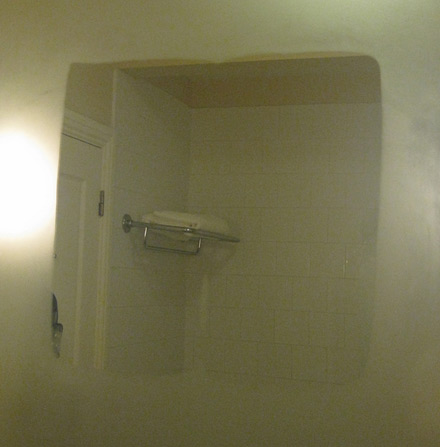
If you’ve ever stayed in a fancy hotel, you may have noticed that part of the mirror never fogs up. These hotels have a mirror heater installed behind the mirror so it never fogs up.
There are some sites that claim wiping foam shaving cream on windows keeps them fog free, but I haven’t confirmed this. Please comment if you’ve tried it. You can also buy Rain-X anti-fog for your bathroom mirror or car windshield from amazon.
Broken Secrets
Written By: Chad Upton
[available on Kindle]
Photo: add1sun (Creative Commons)


 Broken Secrets