Author Archive
The Dropped Call Rules
By Chad Upton | Editor
No matter which mobile phone carrier you use, you’ll eventually drop a call with somebody. Even if you don’t have a cellphone, you still have to deal with dropped calls when you’re talking with people who do.
Sometimes you both try to call each other at the same time and get each other’s voicemail. Other times, you try to call the other person and they’re still talking away, oblivious to the fact that the call was dropped.

Rule #1: Whoever initiated the call, initiates the call back after a dropped call.
To some, this rule is obvious. But, it needs to be stated to remove any confusion and prevent the double voicemail dilemma.
Rule #2: Whoever was listening when the call was dropped, remembers the last sentence the other person said.
This is less obvious, but since the listener is the only one who knows exactly when the call was dropped; they need to remember the last sentence or at least the topic — this may be the same person who needs to call the other person back.
Broken Secrets | Facebook | Twitter | Email | Kindle
Photo: addicted eyes (cc)
A Third Type of Cell In Your Retina Regulates Circadian Rhythm
By Chad Upton | Editor
You probably learned about rods and cones in high school biology class. These retinal cells allow our brains to process light so we can see. But, there is a third type of cell that most people don’t know about: photosensitive ganglion cells.

They don’t have a cool name like Rods and Cones, but what they lack in name they make up for in swagger. Much like rods and cones, they send light information to the brain. Instead of using this information to “see”, the brain uses it to synchronize your body’s circadian rhythm to the 24-hour light/dark cycle of this planet. These “lion” cells are the original atomic clock.
They’re also used to control the pupillary light reflex. When you doctor, or local police officer, shines a bright light in your eyes, these cells are used to close your irises to limit the bright light hitting your retinas. Additionally, they help regulate melatonin — the hormone that controls several biological functions, including sleep.
Most research indicates that the ganglion cells are sensitive to light in the spectrum between 460 and 484 nm, or “blue” light which is prevalent in the visible spectrum of sunlight. Basically, this is why you get sleepy when it gets dark and why you start to “wake up” when it gets light outside.
Broken Secrets | Facebook | Twitter | Email | Kindle
Photo: bigbluemeanie (cc)
Sources: nature.com, wikipedia (pupillary light reflex, photoreceptor cell, photosensitive ganglion cells, melatonin)
How Hollywood Became the Center of the Film Industry
By Chad Upton | Editor
The thirty mile zone (aka “TMZ” or “studio zone”) is the approximately thirty mile area in Southern California where America’s movie industry is based. However, New Jersey was the center of film in America before Hollywood.
Thomas Edison owned a majority of the patents on motion picture cameras and through these patents, he tightly controlled who could make films. In 1908, he formed the Motion Picture Patents Company, a licensing trust that included other important motion picture patent holders, including Eastman Kodak, who sold the only film stock that film makers could legally purchase.
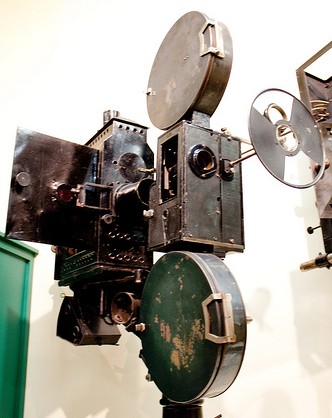
The patents allowed the group to use law enforcement to prevent unauthorized use of their cameras, film, projectors or any variation of this equipment that included features that infringed on their patents. In some cases they hired thugs to do the enforcement.
Understandably, these tight restrictions stifled inovation and crippled the film industry.
Independent filmmakers fled to Hollywood. The physical distance from the Edison Trust made it easy to work on their films without the tight control and patent enforcement.
The reliable sunshine and temperature also made Hollywood a more suitable place to make films year-round.
Broken Secrets | Facebook | Twitter | Email | Kindle
Sources: filmbug, wikipedia (motion picture patents company)
Photo: Heather Culligan (cc)
Square Watermelons are Smarter Than Round Ones
By Chad Upton | Editor
How much is your fridge space worth?
Traditional watermelons take up a lot of space in your fridge. So, farmers in Japan came up with a way to grow square watermelons.
Square watermelons are a better use of space in your fridge and during shipping. When you pack them together there isn’t as much “empty” space in the corners. They’re also more convenient because they don’t roll over, they stand on their own.
From a practical standpoint, they’re definitely better. But, are they worth the money? In Japan, they go for the equivalent of about $82 USD. These watermelons are available in some US specialty grocery shops as well. These Panama imports are going for $75 and up.
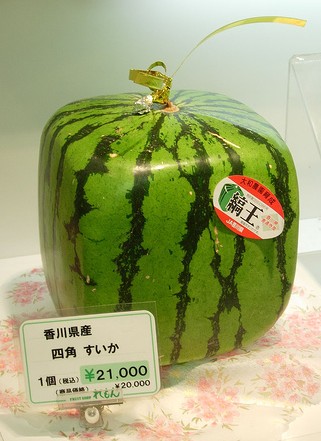
If you want square watermelons without the obtuse price, you might consider growing your own. You can do it just like the Japanese farmers if you pickup a polycarbonate mold to grow them in. Basically, you fit the case around the watermelon as it starts growing and the watermelon grows to fill the shape of the case. The case runs for about $110 USD, but you can use it to grow many watermelons. Once you’ve grown two, you’ve more than paid for it.
Broken Secrets | Facebook | Twitter | Email | Kindle
Photo: solution_63 (cc)
Sources: CNN, slashfood, snopes, square-watermelons.com
Measuring Speed in Knots Started With Tying Knots in Rope
By Chad Upton | Editor
Sailors have it easy these days — an inexpensive GPS will tell you how fast your ship is travelling. Heck, even your smartphone can do it if you have the right app. That’s how I clocked the car ferry on Lake Michigan at 35 mph (56 km/h) last summer.

However, a blackberry could not measure your speed 450 years ago. That required a “chip log” (aka “ship log” or “log”). This was a spool of rope attached to a small piece of wood. The sailors would place the wood in the water where it would drag in the water, unspooling the knotted rope. One sailer count the knots passing over the haul and another would use a 30 second sandglass to measure the time. They had a table to lookup the speed (“knots”) based on the number of knots that passed by.
Although the method has changed significantly, the units are still called “knots.” To put that in a way that might have more meaning, one nautical mile translates to 1.151 miles or 1.852 km.
Broken Secrets | Facebook | Twitter | Email | Kindle
Sources: wikipedia (knots, chip log)
Photo: Rémi Kaupp (gnu license)
Syrah and Shiraz are the Same Grape
By Chad Upton | Editor
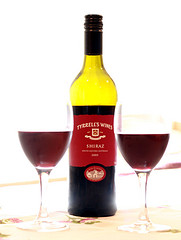 There are thousands of grape varieties out there. You’ll find a couple of them in the grocery store and another fraction of them in wine making.
Casual wine drinkers might be able to name a couple dozen grape varieties used for wine, but two of the most common are actually the same grape: Syrah and Shiraz.
Why have two names for the same thing?
Disney Castle Based on Real Castle in Germany
By Chad Upton | Editor
Often inspired by the Disney fairytales of Sleeping Beauty and Cinderella, many young girls dress as princesses for Halloween.
While they are popular fairytales, these theme-park castles are largely based on a real castle in Germany — Neuschwanstein Castle. Look at the resemblance:
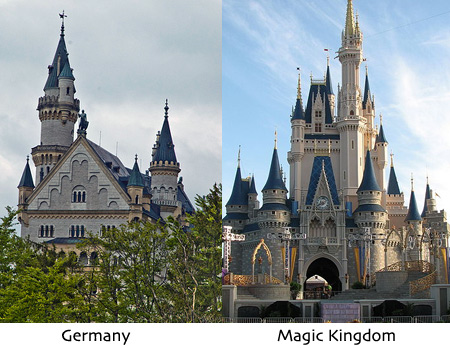
Disney has also noted the inspiration from structures in France too: Notre Dame de Paris and Hospices de Beaune.
Broken Secrets | Facebook | Twitter | Email | Kindle
Sources: wikipedia (Sleeping Beauty’s Castle, Cinderella Castle, Neuschwanstein Castle)
Photos: Katie Rommel-Esham (cc) Jack Versloot (cc)
The QR in QR Code Means Quick Response
By Chad Upton | Editor
Although we typically use QR codes with our mobile phones, they were actually invented by a Japanese company (Denso) for tracking products during manufacturing. Even though they’ve been around since 1994, QR codes have only started to become popular in North America in the past few years. They’re also known as “matrix”, “2d” or “square” barcodes.

Traditional 1 dimensional barcodes are very limited in the amount of information they can store in a small space, generally an 8-24 digit number. The number in a traditional bar code is really only useful if you have a database or table where you can lookup that number to get more meaningful information, such as the price of the item at a grocery store. QR codes can contain a lot more data.
They’re called Quick Response codes because the data is in the code and it doesn’t have to be looked up in a table to be meaningful. For example, the QR code in this article contains a URL to another post on the blog related to bar codes. When you scan it with your phone’s QR app, your phone can decode the image into the URL, no remote lookup is required. QR codes can also be used to get text or send sms text messages and dial phone numbers.
Carrots Do Not Improve Eyesight
By Chad Upton | Editor
Like many kids, I didn’t like vegetables — especially carrots and broccoli. Adults frequently told me that carrots would improve my eyesight, so that seemed like a good reason to try liking them.
There was one person who didn’t tell me this, he actually told me the opposite. My grand father overheard somebody tell me that carrots would improve my eyesight and he let me in on a little secret — it was all a big lie. Carrots do not improve your eyesight.
Sure, carrots and many other foods do contain beta-carotene, which metabolizes into Vitamin A and everyone agrees that is essential for maintaining eye health, but it does not improve it. If you are not consuming enough vitamin A, any number of sources could help restore your vitamin A supply. Carrots themselves are not unique or magical in this way. In fact, carrots have less beta-carotene per 200 calorie serving than red peppers, kale and lettuce.

If lettuce, kale and red pepper have more beta-carotene than carrots, why do carrots get all the eyesight credit?
How Steve Jobs Got His 2009 Liver Transplant So Quickly
By Chad Upton | Editor
When I was about 7 years old, my grade school classroom had an Apple II computer stashed in the corner of the room. I remember the excitement when our teacher said we could use the computer after we finished all of our work, even though I had no idea how to use it. Nobody knew how to use it, except for Woody.
Woody was the only kid who had a computer at home and it too was an Apple II. Since that was the first affordable mass-market computer, if any home or small business had a computer, it was usually an Apple.
Steve Jobs and Steve Wozniak started the personal computer revolution. There’s no doubt it would have happened without them, but who knows when. Steve Wozniak had the drive to build prototypes of computers just for fun while his partner Steve Jobs had the vision and drive to sell them to people who didn’t know how to use them, like some other products Apple has recently been successful with.
When Steve Jobs passed away, his assets were estimated to be around $6 billion. With that kind of wealth, you could buy almost anything. So, when he received a liver transplant in 2009, a lot of people suggested that he bought his way to the top of the waiting list. How else could he have skipped ahead of 16,000 other people?
His wealth did help him, but not in the way that some have implied.

He was on the transplant waiting list. Well, he was actually on more than one waiting list. Some have even speculated that he was on all of the waiting lists.
So, why doesn’t everyone do this? The rule at the time was that you needed to be within 4 hours of the transplant hospital. For most people, that significantly reduces the number of transplant lists you could be on. But, if you’re a billionaire with a private jet on standby, you’re within 4 hours of a lot of places.
Even still, with so many people waiting, how did he get to the top of the list so quickly?
The United Network for Organ Sharing (UNOS) audits the transplant centers to ensure fair treatment. So, he didn’t likely get to the top of the list because of his wealth or social status.
Since his jet gave him access to almost any transplant center in the country, he did what any smart analytical person would do: he figured out which transplant center had the shortest wait and made sure he was on that list. That’s how a guy who lives in Northern California ends up with a liver transplant in Tennessee. It turns out, the median wait time in Tennessee was 85% shorter than the national average.
The technology that Steve brought us will fade, but his approach to everything, including saving his own life, is the real gift he gave us. When Steve rejoined and began to rejuvenate Apple in 1997, the slogan was, “think different” and that sentiment is Steve’s real legacy.
Rest in peace.
Broken Secrets | Facebook | Twitter | Email | Kindle
Sources: digital journal, cnn, slate, the daily beast


 Broken Secrets
