Author Archive
Koala Fingerprints are Nearly Indistinguishable from Human’s
By Chad Upton | Editor
Dermatoplyphes or “fingerprints” are common among higher primates, but are present in only some other mammals.
Take whales for example. They’re mammals and they don’t have fingers (although the bones inside their flippers looks like fingers on an x-ray) but the pattern on the underside of their tail is still unique like a fingerprint.

Koala’s on the other hand do have fingers and they do have fingerprints. Koala fingerprints are so similar to human prints that even under an electron microscope they’re nearly indistinguishable from each other.
Broken Secrets | Facebook | Twitter | Email | Kindle
Photo: michael fontenot (cc)
Sources: naturalscience.com, whalewatchmaui.com
LEGO is the Largest Tire Manufacturer
By Chad Upton | Editor
One of the oldest tire manufacturers is Goodyear Tire and Rubber Company, founded in 1898 in Akron, Ohio.
A couple years later, Firestone Tires and Rubber Company was also founded in Akron. It’s unclear why both companies formed in the same city, but there’s no question they were the kings of the tire world for over 75 years.

If you ask someone which company makes the most tires, they’re likely going to answer Goodyear or Firestone. Goodyear does have one Guinness World Record, although it’s for fuel economy. But, the company that produces the most tires is LEGO.
It seems reasonable once you think about it, but the number of tires they product is absolutely stagering. The first LEGO set with tires shipped in 1962 and that set was one of the top sellers in 1967 with 820,400 units sold. In fact, nearly half of all current LEGO sets include a tire of some kind. That adds up to about 318 million tires per year or 12 tires every second.
Broken Secrets | Facebook | Twitter | Email | Kindle
Sources: lego.com, guinness world records, wikipedia (firestone, goodyear)
TIME Stands for The International Magazine of Events
By Chad Upton | Editor
The first TIME magazine was published on March 3rd, 1923 and sold for fifteen cents.

Cover Credit: WILLIAM OBERHARDT
It’s the first and longest running weekly news magazine in the United States. There are also European, Asian and South Pacific editions.
TIME is well known for its annual “Person of the Year” edition. This special edition has been running since 1927 and can be controversial. This is most apparent in “Person of the Year” choices such as Adolf Hitler (1938) and Josef Stalin. Many people have earned the title multiple times, including Stalin in 1939 and 1942. Franklin D Roosevelt earned the title three times between 1932 and 1941. Nearly a dozen other presidents have been given the title too. Person of the year is not necessarily an honor or prize, it’s simply a recognition of influence.
Although it’s been called TIME for the better part of a century, the founders originally considered naming it Facts. Through an ad campaign, TIME was assigned the backronym, “Today Information Means Everything.” But, on the landing page for the official Kindle edition of TIME, it is referred to as “The International Magazine of Events.” I guess that explains why the name is always capitalized, TIME.
Broken Secrets | Facebook | Twitter | Email | Kindle
Sources: everything2, time.com, wikipedia (time), new world encyclopedia
How to Generate Credit Card Numbers
By Chad Upton | Editor
First of all, I don’t want anyone to get the wrong idea; although the credit card numbers you generate are valid, they’re not active and aren’t for making (fraudulent) purchases.
So, what’s the point?
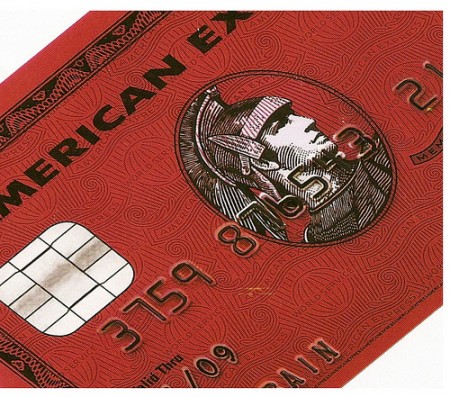
Just like you may use a junk email address to sign up for special offers, you may want a junk credit card number too. That’s because free things are rarely ever free and that’s especially true of free trials.
Companies frequently offer “free” trials in exchange for your billing info. They’re betting against you — hoping you’ll forget to cancel your subscription so they can get some money out of you for at least one month, maybe a couple months if it’s only a few bucks and you’re too busy to cancel at the moment you notice the charge. Then you’ll probably forget about it until you see it again next month. (more…)
There are 90 Seconds in a Moment
By Chad Upton
It will only take you a minute to read this post.

Although a minute is a precise amount of time, we often use it to mean a short amount of time. The same goes for “moment”; the difference being that most people don’t know that a moment is a precise measure of time.
Technically, a moment is 90 seconds.
The first reference comes from 1398, found in the Oxford English Dictionary. Cornish writer John of Trevisa wrote that there are 40 moments in an hour (hence 90 seconds each). Oxford has since replaced it with, “a very brief period of time.”
So go on, continue using it as a casual measure of time — now you know the real meaning.
Broken Secrets | Facebook | Twitter | Email | Kindle
Photo: Peter Pearson (cc)
Sources: oxford dictionary, wikipedia (moment)
Military Contractors Built Flying Saucers
By Chad Upton | Editor
I’ve been writing Broken Secrets for a little over 3 years and UFOs are something I wanted to cover at some point. It’s a difficult subject; there’s so much information, mostly poor or difficult to confirm information and little that seems reliable and interesting. But there are also some little gems that are compelling and enlightening.

A UFO is simply an Unidentified Flying Object. It doesn’t necessarily mean it’s alien — just that you’re not going to find someone who knows what it is or be willing identify it if they are one of the few who may know.
In May of 2011, the public got an unplanned unveiling of the US Military’s “Stealth Hawk” Helicopter when it was damaged during the raid on Osama Bin Laden’s compound in Pakistan. Technically, it’s still a UFO since we don’t know exactly what it is — educated guesses are that it is a heavily modified Sikorsky MH-60M Black Hawk. (more…)
We’re Running Out of Helium and We Need It
By Chad Upton | Editor
Most of us only encounter helium at parties, but its role is far greater than floating balloons and squeaking voices.
Like oil, helium is formed deep in the earth over millions of years. It is created by radioactive decay of underground terrestrial rock. Helium is often trapped with Natural Gas and separating the two during natural gas extraction is typically how we get it.

About half of the world’s helium is located at the National Helium Reserve in Texas. This government reserve was originally setup in 1925, when the extraordinary value of helium was first recognized. The government believed airships were the future of defense and helium was the safest lighter-than-air gas to use since it’s not flammable. They were right in a way, helium was an important gas for future defense and science, but blimps were not a big part of that.
Helium is used to cool infrared detectors and was critical in the development of the atomic bomb and other scientific discoveries. Hospitals need helium to cool MRI scanners. It is also used in space rockets, defense systems, deep-sea diving, airships, optical lenses, power plants, wind tunnels, and other important areas of science.
Despite its great importance to our health and safety, we are squandering helium to the point where experts believe we will run out in as little as 15 years. (more…)
Shuffling Playing Cards Produces Order Never Seen Before
By Chad Upton | Editor
When you finish a game of cards, you must shuffle the deck (imperfectly) seven times before the card order is properly randomized again. Then, it’s also statistically impossible that order of cards has ever occurred before!

Because a deck of cards has 52 unique cards, the number of different orders of those cards is astronomical and I mean that rather literally. The combinations of cards is greater than the number of observable stars in the galaxy. (more…)
Vanilla is an Addictive Stimulant
By Chad Upton | Editor
Vanilla is often associated with plain, boring and ordinary; however, vanilla is anything but vanilla.
Now, it’s hardly the kind of thing you’d find shady characters dealing on a dark street corner. In fact, it’s not the kind of thing you’d likely find anywhere — I mean, good luck finding Grade A Tahitian Vanilla Beans in most cities. If you do find them, you’re looking at $5 or more for a single bean.
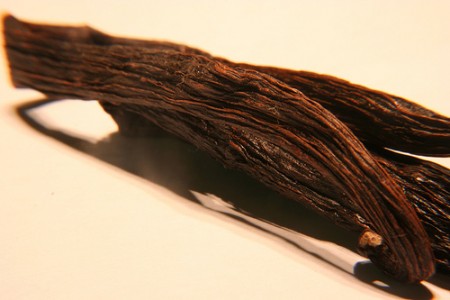
Beans of such high quality are typically sought by epicureans, but there’s more to vanilla than its taste. (more…)
We Don’t Lose Most of Our Heat Through Our Heads
By Chad Upton | Editor
Winter hat, stocking cap, beanie or toque; whatever you call it, it keeps your head warm. But, it doesn’t necessarily keep you warm.

An old US Army survival manual suggested wearing a hat since “40 to 45 percent of body heat” is lost through your head. This recommendation is thought to have come from a military experiment over 60 years ago when participants were dressed from neck to toe in Arctic clothing, but no headwear. Over time, this has snowballed into “most” heat is lost through our heads. (more…)


 Broken Secrets