Author Archive








How Does Information Get On a CARFAX Report?
By Chad Upton | Editor
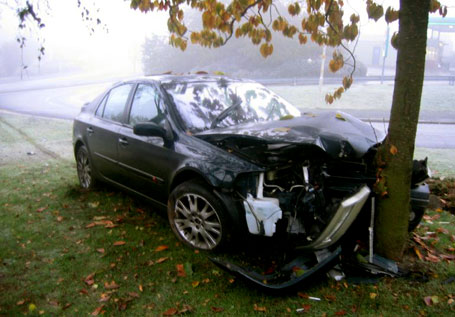
It’s not unusual for somebody to completely destroy their car and walk away unharmed.
This happens because newer cars are designed to crumple on impact, just like a bike helmet made from dense foam. The frame, hood and even the power train components absorb the energy from the impact in order to help protect the occupants. Of course, air bags may also deploy, which protect the occupants from hitting hard surfaces inside the vehicle.
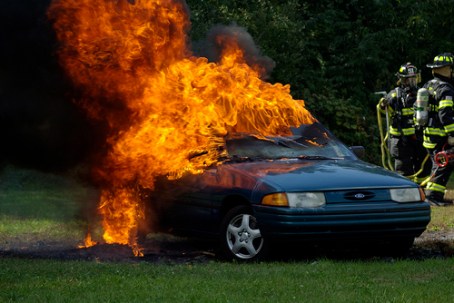
When an insurance company declares a car as a “total loss” it means they are not going to pay to fix the car; although, they may sell the vehicle to somebody who plans to use it for spare parts. That person may then fix the car and try to sell it.
Unfortunately, a car that has been in a major accident may have hidden safety and reliability problems. So, if you’re buying a used car, you’ll want to know its history.
If you’ve ever looked at a used car, you’ve probably come across CARFAX.
It’s a service that provides historical information about used cars. For $35 or less, you can enter the VIN (vehicle identification number) of a used car and get a report about its ownership, accident history, mileage discrepancies, lemon status, flood damage, fleet use (taxi, police…etc) and many other things the seller may not want you to know.
I think this is a great idea, but I’ve always wondered how they get all the information.
I was talking to a guy that runs an auto body shop, so I asked him. He said that he has done work on cars that were nearly totaled and the information did not show up on CARFAX; he had also done minor work that has shown up.
He said that CARFAX buys info from insurance companies and other sources. Some insurance companies have a non-disclosure agreement, where they will not disclose information about your car and its accidents while other insurance companies are willing to sell that information to make money.
I verified this information with CARFAX and it’s true. CARFAX gets information from thousands of sources and has over 6 billion records on file. They have deals with motor vehicle bureaus in every US State and Canadian Province, where they get information about mileage, flood damage, titles, lemon buybacks, accidents, thefts, liens and ownership transfers.
They also get information from auto auctions, car dealers, repair and service facilities, rental companies, state inspection stations, fire departments, law enforcement, car manufacturers, import/export companies and many others. That’s not to say that all companies of these types provide this information, but many do.
In some cases, they have mutually beneficial relationships. For example, car dealers may provide information about vehicles they service, but they may also request information about used cars that they want to take as trade-ins, buy at auctions or sell to their customers.
In any case, CARFAX warns that they may not always have all of the information, since there are many sources that they do not have access to. In 2005, they had 6,100 sources of information. Now, they have grown to over 34,000 sources.
CARFAX does provide a couple of free services that may be worth while if you’re purchasing a used car. The Lemon Check is one of them. This free service, will tell you if the car you’re about to buy was ever declared a lemon, meaning it was serviced for the same problem 3 times and bought back from the owner by the manufacturer. You definitely want to avoid a lemon.
You can also perform a record check with CARFAX for free. This will tell you how many records they have on file for the VIN you entered. If you’re thinking about buying a CARFAX report, you should try this free option first to see if it’s worth buying the report about the car you’re interested in.
Broken Secrets | Facebook | Twitter | Email | Kindle
Sources: CARFAX (Data Sources) MSN, MyVin
Photo: Ian Hampton (cc), jasonbolonski (cc)
The White Dashes at the Top of a TV Picture
By Chad Upton | Editor
They may appear as rapidly flashing dots, dashes, lines or boxes across the top of your TV screen.
The white lines are more prevalent on HDTVs, although they can show on older standard definition sets too.
They often appear while watching an HD channel that is broadcasting a standard definition signal, which frequently happens during commercial breaks and shows that are not available in high definition.

The lines are supposed to be there, you’re just not supposed to see them. If you have seen them, they will vary in size and shape depending on your TV.
These lines are like barcodes embedded in the picture. Closed captioning, teletext and programming guide information is represented by these white lines. Your TV can interpret them and display the information in a format that you can read.
Although this primarily affects HDTVs, it stems from variances in old Tube TVs (Cathode Ray Tubes). In the early days of television, there were extreme variances in production of television sets — some would cut off more of the picture than others.
Broadcasters overcame this problem by trying to keep all titles and important actions away from the very edges of the screen, in case they were cut off on some TVs. That extra space that you don’t see is called the overscanned image (because of the way that CRTs would paint an image on the screen by scanning side to side sixty times per second).
The overscan area became a good place to hide extra information when closed captioning data was added to TV signals.
HDTV signals do not overscan. Their signals are newer and were designed to encapsulate extra information from the beginning. But, you may still see these lines on an HDTV if the broadcaster is showing content that has the lines.
Most good televisions have the option to adjust overscan, including hdtvs. You’ll have to consult your manual, but this option will allow you to adjust the picture so the white lines are not visible.
Broken Secrets
Subscribe on: Facebook | Twitter | Kindle
Bluetooth Headsets Can Reduce EMF Exposure
By Chad Upton | Editor
Popular wireless devices such as cell phones and wifi transceivers produce electromagnetic fields (EMFs).
A lot of people are concerned about the health affects of EMFs, so the World Health Organization started a project in 1996 to study their effects on people.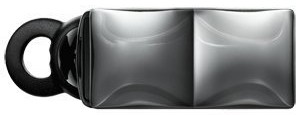
They currently maintain that EMFs, “do not produce any known adverse health effect.”
Operating in the microwave frequency range of EMFs, there is no denying that cell phones induce some of the highest exposure. The UK’s Health Protection Agency claims that 1 year of wifi exposure is comparable to 20 minutes on a cell phone.
The additional exposure with mobile phones is attributed to two factors:
- Close proximity to your head
- High power output (to reach distant receivers)
Both the World Health Organization and the Health Protection Agency continue to review the effects of EMF exposure in humans.
The amount of energy radiated by each cell phone model is measured and tracked. This measurement is taken in watts of radiation absorbed per kilogram of human tissue (W/kg). The amount of radiation absorbed, varies across the body — it is typically averaged over 1 gram of head tissue.
Canada and the US allow up to 1.6 watts per kilogram of radiation in cell phones, while the UK allows up to 2.0 W/kg. cnet maintains an up-to-date ranking of cell phones that emit the highest and lowest amount of radiation. They range from 0.1 W/kg to 1.6 W/kg. Check your user manual to see if your phone is high or low.
Comparatively, many bluetooth headsets emit ~0.001 W/kg of radiation, making them far lower than the mobile phone itself.
If you use a cell phone a lot, you should probably be using a bluetooth headset or speakerphone instead of holding the phone against your head.
Many new cars include audio systems that integrate with your cell phone for hands free calling, these are great. If you want something similar for your car, you can get a bluetooth speakerphone. I’ve had really good luck with the BlueAnt Supertooth 3, it downloaded my entire contact list for voice activated calling and its noise cancellation is really great.
If you’re looking for a headset, be sure to check the class of bluetooth headset you get. Most bluetooth devices are considered Class 2 devices, meaning they output around 2.5 mW of energy, which is a very small amount. A “Class 2” device is likely what you want, which should translate to range of approximately 33 ft (10 meters). One of the most advanced and highest rated Class 2 headsets is the Jawbone Icon.
There are also Class 1 headsets, which give you much better range (up to 330 feet/100 meters), but they output more radiation, about the same as the phone itself. The Callpod Dragon is an example of a popular Class 1 headset.
Broken Secrets
Subscribe on: Facebook | Twitter | Kindle
Sources: cnet, business week, bluetooth SIG, Wikipedia (bluetooth, wireless safety), antiradiation
Cars Built Since 2008 Have Tire Pressure Warning Lights
By Chad Upton | Editor
Last week, I was driving behind a car with a tire that was nearly flat. The tire was so low, it was almost riding on the rims.
At the next red light, I waved at the driver and they opened their window. They put their cell phone down while I told them about the tire. They were surprised, thanked me and went back to talking on their phone. Even though there was a service station across the street, where they could have easily added air or at least checked the tire, they drove off like nothing was wrong.
I was shocked.
Apparently, some people don’t understand how dangerous a flat tire can be, not to mention the poor gas mileage and possible damage to your wheel. In fact, it’s not just this person. 33% of drivers don’t know what the tire pressure monitoring system (TPMS) warning light is when it lights up on their dashboard.
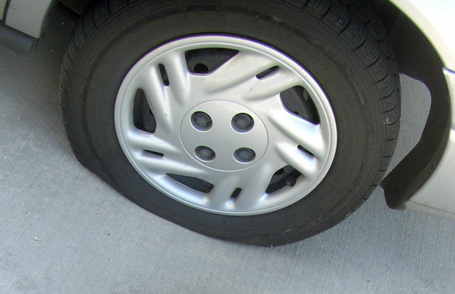
Since 2008, all cars in the US are required to have a tire pressure monitoring system. Many cars, especially luxury cars and SUVs, have had them for longer, but the importance of these systems became clear during the Bridgestone/Firestone Tire debacle in the year 2000. Some sources report there may have been as many as 250 deaths and 3000 catastrophic injuries from under-inflated tires and that tire pressure monitoring systems could have saved lives and reduced injuries.
 The tire pressure monitoring system will illuminate an icon on your instrument cluster when the pressure in any tire drops more than 25% below the recommended inflation level. The icon is a cross section of a bulging tire with an exclamation point inside of it.
Some cars have more advanced systems that will identify which tire is under-inflated. The more advanced systems can also tell you if a tire is over-inflated and when it is just a warning that can be addressed soon or if it is an emergency that requires immediate attention.
As the seasons change and the weather gets warmer or cooler, tire pressure changes too — that’s a good time to pay extra attention to tire pressure. If your vehicle warns you of a tire pressure problem, you should pull over to check the tires. This could really be a life saver, especially if you’re driving at highway speeds when the light comes on.
Whether you have this light or not, you should check your tire pressure regularly, and especially if they’re bulging. Most service stations have an air compressor to fill your tires, many of these are equipped with a pressure gauge that you can use without turning on the compressor (which costs money in some cases). Otherwise, the service station may be able to lend you a gauge.
On the inside of the driver’s door frame, there is usually a sticker that indicates the proper tire pressure for your vehicle. If not, check your manual.
Your manual will also tell you how to calibrate the tire pressure monitoring system. If your system is capable of telling you which tire is improperly inflated and you check the pressure in that tire, only to find that it is perfect, then your tires were probably rotated without calibrating the system to match the new tire locations.
Some systems use wireless sensors on each wheel, these are known as direct measurement systems and they are more expensive. The other main type of system relies on the ABS sensors to determine that one wheel is turning at a slightly different speed, indicating it is low. This system is cheaper, but it only works when the vehicle is in motion.
Broken Secrets
Subscribe on: Facebook | Twitter | Kindle
Sources: Jalopnik, Firestone Tire Recall, USA Today, NHTSA
Photo: jronaldlee (cc), dimmerswitch (cc)
Sherlock Holmes’ Famous Saying Wasn’t Part of the Original Works
By Kaye Nemec
The fictional character, Sherlock Holmes, was brought to life in 1887 by Sir Arthur Conan Doyle who authored 56 short stories and 4 novels about Holmes. The majority of the stories, all but 4, were narrated by Holmes’ fictional friend, Dr. Watson. The stories were hugely popular and the last one was published in 1927, they were and even still are adapted to stage and screen.
 Even if you haven’t read any Sherlock Holmes stories, you’ve probably heard people quote Holmes’ popular phrase, “Elementary, my dear Watson.” Although this quotation is synonymous with Sherlock Holmes, it was not written by Sherlock Holmes author Conan Doyle.
The phrase was written by P. G. Woodhouse in his novel, Psmith Journalist in 1915. Its next known use was at the end of the film The Return of Sherlock Holmes (1929) which was the first Sherlock Holmes film with sound. The phrase grew in popularity from there, through various radio, screen and stage shows.
Not once in any of the 60 Sherlock Holmes’ stories written by Conan Doyle does Holmes say the exact words, “Elementary, my dear Watson.” He often refers to his more logical conclusions as “elementary” and, once in a while, he does refer to Dr. Watson as “my dear Watson” but he never used them together.
David Shore, creator of the popular TV medical drama House, pays homage to Sherlock Holmes throughout the series. For example, Sherlock Holmes lived at 221B Baker Street and the main character in the show, Dr. Gregory House, lives in apartment 221B. Holmes occasionally used cocaine; House was addicted to Vicodin until season 6. Shore also says he chose the name House because it was a play on the name Holmes. In addition, both Holmes and House have only one true friend. Holmes has Dr. Watson and House has Dr. Wilson.
Broken Secrets
Subscribe on: Facebook | Twitter | Kindle
Sources: Wikipedia (Sherlock Holmes), Wikipedia (Gregory House), Wikipedia (PSmith, Journalist), FactsMonk.com
eInk Doesn’t Use Power to Maintain an Image
By Chad Upton | Editor
eInk or electronic paper, is a modern display screen technology used in consumer electronics.
The most popular products that use electronic paper screens are eReaders such as the Amazon Kindle, Barnes and Noble Nook and Sony eReader.
When you first see an electronic paper display, the most striking thing is how much it looks like real paper. Not so much in texture, but definitely in readability. That’s because there really is an inky black dye inside the screen. Electronic paper displays are the perfect screen type for eReaders, for two main reasons.
 Electrical charges repel particles, forcing the ink near top of screen where it appears black, or toward the bottom of the display where it appears white. This provides very sharp text, just like a real book. It also means the display reflects light the same way a real book does, rather than generate its own light like typical television and cell phone display technologies. This makes the electronic paper easy on the eyes over long periods of time and easy to read in sunlight.
The surprising thing about this technology is that is doesn’t use any energy to hold a static image on the screen — it only requires energy while drawing a new image on the screen. This is perfect for devices that don’t require the display to be updated constantly, such as eReaders. Even if you’re a very fast reader, it’s going to take you at least 10 seconds to read a page. That means you’re only using the battery for a fraction of a second to update the display and then the battery can mostly rest until the next page turn.
That is great, because it means the battery last for a very long time. It also means that the display shows an image when the device is off and not consuming power. When the Kindle battery dies, it switches the screen to indicate the battery is dead. So, even though you can’t turn it on, you know exactly why.
One of the main drawbacks is that electronic paper is a black and white technology. Technically, color ePaper exists, but it is not in widespread use. Additionally, the screen refreshes slowly when compared to other display types, such as LCDs.
Slow refresh is no problem for eReaders, it can paint a new page on the screen faster than you can turn a page of a real paper book. But, it’s not good for devices that require motion graphics. Amazon is working on games and applications to run on the Kindle, similar to iPhone and BlackBerry apps. But, you won’t likely see any fast action games on electronic paper devices anytime soon.
Broken Secrets
Subscribe on: Facebook | Twitter | Kindle
Sources: Wikipedia (Electronic Paper, Kindle)
Air Conditioning Affects Gas Mileage
By Chad Upton | Editor
In most cars, the air conditioner’s compressor is powered by a drive belt on the engine. When the air conditioner is activated, the compressor adds resistance to your engine. That extra resistance means your engine requires more fuel to turn at the same speed.
In other words, using your air conditioner burns more gas than not using it. Modern cars have very efficient air conditioners, but this truth still stands.

On a hot summer day, you have to keep cool. Does that mean it’s more fuel efficient to drive with your windows down?
Yes and no.
The Society of Automotive Engineers performed a study that examined this question in detail. They performed wind tunnel and track experiments comparing a car and an SUV. With the windows down, the car was half as efficient at 50 mph (80 km/h) than the SUV’s at 30 mph (50 km/h). It’s clear that driving the car with windows down has a dramatic effect on fuel economy, but it affected the SUV even more, especially when a 10 mph (16 km/h) crosswind was added in the wind tunnel.
Consumer Reports found that below 40 mph (65 km/h), drivers are better off with their windows down and air conditioner off.
Jason Toews from GasBuddy.com found at speeds above 45 mph (70 km/h), “wind drag becomes an issue.” He says, “Drive at speeds over 55 mph with windows down and you’ll decrease fuel economy by up to 20 percent or greater.”
Myth Busters has also looked at this issue on a couple occasions. The first time around, their methodology was flawed, so they tried it a second time. The second time, they came to the same conclusion as Consumer Reports and GasBuddy, that windows down are more efficient than running the air conditioner at speeds less than 45-55 mph (70-90 km/h) and the drag at higher speeds makes the air conditioner the more efficient option.
Of course, results vary by vehicle.
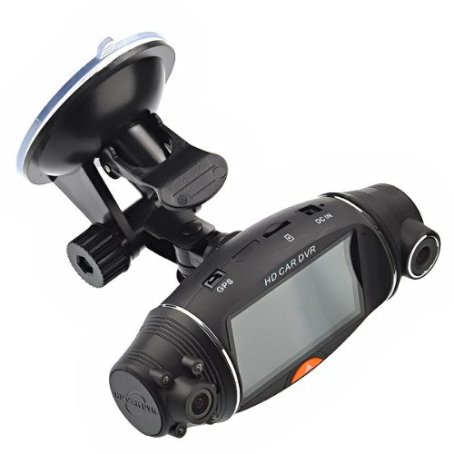
There are many factors other than windows and air conditioning that affect fuel economy: drive train, power-train, body aerodynamics and tire rolling resistance. If you want to know exactly how it affects your car, you might try experimenting for yourself. Some cars have a driver information center that displays fuel economy, otherwise you could order an after market product, such as CarChip Pro ($75-$85), which may help you get that data. If you’re interested, some of these are explored in more detail in another post, The Ideal Vehicle Speed for Best Fuel Economy.
If it’s hot outside, you should probably start with your windows down anyway. This gives your air conditioner a bit of a break by clearing the extremely hot air out of the car first.
Do prefer windows down or the air conditioner on?
Broken Secrets
Subscribe on: Facebook | Twitter | Kindle
Sources: SAE (PDF), MythBusters (Ep 22, Ep 38), Edmunds, Bankrate, Consumer Reports, Missouri Gov
Photo: Tomás Fano (cc)
How to Take the Bone Out of a Chicken Wing
By Chad Upton | Editor
When we want to know how to do things right, we look to the professionals.
For example, if you want to peel a banana easily and with minimal strings, you’d learn how a monkey does it.
The same goes for eating chicken wings. There are plenty of professional food eaters, who win contests by eating food as quickly as possible. Some of these techniques were developed by them.

Here’s one great way to get the bones out of a wing:
Here’s a way to eat it with one hand, keeping your other hand free for your 6 shooter, beer mug or tums. You can skip to the 20 second mark on this one:
For those reading this on a device that doesn’t support video, the first video demonstrates removing the bones from a flat chicken wing. Grab the smaller bone and twist it back and forth a couple times, then pull it out. Then do the same for the larger bone, you’re left with all meat and no bones. The second video shows a man placing an entire flat wing in his mouth, biting down and pulling the chicken off the bones and he pulls it out of his mouth.
Thanks to Janine for suggesting this one.
Broken Secrets
Subscribe on: Facebook | Twitter | Kindle
Photo: Charles Haynes (cc)
Why Some Knives Have Serrated Blades
By Chad Upton | Editor
Good knives are expensive, but they’re money well spent when you consider they may outlive you.
There aren’t many purchases you can say that about and like anything that lasts, they need care and attention.
In fact, Japanese samurai swords endured hundreds of years of use, when properly cared for by a Togi professional — a sword polisher whose apprenticeship lasts ten years.
You’re probably aware that knives need sharpening, but do you know why they get dull in the first place?

It’s not just from repeated use, but from repeated misuse. Some misuse is expected, especially with serrated knives.
When you cut on a surface that is harder than the knife blade, that surface dulls the blade by creating a microscopic flat surface on the bottom of the blade. The flat surface is too small to see, but it makes a big difference in the cutting ability of the blade. In knife manufacturing, electron microscopes are used in quality control to inspect the sharpness of the blade.
To keep your knives sharp, it is best to cut on cutting boards made from soft materials such as various types of wood or plastic. While it’s convenient to cut directly on solid surface counter-tops such as granite and quartz, it’s not good for your knives and neither are glass cutting boards.
Plates are a common surface to cut on, but they’re bad for knives. Serrated blades help solve this dilemma; the points touch the plate but the raised edges above the points do not. Therefore, the points are dulled, but the other edges stay sharp.
Serrated blades also work well for cutting through hard rinds of some produce, and crunchy bread crusts too. The sharp points add more localized pressure, allowing better cutting penetration on the foods and act like a saw when the knife is moved back and forth.
There are other practices that can dull your knives too. Letting the cutting edge bang into other utensils in a drawer or the dishwasher can cause nicks and scratches, which adversely affect the knives’ sharpness.
To keep your knives in good repair, you should use a honing steel on the blade for about 30 seconds before each use. It helps remove scratches and bends in the blade, but it does not sharpen it.
For sharpening, a good manual or automatic sharpener should be used every few months. Professional sharpening should be done every few years. Many serrated blades cannot be sharpened, but a honing steel can be used on some.
Broken Secrets
Subscribe on: Facebook | Twitter | Kindle
Sources: Cutco, Electric Knife Sharpeners Blog, Sword Forum Mag, Wikipedia (Serrated Blade)


 Broken Secrets