Author Archive
The Calendar is Named After The Pope
By Chad Upton | Editor
Many different calendar systems exist, but the calendar used by most modern cultures is known as the Gregorian Calendar.
It may also be called the Western Calendar, Civil Calendar or the Christian Calendar. The names Gregorian and Christian Calendar are popular because it was introduced by Pope Gregory XIII.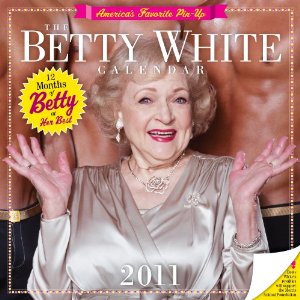
He introduced it in 1582 and it was quickly adopted by a handful of countries. Most others jumped on the wagon over the following centuries. It was very similar to the Julian calendar, although it more accurately represented the lunar cycle and made the dates of Easter easier to calculate. This is the main reason it was preferred by Christians. The calendar is Christian centric in other ways too, after all, the years we count are relative to the traditional Incarnation of Jesus.
Interestingly, there are exactly 14 possible calendar configurations. That makes it easy to figure out if your birthday is on the weekend this year.
Broken Secrets
Get updates from: Facebook | Twitter | Email | Kindle
Sources: Wikipedia
Property Donations are Tax Deductable
By Chad Upton | Editor
While it’s pretty common to get a tax receipt for monetary donations to charity, not everyone knows you can get a tax deduction for donating household items too.
Some of these items include:
- Clothing and Linens
- Indoor and Outdoor Furniture
- Toys and Games
- Appliances and Electronics
- Tools and Automotive Items
- Books, Magazines, Movies and Music
- Musical Instruments
That’s right, you can donate magazines and musical instruments. But, don’t go raiding your Doctor’s waiting room, useful magazines in good condition are worth a maximum of $0.50 each.
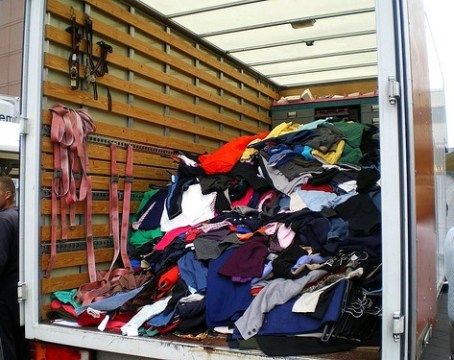
To make a claim, you need the charity or other qualified group to endorse a receipt that shows the name of the charity, the date and location of the donation and an itemized list of the articles along with the fair value of each. For donations under $250, a receipt is not required when it’s impractical to get one, such as when you deposit items in an unattended drop box. But, you’ll still need to provide the details (what, where, when, how much).
So, how do you figure out the fair market value of a book or a trombone? I recommend a free online tool from Turbotax, called ItsDeductible. They provide values based on IRS guidelines (Publication 561) and allow you to print a list that you can bring with you for the charity to sign. For full details, see the charitable donation guidelines in Publication 526.
They estimate a Fuzzy Dice to hang from a rear-view mirror is worth $3 in good condition (seriously). A good trombone is worth between $57 and $82. Do you have an extra coffee maker or microwave in storage? You could be looking at $10 or $20. Do you still have your neighbor’s tile saw? It could be worth $92 on your their tax return.
Your donations can be made to many organizations. There are the traditional charities such as: Goodwill, Salvation Army, Red Cross, CARE, United Way…etc. Donations of money or useful items also qualify for tax deductions when they are made to places of worship (churches, synagogues…etc), government (Federal, state, local), nonprofit schools and hospitals, public parks and recreation facilities, veteran’s groups, Boy and Girl Scouts, Boys and Girls Clubs of America and many other organizations.
Broken Secrets
Subscribe on: Facebook | Twitter | Email | Kindle
Big thanks to Chris for this tip.
Photo: Jen Waller (cc)
Sources: IRS (Publication 526 – Contribution Guidelines | Publication 561 – Determining Value of Donated Property), TurboTax, Money Blue Book
9 Volt Batteries Contain 6 AAAA Batteries
By Chad Upton | Editor
The batteries in most consumer electronics produce 1.5 volts each.
Different products use different numbers of batteries to achieve different voltage requirements. For example, a TV remote might be designed to run on 3 volts, so two 1.5 volt batteries will provide the necessary voltage when connected in series.
Larger devices, such as radios with large speakers or large kid’s toys, typically have larger batteries, like C and D cells. Smaller devices often use AA and AAA batteries, allowing the devices themselves to be smaller. All of these batteries output 1.5 volts, but the larger batteries have much higher capacities, meaning they last longer. D batteries have four times the capacity as AA’s. So, if you’re going to be blasting music on the beach, you’ll change fewer batteries if your radio uses D batteries.
There are many other types of batteries that are not 1.5 volts. One of the most popular is the nine-volt battery, which is technically called a PP3 battery. Smoke detectors, garage door remotes, transistor radios and a variety of other devices use these batteries.
They’re pretty convenient, giving you the voltage of six batteries after only inserting one battery. In fact, that’s exactly what they are — they’re just containers that link six smaller batteries together. Here’s a picture of a nine-volt battery that I took apart:
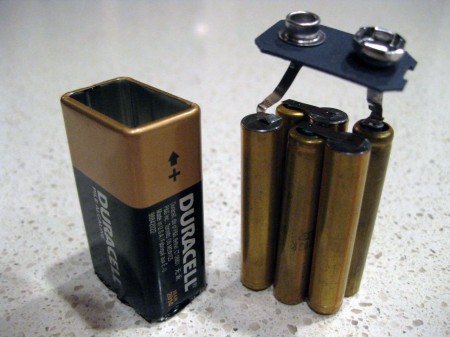
Each of the six batteries outputs 1.5 volts, giving a total of 9 volts when connected in series. The name brand nine-volt batteries usually contain six quadrouple A batteries (AAAA) which are rather uncommon in consumer electronics but find a home in medical devices such as glucose meters.
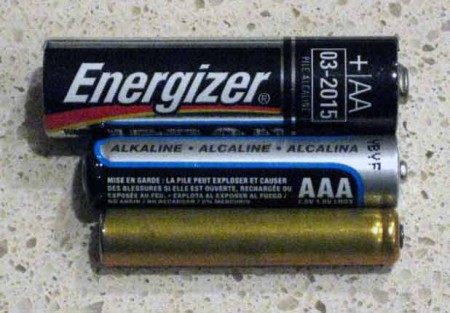
Some of the lesser known battery brands may contain 6 flat cells which are not easily reusable. As you can see in the picture above, AAAA batteries are very close in size to AAA cells. That’s worth noting since they could save the day if you’re short on AAAs:
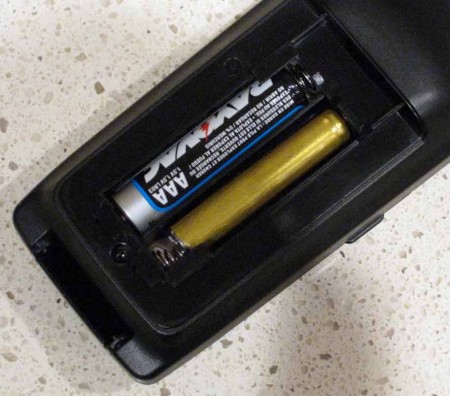
Keep in mind, device manufacturers often use standard batteries in their rechargeable products and you can replace them yourself.
Broken Secrets
Subscribe on: Facebook | Twitter | Email | Kindle
What the Toaster’s Bagel Button Actually Does
By Chad Upton | Editor
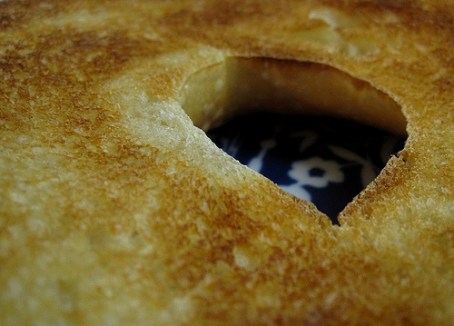
Some toasters have a bagel button and it’s obviously meant for when you want to toast a bagel. But, what does that button actually do?
Firstly, it increases the toasting time since bagels are thicker. Secondly, it increases the heat of the inner elements and decreases the temperature of the outer elements so you don’t burn the outside of the bagel.
It’s also useful for English muffins or other thick items.
Broken Secrets
Subscribe on: Facebook | Twitter | Email | Kindle
Photo: wintersoul1 (cc)
Source: Oster
Most Medications Still Good After Expiration
By Chad Upton | Editor
If you check your medicine cabinet, chances are good you’ve got some expired medication in there. Are they still safe and effective or are they fit for the trash?
First of all, this post is for information purposes only and it is not suggesting you take any drugs after their expiration date — always check with your doctor or pharmacist before making any decisions about pharmaceuticals.
The Federal Drug Administration regulates drugs in the United States. They have extensively studied drug expiration dates for the US government. Specifically, the US military stockpiles large quantities of drugs for regular troop usage and emergencies. If those drugs are not used, the cost to replace them can be high.
The FDA found that 88% of drugs tested remained potent for a year after their expiry date; some lasted up to 14 years. Experts caution these results cannot be directly translated to your medication since the military stores their drugs in climate controlled environments that represents ideal conditions.

That said, the FDA and many in the drug industry, including one pharmacist I talked to off the record, agreed that certain drugs are still good up to a year after the expiration date.
Many popular drugs are safe after their expiration date, but there are known exceptions too. For example, Tetracycline, an antibiotic, becomes toxic and should not be taken after its expiration date. Aspirin, on the other hand, is known to be good for a while after its expiration date.
If the drugs are still good, why do drug companies put these short expiry dates on the bottles? It’s hard to say for sure, but there are a couple things we know.
1. The drug companies are required to ensure their products are 100% effective up to the expiration date. That means they need to do testing. The longer the expiration time they shoot for, the longer it will take to release a new product to market, which is bad for business and customers. In most cases, the products have at least a 1 year shelf life.
2. Every company wants you to buy as much of their product as possible. The drug companies can’t really control how much you use their product, but shorter expiration dates may convince you to buy more, even if you haven’t used all of the product yet.
To be safe, you should check with a pharmacist before taking any expired drugs. When you are ready to dispose of your medicine, check out this previous post: How to Dispose of Medicine.
Broken Secrets
Subscribe on: Facebook | Twitter | Email | Kindle
Photos: hit thatswitch (cc)
Why Airplane Shades Must Be Up for Takeoff and Landing
By Chad Upton | Editor
 You may not have heard of this, but it’s law in some countries and it’s growing in popularity around the world. The reason is similar to why the airlines dim the interior lights during takeoffs and landings at night.
In short, it’s for safety in the event of an accident. With the window shades up, passengers and crew can spot dangers outside the planes before they open an emergency exit. Dangers like fire, water and running airplane engines can be hazardous if someone opens an emergency exit right into them.
During bright daylight, it also allows your eyes to adjust to the brightness outside, which could be critical during an accident.
Broken Secrets
Subscribe on: Facebook | Twitter | Email | Kindle
Photo: contraption (cc)
Sources: Airliners.net, Straight Dope
Why They’re Called White Elephant Gift Exchanges
By Chad Upton | Editor
Among friends and co-workers, gift exchanges are popular, especially during the holidays. In the United States, a popular style of gift exchange is called a “White Elephant Gift Exchange.” I’ve done similar gift exchanges outside of the US where they don’t necessarily go by that name, but follow similar rules.
In fact, there are many variations of the rules, but basically, it involves bringing a fun or humorous gift for an anonymous person. In some cases, the rules allow other people to “steal” the gift or switch it for the gift they received. Regardless of the specific rules, I wanted to understand where “white elephants” fit in to these gift exchanges.
Historically, white elephants were sacred among Southeastern monarchs in Thailand, Cambodia, Laos and Burma (and still are in some areas).

This belief comes from a tale that Buddha’s mother had a dream the night before giving birth to him. The dream depicted a white elephant giving her a lotus flower, a divine symbol of purity. For this reason, it was thought that white elephants were sacred, and laws were made to protect them from labor.
Because white elephants couldn’t be put to work, their maintenance costs were out of proportion to their usefulness. Modern day white elephants include kitchen gadgets that seem useful, but take up useful space in your cupboards and rarely get used. (more…)
The Most Popular Types of Liquor
If you’re throwing a party or just having some friends over, you may want to have the basics in your home bar.
A good place to start is with the most popular types of liquor.

At a real bar, there is often a stock of liquor at waist height below the bar with the most commonly commonly requested liquors. This is called the “speed rail” and it is normally stocked with:
- Vodka
- Gin
- Rum (light)
- Tequila
Many popular drinks can be made with these liquors but bars frequently stock these other popular liquors in the speed rail too:
- Scotch (Whiskey)
- Bourbon (Whiskey)
- Triple Sec
- Vermouth
 Here’s a secret if you’re short on space or cash, or if you run out of Triple Sec. Triple Sec is an orange flavored liquor, so you can substitute other popular orange flavored liquors like: Grand Marnier, Cointreau or Curaçao. When it comes to selecting whiskey, click here to read more about Whiskey.
If you want to go all out with your bar, pick up some of the following and none of your guests will be unsatisfied:
- Irish Whiskey
- Canadian Whiskey
- Tennessee Whiskey
- Dark Rum
- Brandy
- Baileys
- Agostura bitters
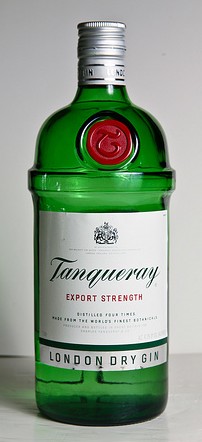
You’ll also want to stock popular tonics and mixers such as: Coke, ginger ale, club soda and cranberry juice. By the way, the Tanqueray Gin bottle was designed to look like a London fire hydrant.
Broken Secrets
Subscribe on: Facebook | Twitter | Email | Kindle
Photos: Jeff Simms (cc), Megan Morris (cc)
Sources: Orange Liqueurs, Hub Pages, Totally Free Bartending, Crunkish
Birthdays Were Not Always Celebrations
By Chad Upton | Editor
Although traditions can vary widely, annual birthday celebrations are pretty common around the world.
In the beginning, only Kings and other royalty were thought to be important enough to have birthday celebrations. At the time, birthdays were not celebrations for common people. They believed that evil spirits searched for people on their birthday, so friends and family would gather to protect the birthday person from the evil spirits. Singing songs and using noise makers was thought to scare the spirits away and gifts were given for good luck.
Of course, modern birthdays are much different. One of the highlights is the cake and the tradition of serving birthday cake comes from Ancient Rome. Originally, cakes were much like bread, the only difference being that cakes were sweeter.
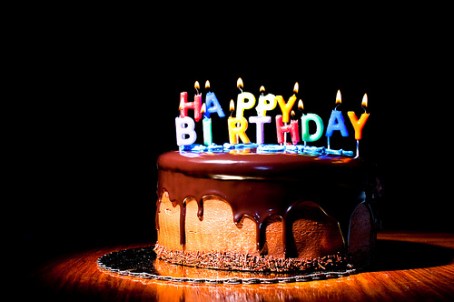
With culinary advancements in the 17th century, cakes began to look more like their contemporary counterparts. At the time, they were a privilege of the wealthy and not until the industrial revolution were the materials and tools affordable and widely available enough for commoners to have birthday cakes too.
Although candles originated in China around 200 BC, it was the Europeans who popularized decorative candles. Candles made their way onto birthday cakes around the 18th century in Germany. Many cultures put enough candles on the cake to equal the age of the person, some cultures adding one more for good luck.
Some cultures also celebrate the birthday of a historical leader or religious figure. One of the most popular is Christmas, which commemorates the birth of Jesus. In the United States we also celebrate Presidents Day on the third Monday of February, which honors George Washington’s birthday (February 22, 1732). Although most people celebrate the day they were born, there are some cultures in Europe and Latin America that also celebrate one’s name day. In that case, if you were named after a Saint, you would celebrate on that Saint’s name day (sometimes in addition to your birthday, other times in place of it — depending on the country).
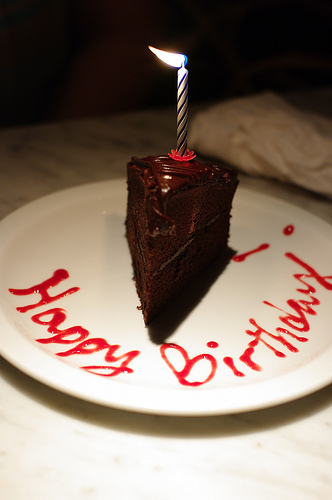 There are many other birthday traditions from around the globe, some are current and others have long passed. In some South American cultures, it was tradition to pull on the earlobes of birthday children, once for each year they have lived. In India, icing from the cake is sometimes rubbed on the face of the birthday person.
In Mexico, a Piñata is a colorful container, often shaped like a star or an animal, that is filled with treats. The birthday person, usually a child, is given a stick to break the piñata or in some countries there are strings to pull open a trap door. Although this is well known, there are many other countries, such as Denmark, India, Sri Lanka, the Philippines, Argentina, Brazil, Japan and others who have similar traditions involving clay pots or other containers that are broken to release treasures.
PS – Today, we are celebrating a very special birthday. Exactly one year and 235 secrets ago, I posted the first secret on BrokenSecrets.com — You Can Use Foil in the Microwave.
Broken Secrets
Subscribe on: Facebook | Twitter | Email | Kindle
Photos: Omer Wzir (cc), Joe Gray (cc)
Sources: BirthdayCelebrations.net, Wikipedia (Birthday, Birthday Cake, Candles, Pinata)
How to Dispose of Medicine
By Chad Upton | Editor
You should regularly check your medicine cabinet for expired drugs. Because, if you’re like me, it’s probably more like a time-capsule than a medicine cabinet. Yesterday, my wife excavated a teeth whitening kit of mine that expired almost 5 years ago.
When you come across unused or expired medication, you have two options: keep it or get rid of it. There is some debate about the safety and effectiveness of expired medication, but there is no debate about the risk to pets and children when they get into unused medication. Prescription medication can be extremely dangerous, in fact: the second leading cause of death in 35-54 year olds is accidental overdose.
The best way to get rid of old medication is to give it to an organization that can properly dispose of it.
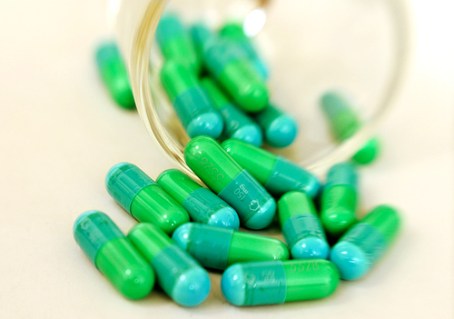
Your local police department may have take back programs where you can return drugs and they will send them away to be discarded. Some local drug stores have take back programs and others, such as Walgreens, sell special envelopes that can be used to mail your drugs to a proper disposal facility.
If professional disposal is not available to you, the next option is to discard the drugs in your own trash. The FDA, and other experts, recommend putting the discarded drugs in a small Ziploc bag and mixing item with undesirable waste such as coffee grounds or kitty litter. This reduces the chance of pets and children finding them or being interested in them if they do find them.
The FDA also maintains a small list of medications that you can flush down the toilet, because they could be potentially dangerous to pets or children if found in the trash. Some of the common ones include demerol, percocet, oxycontin and morphine.
Although flushing these drugs is better than putting them in the trash, sending the drugs away for proper disposal is always the best option. Professional disposal reduces the probability that the drugs will end up in the water supply that we, and many other species, rely on.
You may also want to read this post: Most Medication is Still Good After the Expiration Date
Broken Secrets
Subscribe on: Facebook | Twitter | Email | Kindle
Photo: Sparktography (cc)
Sources: FDA, Tylenol.com, Smarxt Disposal, Walgreens.com, Sharps


 Broken Secrets