Author Archive
Sunscreen and Sunblock are Not the Same Thing
By Chad Upton | Editor
Sunscreen, sunblock, suncream, sun lotion or whatever you want to call it, is much more complicated than most people realize.
The basic idea is well known: a number known as the “SPF” (sun protection factor) is used to describe its effectiveness at blocking sunlight.
Ultraviolet radiation from the sun can burn your skin with too much exposure. Understanding UV rays and SPF ratings is important if you want to prevent sunburns, long term skin damage and skin cancer.
There is a common misconception that SPF values refer to the extended amount of time they allow you to spend in the sun. For example, one myth suggests that an SPF 30 rated lotion would allow someone to stay in the sun 30 times longer without burning, compared to when they were not wearing sunscreen.

Time would be a nice and easy way to calculate it, and it’s fairly close, but the SPF cannot accurately relate to the time of sun exposure because there are a couple factors that affect how long it takes to get a sunburn, whether you’re wearing sunscreen or not.
- Time of Day
- Skin Type
Time of Day
Due to the angle of the sunlight in the morning and late afternoon, our atmosphere filters out more radiation at those times. You will burn more slowly at these times than during midday.
Skin Type
The Fitzpatrick scale divides skin types into six levels of sensitivity to sunlight. Type 1 is characterized by very fair white skin with freckles — it cannot tan, only burns. Type 6 is very dark brown or black skin that does not darken in sunlight. The in-between types demonstrate varying degrees of natural darkness and increased darkening when exposed to sunlight.
SPF and UVA/UVB
The SPF number reflects the relative amount of protection the product provides against UVB exposure.
An SPF 15 product would allow 15 times more exposure to UVB rays than when not wearing it. As mentioned above, this is not a measurement of time since there are other factors that can change the protection level and therefore the time. In addition to time of day and skin type, activities such as swimming can also reduce protection since they can reduce the amount of sunscreen on the skin.
Also, sunscreen and sunblock are not the same thing, although they are often used interchangeably. Sunblock is opaque and usually contains zinc oxide. It doesn’t normally need to be reapplied throughout the day. Sunscreen is usually transparent and needs to reapplied every two hours since the active ingredients break down over time while being exposed to sunlight. This obviously has a huge affect on how much protection time the product adds since it dramatically loses effectiveness after a couple hours.
Another problem with SPF numbers is that they don’t account for UVA rays in most countries. While UVB rays cause visible changes to your skin (tan/burn), UVA rays cause damage that may be invisible initially. Since UVA damages DNA, it increases the risk of malignant melanomas, a potentially life threatening issue. Some countries require a minimum level of UVA protection in sunscreen and more countries should adopt this regulation since the effects of UVA are not well known.
In fact, most countries lack thoughtful regulations on sun protection in general, so be weary of sunscreens that claim to offer broad spectrum protection. Unless the product contains zinc oxide, avobenzone or ecamsule, it doesn’t likely provide good UVA protection.
In addition, there is also infra red rays, which some sunblocks also reduce.
Have fun in the sun.
Broken Secrets
Subscribe: Facebook | Twitter | Email | Kindle
Sources: Wikipedia (spf, skin color, NSFW – sun tanning, von Luschan scale)
Photo: Rishi Bandopadhay (cc)
Not Making Your Bed Kills Dust Mites
By Chad Upton | Editor
There’s a hot debate on whether you should make your bed or not. Some people believe it teaches children discipline, others like the look and/or feel of a made bed and tight sheets.
Regardless of your preference, there is some new information that indicates not making your bed is cleaner than making it.

Millions of dust mites can live in your bed if the conditions are right. Because dust mites can impact our health with asthma and allergies, scientists are studying mights to improve health in the future.
Dust mites survive best in warm and moist conditions. Scientists say that one of easiest ways to reduce the heat and humidity inside your bed is to leave it unmade in the morning.
Because they’re so small, less than a millimeter, it’s very easy to deprive them of heat and moisture.
Broken Secrets
Get updates from: Facebook | Twitter | Email | Kindle
Source: BBC
Photo: Wikimedia Commons
Transport Suit Jackets Inside-Out to Prevent Lint
By Chad Upton | Editor
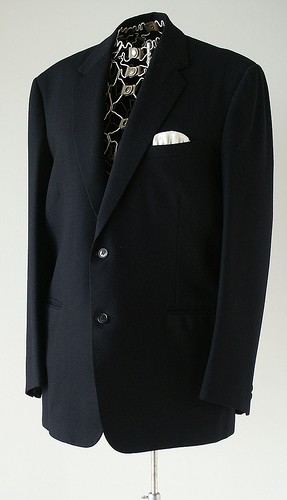 Between high school and college, I had a sales job that required a suit and tie. I learned a lot at that job, more than I probably realized at the time — about operations, sales, security, people and life itself.
I often carpooled with my friend Ryan and I’ll never forget the little secret he passed on from his dad Tim.
Before you get in a car wearing a suit jacket, take the jacket off and turn it partially inside-out: loosely fold it along the middle of the back so the inside of the jacket is on the outside, leaving the sleeves wrapped inside. Then place it flat on the back seat or in the trunk to prevent the jacket from wrinkling or getting lint or stains on the outside of it.
It’s not very comfortable to wear a suit jacket in a car, so you’ll probably take it off anyway. Folding it inside out will cut down on lint rollers and dry cleaning.
Broken Secrets
Get updates from: Facebook | Twitter | Email | Kindle
Photo: Swing Candy (cc)
Cocktail Terminology
By Chad Upton | Editor
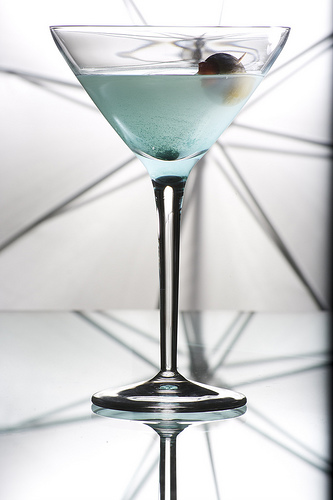
Ordering a cocktail can be as confusing as ordering at starbucks. Here’s a quick guide to help you get it your way.
- on the rocks – on ice (“rocks”)
- straight up – chilled in a shaker and strained to remove ice (aka “up” or “shaken”)
- stirred – served on ice and stirred with a bar spoon
- neat – served at room temperature, no ice
- back – a glass of non-alcoholic liquid served with your cocktail, such as water for mixing with Whiskey
If you like martinis, they have a language of their own. Traditionally, a martini is made with gin and dry vermouth, then garnished with a green olive. Many variations have become popular, especially swapping top shelf vodka with gin. Here are some terms for traditional martinis:
- dry – little to no vermouth
- wet – extra vermouth
- dirty – extra olive juice, making it look “dirty” (murky)
- perfect – equal parts dry and sweet vermouth are used
Cheers!
Broken Secrets
Get updates from: Facebook | Twitter | Email | Kindle
Photo: Adrian Hoffmann (cc)
Sources: Wikipedia (on the rocks, martini), about.com, drinksmixer.com
Toilets: Taboo for TV Until 1957
By Kaye Nemec
Prior to the very well thought out Leave It to Beaver pilot episode in 1957, it was considered taboo to show a toilet on television. If you consider how frequently bathroom scenes (some racier than others) appear in movies and on TV shows now, it is hard to imagine that it was unheard of 54 years ago.
Leave It to Beaver’s pilot episode, Captain Jack, was the first network TV program to bring bathrooms out of hiding when it included a scene with Wally and the Beave with a baby alligator they had ordered through the mail. Assuming a pet alligator would not have been approved, they hid it in the toilet tank.
The toilet scene is at about 3:20
When it was originally filmed, the whole toilet was included in the scene, but CBS refused to air the episode as is. Unable to figure out an alternative place to hide the alligator, the production company was finally able to compromise with CBS and very tight camera angles were used to make sure the seat was kept hidden and only the toilet tank appeared on screen.
The ban on toilets continued even into the late 1970’s when people using toilets on TV was simply not part of scripts. However, during this era All in the Family was the first show to air the sound of a flushing toilet.
Broken Secrets
Get updates from: Facebook | Twitter | Email | Kindle
Sources: The Toilet Museum, Snopes
Blue Eyes Are Not Actually Blue
By Chad Upton | Editor
The most common eye color is brown and the least common is green. Eye color is determined by a number of genes, the actual number of which is unknown. Using six known genes, scientists can predict eye color from brown to blue with 90% accuracy.
The darkness of brown eyes is determined by the amount of melanin (pigment) in them. Blue eyes have little or no melanin, making them translucent; they only appear blue because of an optical illusion known as the Tyndall effect.
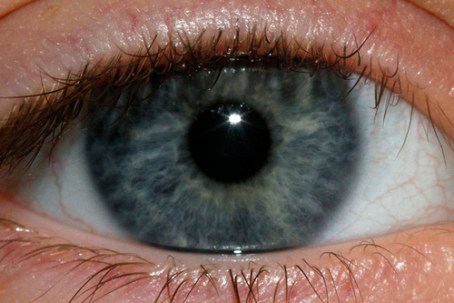
The color we perceive something to be is usually due to their pigment, but somethings appear colored for other reasons. Structural colors are one classification of colors that occur not because of their pigment but because of the way light interacts with the matter.
Without getting too technical, different colors of light have different wavelengths. When those waves pass through matter, they can be filtered or scattered in different ways. The Tyndall effect occurs when a light scattering particulate is suspended in a light transmitting medium and the size of the individual particulate is slightly below or near that of the visible spectrum of light.
Some things that appear to be colored due to optical effects are: blue jay and peacock feathers, mother of pearl, butterfly wings, beetle shells, bubbles, oil slicks and one we see every day: the sky.
Broken Secrets
Get updates from: Facebook | Twitter | Email | Kindle
Photo: Jennifer Durfey (cc)
Sources: Wikipedia (Eye Color, Tyndall Effect, Color)
Brain Freeze is Triggered in the Sinuses
By Chad Upton | Editor
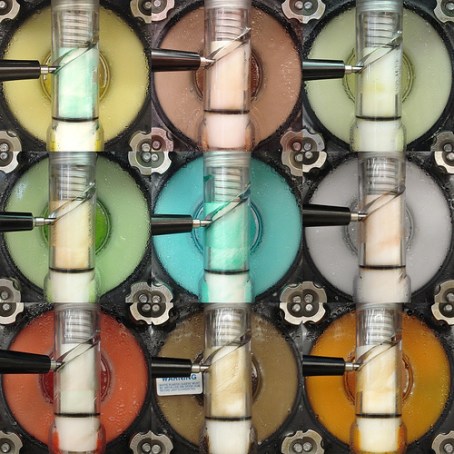
When I was a kid, the local 7-11 had 20 Slurpee flavors. Every Saturday, my brother Brett and I would bike there with a palm full of allowance and return with a belly full of food coloring. We didn’t know how lucky we were — I’ve never seen another convenience store with that many flavors. But, there was one thing we did know: BRAIN FREEZE.
While it’s frequently called brain freeze or ice-cream headache, this mind numbing pain is known as sphenopalatine ganglioneuralgia in the medical community. Don’t even try to sound-it-out, even the British Medical Journal calls it ice-cream headache.
It happens to some people more easily than others and although your childhood imagination may disagree, your brain is not actually being frozen. The pain stems from a defense mechanism that is employed all over your body.
When it’s cold outside, your arms and legs usually cool down faster than your core because they generally have less insulation (fat) than your core. Because blood flows into your extremities and then back to your heart, the blood coming back will cool down your core. Your body protects itself from rapid cooling by constricting the veins in your extremeties, which reduces flow and slows the return of colder blood into your core.
This is a temporary reaction. After some time, the blood-vessels will expand to allow greater flow so these parts get proper blood flow again. This affect can be quite noticeable in the right conditions. If you’re outside for a while, you may find that your fingers are cold at first, but feel warm later. This is part of the reason they warm up. Also, redness in your cheeks is caused when the blood-vessels expand like this.
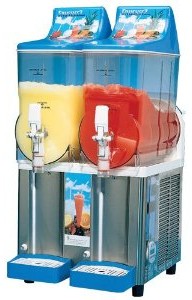 As you consume extremely cold food and beverages, the capillaries in your sinuses can rapidly constrict when cooled and expand when warmed. Pain receptors react to this by sending signals to your brain via the trigeminal nerve, the same nerve responsible for sensations in the face. This is why it can feel like the pain is coming from your forehead.
To get rid of a slushie stinger, some doctors suggest holding your tongue on the roof of your mouth to warm it up. Another tip, which you probably learned at a young age, eat slowly!
There is also a belief that you can only get brain freeze in warm environments, but that’s not true.
Broken Secrets
Get updates from: Facebook | Twitter | Email | Kindle
Photo: Tom Magliery (cc)
Sources: Wikipedia, British Medical Journal, io9, about.com
Secrets of the Red Carpet
By Chad Upton | Editor
The most famous red carpet was rolled out last night for the 83rd Annual Academy Awards. I find the red carpet fascinating, but it has nothing to do with what people are wearing.
While it looks like a random flow of people entering an award ceremony, it’s actually a well choreographed vehicle for publicity — publicity for the event itself and for the people and projects they are involved in.
I walked the red carpet at last year’s Webby Awards, where all of you helped me win a Webby for Broken Secrets. One thing that surprised me was the timing of the red carpet. While it looks like a casual flow of people entering the gala, it’s actually a regulated flow of people selected to pass by the cameras.

Not everyone who attends the event walks the red carpet. Usually, just the guest representing a project will walk the red carpet. Each guest walks at a scheduled time. These times are staggered to maintain an even flow of attendees moving along the press line.
In some cases, the event’s press liaison may provide the press with a list of red carpet attendees so they can decide who they want to interview and produce stories about. If you see someone with an attendee on the red carpet, it is likely their spouse or publicist. A publicist usually walks ahead of their client and decides which media outlets will do the next interviews with the person they represent.
Guests who do not walk the red carpet, escape the press circus by entering through another entrance.
The earliest known reference to “walking a red carpet” is from a play called Agamemnon (458 BC) by Aeschylus. When the hero returns from Troy, his chariot stops at a crimson path for him to walk on. So, like a god, his feet will never touch the earth again.
Broken Secrets
Get updates from: Facebook | Twitter | Email | Kindle
Photo: Ian Muttoo (cc)
Fertilizer Can Melt Snow and Ice
By Chad Upton | Editor
If you need to boil water while cooking, the recipe may suggest that you add salt to the water. This salt is not for taste, it’s for efficiency. The salt lowers the heat capacity of water, making it boil with less energy (heat) from your stove. It also raises the boiling point of the water slightly, although not significantly. In other words, it helps you get the water hotter and in less time than if you didn’t add salt.
 Salt also has an affect on the freezing point of water — it lowers it. This is important to understand during winter, especially if you have a driveway or sidewalk to keep clear. Because salt lowers the heat capacity of water (or snow/ice), it’s takes less energy (heat) to melt. This only happens down to about 15°F (-9°C). Below that, salt is not very effective because it cannot dissolve at those temperatures.
Rock salt (sodium chloride) is the usually the cheapest of all the ice melting products. There are a variety of alternatives that are effective at lower temperatures.
You should be careful when choosing an ice melter. Most ice melting products, including salt, are corrosive and can damage concrete, especially if it’s very new concrete. They can also be harmful to vegetation and grass. (more…)
How to Clean Up a Leaking Battery
By Chad Upton | Editor
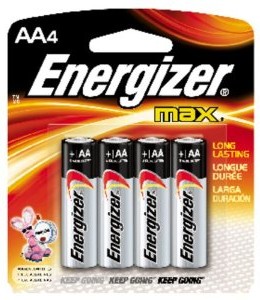 Most household batteries are “alkaline” batteries. Under normal use, they’re relatively safe and stable. But, they are prone to leaking potassium hydroxide when the conditions are right.
Some causes of leaks are:
- Trying to recharge disposable cells
- Mixing battery types (ex. alkaline with nickel-cadmium)
- Mixing new batteries with old ones
- Heat
- Damp environments
- Leaving batteries installed during long term storage
These conditions put strain on the batteries in different ways that can cause them to leak. This leaky material is often called “Battery Acid” although in the case of alkaline batteries, it’s actually not acidic at all — it’s basic (the opposite of acidic on the pH scale).
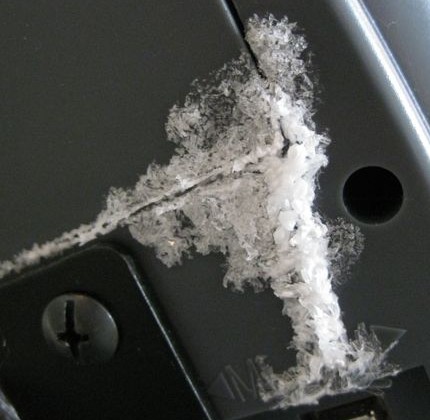
But, it’s still a corrosive material that can cause skin, eye and respiratory irritation. Additionally, if a battery leaks inside your electronics, this crystalized material can corrode the electronics and prevent them from functioning properly.
To clean it up you’ll want the following:
- Eye protection
- Skin/hand protection (gloves)
- Face mask
- Neutralizing acid (lemon juice or vinegar)
- Q-tips, Paper towel and/or disposable rag
The key thing to remember is that you don’t want to come in contact with the potassium hydroxide, so use a Q-tip to wipe the material away from the batteries. If you have trouble cleaning it off of battery contacts in electronics, you may try a drop of neutralizing acid on the end of the Q-tip.
If the battery is an acid battery, such as a car or marine battery, you can use baking soda (an alkaline) to neutralize the acid (ie. don’t use lemon juice or vinegar in this case).
For information about battery disposal, see: How to Dispose of Household Hazardous Waste
Broken Secrets
Get updates from: Facebook | Twitter | Email | Kindle
Sources: Wikipedia (Alkaline Battery, Alkaline, pH)


 Broken Secrets