Author Archive
Studios Pay to Have Movies Rated
By Chad Upton | Editor
I always find it funny when movies come out on video and they’re advertised as “unrated.”
 The “unrated” designation seems to imply that the film is so outrageously sexual, horrific or crude that there’s no rating that could possibly classify how extreme it is. But, that’s not usually true.
While the unrated release may be more sexual, horrific or crude than the rated version, it also may not be. To me, it’s just like doing a math test, not handing it in and calling it “ungraded.” In either case, it doesn’t necessarily reflect the nature of the content — it just means that it didn’t get a stamp from somebody with elbow patches.
The movie rating process varies by country. In some places, such as Australia, movies are rated by the government. In other places, such as the United States, an independent organization handles ratings.
In the US, the Motion Picture Association of America (MPAA) actually has a trademark on the ratings known as: G, PG, PG-13, R and NC-17. That means those ratings cannot be used without the permission of the MPAA. That adds credibility to the rating system, but it also adds digits to their bottom line. You see, when a filmmaker or studio submits a film for rating, they pay $2,500 – $25,000 to have their film rated (based on cost of the film and the annual revenue of the studio).
 The MPAA also has an agreement with the major studios: that all theatrical films will be submitted for rating. That’s why most movies that you see in the theater have a rating. It’s not a legal requirement, at least not in most places. In fact, it’s a business decision.
Even though it costs a lot of money to have a film rated, it can be well worth it. The rating that a film receives can dramatically impact the film’s success at the box office. For many films, the lower the rating, the wider the audience. But, in the case of movies that are targeted at older teenagers and adults, higher ratings may be more appealing. This is part of the phenomenon that contributes to the status of the “unrated” marker.
The rating a movie gets is so important that studios will often re-cut and resubmit a film for rating multiple times, until it receives the rating that they want. It’s all marketing, they know how they’re going to promote the film and the rating has a lot to do with it. Each time they resubmit a film, it costs $2,500.
The factors that contribute to ratings include: sexual content, violence, profanity, drug use and other material that may offend some audiences. The interesting part is that films released internationally are often re-cut for each country or cultural area. Sexual content in America generally pushes the rating up while the same content in France and Germany is more socially acceptable and does not necessarily increase the rating there. On the other hand, extremely violent films may be re-cut and toned down for those same markets where intense violence is less acceptable to ensure a lower rating.
 The ratings board is made up of 9 people (mostly men), ranging in age from 44 to 61. More recently, the board has been accused of “ratings creep” — the idea that movie ratings are becoming more lenient over time. A Clockwork Orange originally received an X rating in 1971, reserved for films that are recommended for adults over the age of 18. But the X rating is not part of the MPAA rating system that we know today. A Clockwork Orange was later given an R rating, which suggests that viewers under the age of 17 by accompanied by an adult. Clearly, it got a much lower rating the second time around.
The marketing of “unrated” films suggests they are similar to old X rated films. If you want to see an unrated film, check out some recent releases: The Hangover, Get Him to the Greek and Hot Tub Time Machine.
Broken Secrets
Subscribe on: Facebook | Twitter | Kindle
Sources: Filmbug, FilmRatings.com, Wikipedia (MPAA, MPAA rating system)
Trader Joe’s Marketed the First Reusable Shopping Bag
By Kaye Nemec
About 20 years ago, groceries were often carried in brown paper bags.
One day, someone realized that we were wasting too many trees, so many grocery stores changed to plastic bags. Then somebody realized that plastic bags didn’t decompose in landfills. Now, we’re finally transitioning to reusable bags. These bags cost at least $1 each, sometimes more, and you can re-use them for a long time.
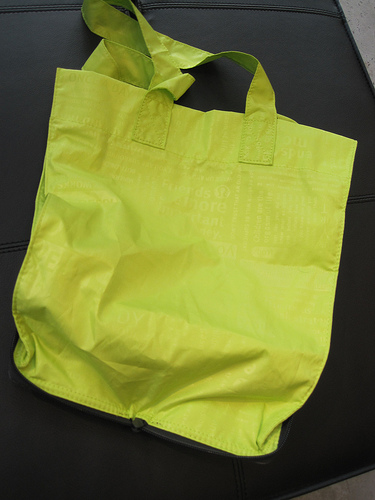
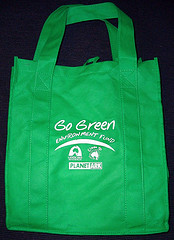
They are an excellent solution to the shopping bag dilemma, at least when you remember to bring them in the store with you. They don’t rip like paper bags and they hold much more weight than plastic bags. But, be careful, you should wash these bags regularly since they can be a breading ground for bacteria.
It turns out that Trader Joe’s was the first super market to offer reusable bags in 1977 with their “save-a-tree” canvas grocery bags.
Most of our international readers and even many of our US readers may not have heard of Trader Joe’s. They’re extremely popular in Southern California and they have stores in about half of the other states. Even if you haven’t heard of Trader Joe’s, you’ve likely heard of their owner, German supermarket giant, Aldi.
 Aldi is a global supermarket brand that has been around since 1961. They have over 8,200 stores and operates in 18 countries. Aldi was started by the Albrecht brothers and that’s where the name Aldi comes from — it means, “Albrecht Discount.”
The first Trader Joes was opened by Joe Coulombe in 1967. In 1979 Coulombe sold the company to Theo Albrecht, who created the trust that owns Trader Joe’s to this day.
Despite the relationship, Trader Joe’s and Aldi are very different – Trader Joe’s is a bright, island-themed store filled with hard-to-find, unique and upscale food selections at a great value. In addition to their innovative selection, Trader Joe’s also offers a wide variety of organic, natural, vegetarian, gluten free and vegan selections. In fact, in 2007 Trader Joe’s eliminated all added Trans fats from all of their private label products. Trans Fats were just the next thing to go in a list that already included artificial colors, flavors, preservatives and genetically modified ingredients.
At Trader Joe’s at least 10 new items can usually be found in the stores each week. You’ll usually have no problem finding an employee to help you with product questions and to ring you up and bag your selections for you. Shopping at Trader Joe’s is an experience, an event, it makes grocery shopping fun.
Like Trader Joe’s, shopping at Aldi is an experience, although in a much different way. It too has a small store format and limited selection with very low prices, but the store looks more like a warehouse – no frills, no decorations and certainly no “character.” Most of the products are stacked in cardboard boxes on pallets instead of actual shelves. Their slogan, “Honest to Goodness Savings,” sums up their philosophy, which is to bring their customers high quality food at the lowest possible price. Aldi only carries around 1400 of the most frequently purchased household and grocery items and 95% of them are store brand – not name brands you’ll recognize.
At Aldi you have to work a little harder for your savings. With only one register open most of the time, customers are moved through the line quickly and they’re responsible for bagging all of their own groceries at a separate counter to make space for the next guest. Looking for a cart to put your purchases in? You must deposit a quarter in order to get a cart and you’ll get your quarter back when you actually return the cart to the store instead of leaving it in the parking lot.
Domestically, a number of vendors create products under both labels – so some products you find at Aldi may be the same things you find in different packaging at Trader Joe’s. Since Trader Joe’s does not exist in the European market, some of their store brand products have begun to pop up on Aldi shelves there.
The next time someone asks if you want paper or plastic, thanks to Trader Joe’s, you can say “neither.”
Broken Secrets
Subscribe on: Facebook | Twitter | Kindle
Sources: TraderJoes.com, Trader Joe’s Timline (PDF), Aldi.com, NewYorkTimes.com , Wikipedia (Trader Joe’s, Aldi)
Photos: lululemon (cc), FoldableBags (cc)
Modern Chewing Gum is Made in a Lab
By Chad Upton | Editor
Chewing gum has been around for a long time. The first form of chewing gum was birch bark tar, dating back about 5000 years in Finland.
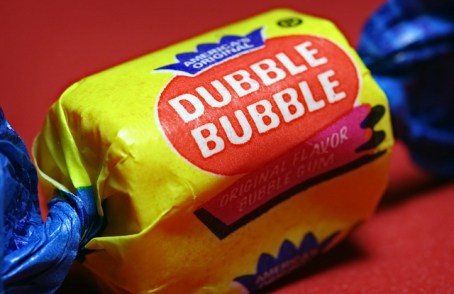
Ancient Greeks chewed a gummy substance from the mastic tree. Aztecs and Mayans chews chicle from the chicle tree.
Chicle is responsible for modern chewing gum. In fact, the famous brand of gum, Chiclets, is named after chicle. Wrigley originally used chicle from a number of natural sources in Central America. But, just like sugar, we found a way to create chicle in a lab, saving the expense of importing it.
In 1937, some scientists at Standard Oil (now ExxonMobil), developed Butyl Rubber, which is almost exactly the same as chicle. It’s also used to make rubber tires, basketballs, footballs, soccer balls and many rubber components used for home construction on roofs and around HVAC fixtures.
Global supplies of butyl rubber primarily come from two companies ExxonMobil and LANXESS, a spin off of Bayer Pharmaceuticals.
Chicle is still used for chewing gum in some markets, such as Japan.
Broken Secrets
Subscribe on: Facebook | Twitter | Kindle
Photo: Darren Hester (cc)
Sources: Wikipedia (Chicle, Chewing Gum, Polyisobutylene)
Some People are Genetically Predisposed to Dislike Broccoli
By Chad Upton | Editor
Broccoli and brussels sprouts are popular vegetables for kids to feed the dog under the table.
My brother and I had a really smart dog growing up, which must be why he didn’t like broccoli either. Although, he always liked to do what we did, so I don’t know if he actually disliked it or if he just liked to make the same face when he ate broccoli too. You know the face, when you squeeze your eyes shut and use your tongue to scrap any residual taste off the roof of your mouth.
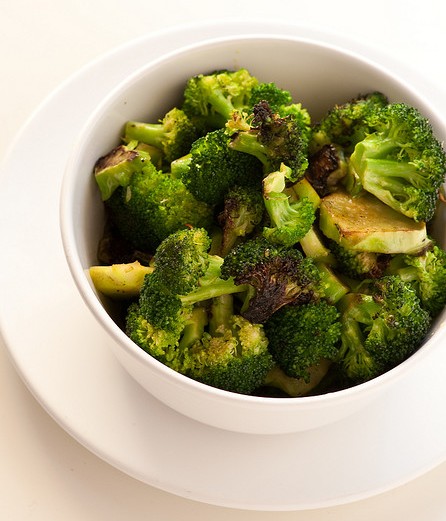
Getting kids to eat their vegetables can be a tough task, but there are plenty of adults who don’t like vegetables either. So why do some people like vegetables such as broccoli and other people passionately dislike them?
There are many reasons why people dislike vegetables. My brother and I always said it was the texture, not the taste. But, it was the taste and it’s scientifically proven.
There is an organic compound called phenylthiocarbamide (PTC) that tastes very bitter. Well, it’s very bitter to some people, it’s tasteless to others. About 70% of people have genetic traits that make them sensitive to the bitter taste of PTC, the rest of the population does not taste it.
While PTC itself is not found in food, there are a number of similar compounds which are. Many vegetables from the cabbage family (broccoli, cauliflower, horseradish, wasabi, mustard, brussels sprouts) contain these compounds.
Additionally, people who do not smoke and do not drink coffee or tea, taste PTC more than those who do consume coffee, tea and cigarettes. One big group of the population who doesn’t consume coffee, tea and cigarettes is children.
So, when you see kids who passionately dislike some vegetables, they may actually taste something that you do not.
Broken Secrets
Subscribe on: Facebook | Twitter | Kindle
Photo: Jules: Stonesoup (cc)
Sources: Indiana Public Media, Science Daily, Wikipedia (Broccoli, Brassica, Brassicaceae, Cruciferous, Kale, Phenylthiocarbamide)
Table Salt Used to Indicate a Person’s Social Status
By Kaye Nemec
While table salt is an important flavoring ingredient in modern day cooking, it had a much more significant reputation in earlier centuries.
It wasn’t until the early 1900s that manufacturers began processing table salt to be used in salt shakers. Before then, salt was served in very elaborate containers that often resembled chairs or thrones.
These “salt chairs” were commonly placed at the head of the table closest to where the most important guest. Salt was considered an extremely important substance that was to be treated with great admiration. Important people sat “above the salt.”

In Russia it was common to have a welcoming ceremony when guests came over that included serving a piece of bread with salt. The salt was served out of the salt chair or throne. Because of the popularity of this ceremony, salt chairs became popular wedding and house warming gifts. Bigger salt chairs signified a wealthier or more prominent place in society.
Typically salt chairs were about 5 inches tall. The salt was stored in what would be the seat of the chair and a lid was placed over the salt. Because the salt could corrode silver, the seat and lid of the chair were usually gold plated. Today, antique “salt chairs” can be found selling at auctions for $500 and up.
Broken Secrets
Subscribe on: Facebook | Twitter | Kindle
Sources: Milwaukee Journal Sentinel, Association of Small Collectors of Antique Silver
How to Tell Which Printing a Book is From
By Chad Upton | Editor
Books were once a luxury.
That changed with the printing press, making duplication of books faster and cheaper, which made books more accessible to common people. Eventually, public libraries made books available to everyone in a community.
 The way we access books is changing again, by eReaders like the Kindle and iPad.
If you browse the Kindle forums on Amazon.com, you may notice that eBook snobs refer to normal books as DTBs (Dead Tree Books). While eBooks are a status symbol now, they may eventually be the way common people access books, making paper books a luxury once again, reserved for expensive hardcovers and collector editions.
For some people, the only books they have ever read were the ones they had to read in school. This year, many high schools and colleges are using iPads and Kindles to distribute reading materials. It’s not because they’re fancy, it’s actually quite practical.
Although the initial cost of the device is high, the cost to create and distribute electronic books is almost negligible. The cost of a Kindle ($139) is about the price of two or three large college textbooks. At that rate, the device could pay for itself in the first semester.
Because it is much cheaper, faster and easier to download books, eBooks may eventually replace paper books as the primary way we read. Like I said, the reading devices are expensive, but even if people don’t want to buy a dedicated device, chances are good they already own one that is compatible. Amazon has already made software that allows Kindle books to be downloaded and read on Windows and Mac computers, iPads and iPods, along with all of the major smartphone platforms (iPhone, Blackberry and Android).
The future of books may be eBooks. In the meantime, it’s hard to know how popular paper books are, unless you know this secret.
 When a book is printed for the first time, the publisher doesn’t know how well it will sell. They print a limited number of books to minimize the risk of their investment. If the book sells well, they can always print more.
Most publishers list the number of the printing in an ambiguous format on the publishers copyright page near the front of the book. They put the numbers 1 through 10 on their own line near the bottom of the copyright page. Sometimes, they’re in left to right order from 1 to 10. Other times, the numbers alternate from left side to right side, with 10 in the center.
The lowest number you can see on this line is the printing that the book is from. When a book goes into its second printing, the number 1 is removed. On the third printing, the number 2 is removed and so on.

1st Printing

9th Printing
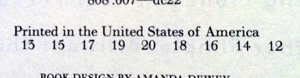
12th Printing
You can see that the numbers alternate from left to right. They sometimes do that so the remaining numbers stay centered without adjusting the printing of the remaining numbers. If you see them in a book and they are not alternated, the remaining numbers will be off to one side instead of being centered (they don’t normally adjust the type to re-center it).
Sometimes, printings are confused with editions. A book may go through many printings and still be considering the “First Edition.” Generally, the edition doesn’t change unless the content in the book or the publisher changes.
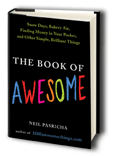
The images above are from one of my favorite books, The Book of Awesome. As you can see, this book has been extremely successful — it’s in its 12th printing! Frankly, it is an awesome book and I’m not just saying that because I’m trying to be funny or because I’m in the book — the sales speak for themselves, it is a great book.
Broken Secrets
Subscribe on: Facebook | Twitter | Kindle
Sources: Travelin Librarian, Between the Covers, Wikipedia (Books), Kotaku
Chewing Sunflower Seeds Can Help You Stay Awake
By Kaye Nemec
We’ve all been there: we’re driving late at night, determined to make it to our final destination, growing more tired with each passing mile. We roll our windows down, turn up the radio’s volume, gulp down caffeine — anything to keep our eyelids from dropping.
Drowsy driving is a dangerous situation. In fact, studies show that it can be just as dangerous as drunk driving. Of course the best solution would be to pull over and get some rest. But if you have no choice and really need to keep on driving, try chewing sunflower seeds to stay awake.

Eating sunflower seeds (with shells) is not an easy task. The act of using your teeth to crack the seed, figuring out how to remove the seed from the shell and successfully discarding the shell, not to mention eating the seed, will keep your brain focused. Be sure to have an empty cup or bottle handy to spit the shells into or your car will be a mess when you finally get to your destination. Grabbing a healthy drink to go with the seeds is a good idea too, they are certainly a salty snack and will leave you feeling pretty thirsty.
Mastering the art of eating sunflower seeds “hands free” can take a little time, so if you’re not quite there yet I recommend a few practice sessions at home before taking this trick out on the road. The point is to keep your mind active and alert, but not to be so distracted that you’re unable to focus on safe driving.
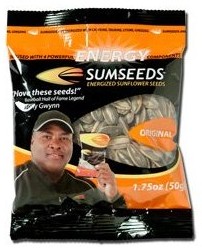 Want to kill two birds with one stone? At your next pit stop, get a package of SumSeeds. They’re a brand of sunflower seeds infused with caffeine, taurine, lysine and ginseng. They come in four flavors; original, salt & pepper, honey BBQ and dill pickle. If your local store doesn’t carry them, you can get them from Amazon.
In addition to the mental concentration and energy it takes to eat sunflower seeds, their nutritional value will also help improve your overall health and wellness. Unlike the sugars and refined carbohydrates often found in common “pick me up” snacks, sunflower seeds are packed with healthy fats, protein and fiber.
Broken Secrets
Subscribe on: Facebook | Twitter | Kindle
Sources: Wikihow.com, AAAFoundation.org, SUMSEEDS.com, Sunflowernsa.com
Photo: photofarmer (cc)
Some Eggs Do Not Need Refrigeration
By Chad Upton | Editor
Eggs are incredibly versatile. They can be prepared many different ways and appear in thousands of recipes, from salad dressings to dessert puddings.
While eggs taste great, they can also be dangerous if not treated properly. In the United States, about 1 in 20,000 eggs may contain salmonella — a bacteria that can make people very sick and possibly lead to death. In fact, approximately 142,000 cases of salmonella poisoning are reported each year and approx 30 of those cases result in death.
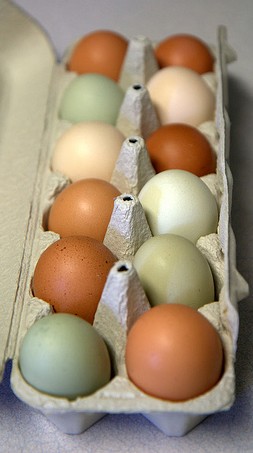 In many countries, eggs lay on supermarket shelves completely unrefrigerated. In other countries, eggs must be refrigerated when they are shipped, stored and sold.
Eggs have a natural protective layer on the outside of them which preserves the egg for a long period of time without refrigeration. Unfortunately, eggs can become contaminated with salmonella. This happens by contacting feces or other environmental contaminants during production. It can also be caused by the ovaries of an infected hen.
Because of this risk, countries such as the US and Canada insist that eggs be washed before they are sold. The advantage of this is that potential bacteria is removed from the outside of the egg. The disadvantage: the natural protective coating will also be removed, which requires that eggs be refrigerated to mitigate the risk of other contamination.
Although rare, there is also a risk that the egg yolk is infected. Refrigerating eggs prevents the potential bacteria from multiplying further, which reduces the risk of illness if a contaminated egg is consumed.
Typical egg care varies by country. If you buy eggs that are refrigerated, you should refrigerate them at home. If the eggs are not refrigerated at the time of purchase, you may optionally refrigerate them at home to extend the shelf life.
Room temperature eggs are recommended for hard boiling, experts say the shell is easier to remove because the outer membrane (just inside the shell) is weaker.
Many chefs suggest that refrigerated eggs should be at room temperature before they are mixed for baking, salad dressings and mayonnaise. The yolk in a cold egg is more firm, so they mix better at room temperature. Therefore, cold eggs are ideal for poaching or frying, reducing the chance that the yolk will break open during preparation.
Broken Secrets
Subscribe on: Facebook | Twitter | Kindle
Sources: USDA, Chow, Banderas, Ochef, Wikipedia (Salmonella)
Photo: chizang (cc)
Secret Menu Items
By Kaye Nemec
When you go out to eat, you generally choose your meal based on the menu items and maybe making a few tweaks here or there.
Many restaurants have “secret” menus that are becoming increasingly well known, thanks to the internet. So the next time you’re having a hard time deciding what to order, try to remember some of these secret menu items.
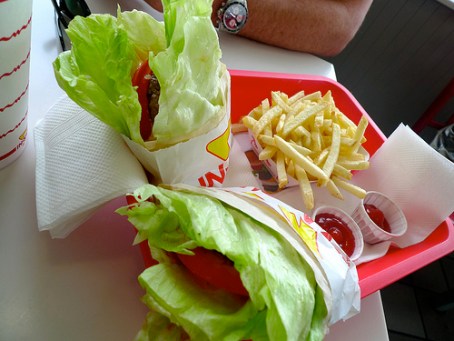
At Subway, my favorite secret menu item is the Pizza Sub. Rookies may not know about it, so you may have to instruct them: it’s basically tomato sauce (from the meatballs) with pepperoni and cheese (plus whatever other toppings you want). I suggest shredded cheese and toasting to get pizza-like melted cheese. If you’ve never had a pizza sub, do yourself a favor.
Chains like Taco Bell and Chipotle – restaurants that usually serve items made to order and only use a few ingredients – will allow you to individualize your order. Next time you’re in the mood for Mexican look at the menu loosely and ask for beans instead of meat or make an order of Nachos at Chipotle, they’ve got all the ingredients, but these arrangements are not on the menu.
Did you know you can order Dairy Queen’s Blizzard of the Month even after its respective month has passed? So if you fell in love with the Strawberry Golden Oreo Blizzard in June and aren’t crazy about the current Brownie Batter option, go ahead and get your Golden Oreo fix, they’ve still got the ingredients on hand!
Another favorite is the Neapolitan shake at McDonald’s. Instead of choosing between a chocolate, vanilla or strawberry shake, have them all in one cup! You may have to explain this one to the chef, but basically they just have to stop the shake machine from filling the cup and switch the flavor. Of course, they’ll have to repeat the stop and switch a couple times to get all three flavors.
One of the worst kept secret menus comes from a popular West Coast fast-food chain called In-N-Out Burger. In-N-Out is wildly popular for their simple menu of burgers, fries and shakes. Their ingredients are fresh and never frozen – you can even see them slicing real, fresh potatoes and making them into delicious French fries right before your eyes. To the average customer, menu options consist of a hamburger, cheeseburger, Double Double, French fries and vanilla, chocolate or strawberry shakes.
To the In-N-Out regular, the menu consists of items like Double Meat, Grilled Cheese, 3 x 3 (or 4×4 or 5×5 etc.) — which is the number of patties and number of cheese slices. There is also Animal Style with all the fixin’s. Or, if you’re watching your carbs, you can get “protein style” which replaces the bun with lettuce. Because this secret menu has become so popular, the chain has published it on their website.
According to internet rumors, another popular chain with a large secret menu is Jamba Juice. Known for their mostly “healthy” and refreshing fruit smoothies, Jamba Juice has a secret menu that is full of smoothie options with a much higher calorie count. White Gummi Bear seems to be one of the most popular options, others flavors include Banana Cream Pie, Peanut Butter & Jelly, Pink Starburst and Push Pop.
In addition to wide-spread secret menus, several restaurants are open to customers creating individualized menu items for themselves. Starbucks, for example, is open to customers creating whatever drink they’d like. You are welcome to combine flavors, add extra espresso shots, blend a normally iced drink, put ice on a normally hot drink etc. Your options appear to be endless. For a complete list of Starbucks drink options, check out this other post on Starbucks Drink ID Codes.
Broken Secrets
Subscribe on: Facebook | Twitter | Kindle
Sources: In-N-Out.com, Jamba Underground, The Consumerist
Photo: SanFranAnnie (cc)
McDonald’s Once Owned Chipotle Mexican Grill
By Chad Upton | Editor
Chipotle Mexican Grill is a popular fast food restaurant with more than 1000 locations in the United States, Canada and England.
For those who don’t know, they are well known for using fresh and healthy ingredients. For the most part, they use meat from animals that are free range, fed vegetarian diets and raised without antibiotics, hormones or arsenic, not to mention vegetables that are organic and locally produced.
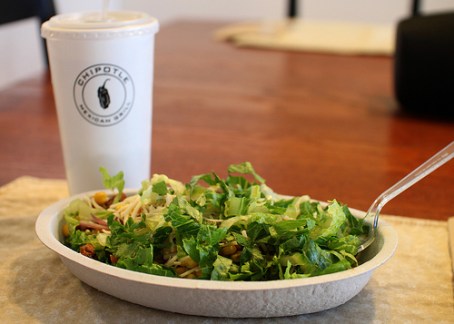
If you’ve read or seen Fast Food Nation (2001/2006), you’ll know that most fast food chains do not operate like this. They source the cheapest meats possible, which often come from animals raised in the least healthy ways. If you’ve seen the documentary Food Inc (2008), Chipotle is painted as a very different kind of fast food chain.
That’s why it’s so surprising that McDonald’s once owned a majority share.
Chipotle was started in 1993 by a chef named Steve Ells. The first store was in Denver Colorado, followed by a few more Denver stores in 1995 and five more in 1996. The chain was growing quickly, so they accepted outside investors in 1998, including McDonald’s.
Because the chain was expanding so quickly, it made a lot of sense for McDonald’s to invest. The funding helped Chipotle expand even more quickly, going from 16 stores in 1998 to 500 in just 8 years.
In January of 2006, Chipotle went public on the New York Stock Exchange. It was the second most successful public offering for a restaurant, second to Boston Chicken (now Boston Market), which was another McDonald’s property. McDonald’s divested its interest in both companies in October 2006 to focus on the McDonald’s brand.
It should be noted that Chipotle chose to sponsor the documentary Food Inc. Although, it’s not know if it was the chicken or the egg, that is if Chipotle was painted in such a positive light because they were a sponsor or if they sponsored and promoted the film because it made them look good. The sponsorship was announced almost two months after the film was released, so it’s plausible the sponsorship was an effort to promote the film because it was so favorable to Chipotle.
Broken Secrets
Subscribe on: Facebook | Twitter | Kindle
Sources: grist, wikipedia, chipotle
Photo: Mr. T in DC (cc)


 Broken Secrets