Author Archive
Why It Is Called a Swan Song
By Kaye Nemec
If you’ve been watching NBC’s The Sing Off, you’re probably familiar with the term “swan song.” At the end of each episode, the group that gets voted off leaves the stage as they perform what host Nick Lachey refers to as their swan song.
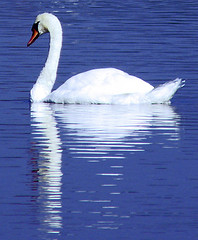 A swan song is used in reference to any final theatrical or dramatic performance. It can also be said that a political candidate is singing his/her swan song during their final political campaign or final term of office.
The term “swan song” comes from the belief that Mute Swans (Cygnus olor) were completely silent until the last few moments of their life, when they would sing a beautiful song. Although this is an ancient myth and was proven to be false, as far back as 77A.D., the legend has lived on and the term swan song has become mainstream.
Although Mute Swans do have a straight trachea that prevents them from making loud noises and, although they are usually pretty quiet, they are not mute. They make hissing, whistling, snorting and soft bark-like noises.
Broken Secrets
Get updates on: Facebook | Twitter | Email | Kindle
Photo: Christian Roberts (cc)
Sources: University of Michigan, Wikipedia
How to Dispose of Household Hazardous Waste
By Chad Upton | Editor
Every home has things that should NOT go in the trash. Yet, many people don’t know what to do with them or even what some of these items are.
Some examples are:
- batteries
- compact fluorescent light bulbs
- paints and stains
- pesticides and herbicides
- fertilizers and poisons
- cleaners and disinfectants
- car fluids
- medicines and prescription drugs
The main concern is that when many of these hazardous materials make it to landfills, they will eventually leech into our water supply and have potentially dangerous consequences.
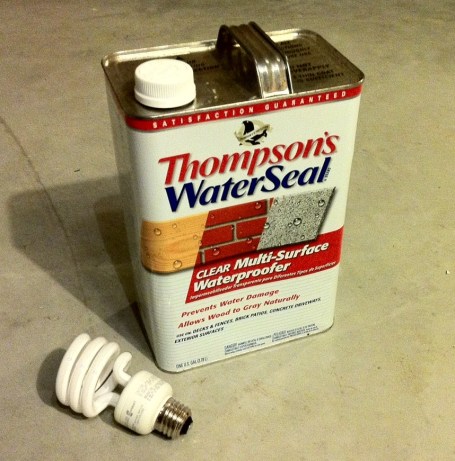
Many large retailers such as Lowe’s, Radio Shack, Best Buy, Sam’s Club, Whole Foods and many others will accept certain types of batteries, Ni-Cad and Car Batteries being the most popular types accepted. Some retailers, like Home Depot and Lowe’s, will also accept compact fluorescent light bulbs.
For most other hazardous materials, you’ll likely need to go to your city’s drop off depot. Sometimes this service is paid for by your taxes, other cities charge a usage fee depending on what you’re dropping off.
A great site to help you find a nearby retailer or city depot to recycle or safely dispose of some of these items is earth911.com. You tell it what hazardous material you have and where you are, it will try to tell you the nearest place you can take it. I got really good results for everything I tried.
For medicines, check out this previous post: How to Dispose of Medicine.
Broken Secrets
Subscribe on: Facebook | Twitter | Email | Kindle
Sources: Oregon Live, Earth 911, City of Toronto
Why We Clink Glasses When We Toast
By Chad Upton | Editor
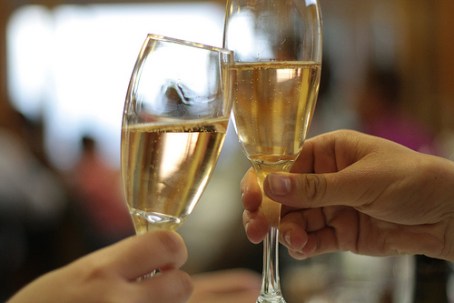
Many of you will be clinking glasses with family and friends this time of year and there are a number of theories about where this custom started.
One belief is that ancient societies believed that noise would scare away the demons (that they believed) were lurking around every corner. Firecrackers and noise makers are popular instruments to ring in the New Year, also believed to stem from the idea that noise would scare away evil spirits, clearing the way for good things to happen. Wedding bells and clinking glasses are other examples of this belief in practice.
Another legend says that nobles used to try to poison each other, so drinks were clinked to slosh liquid from one drink to the other, demonstrating that the guest’s drink was safe if the host was willing to drink from his now “contaminated” drink. Among trusted associates, table members adopted the “drink clink” to signify their trust that drinks were not poisoned without making a mess of the table — it was a sort of handshake.
A fairly reputable website, Snopes.com, disputes this theory, claiming that poisoning was not common enough for it to change the behavior of society. They also believe that too much liquid would be wasted for it to be practical. I generally trust snopes and usually agree with their proof and supporting statements, but their explanation on this matter has much more proof against than for it.
First of all, the argument that it was messy isn’t very strong. If you believed your life was at stake, you wouldn’t consider it a waste to spill some wine in exchange for your health.
Secondly, there is plenty of proof that poisoning was very common throughout history. The BBC says, “During the age of the Roman Empire, poisoning became a common activity at the dinnertable, especially in the high circles of society. It was certainly a convenient way of getting rid of unwanted family members, as [Emperor] Nero demonstrated.” They have a well researched article that demonstrates poisoning as a common occurrence and a popular anxiety among royals and high society for much of recorded history.
In fact, poisoning wasn’t just common in medieval times, it’s still popular now. There are multiple homicide and suicide cases every year that involve poisoning. In 1998, food was poisoned at a village festival in Japan, killing 4 and injuring 40 others. Recent intelligence has suggested that Al Qaeda groups have discussed poisoning buffets.
Poisons have changed a lot over the years, although arsenic was popular for more than ten centuries, until a method became available to detect it in the deceased. Many modern poisons are actually prescription drugs, including fentanyl — one of the drugs found in Michael Jackson body during the autopsy.
Regardless of poison threats, we continue to clink our glasses as a way to connect with each other. This has been nearly ubiquitous for more than 100 years. In fact, glass makers actually consider the sound that glasses make an important design element. So, Pay attention during your next toast, the sound may be as sweet as the sauce.
Broken Secrets
Subscribe on: Facebook | Twitter | Email | Kindle
Photo: AL404 (cc)
Sources: Snopes, Wine Intro, BBC, CNN
Babies Don’t Shiver
By Kaye Nemec
When adults are cold, our bodies shiver to engage our muscles and produce more body heat. When babies are cold their bodies do not react in the same way. Instead of shivering, babies warm themselves by burning body fat.
Babies are born with brown thermogenesis fat, also known as brown fat (because of its color). Brown fat is basically a fat-burning type of fat. Scientists used to think brown fat was only found in babies but recent studies suggest it does not actually disappear with age. For adults this could end up being the ultimate diet solution. For a baby it is critical for temperature regulation.
Brown fat is filled with mitochondria. When the body is fueled with food (sugar) the mitochondria help to transform sugar into energy in the form of heat. This heat warms the babies until they are able to shiver like adults.
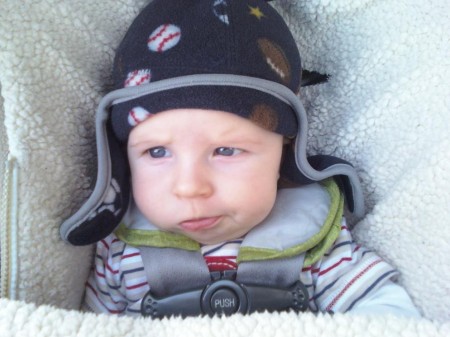
Does this process warm them? Yes. However, some studies suggest this takes away calories that should be used to help the baby grow.
It is usually recommended that babies are dressed warm and in layers but ask your pediatrician for specific recommendations on ways to keep your baby warm, like what temperature you should keep your house at.
Broken Secrets
Subscribe on: Facebook | Twitter | Email | Kindle
Sources: Riley Hospital for Children, brainyweightloss.com, Chicago Tribune
Photo: Kaye Nemec
Design and History of the Northface Logo
By Kaye Nemec
Northface is a performance apparel, equipment and footwear company that started over 40 years ago. Although most of their products are geared towards mountaineers, climbers and hikers, the company was, ironically, started on a beach. In 1966 two young men with a passion for hiking were living in San Francisco’s North Beach neighborhood; they decided to turn their hobby into a living by starting a small, mountaineering retail business. Today, they are known around the world as a leader in endurance products among outdoor performance enthusiasts.
The name North Face was chosen because the north face of a mountain is the coldest and most treacherous side and the goal was to create gear that would assist climbers in successfully traversing these conditions.

The logo they chose for the The North Face company is an interpretation of Yosemite National Park’s Half Dome, a rock formation rising 8,800 feet above sea level. In 1865 Half Dome was declaredto be completely inaccessible to anyone and this was believed to be true until 1875 when George Anderson was the first person to successfully reach the summit.
Today thousands of people reach the summit every year and several of them are likely using North Face gear while they do it.
Broken Secrets
Subscribe on: Facebook | Twitter | Email | Kindle
Sources: The North Face: Our Story, Dinesh.com, NPS.gov
The Shoulder is the “Butt” and the Butt is the “Ham”
By Kaye Nemec
As you browse through your local grocery store’s meat department you’ll see various cuts of pork including pork shoulder, pork loin, pork chops, spareribs, pork hocks, ground pork etc. Most of these cuts of meat are self explanatory and, you’d think, the same goes for the package labeled “pork butt.” Seems pretty obvious right? Thankfully, it’s not.
Pork butt actually comes from the upper portion of the shoulder of the hog. It is a large cut of meat with a thick consistency. Typically the entire pork butt will weigh 6-10 pounds and can be sold either bone-in (with part of the shoulder blade) or boneless.
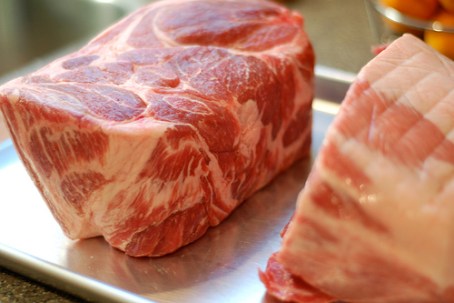
Pork butt most likely got its name because it use to be that nicer cuts of meat, those that were “high on the hog” were packed into barrels for shipping that were called “butts.”
Especially popular in the Southern United States, pork butt is most commonly used in barbecue recipes like pulled pork sandwiches. Its high fat and connective tissue content make it very tender and moist after slow-cooking.
Other common names for pork butt include Boston Butt (pre-revolutionary New England is where packing meat into “butts” originated), Boston shoulder roast, Boston roast, shoulder butt and shoulder blade roast.
On the other hand, ham comes from the rear of the hog, the hind leg. A whole ham is the entire rear leg of the ham. A half ham is either the butt end, the top of the thigh, or the shank end which is the lower part of the leg.
Broken Secrets
Subscribe on: Facebook | Twitter | Email | Kindle
Sources: VirtualWeberBullet.com, Wikipedia
Photo: Luis Ramirez (cc)
How to Taste Defective Wine
By Chad Upton | Editor
If you order wine at a fine restaurant, it can be expensive. So, you don’t want to pay big bucks for a bad bottle.
At some restaurants, the wine waiter or sommelier will usually pour a small sample and pass you the cork. Both of these gestures are done for the same reason, but not everyone knows what to do.
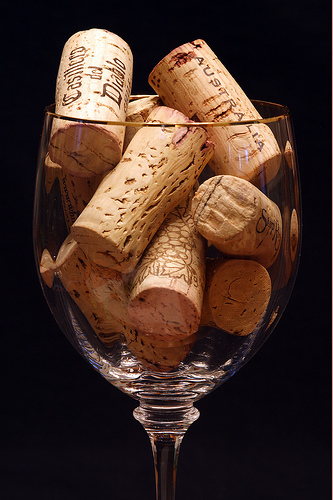 Basically, this is your chance to determine if the wine is faulty. It’s not a matter of whether you like it or not, it’s about if the wine has spoiled. It is estimated that 5% of wine is defective, so you’ll come across a bottle sooner or later.
There are a few things that can caused a wine to spoil before it’s opened.
- Oxidation
- Heat
- Sulfur Dioxide
- Cork Taint
Some people smell the cork, but the idea is actually to feel the cork, to ensure that it is moist all the way around the bottom (the end that was inside the bottle). The cork, or a synthetic material with similar properties, is meant to protect the wine by sealing it from outside air. Wine should be stored on its side, so the cork stays moist and doesn’t dry out. If it dries out, the air tight seal can be broken and the wine can be ruined. (more…)
The Real Names of Brand Name Products
By Kaye Nemec
The weather is getting cold and the air is getting dry. We’re going through more Kleenex and additional Chapstick. We’re cooking warm meals in our Crock Pots and soon we’ll be getting out the wrapping paper and Scotch Tape to prepare for the holidays.

Kleenex, Chapstick, Crock Pots and Scotch Tape are all things that have become common, household names and most of us don’t think twice before calling them by these titles. Like many other popular products, the brand names have become more widely used than their original names. Replacing generic names with brand names has become so common that they have even coined a term for it – Genericide.
Below is a list of items that we commonly use the brand name for instead of the actual name. (more…)
Why It’s Called Black Friday
By Chad Upton | Editor
The term “Black Friday”, originally referred to Friday, September 24 1869, when the value of gold plummeted. It happened because a couple of speculators allegedly drove the price up, telling investors it would increase in value because the government was going to buy it, but the federal government actually sold a significant amount of their gold, which flooded the market and caused the value to plummet. For many investors, it was their financial doomsday.
The contemporary meaning of “Black Friday” refers to the day after US Thanksgiving. This meaning comes from Philadelphia Police, cab and bus drivers. They called it black Friday because they are overwhelmed as huge numbers of people go shopping and cause havoc to their normal routines.
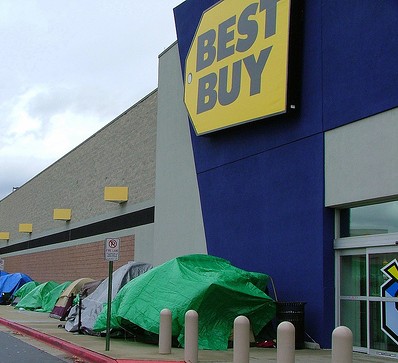
It’s often referred to as the busiest day of the year for retailers, but that’s not entirely true. It is the day when they have the highest number of people in their store, but it’s not normally the highest day of sales for the year, although it’s usually in the top ten.
Update: A couple of comments mentioned the idea that the “Black Friday” name refers to the time when retailers finally turn a profit for the year, moving from “red” ink into “black” on their income statement. Before researching this post, I thought that was the reason too. Wikipedia does mention this idea as an “alternative” explanation that emerged sometime after the term was coined by police, cabs and bus drivers in Philadelphia. Unfortunately, Wikipedia does not provide any sources to indicate that this is a fact for retailers. Although there are many sources that mention this idea, I cannot find any hard data that indicates any retailer operates without profit until the last 6 weeks of the year. If anyone finds any data that shows this, I’d love to include it in this post — it would definitely have significance in the meaning of “Black Friday.”
Broken Secrets
Subscribe on: Facebook | Twitter | Email | Kindle
Photo: Richard Roberson (cc)
Sources: Wikipedia (Black Friday 1869, Black Friday Shopping)
White Wine also Stains Teeth
By Kaye Nemec
We’ve long been told that coffee, marinara sauce and red wine will leave our teeth stained and in need of whitening. Dentists have warned us about letting these foods sit on our teeth for too long without brushing. But, it turns out we also need to be cautious when drinking white wine if we want our pearly whites shiny and bright.
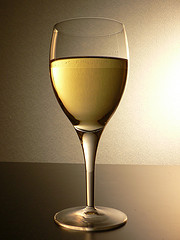 It’s not just the color of red wine that affects our teeth, it is also the acidic nature of wine that helps stain and darken our teeth. In fact, red wine and white wine are equally acidic. The acids erode tooth enamel, which is there to protect your teeth.
Because red wine contains dark pigments that will stain your teeth, you get a two-for-one deal when drinking it. Not only will the acid rough up the surface of your teeth, but it will also clear an immediate path for the red pigments to settle in and stain. White wine, on the other hand, will simply make way for stains and is more dangerous if paired with or consumed in a diet that also contains red sauce, coffee or cola.
Apparently, citrus drinks like orange and grapefruit juice, sodas and energy drinks also contain enough acid to have the same, damaging effect on the enamel of teeth. Because coffee, sodas, juices and energy drinks have become so popular, whitening agents and toothpastes have also increased dramatically in popularity over the last few years. It seems that dentists agree, it is OK to use a toothpaste with a whitening agent in it; however, it is recommended that you do not brush your teeth immediately after drinking wine. As mentioned above, the acid in the wine will weaken the enamel on your teeth. The weakening process will last about an hour so if you brush before that hour is up you risk brushing away bits and pieces of your weakened enamel causing further damage.
Broken Secrets
Subscribe on: Facebook | Twitter | Email | Kindle
Sources: ToothMingle.com, NPR, DentalHealth.org
Photo: Danielle Bauer (cc)


 Broken Secrets