Archive for 2010
That Falling Feeling When Going To Sleep
By Chad Upton
When you’re falling asleep, do you ever get that sensation of falling, sometimes followed by a jerk reaction?
It’s pretty normal for this to happen occasionally. Irregular sleep schedules are one known cause and the explanation behind it is pretty interesting.
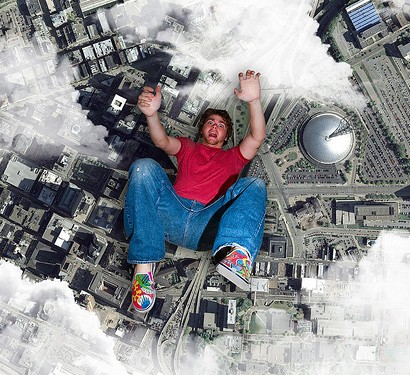
During REM sleep, your muscles go into a state called atonia. Essentially, all of your muscles except those in your eyes and those used for breathing are temporary paralyzed. You brain blocks signals that are normally sent to these muscles. This is true for humans and common among most other warm blooded mammals.
This is the reason why your muscles don’t actually move when you’re dreaming about them moving. It’s a self preservation mechanism, preventing you from hurting yourself and other people while you’re asleep, which is obviously good for your safety but it also prevents you from waking yourself, ensuring a proper sleep.
If your REM sleep is interrupted, your muscles resume from atonia and your mind returns to consciousness at roughly the same time. But, it is possible for your consciousness to resume before muscle control. You’ll be awake, but paralyzed. This is called “sleep paralysis” and as many as 60% of people will experience it at least once in their lifetime. It can be scary, but it normally occurs for a very brief period of time, sometimes it is so short that you may not even realize it happened.
This sensation is often described with feelings of fear or dread and described like an out of body experience. Auditory and visual hallucinations have been reported and are part of the mythology of some cultures, attributing this feeling to supernatural forces, demons, UFO encounters and so on. There are also people who believe this state is a doorway to the inner mind and they try to remain in this state as long as possible.
Waking up into sleep paralysis a single time is not usually something to worry about, but if it happens more frequently then it could be a symptom of a more serious problem such as narcolepsy and you should see a doctor. Sleep paralysis occurs more commonly when people are on their backs, but doctors do not know why.
Sleep paralysis can also happen while you’re falling asleep. Your mind may realize that you are awake but your body is paralyzed. That disconnect can cause the feeling of falling, which is startling and often accompanied by a hypnic jerk.
Super thanks to Dr Ryan W, the Broken Secrets neurology expert, for his help with this post and for his great work in neurology.
Broken Secrets
Subscribe on: Facebook | Twitter | Kindle
Sources: Dr Ryan W, Sleepdex, brynmawr.edu, Wikipedia (Hypnagogia, Hypnic Jerk)
Photo: NewEndProductions (cc)
Shoes on Power Lines
By Chad Upton
Tying shoes together by their laces and throwing them onto overhead lines is known as “shoefiti” (shoe + graffiti).

Shoefiti started in the United States and spread throughout the world, the photo above was taken in Berlin.
There is no single reason why people do this, there are many reasons.
When sneakers are festooned on power lines in rough neighborhoods, the conclusion for their presence is often crime related. Some believe they mark crack houses where you can get your fix or some free shoes via ladder. Others say they are shoes that belong to (or hang in memory of) a murder victim. Some say they are for marking gang turf, but Tucson Arizona police have denied that and flagged the turf marker idea as myth.
They did mention that many shoes are removed each week, since they are unsightly and can cause damage to the lines.
They also said that the volume of shoes increases during the summer break from school. A couple of stories have been told that may support this. One is that of tradition, shoes are thrown on power lines to celebrate the last day of school or graduation. Teenage boys have also been said to do this when they lose their virginity.
Perhaps the oldest story about the origin of shoefiti claims it was tradition for soldiers to hang their boots on the power lines at base when they completed basic training, went home on leave or left the service entirely.
In some movies, it’s the school bully who steals your shoes and throws them onto the lines. There are also stories of kids retiring their own shoes when they get a new pair.
Chances are good that the people who are doing it now have no idea why their predecessors did it.
Some people may think it’s a harmless tradition, but the shoes can disrupt utility services by adding weight to the lines which causes them to sag and potentially touch other lines or trees, which could also result in fire.
If you want to remove shoes from the lines, because you want your kicks back or you just want to clear the eyesore, you should call the utility company to do it — a few Darwin Award candidates have earned their nomination trying to DIY their shoes back.
Broken Secrets
Subscribe on: Facebook | Twitter | Kindle
Sources: About.com, Snopes, Straight Dope, Wikipedia
Photo: edkohler
Quantum Teleportation is Real
By Chad Upton
We know a lot about the world around us. We have a pretty good understanding of forces such as gravity and magnetic fields. We know a lot about barely visible subatomic particles and even invisible energy such as radio waves.
We can control and measure most of these amazing things and they really are amazing. Think back over a thousand years. Could you imagine what it was like when magnets were first discovered? The amazement, confusion and challenge to explain how they worked.

Due to recent developments, we are in a similar state of fascination.
When you read “quantum teleportation” in the title, you probably had visions of something from Star Trek where people and objects are transported from one location to another. That is teleportation but it’s not quantum teleportation.
In quantum teleportation, no visible object is moved from one place to another. Rather, quantum information is moved from one place to another.
It starts with entanglement of two atoms or particles such as ions or photons. In simple terms, they are “tied” together. When separated, something amazing can be observed. Changing the state of one, the state of the other changes to match. This phenomena has been observed when the two have been separated by a distance of a few meters (10 feet), 16 km (10 miles) and even 144 km (89 miles).
No, it won’t let you visit your grandma in Montana and your other grandma in Malta on the same day, but the potential is still amazing.
You’ve probably seen a satellite interview on TV noticed there is a huge delay between the two people talking. That’s what happens when shipping information to space and back on each side of the screen. But, Quantum information moves extremely fast so there would be negligible delay if it could one day be used for communication (it can’t for now).
Although a bit awkward sometimes, we can live with delayed satellite interviews. But, as we try to explore deep space, communication delays could become a factor that prevents or severely delays exploration. One day, cell phones might use this technology to eliminate dropped calls and dead zones. In communications, the possibilities are endless.
We can’t even imagine how this might affect other areas of science and that’s because we don’t really understand how it works. But, scientists believe these entangled particles exist in nature and there are potentially billions of them. Of course, we don’t know which ones they are or where the other half of their entangled pair is. Maybe there is some truth behind the notion that one twin feels something when their identical twin experiences something traumatic. Maybe there’s even some science to prove it.
Broken Secrets
Subscribe on: Facebook | Twitter | Kindle
Sources: Wikipedia (QT), Quantum (Entangled QT, First QT), The Future of Things , Ars Technica
Photo: Thomas Shahan (cc)
Tea Contains Less Caffeine Than Coffee
By Chad Upton
This is one of those things that a lot of people know and a lot people get wrong.
Most coffee has 60-100 milligrams of caffeine per cup. Here’s a list of the most popular coffees and their caffeine content:
| Coffee (16oz) | Caffeine (mg) |
| Starbucks | 330 |
| Caffè Americano (Espresso) | 225 |
| Tim Hortons | 160 |
| McDonald’s | 145 |
| Store Brand (Drip) | 145 |
| Dunkin Donuts | 143 |
| Store Brand (Brewed) | 108 |
| Decaf | 2-5 |
As you can see, Starbucks coffee is the strongest with 330 mg of caffeine in a 16oz serving. It is followed by Starbucks Caffè Americano, which has three shots of espresso in it and more than 100 mg less caffeine in the same size serving. Most of the other brands have about 110-160 mg in a 16oz serving..
So, how does that compare to tea? Let’s have a look:
| Tea (16oz) | Caffeine (mg) |
| Starbucks Tazo Chai | 94 |
| Black | 90 |
| Green | 40 |
| White | 30 |
| Starbucks Tazo Red | 0 |
As we can see, Tea generally has much less caffeine than coffee.
Of course, there are always exceptions. There are some coffees that have less caffeine than most teas, particularly decaf coffee. That might be an unfair comparison since decaf is a man-made product. Although, it might not be that way forever. Caffeine free coffee beans have been discovered, although they’re too bitter for most people’s taste buds.
There are also some black teas that have up to 140 mg of caffeine per 16 oz, which is more than the same size coffee at Dunkin’ Donuts (or Dunkin’ Coffee as they call it in Spain).

Dunkin Donuts - Barcelona, Spain
There are many other caffeinated beverages that are popular, how do those stack up?
| Product | Serving (oz) | Caffeine (mg) |
| Jolt Energy | 24 | 280 |
| Red Bull | 8 | 80 |
| Mountain Dew | 12 | 55 |
| Mountain Dew Code Red | 12 | 54 |
| Diet Coke | 12 | 45 |
| Coca-Cola Classic | 12 | 35 |
| Sprite | 12 | 0 |
| 7-Up | 12 | 0 |
Caffeine is found in many other foods, such as chocolate. It is also found in guarana beans, which are very similar to coffee beans according to Brett’s Energy Drinks. So, be careful of those guarana filled energy drinks, caffeine is a hell of a drug.
Thanks to Kristen for suggesting this one and Ian for adding front lines insight.
Broken Secrets
Subscribe on: Facebook | Twitter | Kindle
Sources: Mayo Clinic, Brett’s Energy Drinks, Energy Fiend,
Secret Codes in Public Places
By Chad Upton | Editor
I was at Walmart today and I realized, I absolutely love that place — I feel like a supermodel in there.
While there, I heard an announcement for “Code C” and I had to know what it was.
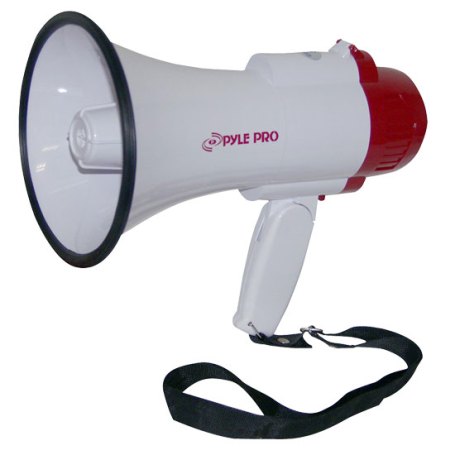 You see, airports, retail stores and hospitals all have secret codes to announce information to staff without causing alarm to the general public.
Walmart actually has a lot of these codes and for good reason. Perhaps the most well known code is “Code Adam.” It was invented by Walmart 1984 and it’s now used by many different companies, all over the world.
It’s named after Adam Walsh, son of America’s Most Wanted TV host John Walsh. Adam was kidnapped from a Sears store in 1981 and murdered. Walmart actually has a very strict policy about this code. All employees drop what they’re doing, some watch the doors and other sweep the store looking for the child. Employees do nothing else until the child is found.
Other Walmart Codes:
- Code Black – Severe weather (ex. tornado warning)
- Code Blue – Bomb threat
- Code Brown – Shooting
- Code Green – Hostage situation
- Code Orange – Chemical spill
- Code Red – Fire
- Code White – Accident
- Code C – Customer service or cashier needed
- Code 300 or Department 51 – Security
Walmart also has color coded pillars in their stores:
- Blue – Telephone
- Red – Fire extinguisher
- Orange – “Spill-O-Magic” station
Boat/Ship/Vessel Codes
- Code Oscar or Mr. MOB – Man overboard
- Bravo, Bravo, Bravo – Serious incident such as a fire
- Mr Skylight – Minor incident
- Code Blue – Medical emergency
Hospital Codes
- Code Blue, Code 90, Code 45 – Cardiac arrest
- Code Red, Dr Red, Dr Pyro, Dr Firestone – Fire
- Code Grey, Code Silver – Combative or violent person
- Code Orange – Mass casualty incident
- Code Black, Code Brown – Extreme weather warning
These are the most common codes, obviously some of these codes will be known by other code names in certain places. Some countries such as Australia, Canada and the United States have standards for these codes, but they differ from each other and many other countries do not have standards.
Broken Secrets
Subscribe on: Facebook | Twitter | Email | Kindle
Sources: Wikipedia, Google Answers, Wal-mart Info, UPHAA, Vessel Emergency Codes, Hospital Codes
Lock Your Car Better With Your Chin
By Chad Upton
I think everybody has done it. You’re walking away after parking your car and you can’t remember if you locked it. You turn around to lock it and you’re too far away – or – maybe your car has remote start and you want to warm it before you leave work in the winter. You can see it in the parking lot, but you’re too far away.
There is something that may help.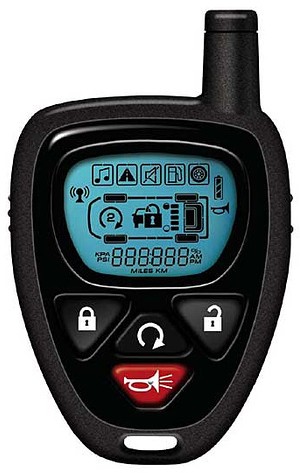
If you push the car remote against your skin, and then press the button, your body will act like a giant antenna to extend the signal. I don’t know how safe this is, but it works.
I first heard about this a few years ago and I was in disbelief, until I tried it. Not only does it work, according to New Scientist, it can almost double the range of your key fob.
When I first heard about it, I was told to push it against my chin. It turns out you can push it again your arms or other body parts too. It relies on a principle called capacitive coupling, the same principle that the capacitors on electronic circuit boards rely on.
This doesn’t work for all types of radio frequency remotes, it works best with relatively low frequency signals with rapidly changing currents, which is what many car remotes use.
You may have heard that the iPhone 4 is having signal issues when the exterior antenna is touched in a certain way and you may be wondering why it has the opposite affect on the iPhone. The difference between the iPhone problem and capacitive coupling is that there is no insulator between the transmitter and your body with the iPhone, but with your car remote, the plastic case acts like an insulator. Again, this is precisely how capacitors on circuit boards work — two conductors are separated by an insulator.
It should be noted that some car remotes may use a different frequencies and types of signals, so you’ll have to test yours to see if it works for you.
Big thanks to Max Surguy for reminding me about this one, such a great tip!
BrokenSecrets.com
Subscribe on: Facebook | Twitter | Kindle
Sources: New Scientist
Photo: nailkennedy (cc)
Broken Secrets: Phase 2
Today, I want to talk about Broken Secrets — where we’ve been and where we’re going.
I started this site back in November of 2009. The first post was You CAN Use Foil in the Microwave. In fact, if you want to see a list of all the secrets, checkout The Secret Archive.
For those who don’t know, my name is Chad Upton and I’m the creator of Broken Secrets. I’m a 31 year old guy, living in the Midwestern United States. I have a pretty normal day job and I write this site in the evenings, usually after dinner or when my wife Kristen goes to bed.
A lot of people ask me if I make money from Broken Secrets. The answer is a vague, but accurate, “not really.” Technically, the blog generates a small amount of money through amazon referrals (if you buy something) and through kindle subscriptions. Frankly, I’ve spent more on the site than it has brought in, so I think it’s fair to say that I don’t “make” money from the site. Which is fine, I didn’t start the site because I need the money — it’s a hobby.
 I don’t believe most people think about the time it takes to research, write, edit and find photos or videos to make a single entry come together. But, most posts take 2-3 hours to create. There are some exceptions, a few posts were created in less than 2 hours and a few took more than 3 hours (especially some of the videos).
Creating content and promoting the blog is a lot of work, but I’ve been lucky. The site quickly gained in popularity. It now gets more visitors each day than it got in the first month of operation.
All of the readers have different tastes and expectations. Some people love the really long, very detailed posts. Others prefer the short, sweet and glossy ones. Therefore, the topics and lengths of posts vary widely. What some readers find useful, others find elementary. What some find informative, others find useless. It all depends on your perspective, and everyone’s is different.
It’s tough to please everybody and that’s OK, the response has still been overwhelming. Up until now, I’ve written every post and delivered one every weekday for the past 9 months (166 posts). That makes for a long workday, every day.
Although the pay is negligible, the rewards are priceless.
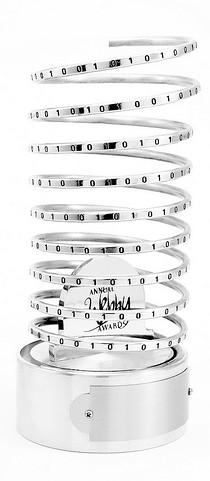
Broken Secrets recently won a Webby Award for best personal blog/website. It has been featured by local and national media around the globe. It’s highly ranked in the Amazon Kindle store for blogs and between Facebook, Twitter, Kindle and email, there are thousands of people who subscribe and read daily. Frankly, it has exceeded all of my expectations and passed all of the milestones more quickly than I could have imagined.
The Webby Awards are by far the biggest compliment, they’re like the Oscars of the Internet. They’re the highest award a website can win; I’m honored to have won and had the support of so many of you. At the award ceremony, I got to meet Jimmy Fallon, Buzz Alrdin, Jason Bateman and many other great people.
All of this success means that it’s time to make the site bigger and better. The first step: more high quality content. As I concentrate on more quality content, the site will continue to get updated several times per week, but I may have some other contributors helping out. This will be great, we’ll have some fresh ideas.
I appreciate all your feedback, suggestions and support. You can always contact me by clicking here.
As always, thanks for reading.
Broken Secrets | Chad Upton
Subscribe on: Facebook | Twitter | Kindle
Photo: zagatbuzz (cc)
How to Remove Skunk Smell from Pets, Clothes, etc.
When I was a teenager, I heard an awful noise in our backyard. It was a loud and fearful shriek, like nothing I had heard before; it was followed by the yelping of our yellow Labrador.
Our dog Trooper had just been sprayed by a skunk and he was not happy about it. Frankly, nobody on our block was happy that warm spring night. I could hear the neighbors disgust as they went from room to room and shut their windows.
My mom bathed the dog in the backyard and I went to buy tomato juice. We bathed him in Tomato juice for a while and it was mildly effective.
But, there are some better alternatives.
The home remedy is a foaming mixture:
- 1 Quart Hydrogen Peroxide (3%)
- 1/4 Cup Baking Soda
- 2 Tbsp Dish-washing Soap (not dishwasher detergent)
 The baking soda and hydrogen peroxide will create oxygen bubbles that react with the thiols in skunk oil to neutralize the smell. Be sure to use the mixture right away, while it is foaming, before the bubbles dissolve. This was proven to be more effective than tomato juice by Myth Busters in episode 16. This potion can be used on clothing, people and animals.
If you you’re a planner or have a time to go to a local pharmacy, you can pickup a product called Tecnu — I found many internet users who claim it is more effective than the homemade brew while Myth Busters found the home brew concoction to be more effective than commercial products.
Regardless of which method you choose, you should use a proper eye cleaning solution for your pet’s eyes and put cotton balls in their ears to prevent these solutions from getting in their ears.
Broken Secrets | Chad Upton


Sources: eHow, Skunk Removal Recipe, Myth Busters
Trap Doors on Car Bumpers
From satellite navigation to chilled cup holders, modern cars are full of high-tech developments that get you from point A to point B without getting lost and with colder refreshments. Overall, car technology has improved the handling, efficiency, style, safety, comfort and entertainment of our cars.
There are even high-tech bumpers out there. If you see bumpers with three or four dimples aligned across the back bumper, those are likely sensors for the backup warning system.
If you see small rectangular patches, that’s what this secret is about. They’re actually pretty low-tech, but still cool.
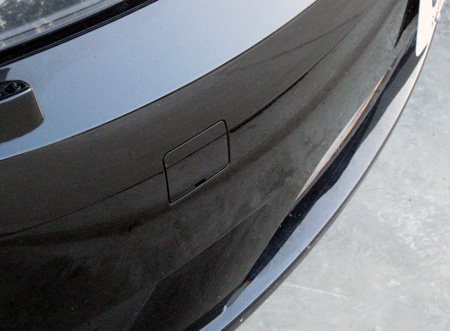
Even if your car doesn’t have them, maybe you’ve noticed them on other cars while you’re sitting at a red light (they may be found on front and/or rear bumpers).
They look like trap doors that cartoon characters fall through long after the audience spots them and screams at their television to warn the carbon impaired being of the obvious hazard and their impending doom. In reality, they cover anchor points where you can insert a towing eye (aka “tow hook”).
Check your car out during the summer and if you need them in the winter, you’ll know if they’re there. The towing eye is usually stored with the spare tire and/or jack and it screws in behind these covers.
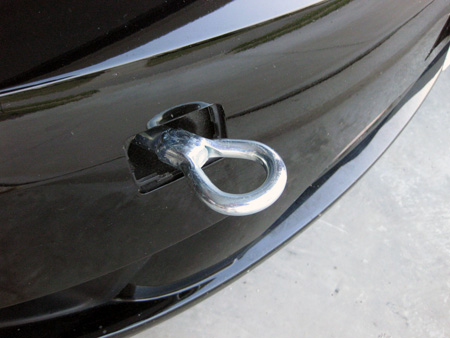
Like all of the secrets on this site, there will be somebody reading who already knows this one — that’s cool, you can brag (or complain) about it in the comments, or retweet it and say you knew this, “like 10 years ago.”
Broken Secrets | By: Chad Upton
Desktop Snacking Without a Greasy Keyboard
With more work and less help, it’s no surprise that nearly 70% of Americans eat lunch at their desks. At 61% the majority of people also snack at their desk throughout the day.
All that food is one reason keyboards and mice are have more bacteria than most toilet seats. Also, office toilet seats are usually sanitized daily, when was the last time your keyboard or mouse were?
This tip is helpful because your hands never touch your food. This prevents your keyboard from getting dirtier and it keeps your hands from passing bacteria to your mouth.

1. Pour bite-size snacks into a cup or glass.
2. Angle cup into your mouth so bite-size snacks fall into your mouth.
3. Chew, swallow and repeat from step 2.
Broken Secrets | By: Chad Upton
Subscribe on: Facebook | Twitter | Kindle
Sources: Home Food Safety Org, ABC News


 Broken Secrets