Archive for 2010
Bozo the Clown was the First Ronald McDonald
By Kaye Nemec
Weather Man Willard Scott is well known as Bozo the Clown, but what most people may not know is that he is also the man who created Ronald McDonald.
Scott started his show business career on the Joy Boys radio show in 1955 and remained a co-host until 1974. In the 1960’s, Scott began his television career by appearing in children’s programs as Commander Retro and Bozo the Clown. In 1970 his weatherman career officially kicked off when he became the weekday weatherman on WRC-TV. He is also well known for his Smucker’s birthday segment on NBC’s The Today Show.

Original Ronald McDonald Costume
In 1963 a local McDonald’s franchise in Washington D.C., where Scott was living, asked him to create a children’s character for their restaurant chain. He came up with “Ronald McDonald” and appeared in three different television spots in the Washington D.C. area using the phrase, “Ronald McDonald, the Hamburger-Happy Clown.”
In the movie Super Size Me, Eric Schlosser says that McDonald’s decided to replace Scott with someone who wasn’t as overweight because they were concerned about the image they were sending if their mascot did not appear healthy and fit.
Although there are hundreds of actors who play Ronald all around the country, the company likes to keep the illusion that there is only one Ronald. In an effort to create this illusion, all actors are trained on specific mannerisms before performing as Ronald.
Ronald McDonald is still very popular and a widely recognized character today. According to McDonald’s statement about Ronald McDonald, 96% of all school aged kids in America recognize him.
Broken Secrets
Subscribe on: Facebook | Twitter | Email | Kindle
Sources: Wikipedia
Photo: partly cloudy (cc)
Differences Between Major Over-The-Counter Pain Drugs
By Chad Upton | Editor
There are many over-the-counter pain killer choices and although they are often used interchangeably, they each have unique strengths and weaknesses. Knowing their differences can be extremely beneficial for choosing the most effective one for each situation.
This kind of information needs an upfront disclaimer, so I’ll warn you that this post is provided for information purposes only and it should not be taken as medical advice. Everybody is different and various medications can affect each person differently, be sure to seek professional advice before taking any medications. Also, read the sources listed at the bottom of this post for more detailed information.
Due to the cost of over-the-counter pain medication, they are often used in large doses for chronic pain. Therefore, it may be helpful to know that Tylenol and Ibuprofen do not interact with each other, so if you reach the maximum allowable intake of each per day, you can actually alternate them to increase the pain killing effects. Again, consult your doctor before doing this.
All of these pain relievers are generally used to relieve the same types of pain and symptoms: headache, arthritis, fever, menstrual pain, back pain, etc. But, each one has unique pros and cons. Hopefully, this comparison will help you ask your doctor the right questions to help find the right one for each scenario.
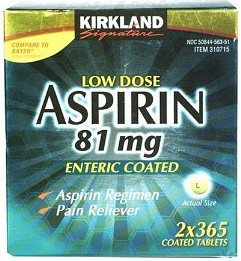 Aspirin
Uniqueness: Antiplatelet drug that improves arterial circulation. Small daily doses and/or large emergency doses are sometimes used to reduce risk of heart attack, stroke and blood clots in certain patients.
Warnings: Potential for allergic reactions, asthma complications, ulcers and stomach bleeding (especially in higher doses). If taking aspirin, doctors may recommend a break before taking ibuprofen. Should not be used to control flu, chickenpox or other viral symptoms in children and adolescents due to a risk of Reye’s syndrome.
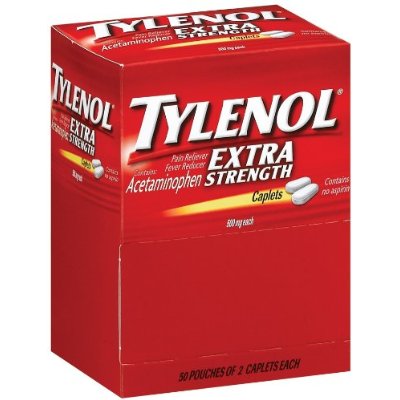 Tylenol (Acetaminophen)
Uniqueness: Alternative for those with Aspirin allergies. Some acetaminophen products contain caffeine, especially ones that are marketed for headache and migraine relief. The caffeine makes the drugs more effective, which means you need less of them, which reduces cost and side-effects.
Warnings: Potential for liver damage, especially in high doses.
 Advil (Ibuprofen)
Other Common Names: Nurofen (UK), Brufen, Motrin.
Uniqueness: Is better at reducing fever than Tylenol. Although it is an antiplatelet drug, its antiplatelet properties are mild and short-lived when compared to aspirin. One of the scientists who developed the drug, Dr Stewart Adams, discovered its hangover mending capabilities first hand shortly after the drug was finally approved for treatment of rheumatoid arthritis.
Warnings: Should not be used during last trimester of pregnancy. If taking aspirin, doctors may recommend a break before taking ibuprofen. Can cause upset stomach.
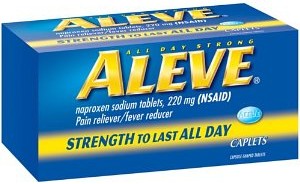
Aleve (Naproxen)
Uniqueness: Powerful anti-inflammatory properties. Doesn’t just relieve pain, may reduce the inflammation that is causing the pain.
Warnings: Should not be used by nursing mothers. Can cause upset stomach.
All of the above drugs, except for Tylenol, are non-steroidal anti-inflammatory drugs (NSAID). That means they are generally better at treating pain caused by inflammation than pain killers that do not reduce inflammation. They are a very popular form of pain killer, in 2001 there were more than 30 billion NSAID doses purchased over-the-counter and over 70 million prescriptions in the United States alone.
Broken Secrets
Subscribe on: Facebook | Twitter | Email | Kindle
Sources: Wikipedia (Advil, Tylenol, Aleve, Aspirin, NSAID), PubMed (Ibuprofen, Acetaminophen, Naproxen, Aspirin), Manufacturers (Tylenol) Consumer Reports (PDF), Vaughn’s Summaries
Relevant
Taking medications in excess, even if the drugs involved are over-the-counter ones, may also require substance abuse treatment later on.
Daylight Saving Time Was Funded by 7-11
By Chad Upton | Editor
Spring forward, fall back — that’s the phrase that moves our clocks the right way.
Most of North America, Europe, New Zealand and parts of Australia, South America and Africa currently observe Daylight Saving Time (DST). The days and times at which individual countries actually make the shift, varies widely.
In the following image, the blue zones currently observe DST. Orange zones no longer do and red zones never have. It should be noted that the further away from the equator, the more likely a country is to support DST since the daylight hours are more greatly affected.

Daylight saving time was invented by two people in different parts of the world at around the same time. The first man was George Vernon Hudson, an Australian, who proposed the idea in 1895. He wanted longer afternoons following work to spend collecting and studying butterflies and other bugs. The second man was William Willet, who proposed the idea in 1905 and wanted longer afternoons to play golf. He had no knowledge of Hudson’s proposal since he was half way around the world in London, England. Hudson was actually born in London but moved to Australia when he was 14, so two men from London invented daylight saving time on two different continents to enjoy more of life.
Although both men were seeking extra daylight hours for pleasure, the benefit of the idea was electrical savings. Since people would be awake for more daylight hours, they would run their electric light bulbs less.
Since that was a primary use for electricity, this was a big concern all over the world. In fact, there was a time when most of the world observed daylight saving time. But, that’s the not the case anymore: much of Asia and parts of Africa, Australia and South America no longer observe DST.
It’s a surprisingly controversial topic.
Although it was conceived in 1895 and it was a good idea, it didn’t actually get used until Germany saw a need for it in April of 1916. They started using it during World War I because it allowed them to run generators less, which helped ration coal and handle air raid blackouts. The United Kingdom started using it a month later. The United States started using it in 1918 and other countries followed.
When the war ended, many countries abolished its use, including the United States. It was reestablished in 1966 and has continued to grow ever since.
In the mid 1980s, Fortune magazine estimated that 7-Eleven stores could benefit an additional $30 million per year if daylight saving time was seven weeks longer. In 1987, 7-Eleven and Clorox funded the Daylight Saving Time Coalition that sought to extend the length of daylight saving time. More sunlight was good for retail business.
There have been many controversies over the benefits of daylight saving time.
Light bulbs currently account for about 3.5% of energy consumption in the United States and Canada. With the adoption of compact fluorescent bulbs, that number will decrease. In other words, it’s not a significant part of power consumption any longer. Some studies show that daylight saving time actually increases energy costs in some places due to a shift in peak energy consumption patterns and prices. There are many conflicting reports on whether DST really saves any electricity at all.

There are other benefits, such as fewer traffic accidents. It has been shown, and it seems reasonable to expect, that fewer traffic accidents occur during daylight. So, the longer the daylight lasts after work, the fewer accidents occur. But, it can a negative impact on some farming. For example, grain harvesting is best done after dew evaporates, which requires sunlight. But, the field workers go home after an hour less sunlight in the summer, reducing the number of hours that harvesting can take place.
Daylight saving time can also disrupt electronic devices. Most of them are set to change times automatically, but some don’t and some have problems doing it correctly. There was a recent problem in Europe and Australia with iPhones not changing time correctly, causing those who rely on their phone’s alarm clocks to be late for work.
Given all the controversy, perhaps the only concrete thing we can say about Daylight Savings Time is similar to what we already know from Wearing White After Labor Day: summer is for leisure and winter is for business.
Broken Secrets
Subscribe on: Facebook | Twitter | Email | Kindle
Sources: Engadget, Wikipedia (Daylight Saving Time, George Vernon Hudson)
Photos/Images: Wikimedia Commons (gnu license), Richard Yuan (cc)
The Meaning of the PlayStation Button Symbols
By Chad Upton | Editor
We are surrounded by symbols and they’ve been around for a very long time.
In public places, where people may speak many different languages, we often see symbols instead of words. Some examples include signs for bathrooms and restaurants and even many road signs.
In the West, we have a some common symbols in writing. Check marks often mean correct or yes and an X usually means incorrect or no. In Japan, they have four symbols that are commonly used in surveys: X, Triangle, Circle and Double Circle (circle within circle). These four symbols make up a four point scale, although sometimes the double circle is omitted for a three point scale. The circle means good or satisfactory and the double circle means excellent. The X means no or bad. The triangle means average (or below average on the four point scale when the double circle is being used). These symbols are just as common as the checks and Xs in the West.
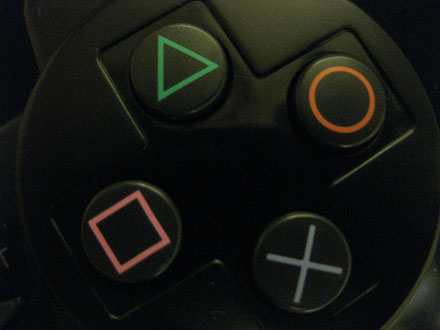
So, when Sony charged Teiyu Goto with designing the original PlayStation, he wanted the buttons to represent ideas rather than label them with arbitrary letters like everybody else. It didn’t take long for him to settle on the triangle, circle, X, square icons.
They were easy to remember because they were associated with meaning. The triangle represents a user’s viewpoint or perspective, making it a great button to launch maps or change the game perspective. The square represented a piece of paper, making it ideal for showing navigation lists and menus. The circle and the X mean yes and no, and they’re meant for navigating yes and no operations.
When asked about the impact of the design, Goto replied, “”Getting to use such simple symbols in a design is an extremely rare opportunity, and it was really a stroke of luck to me.”
Broken Secrets
Subscribe on: Facebook | Twitter | Email | Kindle
Sources: 1up, Japanese Translator
Chewing Gum Digests Within a Few Days
By Chad Upton | Editor
An old wives tale states that gum stays in your stomach for up to seven years, but that is far from the truth.
 Although it’s pretty sticky between your fingers, a single piece of gum doesn’t present a great challenge to your digestive enzymes — gum generally moves through your digestive system pretty quickly.
Food digests in as little as a few hours, and although gum can move at the same speed, it is sometimes slower than normal food, and it passes through our digestive system within a few days at the most.
The confusion comes from the fact that gum cannot be broken down. It’s the same as small coins, they cannot be broken down but they usually pass through within a couple of days. That earns gum the designation of “indigestible”, but that doesn’t mean it won’t pass through the digestive system, it just means it can’t be broken down into smaller pieces. I guess it goes in the same category as corn.
That means habitual swallowers can suffer from blockages and constipation if a large amount of gum builds up, especially children who swallow gum frequently. But, a single piece of gum usually passes without a problem.
Broken Secrets
Subscribe on: Facebook | Twitter | Email | Kindle
Sources: Scientific American, Snopes, How Stuff Works
How to be a Halloween Scrooge
By Chad Upton | Editor
If you think about it, Halloween is kind of an odd tradition. Generally, we tell kids not to accept candy from strangers. Then, we encourage them to dress up in weird costumes and go door to door, seeking candy from every stranger within walking distance.
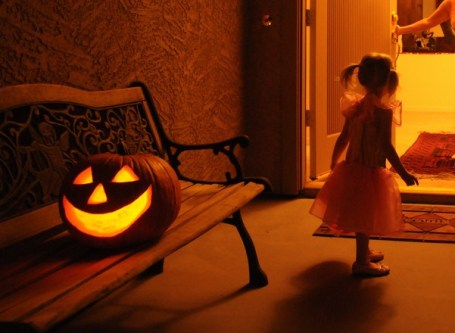
As a kid, Halloween was third on the “getting free stuff scale” right after Christmas and birthdays. As an adult, Halloween is probably first on the “giving away your stuff scale.” I mean, you don’t even know these kids, and even if you did, you can’t tell that you do because they’re in disguise.
So, I don’t blame you if you get upset when somebody’s kids are knocking on your door, expecting you to hand over your food. In fact, there are probably some of you who don’t even want your grown children eating your food.
So, if you want to be a mean old grumpy grump, here are a some ways to be a Halloween scrooge.
Help Yourself Candy Bowl
Put a large empty bowl on your door step. Attach a sign that says, “Please Take Your Own Candy.” This will probably make some kids cry.
Disabled Doorbell
We used to unhook our doorbell on Halloween because our dog would go crazy every time the doorbell was pressed. We still answered the door and gave out candy, but you can use this trick if you don’t want the candy seeking youngsters interrupting your Ugly Betty marathon.
Boo Yourself
In some places, neighbors will “Boo” each other in the weeks leading up to Halloween. Basically, they wait for nightfall and leave a bucket of treats on your doorstep. Then they ring the doorbell and run away. You put a sign in your window to indicate that you’ve been “Boo’d” and you “Boo” two other people. It’s all in good fun, and it’s a lot better than what people used to leave on doorsteps before running away. But, if you see this as doorstep spam or an unprofitable pyramid scheme, then you can just boo your own house and count yourself out early.
 Lights Out
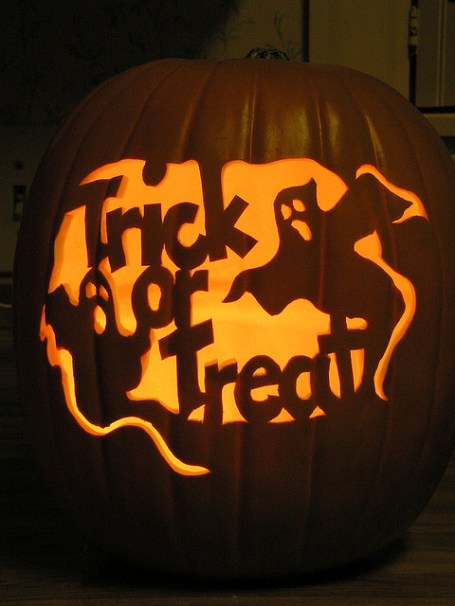
In some neighborhoods, unlit house lights tell the goblins that you’re on to their game and you’re not going to give up any free candy.
Do a Trick
If you do a trick, you’ll confuse some kids for sure. Be careful with the older ones or the trick will be on you later.
Fake Candy
My parents were always worried about us getting tampered candy, so they’d have to “inspect” the candy before we could have any. In other words, they would “skim” the loot before it got counted. That actually worked out pretty well, they liked all the stuff I didn’t like anyway.
If you’re really trying to stick it to those candy grabbing ghouls, then you’d save empty candy wrappers throughout the year and just hand out the wrappers. You may also consider this doing a trick.
Jinx
A twist! Here’s when you answer the door and you say “trick or treat.” Of course, that means they will have to give you candy. If their parents are at the curb, they probably won’t stop at your house next year — mission accomplished, scrooge.
If you’re wondering how this dark and twisted holiday started, check out Kaye Nemec’s History of Halloween.
Broken Secrets
Subscribe on: Facebook | Twitter | Email | Kindle
Photos: PumpkinWayne (cc), Rael B (cc)
The Meaning of “Sport” in Ritter Sport Chocolates
By Kaye Nemec
In 1912, two chocolate lovers fell in love with each other and started the Alfred Ritter Cannstatt Confectionery Factory in Bad Cannstatt, Germany.
By 1919, Alfred and Clara Ritter were ready to take their chocolate to the world. They were very successful and within 11 years, they were already at their third location, which was in Waldenbuch, Germany. In 1932, Clara Ritter had an idea for a new kind of chocolate bar: a chocolate square. Her idea was to have a square of chocolate that fit neatly in the pocket of a gentleman’s sports jacket. It didn’t extend out of the pocket and it didn’t break during daily activities that preceded chocolate eating.
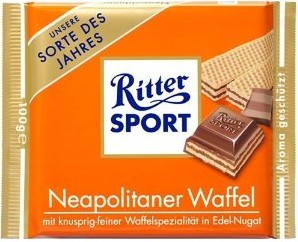
It was a huge hit with consumers and gave birth to the next generation of Ritter products.
Alfred passed away in 1952 and his son, Alfred Otto Ritter, took over the business. In 1966 Clara also passed away and Alfred Otto remained in charge of the family business. By 1960 some items in their product line had begun to fizzle out and Alfred began focusing all efforts on the square chocolate bar, officially creating the Ritter Sport brand.
By 1982, the squares were available in a variety of flavors and each flavor had a uniquely colored package. The original size square had become so popular, the family decided to introduce a new, smaller version of the original. Twenty-two years later the mini chocolate square was followed up by the chocolate cube, available in 6 different flavors.
In 2001 the “RITTER SPORT Chocolate Shop” Visitors’ Center opened in Waldenbuch, Germany. At the Chocolate shop, visitors learn all about Ritter Sport’s history and watch the chocolate get produced. The Chocolate Shop is the first part of what later became the Ritter Sport Museum, which opened in the fall of 2005. The museum stays true to Ritter’s square tradition by showcasing square contemporary art. Most of the art pieces belong to Marli Hoppe-Ritter, a co-owner of Ritter Sport. One of the main collections at the museum is titled, “Homage to the Square” and consists of nearly 600 pieces.

Clara was clearly onto something when she dreamed of the chocolate square, although I doubt she knew how many nights her dream would last or how big such a small chocolate could be.
Broken Secrets
Subscribe on: Facebook | Twitter | Email | Kindle
Sources: Ritter Sport, Ritter Sport Museum
Photos: Museum Ritter
The Difference Between Whiskey and Whisky
By Chad Upton | Editor
It’s the start of another work week, so it’s a good time to talk about drinking.
Frankly, I spent a lot of time researching this subject. I found that after getting over the novelty of drinking, which seems like the primary function of post secondary education, you’ll start to appreciate the subtle flavors in finer varieties of liquor. One of the most popular liquors is whisky.
There are two correct ways to spell it: Whisky and Whiskey. Whiskey refers to whiskeys distilled in Ireland and the United States. Whisky, on the other hand, is generally used for whiskies distilled in Scotland, Wales, Canada, Japan and other countries.
Whisky is a confusing subject and not just because the two spellings have distinct means, but because there are so many varieties. The most popular types of whisky are: Scotch, Irish, Bourbon, Tennessee and Rye. There are plenty of other types and they come from every corner of the globe.
History
The name whisky is derived from a Gaelic word that means, “water of life.” Distillation of this water goes back about 4000 years, to the area that is now known as Iraq. It started as a way to purify perfumes and aromatics. It is thought to have made it to Ireland by Irish missionaries in the 6th century and from Northern Africa to other parts of Europe where it spread through monasteries, mostly for treatment of colic, palsy and smallpox.
 When distillation spread to Ireland and Scotland, the islands had few grapes, so beer was made from barley and resulted in the development of whisky. In 1725, the English Malt Tax resulted in many of Scotland’s distillers to shutdown or go underground. Distillers began making their whisky at night because the darkness hid the smoke from the stills. This is where the term “moonshine” came from.
In the 1920’s in the United States, all alcohol was banned under prohibition laws. The only exemption was whisky, which could be prescribed by doctors and sold through licensed pharmacies. It was at this time when the Walgreens pharmacy grew from 40 stores to nearly 400. Much like the case of the hemp production ban that currently exists in the US, Canada supplied the medicinal Whisky when it was prohibited too.
Although there are many categories, whisky is generally made in two ways. Malt whisky is made entirely from malted barley. Grain whisky is made from malted and unmalted barley along with other grains, usually for flavor and texture. Whiskies also get their flavor from lactone, found in the oak barrels that many whiskies are aged in. The differences beyond the ingredients start to get very specific and that’s why there are thousands of whiskies in production today. Here is a breakdown of some of the most popular categories and some popular brands in each:
Scotch
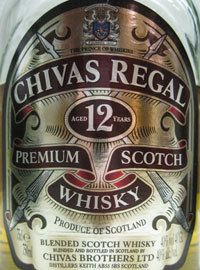 Scotches are one of the most popular types of whisky. They are often distilled two or sometimes three times. International laws require that “Scotch” be distilled in Scotland and aged for at least three years and one day in oak casks. Because many whiskies are blended, the age of the youngest whisky used in the blend must be indicated as the age on the bottle. When there is no age, it’s likely the whisky is very close to the three year minimum. Whisky does not age in the bottle, so the time in the cask is critical to its maturity.
Although “single malt” whiskies are available in all categories, they are more common with Scotch and Irish whiskies. Single Malt simply means that all of the whisky is from a single distillery. They often contain whisky from multiple casks, and only “single cask” whiskies are from the same cask. Single Cask is not necessarily higher quality than Single Malt, it just indicates that the whisky has not been blended with whisky from other casks, which is commonly done to achieve the consistent flavor that you expect from a brand.
Popular examples: Chivas Regal, J&B, Glenlivet, Glenfiddich, Johnnie Walker.
Irish
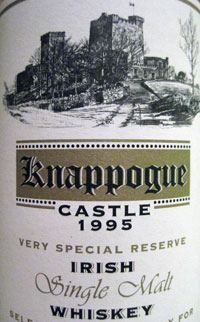 These whiskeys are typically distilled three times. They must be produced in Ireland and aged in wooden casks for at least three years, although it’s common to age them three to four times longer. There are exceptions, but unpeated malt is one of the distinctive characteristics of Irish whiskey. It is mixed with unmalted barley to create “pure pot still” whiskey, which has a bit of a spicy taste that is unique to Irish whiskeys.
Popular examples: Bushmills, Jameson, Knappogue, Tullamore.
Bourbon
Named after Bourbon County, Kentucky, this type of American whiskey is primarily made from corn (maize). In fact, it has to be made in the United States and contain at least 51% corn. Typically, it’s about 70% corn, the rest is wheat and/or rye and malted barley. The high content of corn is the main characteristic of it’s unique flavor. It cannot be more than 160 proof, contain any coloring or flavoring and must be aged in new, charred oak barrels. If it’s aged less than four years, the age must be labeled on the bottle.
Popular examples: Jim Beam, Wild Turkey, Maker’s Mark, Evan Williams.
Tennessee
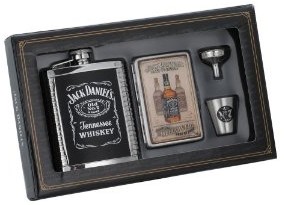
Tennesseee Whisky is almost identical to Bourbon, with the exception that it is filtered through sugar maple charcoal, which is thought to remove some unpleasant flavors and produce a clearer whisky. It was officially recognized as a distinct style of whisky in 1941, before which it was considered bourbon. Until 2009, only three counties in Tennessee were allowed to produce drinkable spirits. The law has been expanded to include another 41 counties, which should lead to more varieties of Tennessee Whiskey.
Popular examples: Jack Daniel’s, George Dickel and Pritchard’s are the only three brands.
Rye
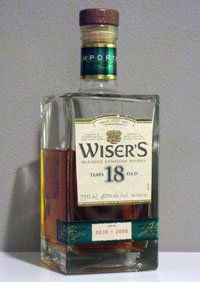 Rye is sometimes, often incorrectly, referred to as Canadian Whisky. Although rye is a popular ingredient in Canadian Whisky, the Canadian government does not require any specific proportion of rye in Canadian Whisky. Interestingly enough, Rye whisky from the United States must contain at least 51% malted rye. Canadian blends often contain less rye than American “Rye” whiskeys but more rye than most other types of whisky. The additional rye makes these wiskies among the smoothest of all whiskies.
Popular Canadian Rye examples: Crown Royal, Canadian Club, Seagram’s, Wiser’s.
Popular American Rye examples: Jim Beam Rye, Wild Turkey Rye, Van Winkle Family, Michters.
Serving
All whiskies are popular straight up or on the rocks. It is also common to drink them with water, cola, ginger ale or other sodas and juices. Some popular whisky cocktails include: Whisky Sour, Rusty Nail (Scotch), Manhattan (Bourbon) and Old Fashioned (Bourbon).
Broken Secrets
Subscribe on: Facebook | Twitter | Email | Kindle
Sources: Suite 101, Whiskey Wise, Whisky Mag, Wikipedia (Whisky, Whisky Brands, Lactone)
Commonly Misquoted Phrases
By Chad Upton | Editor
Admittedly, I am not an English professor. There are many occasions when readers have corrected me, and I appreciate it, that’s what this site is all about — learning new things.
I’ve noticed a few common phrases that frequently get misquoted in conversations. Even if you know the correct phrase, you might not know it’s meaning or origin. If you’ve got others, share it in comments at the bottom.
Tide over
common misquotes: tie over, tied over
The word “tide” is an obsolete word for time, although it’s still with us in words like “Yuletide” (Christmas Time).
The phrase comes from sailors who had to anchor (or compromise progress) when there was no wind to fill their sails — to prevent the tide from pushing them backwards or off course. The earliest recorded use of the phrase can be found in A Sea Grammar (1627), “To Tide ouer to a place, is to goe ouer with the Tide of ebbe or flood, and stop the contrary by anchoring till the next Tide.”
Down the pike
common misquote: down the pipe
If you’re talking about something in a pipeline, whether it’s literal or metaphorical (like a sales pipeline), then “pipe” does make sense. But, if you’re talking about anything else, then it’s probably “coming down the pike.”
The etymology is pretty straight forward, in this context, “pike” simply refers to “turnpike”, which is a major roadway, usually a toll road. In other words, it just means that something is coming down the road.
Flesh Out
common misquote: flush out
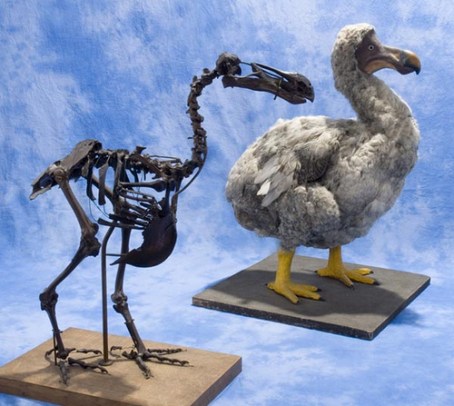
Much like, “coming down the pipe“, “flush out” is a real phrase. But, “flush out” is often used when people actually mean, “flesh out.”
To “flush out”, means to expose or release something, like flushing the toilet. It comes from bird hunting, where one flushes out a flock of birds. To “flesh out” is to bring something to life, to make it real. If you take an idea and make it real, you have put flesh on a skeleton.
Broken Secrets
Subscribe on: Facebook | Twitter | Email | Kindle
Photos: skipnclick (cc), MuseumWales (cc)
Sources: The Free Dictionary (turnpike), Google (pike), UsingEnglish, phrases.org.uk, Wikipedia (Tide), Paul Brians (Washington State University)
The History of Halloween
By Kaye Nemec
Although Halloween has religious roots in Celtic, Roman and Catholic celebrations, it became a more secular holiday in the 19th century.
Two thousand years ago, Celts celebrated New Years on November 1st in the festival of Samhain. Due to the changing climate, that date symbolized the end of summer and the beginning of the cold, dark winter. They associated winter with death and believed that New Year’s Eve, was the night when ghosts of the dead would return to Earth. They believed the presence of the dead allowed priests to better predict the future and their prophecies were taken very seriously. In order to support the priests, the Celts would celebrate Samhain by wearing costumes and building bonfires where they made sacrifices by burning crops and animals.
By 43 A.D., the Romans had taken most of the Celtic land and combined some of their traditions with the Celtic festival of Samhain. Romans celebrated Feralia, an event to commemorate the passing of the dead, at the end of October. They also celebrated the Roman goddess of the trees, Pomona, around this time. Pomona’s symbol was an apple and it is believed this celebration is where “bobbing for apples” originated.
Eventually Christian beliefs began making their way through Celtic land and Pope Boniface IV declared November 1st All Saints’ Day, which was also known as All-hallows (All-hallows Eve began to replace the festival of Samhain). About 200 years later, the Catholic Church named November 2nd All Souls’ Day which was a day to honor the dead. All Souls’ Day and Samhain had similar celebrations – costumes and bonfires. Collectively, All-hallows Eve, All Saints’ Day and All Souls’ Day were referred to as Hallowmas.
When Europeans immigrated to America, they brought their Hallowmas traditions; in the late 1800’s the traditions of ghosts and honoring the dead become more family-friendly events like trick-or-treating and neighborhood parties. Hallowmas became Halloween and grew into the child oriented, secular holiday that we are familiar with today.
The “Halloween Capital of the World” is Anoka, Minnesota — a small city near the Twin Cities of Minneapolis and St Paul.
In 1920 Anoka hosted the first documented Halloween celebration and parade in the United States. The Halloween celebration was planned as an alternative to the pranks that had become common around Halloween. Prior to the organized Halloween celebration, troublemakers would let cows out of their enclosures, tip over outhouses and soap windows. City officials wanted to end the pranks and start a more positive Halloween tradition.
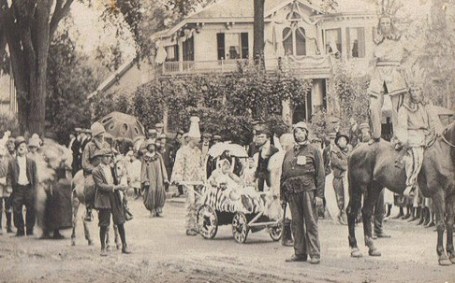
An official Halloween committee was formed and began planning a big event. When the time came, a parade made its way down Main Street and treats like popcorn, candy and peanuts were handed out. In true Hallowmas fashion, the night concluded with a huge bonfire. Seventeen years later, Anoka city officials convinced the United States Congress to grant them the official title, “Halloween Capital of the World.”
Since 1920, Anoka has hosted a huge Halloween celebration every year, except for 1942 and 1943, when it was canceled due to World War II. The city continues the tradition with their annual Halloween celebration. Just like the first year, a Halloween committee is formed, although now it is known as the Anoka Halloween Board of Directors.
This year’s event includes three parades, a pumpkin carving contest, a costume contest, BINGO, house decorating and of course, a bonfire.
Broken Secrets
Subscribe on: Facebook | Twitter | Email | Kindle
Pictures: Eric Martin (cc), Steve Chasmar (cc)


 Broken Secrets