Archive for 2010
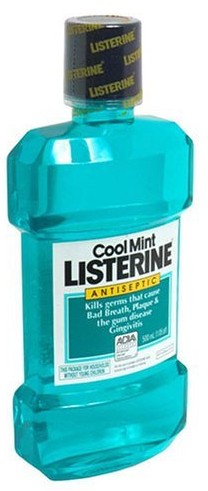
Listerine Was Once Sold as Floor Cleaner
By Chad Upton | Editor
If you haven’t noticed, the popularity of hand sanitizer has exploded. It’s in our desks, cars, purses and homes. I have seen dispensers at subway stops, hospitals, airports and restaurants. We are obviously obsessed with killing germs and fighting viruses.
With H1N1, Mad Cow, SARS and others, you can’t blame us for being careful. It seems like hand sanitizer came out of nowhere, but it’s not new, and neither is the principle.
 The first time I saw hand sanitizer was in 1995. I worked at a restaurant and we were told to use it hourly. At the time, it seemed like a magical potion. I thought the concept was weird: I wasn’t washing anything off my hands, I was rubbing it in.
The truth is, hand sanitizer is more effective at killing bacteria than soap and water. That said, soap and water is far more effective at removing visible dirt.
For the most part, hand sanitizers use a variety of alcohols as their active ingredient. To be effective at reducing bacteria, they should contain at least 60% alcohol, and most contain 60% to 85%. A few brands (worth avoiding) contain as little as 40% alcohol and some hospital solutions have as much as 95%.
So, where did this idea start?
It began in 1867 with a British surgeon, Joseph Lister. He published a series of articles in the British Medical Journal stating that surgery patients had less tissue infection if the incisions and surgical instruments were treated with carbolic acid prior to surgery.
At the time, they didn’t wash their hands or anything else before surgery. They thought gangrene wounds were caused by stinky air. Seriously. The same stinky air they blamed for cholera, black death and bubonic plague. They later realized the stinky air was actually the result of rotting wounds, not the cause.
His work lead to the germ theory of disease. It was the equivalent of suggesting the Earth was round, when everyone else thought it was flat. Fortunately, it was very easy to demonstrate the success of his theory and it became widely accepted.
In 1879, Listerine was named after him. It was originally developed as a surgical antiseptic, but that’s a pretty small market. To increase sales, they began marketing it as a floor cleaner and a cure for gonorrhea. That brought company revenues to about $115k, but marketers had another idea in the 1920s.
In this era of patent medicines, there were products to cure every known illness. The Listerine folks weren’t going to let this bandwagon pass by. All they needed was the perfect illness, something that everyone had and Listerine could cure; so, they made up the term, “chronic halitosis” (bad breath).
You see, bad breath hadn’t been invented yet. At that time, bad breath was just known as “breath.” Their best effort was an ad campaign that suggested young people would never find marriage with a condition such as bad breath. Over 7 years, revenues skyrocketed to $8 million.
Listerine is still sold as an antiseptic today, and primarily marketed for oral health. Depending on the flavor, it contains 21.6% to 26.9% alcohol.
Broken Secrets | Facebook | Twitter | Email | Kindle
Sources: WP Hand Sanitizer, WP Lister, WP Listerine
The Sugar in Most Foods is Not Natural Sugar
Real sugar, from cane or beets, is expensive to import. That’s why countries without real sugar, make it from other stuff.
The United States, Canada and the UK consume a lot of sugar and don’t have enough real sugar to meet their needs. A complicated series of transformations involving enzymes and fungi can process corn into a sugar substitute called high fructose corn syrup (known as “glucose/fructose” in Canada and “glucose fructose syrup” in the UK).
It is almost exactly like real sugar. Almost.

The safety of high fructose corn syrup (HFCS) is a hot debate in health circles. Food manufacturers say that it is almost exactly like real sugar and there is no proof that it is any worse for you than real sugar. Other experts point to a key difference between natural sugar (sucrose) and high fructose corn syrup. It’s very technical, but I’ll try to simplify it.
Sucrose and HFCS are both made up of glucose and fructose, which is why the food manufacturers say they’re almost the same. The key difference is that sucrose contains a bond between glucose and fructose, while HFCS does not. Because of this bond, your body must break it down before it can be utilized. In high fructose corn syrup, there is no bond — allowing it to be utilized more easily.
When you have more energy than you can burn, it gets stored as fat. A high absorption of sugar can also lead to insulin resistance and then diabetes.
Pay attention to the type of sugar in your food, it’s important. You might be surprised by how many things contain high fructose corn syrup. Some examples include: yogurt, breakfast cereals, granola bars, crackers and of course things like soda/pop and cookies. But, for all of these products, there are brands with natural sugar. Even manufacturers are starting to pay attention, Pepsi is currently offering Pepsi and Mountain “Throwback.” They’re just like their normal drinks, but made with real sugar — a throwback to the good ol’ days.
Remember that if you’re not in the USA, high fructose corn syrup is called glucose/fructose or glucose-fructose syrup.
Broken Secrets
Subscribe on: Facebook | Twitter | Kindle
Sources: WP HFCS, WP Insulin, Princeton University
Photo: *MarS (cc)
Satellite Dishes are Gray Because…
They are primed for painting. That’s right, it’s not just any gray: it’s primer gray. That means your dish can blend in or compliment your house if you paint it.
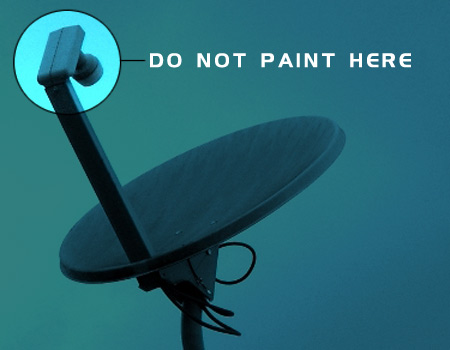
As for the type of paint, many people report good results with rust-oleum and Krylon Fusion (or similar).
If your dish is not gray then you may want to prime it first.
Tips:
- do not paint over the LNB (plastic cap at the focal point of the dish – see picture)
- only use satin/flat paint (not glossy or metallic)
- do not move the dish while painting it (unless you plan to re-aim it)
- do not hurt yourself
BrokenSecrets.com
PS – Sorry to my readers in “grey” countries. :)
Sources: Helium, DSS Geeks, Satellite Guys
Photo: angelrravelor a3r (cc)
Roadway Marks Used For Speeding Tickets
Look at the two white marks highlighted in the photo below.
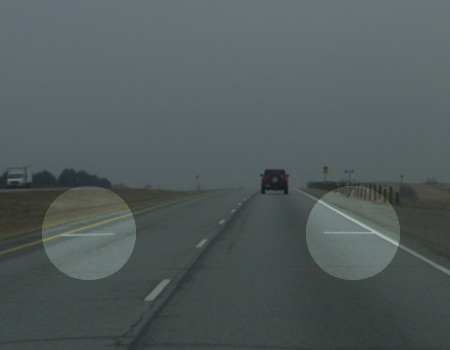
Radar is not always the best way to catch speeders, especially in open areas where the police can’t hide.
But, radar isn’t the only option, Police can also use these marks to measure how fast you’re going. This pair of marks will be followed by a second pair further down the highway. In the United States, they’re usually a quarter mile apart and in Canada, 500 meters.
An officer in an airplane or unmarked car will use a stopwatch to time your car between the two pairs of marks. The time it takes will give them your average speed between those two markers, and if it’s high enough then they can write you a ticket. In the case of aerial surveillance, the plane will notify police cars waiting on the ground.
Either way, I’d recommend a good radar detector (where legal of course).
BrokenSecrets.com
Sources: AOL, Nashville.gov, City of Ottawa
Photo: dougtone (creative commons)
What Do AM and PM Stand for?
You might see these acronyms every day and never even think about what they actually stand for. But, at some point, you’ve probably set your alarm for PM and been late for something in the AM.
I asked my dad about AM and PM at the curious age of five. He had a really good answer. It wasn’t the right answer; but, it was a good answer.
According to him at the time, “AM” stood for “At Morning” and “PM” was “Past Morning.” It made sense and kept my mind at bay until now, and it’s not that far from the actual Latin translation.
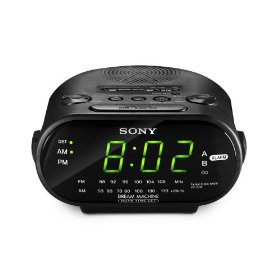
AM is a Latin acronym for Ante Meridiem, which is “before midday” when translated to English.
PM is Latin for Post Meridiem or “after midday.”
Now, if you want to showoff you can lose the acronym and throw down, “post meridiem” the next time someone asks “AM or PM?”
BrokenSecrets.com [available in the Amazon Kindle Store]
Source: WP
Google Provides Free 411 Searches and Connections
Google has a lot of cool services that most people don’t know about. One of my favorite Google secrets is Google 411.
Just dial: 1-800-GOOG-411
It is just like your local telephone company’s 411 service, except it’s free and it automatically connects you to the number for free. It works from US or Canadian phones and can be used to find US and Canadian business listings.
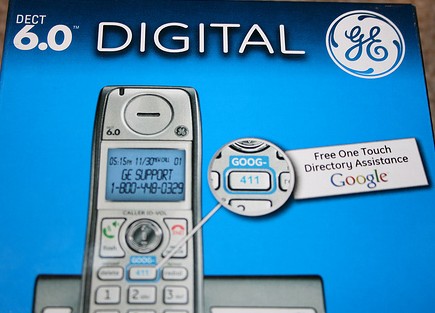
It also has some cool features. When you find a listing, you can say “text message” and Google will instantly text you the phone number, address and a map link for the address that opens in Google maps on a capable phone.
There are even cordless phones available with a dedicated button for Google 411.
Remember goog-411 the next time you need to make dinner reservations or order takeout — it couldn’t be easier or cheaper.
BrokenSecrets.com [available on kindle]
Photo: morrowplanet (cc) | Source: Google 411
Colored Sunglass Lenses Can Improve Your Sight
 Let me be clear, they don’t improve the focusing power of your eyes but they can change the way things look so you recognize them more easily. That’s important when reaction time is critical.
Yellow lenses are a popular option but it’s a myth that they make things brighter — they do not amplify light. But, according to the American Academy of Ophthalmology, they do enhance depth perception. This is because they block some of the blue light that can make objects look hazy and reduce sharpness.
For this reason, yellow lenses are popular with pilots, cyclists, shooters and boaters in low light. In daylight, blue lenses are good for pilots and skiers because they enhance the contrast between objects that are white (snow and clouds) and other objects. For boaters, red lens are good because they increase the contrast between water and objects that are in the water.
Although colored lenses can increase contrast in specific conditions, the downside with any colored lens is that they obviously distort color. Brown colored lenses are the happy-medium; they offer minimal color distortion while improving contrast, so they’re great for everyday use.
BrokenSecrets.com
Big thanks to Todd for sharing this secret with me!
Automatically Add WWW. and .COM to a Website Address
Because I spend so much time on the internet, I have bookmarked hundreds of websites, maybe thousands. They’re neatly organized into folders by category, some of them 8 folders deep. But, I rarely see anyone else use bookmarks — I know that you’re typing in the address for many of the sites you visit.
This secret will save you some keystrokes.
Instead of typing “www.BrokenSecrets.com” and then hitting enter, just type “BrokenSecrets” and press CTRL+ENTER (Mac users use COMMAND + RETURN). That will automatically add “www.” to the beginning and “.com” to the end.

For those who have no idea what I’m talking about, look at the top of your web browser (the program you’re using to view this site). You’ll see a text input area that starts with, “http://brokensecrets.com”. That is where you can type web addresses that you’d like to visit. For most sites, you need to at least type the address and the extension (ex: brokensecrets.com).
In Windows, this works with: FireFox, Internet Explorer and Chrome. On Mac, this works with FireFox and Chrome, but use CTRL + RETURN for Chrome. It does not work in Safari for Mac or Windows.
BrokenSecrets.com
Subscribe on your Kindle
How to Get Free HDTV Channels
When I say free, I don’t mean free with your paid cable or satellite package. I mean 100% free without paying for any service.
When television broadcasting began in North America, the broadcasts were completely free. The costs associated with producing TV were covered by program sponsors (advertisers). TV signals were received over the air, so all you needed was a television and an antenna (aka “rabbit ears”). This worked great at the time because TV was new and nobody knew if it was going to be successful; laying cable to distribute signals didn’t make any sense and satellites weren’t an option yet.
Once television was a proven success, viewers wanted more content on bigger and better televisions. Today, those demands haven’t changed, but the technology has.
Receiving signals over the air was not perfect, there were a limited number of channels that could fit in the airwaves. Reception was spotty, but Cable and Satellite services came along with more channels and reliable signals that didn’t require any adjustments.
The technology has changed again. The development of digital signals has allowed broadcasters to fit many channels in the same space that used to only fit one channel. Although it caused a lot of disruptions in June of 2009, the United States ceased all analog TV signals within a specific frequency range. That means the once crowded airwaves are much more useful with digital signals that can stuff more channels in the same space.
Some broadcasters have been distributing their television signal over-the-air for more than 50 years and they continue to do so, now in digital. The secret to picking up these free channels: rabbit ears.
Seriously.

To many people, this will sound like a huge step back, and in some ways it is. You’re not going to find John and Kate or Jersey Shore on the free channels, but it could be worse: you might find John and Kate or Jersey Shore on the free channels.
If you’re on a budget; or you only watch the most popular network shows; or you want to stick it to the cable-man; or you want to pickup really good HD signals on a TV without a cable box or satellite receiver, then this is an option to consider. In many cases, digital over-the-air signal quality rivals cable and satellite signals, where signals are highly compressed because of bandwidth limitations.
Digital rabbit ears are much better than the coat hangers of the past — if you’ve upgrade to a digital cordless phone in the past couple years, you’ll understand the difference in reception, reliability and clarity that digital signals offer.
Depending on where you live, your channel selection will vary. In some places, you can get 10+ HD channels and dozens of standard digital channels, all for FREE! If you live in the United States, you can enter your zipcode in AntennaWeb’s search engine to see a list of the channels you should receive. In many places, you should get most (or all) of your favorite prime time shows in free HD. All you need is an HDTV, an ATSC tuner (most HDTVs have one built in) and an antenna. Here are some examples of affordable indoor and outdoor antennas that you can buy.
BrokenSecrets.com [now available on Kindle]
Photo: Dano (cc)
How to Prevent a GPS From Falling Off the Windshield
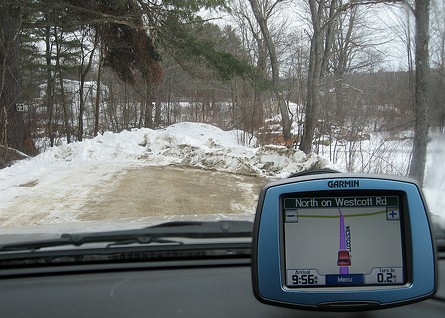
You’re driving along, minding your own business, when your GPS unit suddenly annuls its marriage to the windshield. It crashes into the dashboard, slides into the door, high-fives your passenger and bounces on the floor. Your GPS is not broken; but, it will be the next time it startles, then attacks your passenger again.
In the winter, it’s especially tempting for the suction cups on your GPS or radar detector to take your electronics skydiving. The suction cup relies on a vacuum tight seal to maintain its grip on the windshield. Cold weather, or direct flow of air conditioning, can degrade that seal enough that it can’t support the weight of the device.
The secret to getting a good seal: warm the windshield and suction cup(s) before getting them back together. You can warm the suction cup(s) with your hand or treat them like takeout food and warm them with your seat heaters. Using the defogger, blow hot air on the windshield for at least 10 minutes, then pull over in a safe place and apply the warm suction cup(s).
The idea is to create as much suction as possible inside the suction cups. Before you push it against the window, be sure the suction lever is all the way back, then push the suction mount HARD against the windshield, then push the suction lever forward. Because the windshield and suction cups are warm, you’ll get a better seal that should maintain enough suction to support your GPS unit or radar detector.
If you still don’t have any luck, try cleaning your windscreen and suction cups with glass cleaner wipes and repeat the steps above.
BrokenSecrets.com [Now available on Kindle]
Photo: redjar (cc)


 Broken Secrets