Archive for 2010
What are Truck Weigh Stations for?
There are truck weigh stations scattered along most major highways in the US, Canada, Taiwan and other countries. Obviously they’re there to weigh trucks, but why do trucks need to be constantly weighed?
Vehicles that weigh more than 26,000 pounds or have 3 or more axles have to pay fuel taxes. Motor homes and other private (non-commercial) vehicles are generally exempt. For example, if you see a race-car team drive by, you’ll often see “not for hire” on the side of the cab. That suggests the vehicle is exempt from the fuel tax charges and keeps other trucking companies from soliciting their services.
Truck weigh stations were originally developed for states to collect the fuel taxes they were owed by the commercial trucks using their roadways. It is similar to the licensing concept that I talked about in a previous post, Why U-Hauls Have Arizona License Plates.
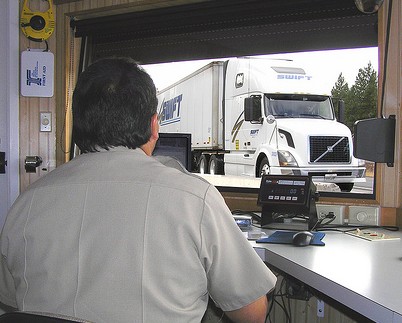
In North America, weight stations aren’t directly used for that purpose anymore. There is now an International Fuel Tax Agreement which allows truckers to file a quarterly tax report. Weigh stations are still used to enforce the tracking and submission of the logs and the payment of the fuel tax.
The scales are still used to enforce weight restrictions. The federal weight restriction is 80,000 pounds. Trucks need a trip permit to transport a load exceeding that weight.
Some weigh stations are pretty high-tech, supporting “weigh-in-motion” technology. This technology can allow truckers to bypass weigh stations entirely. This involves the truck driving over a scale that is built into the right lane of the road, usually about a mile before the weigh station. Depending on the weight of the vehicle, its history and the history of the trucking company, the weigh station operator or an automated system will decide if the truck needs to pull into the weigh station.
Truckers who use these systems have a transponder in their truck, similar to those used for electronic toll collection. If they can skip the weigh station, they will usually get a green light on the transponder. If they need to pull in, they will get a red light.
Weigh stations are also used for safety inspections of vehicles. Truckers often refer to weigh stations as “chicken coops.” Check out my post on trucker signals for more trucker slang.
Broken Secrets | By: Chad Upton
Subscribe on: Facebook | Twitter | Kindle
Sources: Wikipedia (weigh station, IFTA, weigh in motion)
Photo: OregonDOT (cc)
Cats Cannot Taste Sweetness in Food
My favorite classic science fair exhibit is the taste buds booth.
It’s like going to the electronics department in Costco — you eat free food samples while some kid tells you stuff you’ll never remember because all you’re thinking about is how you can get away from the booth without it looking like you just came over for the free food samples.
Taste has been studied for a long time. In 1901, Harvard professor Edwin G. Boring published a paper that stated different taste receptors can be found on different parts of the human tongue. His last name was Boring, but his work was not. In fact, his work is slightly controversial since all areas of the tongue are sensitive to all tastes; however, some areas are more sensitive than others.
Some wine and beer glasses are shaped to encourage the liquid to hit certain parts of your tongue first, this is supposed to deliver the ideal taste sensation for that drink.
 There are five generally accepted taste sensations:
- Sweet
- Bitter
- Savory
- Salty
- Sour
Most mammals can experience all of these sensations. There are some exceptions, particularly with sweetness. New world monkeys do not perceive aspartame as sweet. Humans, apes and old world monkeys do. Cats cannot taste sweetness at all.
Broken Secrets | By: Chad Upton
Subscribe on: Facebook | Twitter | Kindle
Sources: Wikipedia (taste buds, sweetness, wine glass), Scientific American
Why Chocolate is Dangerous for Dogs and Not Humans
Whether it was your idea or not, your dog or cat may swallow chocolate at sometime in their life.
You want to avoid that since there are two toxins in chocolate that can have adverse affects on your pets: caffeine and theobromine.
Both of these drugs are very similar, but chocolate contains a lot more theobromine than caffeine. Theobromine does not affect the human nervous system as much as caffeine, nor is it as addictive as caffeine. But, theobromine is still addictive and believed to be the agent that causes Chocolate addiction. It is also believed to be responsible for chocolate’s notoriety as an aphrodisiac.
 Although theobromine increases heart rate in humans, it also dilates blood vessels, which reduces blood pressure. In fact, it is superior to codeine at suppressing cough and can be helpful in relaxing muscles to alleviate symptoms of asthma.
Humans are able to consume chocolate in moderation because we can breakdown theobromine fairly quickly. In dogs, cats, rats and other species, they cannot digest it efficiently. This leads to a buildup of this toxin and is known as theogromine poisoning. Actually, this can also happen to elderly people who consume large quantities of chocolate.
For animals, a dangerous quantity of chocolate depends on the type of chocolate. Milk chocolate is not as dangerous as semisweet chocolate and it’s not as dangerous as cocoa powder.
Milk chocolate contains approx 44-64 milligrams of theobromine per ounce. Semi-sweet chocolate is about 150-160 mg/oz. Cocoa powder is 800 mg/oz.
A toxic dose for pets is 100-200 mg/kg of body weight (1 kg = 2.2 pounds). That said, problems can still be evident with smaller doses.
Signs of toxicity include:
- Excitement, nervousness, trembling
- Vomiting or diarrhea
- Excessive thirst
- Muscle spasms
- Seizures
- Coma
- Death (usually a result of other problems caused by the toxin)
As much as people like to treat their pets like humans, they are not human and should not be treated like humans when it comes to diet. There are many other human foods that are not recommended and poisonous to pets:
- Alcohol
- Avocado
- Coffee
- Fatty Foods
- Onions
- Raisins and grapes
- Salt
- Yeast dough
- Garlic
- Artificial sweetener
Pet’s digestive systems are very different from humans. Checkout Vetinfo for more details on why some of the above foods should not be fed to your animals.
Thanks to Ryan W for suggesting this secret.
Broken Secrets | By: Chad Upton
Subscribe on: Facebook | Twitter | Kindle
Sources: Wikipedia (Theobromine), About.com, Vetinfo
License Plates and Headlights Increase Visibility to Traffic Radar
I did a previous post about how speed enforcement radar works.
There are two primary types, laser and tradition (Doppler) radar. Even if you have a radar detector, laser is the most difficult type of radar to avoid getting caught by. Laser radar gives officers a near instant reading on your speed, so you don’t have time to slow down before they get a reading on you.
Your best defense is reducing or even preventing the laser beam from bouncing back to the radar gun. The front license plate and your headlights are the most reflective thing on the front of most vehicles. If you’re not required to have a front plate in your area, get rid of it.
The next best thing is laser jamming, although it’s not legal in all places. But, if it is allowed in your area then you can buy laser jamming or scrambling units which prevent the radar gun from receiving a usable laser reading.
If laser jammers are not allowed, you have some other options. You can get plate covers and headlight treatments to help reduce the amount of laser light that is reflected back to the radar gun.
Reflectors on the back of your car are also an ideal reflector for Laser radar guns. For safety and legal requirements in some areas, you should probably keep these reflectors on your car.
I hope that some these tips will help you avoid some speeding tickets.
Broken Secrets | By: Chad Upton
Subscribe on: Facebook | Twitter | Kindle
Source: Wikipedia Laser Lidar
Carousels Were Invented By The Military
Depending on where you come from, you may call carousels by another name, perhaps: “merry-go-rounds”, “flying horses” or “roundabouts.”
They have been popular rides for the past 200 years, but they started off as military training machines. In fact, the word “carousel” comes from the Spanish word, carosella, which mean “little battle.”
This name was fitting because carousels were originally used to train knights to use their swords while riding on a horse that moves up and down. Objects were placed along the outside of the carousel; the knights tried to stab the objects or catch them on their swords.

Jousting competitors also trained on carousels, but, when Catherine de Medicis’ husband was killed in a sudden jousting accident (or “lost” as they called it back then), the carousel quickly became a safer form of entertainment. Crowds would watch as entertainers would catch objects on their swords and travel in circles until they got dizzy.
That sounds more boring than actually going to a mid-evil times restaurant, so spectators naturally wanted a shot at riding the carousel and even catching one of the objects on their sword. This is how it became the popular amusement ride it is today.
In fact, a small number carousels still exist that have an obstacle as part of the ride. On these carousels, riders will try to grab a brass ring as they ride around on the carousel. There are steel rings as well, and those are often thrown at a target to discourage people from keeping them as souvenirs. The brass ring can often be redeemed for a prize, which is usually a free ride on the carousel.
This is also where the term, “catch the brass ring” comes from.
Broken Secrets | By: Chad Upton
Subscribe on: Facebook | Twitter | Kindle
Sources: Wikipedia, Big Site of Amazing Facts
Photo: Swamibu
WD-40 Ingredients and Uses
By Chad Upton | Editor
WD-40 was created in 1953 by Norm Larsen. It was originally designed to prevent corrosion caused by water — the WD stands for “water displacement.” Norm’s 40th formula was successful and that’s where the “40” comes from.
The formula is so secretive, they decided not to patent it. This may sound counter intuitive, but filing for a patent would require disclosing the ingredients.
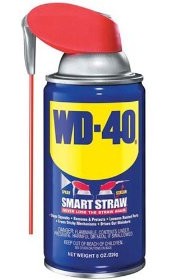 That strategy was good for a while, but many years later, the Hazardous Communication regulation required that ingredients of potentially hazardous products be made available to emergency responders.
I did some digging and found the material safety data sheet for WD-40 (PDF).
The main ingredient is Stoddard solvent, which is also known by its own brand name, Varsol. CO2 is used as a propellant and mineral oil is another main ingredient.
It was first used to protect the Atlas missile from corrosion and it became available to consumers in 1958. Since then, consumers have found over 2000 uses that the WD-40 Company endorses (and many more it doesn’t).
There is a popular email circulating that you may have seen. It states WD-40 is primarily fish oil, but that’s not true. The email also lists a number of uses, although the WD-40 company only recommends about half of those. Some of the 2000 recommended uses include:
- Stop squeaks (doors, bike chains)
- Remove and prevent rust (lawn mower blades during off season, cookie tins/sheets)
- Remove gum, glue, ink and lipstick from fabrics and other items
- Lubricate metal parts (zippers, tools, machines)
- Loosen nuts and screws
- Cleaning (shower doors, tools, lime stains in toilet bowls)
Check out the full list of 2000 uses (PDF).
PS – The WD-40 company has an affinity for product names with numbers. They also make 2000 flushes, X-14, 3-in-one-oil and a few other products.
Broken Secrets | Facebook | Twitter | Email | Kindle
Sources: Official WD-40 Uses (PDF), MSDS (PDF), Snopes
There are Three Stanley Cups
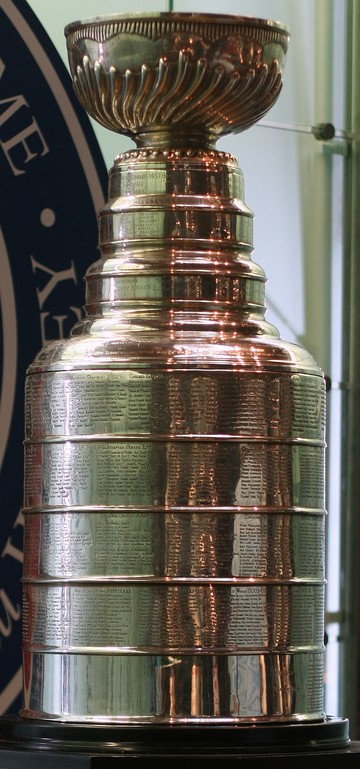 Congratulations to the 2010 Chicago Blackhawks for winning their first cup since 1961 last night.
For those who don’t know, the Stanley Cup is the National Hockey League’s playoff trophy. 30 franchised teams from Canada and the United States compete from October to June for the honor of having the players, coaches, managers and staff names engraved in the cup.
There are six historic bands (“rings”) at the top of the cup where names were engraved between 1893 and 1927. Then there are five main bands on the body of the cup where more recent names have been engraved. The historic bands never change, but the oldest of the five main bands is retired when a new ring is added to make room for new names.
The retired rings are displayed in the Hockey Hall of Fame in Toronto Canada and the cup itself is always accompanied by a minimum of one Hockey Hall of Fame representative.
After winning the Stanley Cup, the team captain will be presented with the cup. It is a tradition for the players to skate a lap around the rink with the cup held above their head. This tradition was started by Ted Lindsay of the Detroit Red Wings in 1950. He did it to give the fans a better look at the trophy.
After the winning game, there is usually a home-town parade. Each winning player is also allowed to spend an entire day with the cup. Players have baptized their children with the cup, swam in their pool with the cup and even fed their dogs from the cup.
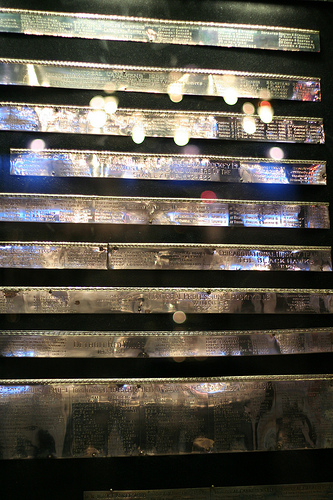
Rings removed (retired) from Stanley Cup
There are three Stanley Cups in total. The original “cup” resembles a large bowl and is mounted to a wooden stand. It no longer has bands at the bottom and was retired after its first 71 years of service — it remains on display at the Hockey Hall of Fame. Then there are two nearly identical cups. One is the official cup and bears the official seal on the bottom, the other is a replica and remains on display at the Hockey Hall of Fame when the official cup (“Authenticated Cup”) is elsewhere.
The easiest way to spot the real cup is to look at the 1984 Edmonton Oilers engraving. Basil Pocklington’s name has been crossed out with X’s. He is the father of Peter Pocklington, the Oiler’s owner at the time and his name was added in error. The NHL claims Peter added his father’s name to the engraving list and they failed to validate that list. Peter claims it was the engraver’s error and the list with his father’s name on it was a list of people who should receive miniature replicas.
The full size replica cup does not contain Basil’s name at all.
Broken Secrets | By: Chad Upton
Subscribe on: Facebook | Twitter | Kindle
Sources: Wikipedia (Stanley Cup, Peter Pocklington, NHL)
Photos: Colby Cosh (cc), Vidiot (cc)
Diesel Fuel Nozzles Don’t Fit in Standard Fuel Cars
Diesel cars are not popular in North America. But, diesel engines are fairly popular in pickup trucks and are becoming more popular in North American cars.
Although they have a limited history in America, foreign car manufacturers sell many diesel models in Europe.
Diesel engines are generally very efficient and that behind their new found demand. As diesel becomes more popular, you will likely see more diesel pumps.
This is good if you have a diesel car, potentially bad if you don’t. Diesel pumps present a slight risk to your standard gasoline vehicle — you do not want to put diesel fuel in a car that uses standard unleaded fuel.
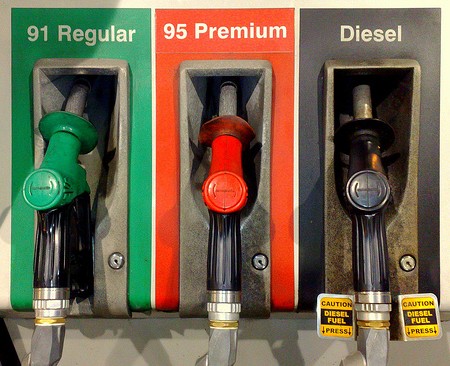
Standard engines use spark plugs to burn the fuel, diesel engines use pressure and heat to cause a reaction in diesel fuel. That means standard engines will not burn diesel fuel. If you inadvertently put diesel in an unleaded car, the engine will stop very quickly. It’s not usually a total loss, the fuel system will have to be cleaned, filters will need to be changed and the whole process can cost as much as $600.
But, there is an easy way to avoid this costly mistake. First, diesel fuel dispensers are usually clearly marked with text and with a special color handle (the color varies by station).
Second, the nozzle on the end of a diesel fuel pump is slightly larger than a standard fuel nozzle. That means it won’t fit in your car’s gas hole, at least not that way you’re used to a pump nozzle fitting. If you notice that the nozzle isn’t going as far in as it usually does, check the pump, you might be holding a diesel trigger.
This same principle was used in the 80s when we transitioned from leaded to unleaded fuel. Leaded fuel nozzles wouldn’t not fit in unleaded gas holes.
Checkout some other gas related Broken Secrets:
- The gas arrow
- Locking the gas pump trigger (be careful)
Broken Secrets | By: Chad Upton
Subscribe on: Facebook | Twitter | Kindle
Sources: Answer Bag, WTSP, Dixon Nozzles (PDF)
Photo: teachernz (cc)
How to Make Your Grass Greener
Look outside. Every lawn on your street is a different shade of green. That’s because everybody cuts, waters and fertilizes differently, not to mention the half dozen varieties of common grasses that they may have.
I’ve never been that guy with the greenest lawn, so I asked my lawn specialist friend Mike how to make my lawn greener.
He told me the most important factor was how short I cut it. He said, “the longer you leave it, the better. Set your mower on its highest setting.” I was hesitant because I always cut my grass short and I liked the way that looked.

But, longer grass traps more moisture and reduces the sunlight that gets to the roots, which can burn the grass and dry it out.
Grass reacts to the sun like your skin does. Too much sun without protection will burn it. When you have/had a full head of hair, you don’t put sunscreen on top of your head because your hair protects your skin. The same goes for long grass, it provides shade for the roots and soil.
Long grass also develops a deeper root system which makes the grass more fit for dry and less fertile soil.
I followed Mike’s advice and my grass still looks neatly trimmed, it’s also the greenest grass I’ve ever had. But, there are other reasons why your grass turns brown or yellow. (more…)
How to Buy the Right Shoes for Your Feet
Considering how much time you spend wearing shoes, how much time have you spent understanding what’s unique about your feet?
Unless you’re an avid runner or maybe work at a shoe store, you probably don’t know how to buy shoes that compliment your feet and the way you use them. It can be hard enough to find a shoe that looks good, fits on your foot and feels comfortable, but it takes even more to find a pair that fits your arch and the angle of your ankles. But there is a way.
Even if you don’t run, you can still benefit from buying the right running (or walking) shoes — especially if you spend a lot of time on your feet at work or at play.
For example, the only “running” I do is running errands, but I often wear running shoes because they’re comfortable and lightweight. With the right shoes, there is less stress on your feet, ankles, knees and hips.
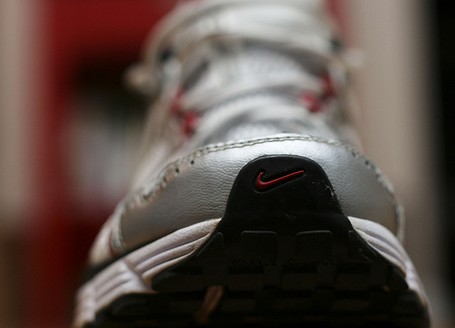
When you walk, the heel of your foot will touch the ground first and as you roll your foot forward, your weight will be transferred to the front of your foot. Depending on the angle of your foot, you may be putting more weight on the inside or outside of your foot. Doing that hundreds or thousands of times a day can lead to pain and discomfort in your feet and other parts of your body.
If your hips, knees or ankles produce external rotation, you will be more likely to angle your feet as you walk (known as pronation of the foot). Your shoes can compensate for natural irregularities or make them worse and that’s why it’s important to get the right shoes.
Good shoe stores will help determine your arch type and level of pronation. Once you know your arch type and pronation, there are different shoes that will suit you. A local running shop is a good place to start, they’re generally the most knowledgeable retailers of shoes. Some websites with good fitting advice are: Road Runner Sports, Zappos, Dick’s and New Balance.
One way to determine your arch type is by standing (to put weight on your feet), then sliding your index finger under your arch. If you get your finger up to 1/2 an inch under your foot then you’ve got a low arch. 1/2 inch to 1 inch is a medium arch. More than an inch is a high arch.
The other way to determine arch type is the paper bag test. You wet your feet and stand on a paper bag. Looking at your wet footprint and the size of the gap left by your arch, you can tell if you have a low, medium or high arch. This way is pretty common, but it’s a bit more subjective than the index finger method.
To determine your pronation (ankle roll), you’ll need the help of a friend. They will stand behind you to see how your ankles behave as you walk. If your ankles stay very straight, then you have neutral pronation. If they roll slightly inward or outward then you’re considered an under-pronator. If they roll inward excessively, then you’re an over-pronator.
Another way to determine pronation is to put a used pair of your running shoes on a flat surface and see if the shoes tilt inward towards each other, or tilt outward, away from each other.
 Shoes are divided into three categories for different feet type: stability, motion control and neutral. Stability shoes are for under-pronators. Motion control shoes are for severe over-pronators and perhaps obviously, neutral shoes are for neutral pronation.
Most online retailers categorize shoes into these groups. A good shoe store will be able to tell you which shoes are your type as well.
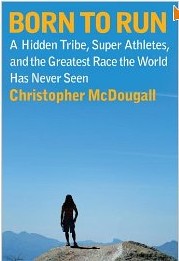
The other approach to running footwear is: barefoot. There is a popular book on running called Born to Run which suggests that we are literally born to run in our bare feet and the best runners in the world come from tribes of barefoot runners who run well into old age without injury.
For now, I think I’ll stick with my runners.
Thanks to Kristen for suggesting this secret!
Broken Secrets | By: Chad Upton
Subscribe on: Facebook | Twitter | Kindle
Sources: Wikipedia (Foot type), New Balance (Running Gait), Zappos, Dick’s
Photo: Jason Alley (cc)


 Broken Secrets